Unlike traditional search engines, ChatGPT does not crawl the web in real time.
It answers based on learned data and credibility signals.
So, if you have been optimizing for Google but ignoring AI visibility, you are missing a massive new source of exposure to brand visibility. The good news is that you can fix this.
In this guide, you will learn about search intent :
- How ChatGPT evaluates sources
- Why brand mentions inside AI matter
- 10 strategies to rank in ChatGPT responses
- The signals the model relies on
- How to track your AI visibility
But first, let’s begin with a basic understanding of how ChatGPT determines which brands to mention.
How Does ChatGPT Rank Websites?
ChatGPT does not rank pages like Google, nor does it display a list of search results. Instead, it generates answers based on what it has already learned and what it believes is the most reliable information for the user.
The goal is always the same: provide the most accurate and relevant response to the user’s question.
When someone asks ChatGPT a question, the model goes through its internal knowledge. It remembers which sources explained things clearly, which sites sounded trustworthy, and which content helped users understand the topic better. Those are the brands more likely to rank in ChatGPT.
Think of it as a credibility filter instead of a search engine. When deciding which websites or brands to rank in ChatGPT, it looks for key factors.
Here are the core factors considered to rank in ChatGPT:
1. Authoritative and Trusted Content
ChatGPT prefers content that feels credible, expert-written, and supported by real insights. When you explain concepts clearly, use evidence, reference reliable sources, or include examples and user outcomes, it shows genuine authority with high-quality content.
2. Clear Structure and Formatting
AI understands content better when it is organized. Use clear headings, subheadings, short sentences, and bullet lists. This helps ChatGPT extract the right point quickly without guessing or misinterpreting your meaning.
3. Topical Relevance and Keyword Alignment
When your website consistently focuses on a specific topic and uses natural language around that niche, the model learns to associate your brand with that subject. This increases your chances of being recalled for related questions.
4. Consistency Across Platforms
Your information should match everywhere users and AI might encounter it. Your brand details, product claims, pricing, positioning, and messaging must be consistent across your site, directories, review platforms, and social profiles. Consistency creates trust.
5. Fresh and Updated Content
ChatGPT favors content that appears current. Updating pages, refreshing data points, adding new research, and showing recent edits signal that your content reflects the present, not the past, ensuring user satisfaction.
6. Accessibility to AI Crawlers
Your site needs to be readable by GPTBot and similar crawlers. Make sure your robots.txt allows them. Avoid heavy script-based content that hides information. If AI cannot access your pages, it cannot reference them.
In short, ChatGPT mentions brands based on these signals. When your content reflects them, you increase your chances of being included in AI-generated answers.
 Pro Tip: While ChatGPT has unique ranking signals, optimization principles overlap with other AI systems like Perplexity and Gemini. Learn comprehensive cross-platform ideas in our guide on rank in AI search to ensure your brand appears consistently across the entire AI ecosystem.
Why Ranking Your Website on ChatGPT Matters?
People are starting to ask questions directly to ChatGPT and trust the answer they get. If your brand appears inside that answer, it creates instant visibility and perceived authority in front of users.
Here are some key reasons why getting AI visibility matters for your business:
1. AI as the New Search Interface
More people are now asking ChatGPT for answers instead of Googling. This shift means real attention is moving into AI-powered conversations, and being present there puts your brand where users are actually looking.
2. Gain Instant Trust and Authority
When ChatGPT mentions your brand, users naturally view you as credible. It feels like a neutral recommendation rather than self-promotion, which makes people trust you faster.
3. Reach High-Intent Users Seeking Answers
ChatGPT users come with intent. They are not casually scanning search results. They ask direct questions because they want direction, clarity, and a solution. Showing up here means connecting with high-intention audiences.
4. Reduced Competition and Noise
Google shows hundreds of competing results. ChatGPT usually highlights only a few brands. If you are included, you get far more attention with far less competition compared to ai search engines.
5. Compounding Visibility Over Time
Once ChatGPT learns your content and begins referencing your brand, those mentions can appear across many similar prompts over time. One successful citation can multiply into many future exposures.
6. First Mover Competitive Advantage
Most brands are still adapting to this new discovery model. By optimizing now, you secure a position before competitors arrive and become one of the names AI learns, remembers, and repeats.
Now that you understand why ChatGPT visibility matters, let us look at the practical steps you can implement to improve your chances of being mentioned by ChatGPT.
Top 10 Strategies to Rank on ChatGPT
Here are the top ten strategies that will help you increase your chances of being cited by ChatGPT:
Strategy 1. Publish High Quality and Structured Content
If you want to rank in ChatGPT and get mentioned by the model, your content must genuinely help people. AI does not reward rewritten ideas. It looks for clarity, depth, and real expertise.
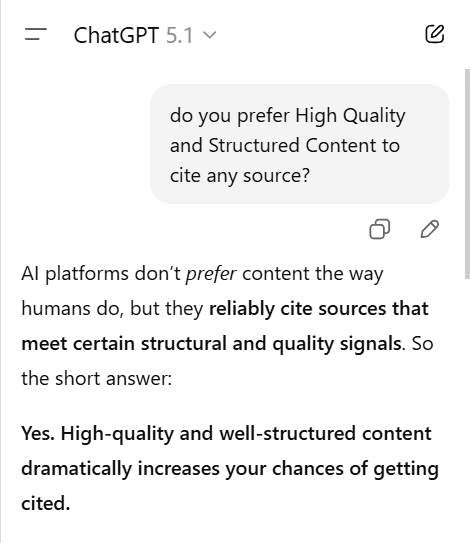
So you need to create content with real value. And here are a few points you can consider for it:
- Proprietary research: Run your own surveys, internal analyses, or original data studies.
- Case studies: Show real results, real methods, and real outcomes from client engagement.
- Unique thinking: Introduce fresh perspectives or frameworks that others are not covering.
- Audience-based content: Understand real user intent and create content that gives direct answers.
- Well-structured writing: Use short paragraphs and clear language to make your content easy to digest.
- Supported insights: Base your explanations on real experience, real data, and real credibility.
If someone reads your content and feels like they finally got a clear and honest answer, you have done enough to rank in ChatGPT. In simple words, when your content goes deeper than generic advice, you rank in ChatGPT as a trusted source.
Strategy 2. Earn Citations from Authoritative Sources
If you want your brand to rank in ChatGPT, it must show proof that others already trust you. AI does not just look at your own site. It scans the wider internet, evaluates who mentions you, who references your content, and where your name appears.
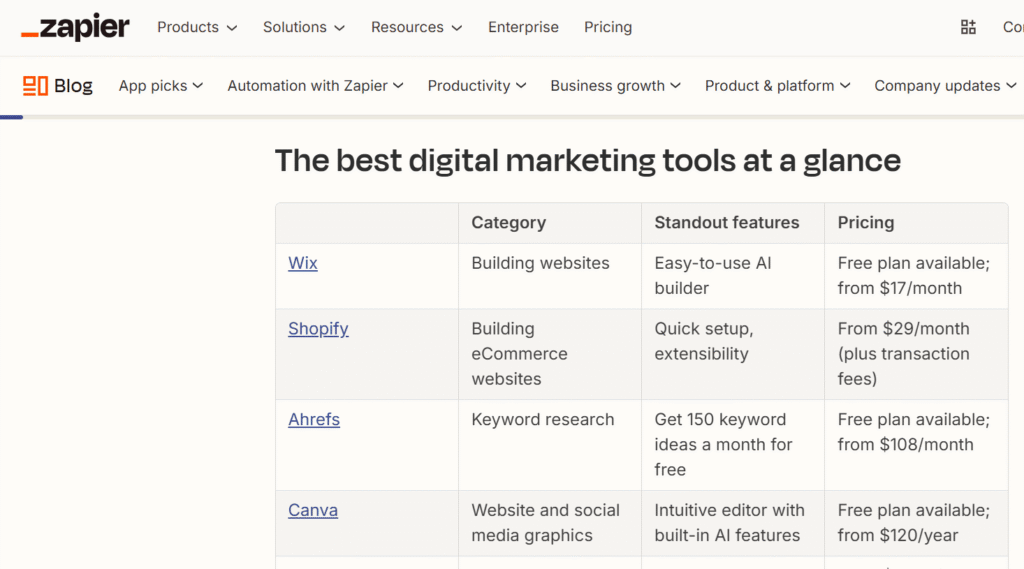
The more credible external validation you have, the stronger your perceived authority becomes to rank in ChatGPT. A citation can be:
- Brand mentions in articles: Your company name included in industry write-ups or news pieces.
- Expert quotes: You or your team speaking as a subject matter expert.
- Comparisons or evaluations: Your product or service included in a “best tools” or “top providers” evaluation.
- Industry list features: Your brand appearing in roundup lists, recommendations, or category rankings.
- Trusted platform reviews: Positive customer reviews on places like G2, Trustpilot, Capterra, or Google.
ChatGPT does not want to risk recommending unknown brands.
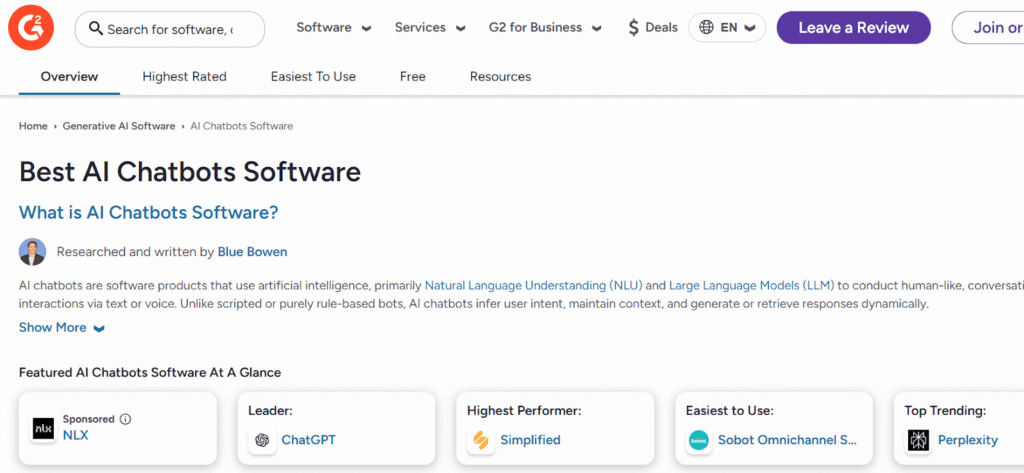
When your name appears regularly on respected domains and authority-driven platforms, AI gains confidence in presenting you as a viable choice. This reduces risk for the model and increases your chances of ranking in ChatGPT through generative engine optimization.
Over time, recurring citations create a strong association between your brand and your topic category.
The more you become “known in the ecosystem”, the more ChatGPT begins to treat you as a safe, reliable, and tested source worth mentioning.
In simple words, you build trust with people first, and AI reflects that trust back to the user.
Strategy 3. Keep Your Content Fresh and Updated
One of the biggest reasons your brand may not get mentioned by ChatGPT is that your content feels old.
AI prefers information that looks current and alive. If your site has outdated statistics, old screenshots, or content that clearly belongs to last year, it will likely pass you over for a fresher source.
Keeping your content updated signals care and improves your ability to rank in ChatGPT.
It signals care, relevance, and reliability.
And that’s one of the key factors to rank in ChatGPT.
Here is how you can keep your content fresh and updated:
- Refresh older articles: Go back and update older posts with newer insights or stronger explanations. This helps your content stay useful.
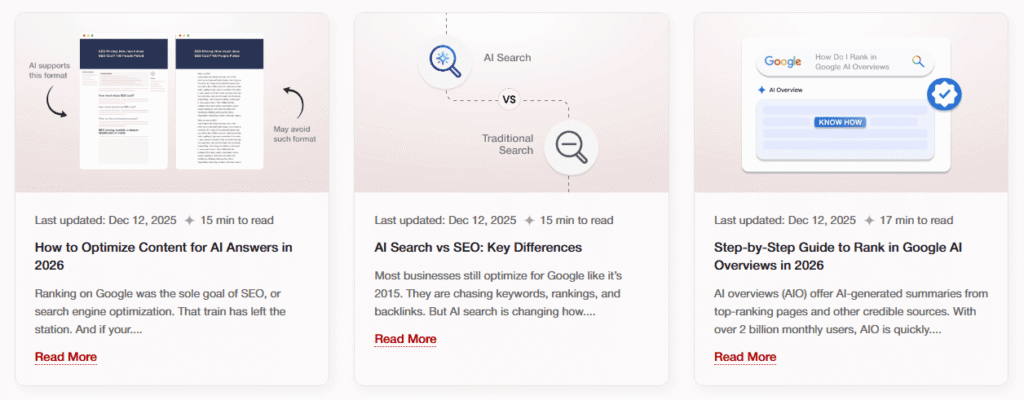
- Use current facts and examples: Swap outdated numbers for recent, credible data. Add real current examples wherever you can.
- Watch how people ask questions: Pay attention to how users phrase queries in ChatGPT and real conversations. Write in that natural language instead of forcing keyword stuffing.
- Add new trends or changes in your industry: If something new is happening in your field, include it. It shows you are aware and evolving.
- Convert content into different formats: Let’s say, turn a long article into a visual summary, short video, or quick guide so it reaches people in different ways.
- Show that your content is updated: A simple note that says “last updated recently” instantly tells both readers and AI that your content is maintained.
When your content feels current and cared for, ChatGPT sees you as a source worth referencing. Freshness is not about publishing nonstop. It is about making sure what you already have stays accurate, relevant, and truly helpful.
Strategy 4. Strengthen Your Brand Reputation with Digital PR
Even if your content is great, ChatGPT still needs to see that real people trust your brand.
AI looks at what others say about you online. If you are mentioned, talked about, and reviewed positively, it treats you as a safe and credible source. In this space, reputation works like a ranking signal. The more your brand shows up across trusted places, the more AI believes you are reliable.
And this is not about forcing backlinks or trying to look big.
It is about earning genuine respect, one real mention at a time.
Here is how you can build real brand trust and visibility:
- Guest posting on trusted sites: Share your expertise on well-known industry platforms so people see you as a true professional.
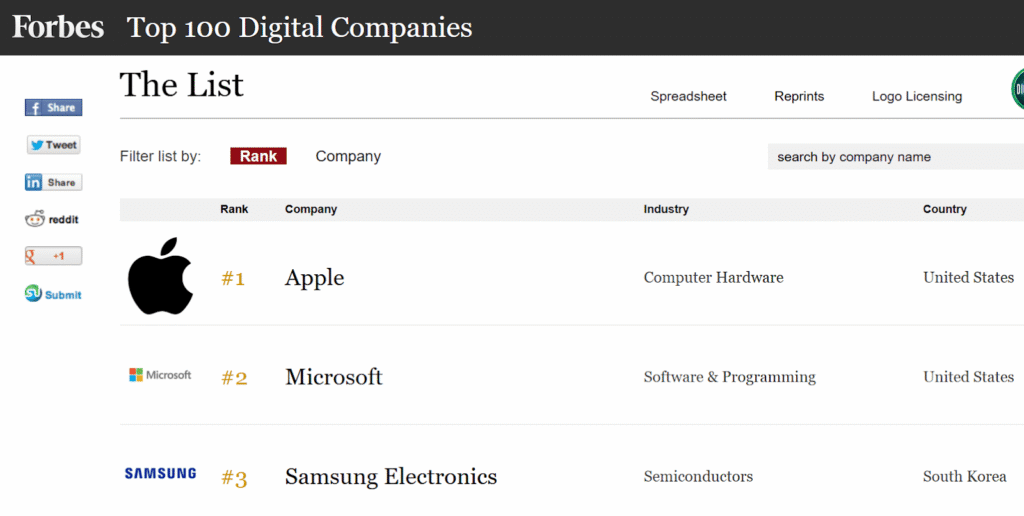
- Appearing in top lists and comparisons: Be included in “best tools” or “recommended solutions” lists where real users look for choices.
- Working with respected voices: Collaborate with influencers or experts whose audiences already trust them.
- Being active in helpful communities: Join conversations on Reddit, Quora, or industry forums and help people with real answers.
- Showcasing awards or recognition: If your brand has been acknowledged publicly, show it clearly. It adds instant credibility.
- Encouraging honest reviews: Ask real users to share their feedback on G2, Trustpilot, Capterra, or Google. Authentic praise goes a long way.
When ChatGPT keeps seeing your name in trusted places, referenced by experts, and appreciated by users, it naturally becomes more confident in mentioning you in its answers.
Your reputation becomes your proof of trust, according to a reputable seo agency.
And AI simply follows the trust that real people have already given you.
Strategy 5. Optimise with Semantic Keywords and Entities
Many people think that repeating keywords ten times is enough to make content rank.
But AI does not work that way anymore. It evaluates surrounding concepts, relevant entities & terminology, and the depth of topic coverage to determine authority.
This is where semantic keywords help.
Instead of repeating one keyword again and again, you use related terms and entities in natural language that build context around the topic. When you naturally include those connected concepts, you show AI that your content truly understands the topic in a complete and human way.
Here’s how you can optimize with semantic keywords and context:
- Use natural topic-based language: Instead of forcing exact keywords, write with the terms people naturally use when discussing the subject. This helps AI match meaning and user intent.
- Include related terminology and concepts: If your topic is “SEO audit,” include concepts like technical SEO, crawling, indexing, and site performance. AI sees these connections as signs of depth.
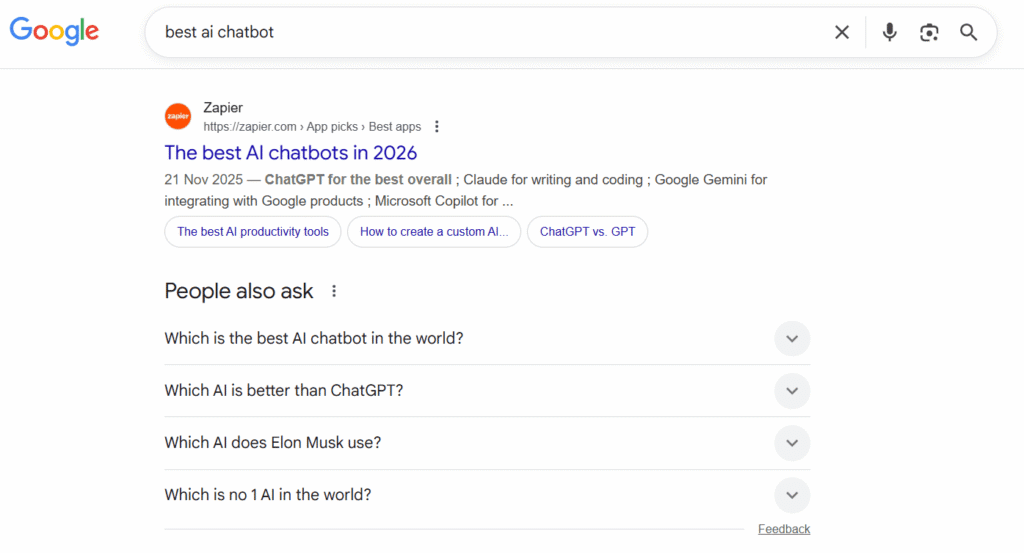
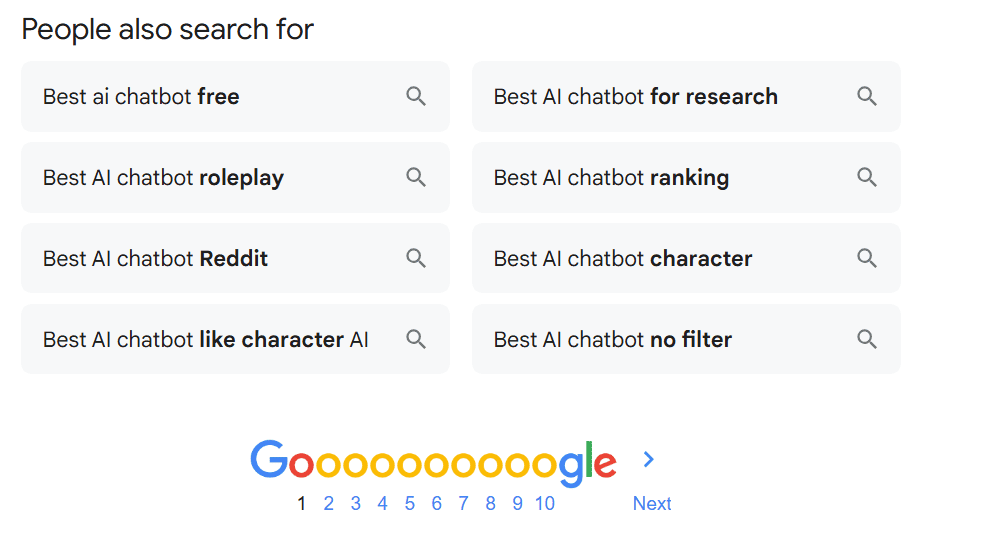
- Match the way people ask questions: Study real queries on Google, “People Also Ask,” and ChatGPT prompts. Write using the same phrasing and natural language that readers use.
- Structure content by intent clusters: Organize your content into sections that answer different stages of user curiosity, like definitions, how to use, best practices, and comparisons.
- Link related content internally: Connect pages and articles that cover subtopics. Internal linking reinforces topical clusters and teaches AI your site’s structure of knowledge.
- Write for meaning, not keyword counting: The goal isn’t to repeat a keyword. The goal is to help AI confidently say, “This page understands this topic fully.”
When you optimize for context instead of brute repetition, AI is more likely to reference your content because it sees what readers will see: real clarity, real expertise, and real understanding of the topic.
Pro Tip: From schema markup to FAQ formatting and answer-ready structures, technical optimization ensures AI can easily extract and cite your information. Discover comprehensive optimization techniques in our detailed guide on how to optimize content for AI answers in 2026 for implementation strategies beyond keywords.Strategy 6. Use Answer First Formatting for Better AI Readability
It’s a fast-moving world where attention spans are shorter than ever.
If someone asks a question, they are not waiting for a long story. They want a clear, direct answer right away, and this is how brands rank in ChatGPT responses.
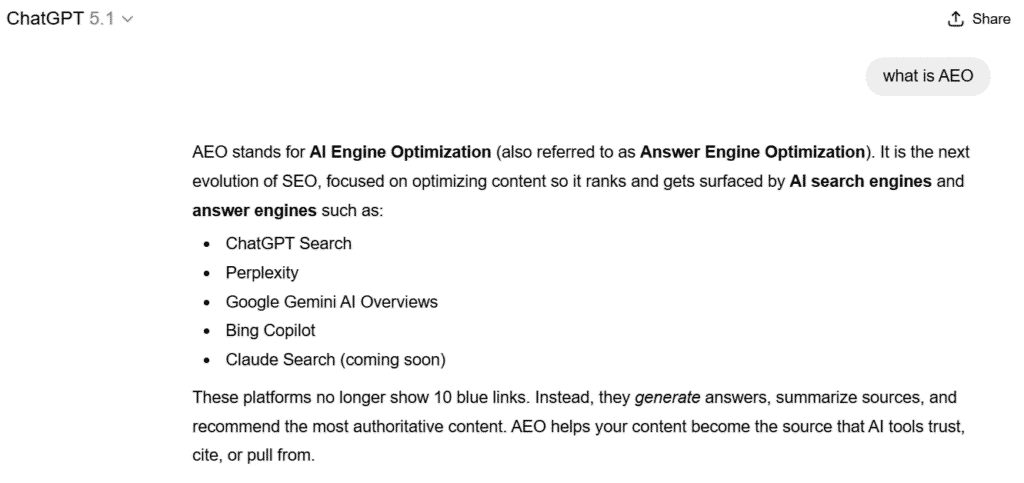
That’s why, every day, billions of searches are shifted from Google to AI platforms like ChatGPT.
ChatGPT is trained to look for content that delivers answer-first formatting to decide which content to cite.
When your website answers in the very first sentence or two, AI sees it as more helpful and worth considering to rank in ChatGPT responses.
Here is how to implement answer-first formatting powerfully:
- Start with a short, direct answer: Begin each section by giving the main takeaway immediately before going into any explanation.
- Use question-based headings: Write headings that mirror real user queries, so AI instantly understands the intent.
- Expand with context after the answer: Once the answer is stated, follow with why it matters, how it works, or examples that deepen understanding.
- Match real human phrasing: Write in simple conversational language that reflects how real people ask and answer questions.
- Make each idea scannable and easy to extract: Use short paragraphs, clean spacing, and one idea per block so AI can lift key information easily.
- Anticipate and answer follow-up questions: If someone gets their first answer, answer the next logical question right after to increase information completeness.
When your content answers like this, AI recognizes it as helpful and “ready to quote.” And people appreciate it too because it respects their time and intention.
Answer first formatting makes your knowledge clearer and helps you rank in ChatGPT with higher visibility.
Strategy 7. Allow GPTBot and All Crawlers to Access Your Content
Even the best content is invisible to ChatGPT if AI crawlers cannot access it due to poor page speed.
AI engines like GPTBot, OAI SearchBot, Bing crawlers, and Google bot must be able to reach your pages in order to index and learn from your content. If your robots.txt file accidentally blocks these crawlers, your site is effectively invisible to AI, and ChatGPT cannot reference or recommend you.
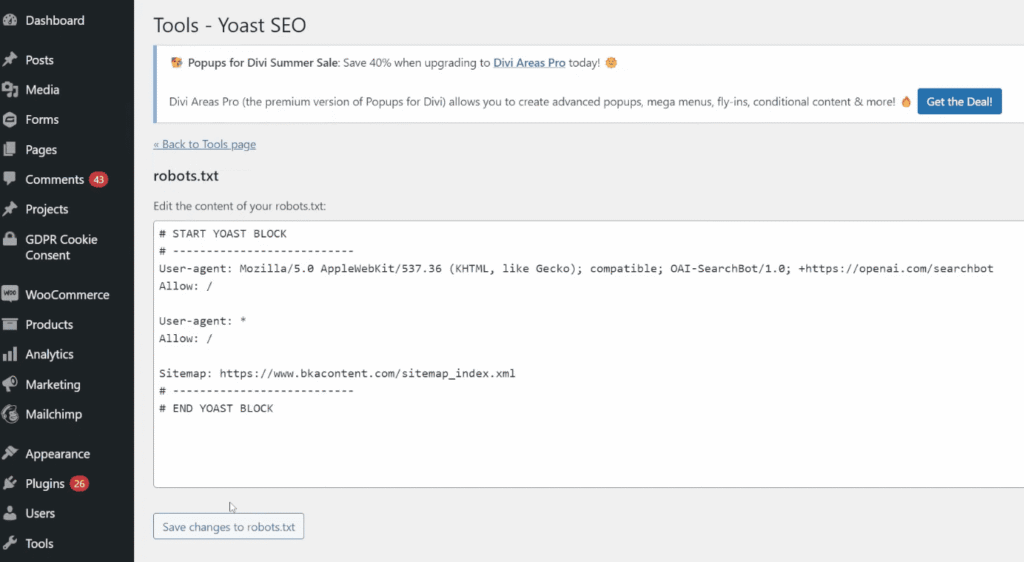
Your priority is ensuring that your content is accessible, not hidden behind technical barriers.
Here’s how to keep your site fully crawler-friendly:
- Allow AI crawlers in your robots.txt: Check that you are not blocking GPTBot or OAI SearchBot.
- Verify that AI bots are actually visiting: Do not assume they are crawling your pages. Use server logs or tools like Screaming Frog to confirm that these bots are active and indexing your site.
- Make sure your core pages are publicly accessible: Your About page, product pages, FAQs, blog posts, and documentation should not be locked behind logins, blocked by heavy scripts, or restricted by accidental disallow rules.
- Submit your site manually to Bing: Since Bing plays a major role in powering ChatGPT’s real-time access, manually submitting important URLs helps push your site into AI indexing pipelines.
- Keep an updated XML sitemap: A clean and current sitemap helps bots discover your entire content library more efficiently, especially recent or deeper pages.
- Understand AI search CTR behavior: Users often get the answers they need directly in the AI response. This means click-through rates are naturally lower than Google’s. In AI search, visibility and citation matter even when clicks don’t happen.
When ChatGPT can crawl, read, and understand your content, your chances of being cited rise significantly. But if GPTBot cannot access your site, it is as if your content does not exist at all.
In simple words, quality matters, but accessibility comes first. AI cannot cite or rank in ChatGPT what it cannot see.
Strategy 8. Build Strong Topical Authority Across Your Niche
If you want ChatGPT to recognize you as a genuine expert, you need to demonstrate real depth around your topic, not shallow coverage.
AI does not judge you based on one article. It studies the total footprint of your content.
Topical authority happens when you cover a subject so thoroughly that AI begins to view you as a reliable and specialized voice in that space, contributing to an honest search ecosystem.
Instead of writing disconnected content on random subjects, you build a tight cluster of related knowledge that shows real expertise.
Here’s how to build strong topical authority in a way that AI understands and respects:
- Build content in topic clusters: Create one main pillar article around your core topic, then support it with multiple related sub-articles that go deeper. This proves you truly understand your subject and deserve to rank in ChatGPT as a specialist.
- Link related content together: Use internal links to connect those articles. It teaches AI that your knowledge is organized, interconnected, and intentional.
- Publish consistently within the same niche: Anyone can write one good post. But when you publish valuable content on the same topic over time, you become a go-to voice in that niche, which strengthens your LLM content ranking signals and consistently rank in ChatGPT.
- Get mentioned by others in your field: When industry sites reference you, it shows AI that experts recognize your brand as credible.
- Become synonymous with your category: Your goal is for your brand to be naturally linked to your topic in AI memory, the same way Notion is tied to productivity, or Ahrefs is tied to SEO.
When you build true depth instead of shallow breadth, ChatGPT sees you as a trusted expert.
And trust is what leads to mentions, citations, and AI choosing your content again and again.
Strategy 9. Get Referenced in Places the Model Already Reads
ChatGPT doesn’t automatically know your brand exists. It learns from trusted sources around the web.
If your brand doesn’t exist in the external sources that ChatGPT depends on, then you’re invisible.
AI models learn from the wider internet. They pay attention to trusted data sources, review platforms, knowledge communities, and established directories.
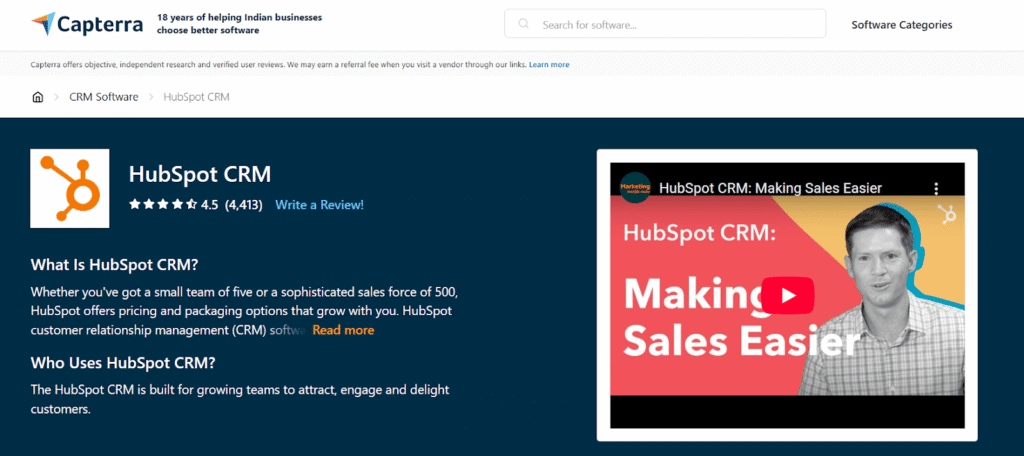
If your brand shows up in places like G2, Capterra etc, ChatGPT begins to recognize you as a known entity and is more likely to rank in ChatGPT recommendations, not a random website.
Here’s how to get into the sources AI is already reading and learning from:
- Show up on high authority publications: These are sites with strong reputations and large indexed content footprints. Getting mentioned by them increases your “authority with AI.”
- Get listed in niche industry directories: Being added to places like Crunchbase, G2, Capterra, Product Hunt, or relevant business databases helps AI categorize your brand correctly.
- Be included in data-driven roundup or expert lists: If AI sees your brand appear next to other trusted names in:
- “Top 10 tools for X”
- “Best platforms for Y”
- “Recommended solutions for Z”
- Contribute to common Q&A knowledge pools: Platforms like Reddit, Quora, Stack Exchange, and other discussion hubs provide conversational data that AI often sees during training.
- Provide original insights to journalists and researchers: When your data, quotes, or analysis appear in articles or reports, AI sees your name attached to expertise.
When multiple trusted platforms mention your brand, AI starts associating your name with your niche.
In simple words, don’t wait for AI to discover you. Place your brand where AI is already looking if you want to rank in ChatGPT responses.
Strategy 10. Track Your Brand Mentions in ChatGPT and Improve Consistently
Even if you’ve applied all the strategies above, how do you know whether your effort is actually working?
This is where tracking your brand mentions in ChatGPT matters.
Because you cannot improve what you do not measure. The same applies to AI visibility. If you do not know when and where your brand appears inside AI responses, you are optimizing blindly.
There are two ways to track your brand mentions in ChatGPT:
1. Using AI Visibility Tracking Tools
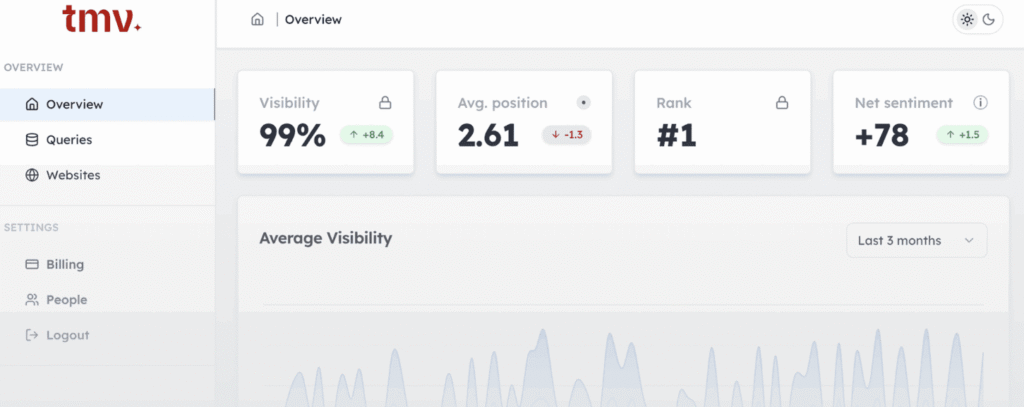
By using AI visibility tracking tools, you can see how often your brand appears inside AI answers on platforms like ChatGPT, Google AI Overviews, Perplexity, and Gemini.
These tools typically provide:
- Brand mention and citation tracking
- Competitive share of voice analysis
- Sentiment tracking of AI mentions
- Source transparency that shows where AI pulls data from
This helps you track your real AI visibility instead of relying on guesses.
2. Manual and Traditional Tracking Methods
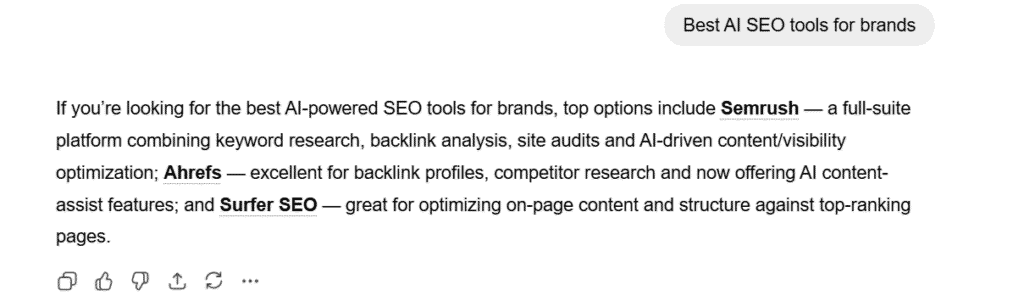
Manual tracking is useful for validation and early testing. This includes:
- Running prompts in incognito mode to see how AI answers real user queries.
- Monitoring brand mentions using Google Alerts or social listening tools.
- Analyzing high ranking informational pages in SEO tools, since these are often summarized by AI.
This method takes more effort, but it is useful for quick checks and early validation.
Pro Tip: Each platform, from ChatGPT to Perplexity to Google’s AI Overviews, has unique ranking factors and citation preferences. Explore the fundamental differences in our comparison guide on AI Search vs SEO, where you understand key differences to build strategies that work across all AI platforms, not just one.How Track My Visibility Helps You Monitor AI Brand Mentions?
Once you see why AI brand visibility matters, the real challenge is tracking it at scale with accuracy and clarity. That is where Track My Visibility fits in.
Track My Visibility is an AI visibility monitoring platform designed to help brands understand how they appear inside AI generated answers across platforms like ChatGPT and others.
You can track mentions, compare visibility with competitors, see which pages are being cited, and spot gaps in one place.
Instead of repeating the same prompt checks every day, it gives you a clear and organized view of how AI currently sees and mentions your brand.
For a closer look at how the process works, you can explore it here.
Conclusion
We’re now in a world where answers matter more than search results.
Visibility no longer means ranking on Google; it means learning how to rank in ChatGPT.
Getting cited and ranked in ChatGPT comes from real expertise, quality content, external mentions, and building your presence where AI pays attention. When you apply the strategies in this guide, you’re not just improving SEO but shaping how AI understands and recalls your brand.
And remember, you can’t improve what you don’t measure.
If you don’t know how often ChatGPT mentions you, you’re guessing, not optimizing.
Start by checking your AI visibility and how often you rank in ChatGPT responses with Track My Visibility.
See how often ChatGPT references your brand today, and use that insight to improve how it talks about you tomorrow. Happy Growing.