Ranking on Google was the sole goal of SEO, or search engine optimization. That train has left the station. And if your SEO strategy is still focused on ranking on Google, you will be disappointed.
The number of people asking LLM tools like ChatGPT, Perplexity, and Google’s AI Mode is constantly on the rise. While traditional search engines like Google still handle more than 15 billion searches per day with +90% global search market share, large language models, like ChatGPT (which now handles 2.5 billion prompts a day), are catching up.
For businesses, hence, the new goal is to get AI tools like ChatGPT, Gemini, Perplexity, and more to cite your brand.
So, what can you do to get these LLM tools and AI search engines to use your content for their answers and cite your brand as a reference?
That’s what we are discussing in this blog post. Here, you will learn:
- What is answer engine optimization, or AEO
- Why you should shift your focus from traditional SEO to AEO
- Strategies to optimize content for AI answers and LLM tools in 2026
- Best practices to ensure your content appears on AI answers consistently
Let’s get started.
What Is Answer Engine Optimization?
AEO stands for Answer Engine Optimization. It is a process of making your content easy for search engines and AI tools to extract and display as instant answers, especially in AI-generated summaries and voice searches.
Unlike traditional SEO, where your goal is to rank in a list of results, answer engine optimization is about being the answer. While AIO is similar to what featured snippets used to do, it now uses multiple sources to offer concise answers and relevant content to searchers.
Here is an example of how results appear in answer engine optimization in Google’s AI overviews:
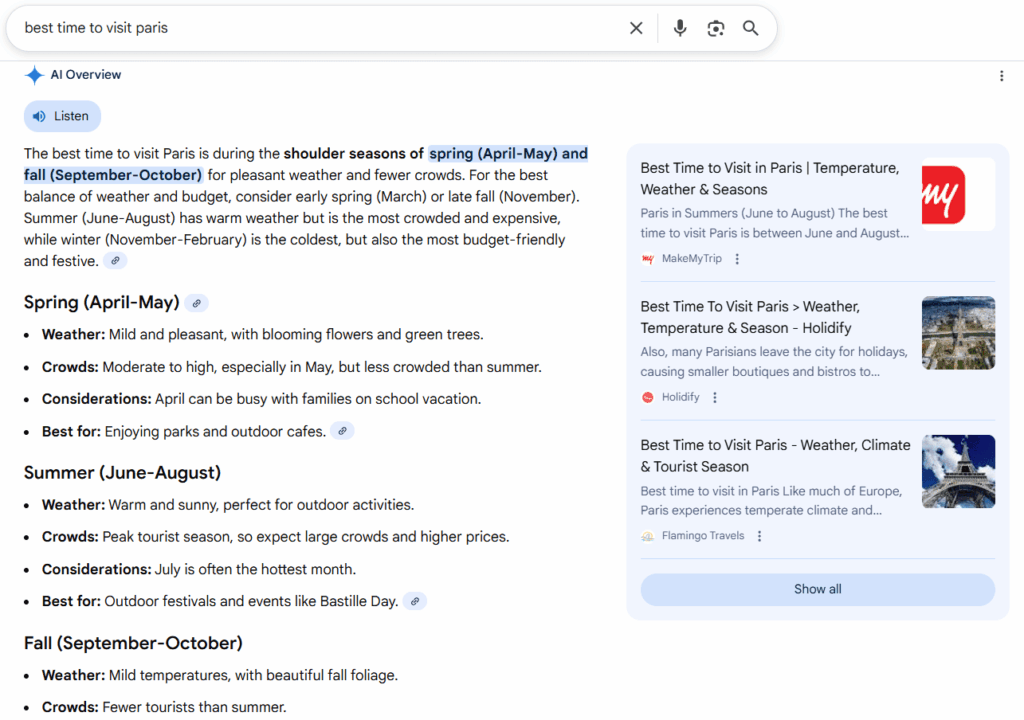
As you can see, Google’s AI overview has pulled the answers for the question from various websites, as shown on the right. As a result, you get the answer right on the SERP itself. You no longer have to open and go through multiple websites to find the answer.
Here, you are optimizing for visibility at the very top, where search platforms, like Google and Bing, pull a quick response to answer a user’s question.
# How AEO works
Search engines and AI search platforms scan pages to find clear, structured information that can quickly answer user questions.
They look for things like:
- Clean formatting (short paragraphs, lists, tables)
- Schema markup (e.g., FAQ or HowTo schema)
- Question-based headings (like H2s that match common queries)
- Consistent terminology and definitions
Gaetano Nino DiNardi of Marketing Advice puts it this way:
“AI Search platforms use a technique called ‘grounding,’ which means connecting the AI’s answers or reasoning to reliable sources of truth (citations) instead of just generating text from patterns in training data.”
Hence, if your content is well-organized and clear, there is a higher chance it will be pulled into AI answer or voice results.
Learn More: What Is AEO and GEO
How to Optimize Content for AI Answer Engines: 8 Strategies for More Citations in AI-driven Search Results
If you have searched for something on LLMs tools recently, you know most AI tools don’t just generate answers. These tools, such as Perplexity, ChatGPT, and Gemini, often include citations to support their claims.
Here is what it looks like in Perplexity:
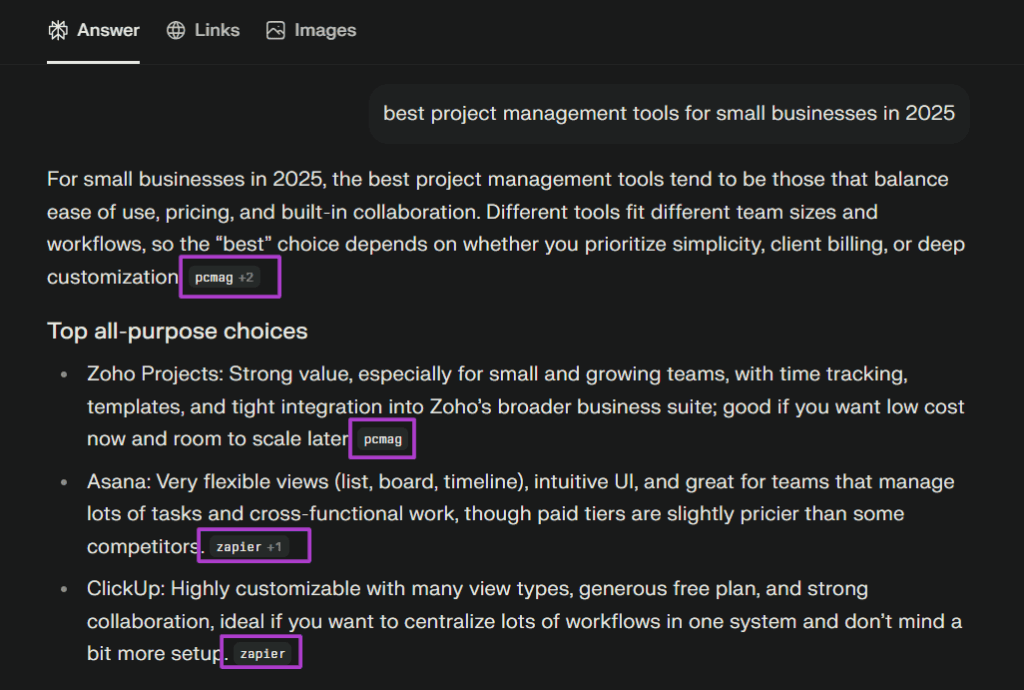
Getting your site cited builds trust, drives traffic, makes your brand more popular, and helps your brand stand out in AI-driven search.
Here are 8 strategies to optimize content for AI answers in LLM tools.
1. Write factual, citable sentences that can stand alone
AI models often pull isolated sentences to answer user queries. So if your key information is buried in long paragraphs or needs extra context to make sense, it’s unlikely to be cited. The solution? Make your sentences short, factual, and self-contained to provide direct answers.
Here are a few tips to write such sentences:
- Use one fact or claim per sentence
- Keep sentences under 20 words when possible
- Include stats, names, or clear definitions
- Skip intros and transitions in key factual lines
Here is an example for the same:
- Instead of writing: ‘Our new pricing model has helped with user retention, especially since Q1.’
- Write: ‘In Q1 2025, our new pricing model increased user retention by 38%.’
As you can see, the second sentence contains valuable facts, figures, and data for users. This makes your sentences worthy of AI’s attention.
Hence, when writing key sentences, ask yourself:
- Could this sentence be copied directly into an AI answer?
- Would someone understand it if they only read this line?
If the answer is yes, then go ahead and include it in your content. Or rework the same until you are satisfied.
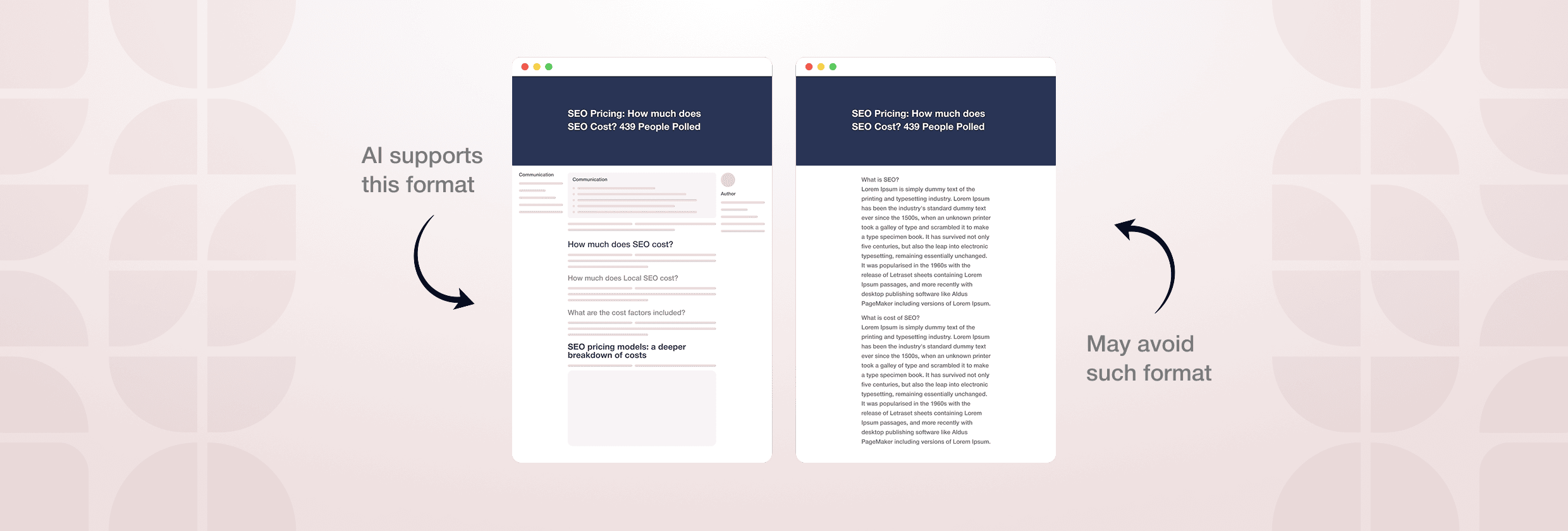
2. Use AI-friendly formatting with subheadings, lists, and tables
AI models scan for patterns, structure, and clarity. If your content is one big text block, it’s harder to extract and quote. Formatting makes content readable for users while helping machines pick up what matters.
Here are a few elements to format your content, and when to use them in your content:
- Numbered lists for steps or sequences, like ‘5 Steps to Set Up a Drip Campaign’
- Bullets for comparisons, pros/cons, or examples
- Tables for side-by-side comparisons of features, pricing, or outcomes
- H2s and H3s to break down topics into sub-topics
AI systems like Google’s SGE or Perplexity tend to feature content that’s well-scaffolded. If your article uses clear headings and repeatable formats, it is easier to cite the part that answers a query directly.
 Pro Tip: After drafting, ask an LLM to turn your section into a structured table. Wherever the model creates vague or merged rows, rewrite those parts in your content with tighter subheadings and explicit data points.
 3. Match search intent behind AI-generated questions
AI doesn’t just copy user keywords. It interprets why someone is asking a question. If your content doesn’t match that intent, it won’t be selected, even if it has the right keywords.
To optimize for answer engines, align with user intent at the sentence and structure level.
There are four types of search intent based on users’ search behavior:
- Informational
- Commercial
- Navigational
- Transactional
Here is a quick comparison between them:
| Search Intent Type | User Goal | Typical Keyword Patterns | Example Queries |
| Informational | Learn something, get answers, understand a topic | ‘How to…’, ‘What is…’, ‘Why…’, ‘Guide’, ‘Tutorial’, ‘Tips’ | How to bake a cake, Best public speaking tips, What is search intent |
| Navigational | Reach a specific website, brand, or page | Brand names, website names, known products | YouTube, Mangools blog, Amazon |
| Commercial / Commercial Investigation | Compare options before buying; evaluate products or services | ‘Best’, ‘Top’, ‘Review’, ‘Comparison’, ‘Vs’ | Best budget laptops, iPhone 15 vs iPhone 16, Best cameras for beginners |
| Transactional | Take action, like purchase, sign up, or redeem offers | ‘Buy”, ‘Price’, ‘Deal’, ‘Discount’, ‘Coupon’, specific product names | Buy Nike shoes, Asus laptop sale, Discount code for |
Your pages must have valuable content that aligns with the intent so the AI can fetch them. For example, if the keyword is ‘best CRM tools for small teams,‘ your content must have a list of these tools.
Here is how you can work your content to match the intent for AI citations:
- Look at how ChatGPT or Gemini rewrites common questions
- Study multiple AI Overviews to see phrasing patterns
- Build your sections to reflect relevant queries directly
This will help AI tools and search engines to pull sections from your page, parse them as answers, and cite your pages as sources.
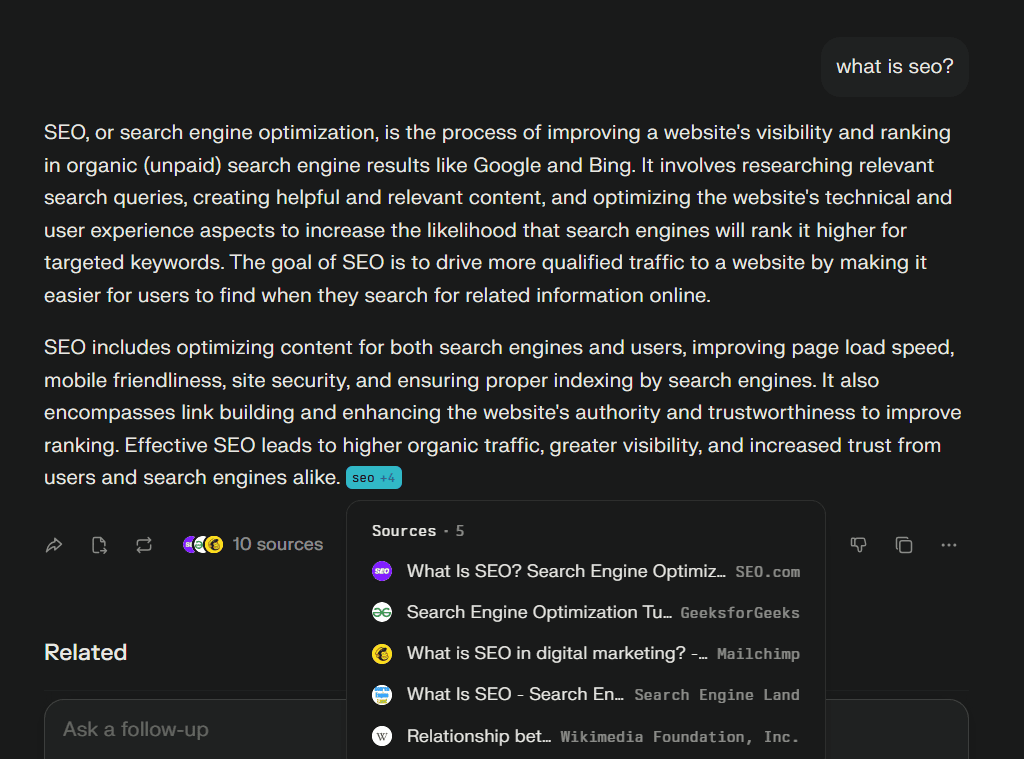
Here is an example from Perplexity for the search query ‘what is SEO?’
4. Include credible sources and external links
AI favors information backed by trusted sources. If your content cites relevant, authoritative links, it sends a trust signal. You don’t have to overdo it, but a few well-placed links can make your page more “citable.”
It matters more for AI engines that you think it is:
- Having links to credible sources boosts your credibility and ranking in AI-generated summaries
- Tools like Perplexity and Google’s AI Overviews pull content that references primary sources
- Links help AI platforms map your content and find where it stands in the knowledge graph
- Source-backed statements are more worthy in the eyes of AI search platforms
However, adding random links to a few authoritative sites is not the best strategy if you want to optimize content for AI answers and win at AI.
Here are a few quick tips to help you:
- Use descriptive anchor text:
- Use ‘According to [this 2025 McKinsey report]…’ instead of ‘according to a study…’
- Keep the sources up to date as they become unavailable with new sources
- Link to research studies, government reports, and industry publications
- Link only when it adds value or evidence, not just for SEO padding
Having enough and relevant links to authority sources in your content makes AI trust you more, which can, in turn, offer you more AI visibility in search.
5. Embed FAQs based on real AI and SERP queries
FAQs are a direct line into AI-generated answers. When users ask questions, AI tools often serve up structured Q&A snippets, which is an efficient way to optimize content for AI answers.
If your content already answers these questions clearly and briefly, it’s more likely to get cited. You can also frame your H2s and H3s as questions and then answer it directly.
Here is what you can do to build it:
- Use tools like AnswerThePublic, AlsoAsked, or even ChatGPT to pull real user questions
- Pick 3–5 per post that are tightly related to your core topic
- Format each with the question in bold or as an H4, followed by a 1–2 sentence answer
Let’s check that with an example on Google’s Gemini.
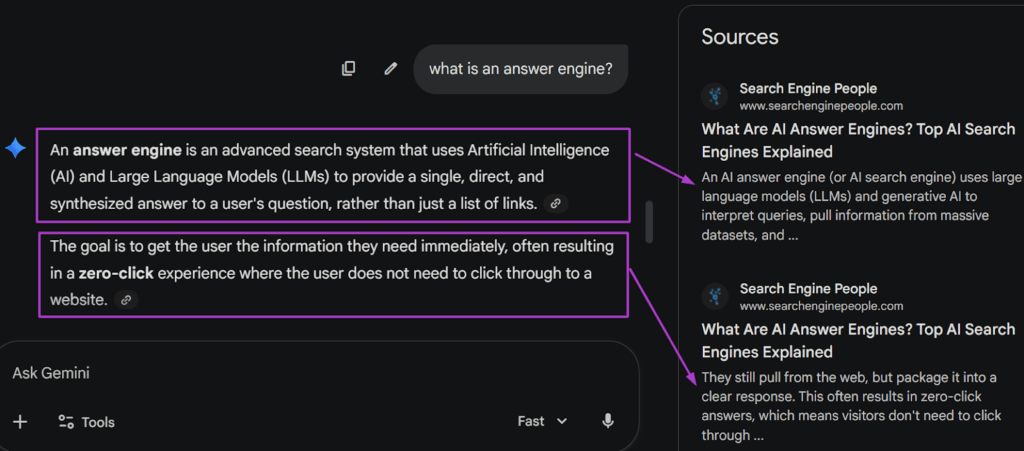
As you can see, the platform lifts the answer from the source and summarizes it for a quick, direct answer. This format gives AI a block it can easily lift.
6. Add author info, publish date, and page updates
AI systems prefer recent, credible content from identifiable sources. Anonymous articles with no author, no publish date, and no sign of updates are less likely to be cited or surfaced in AI summaries.
Hence, adding the following details is a must for effective generative engine optimization:
- Author name and title (or brand name if writing as a company)
- Last updated date, even if it’s the same as the publish date
- A small note like “Updated for 2026” to signal relevance
- Add social proof, such as a LinkedIn profile (optional)
- Use structured data, such as the author schema, to signal content metadata to AI crawlers.
AI engines rank ‘fresh + human’ content higher. Even a simple gesture like adding a name and date could help you optimize content for AI answers.
7. Focus on topics you can own, not broad keywords
Answer engines prioritise content that shows depth and expertise. Generic content like “The Ultimate Guide to Marketing” won’t stand out. But if you go deep into a specific topic, especially one that’s underserved, you increase your odds of being cited.
And you need to figure this out before you start topic or keyword research to properly optimize content for AI answers.
A few examples of ownable content topics are:
- ‘How AI email scoring works for cold outreach in B2B’
- ‘Pricing comparison of AI chatbots for Shopify ecommerce in 2026’
However, finding and creating content on these topics takes time and effort. Here are a few ways to own a topic and get cited for it:
- Find subtopics where high-quality answers don’t exist in generative AI tools.
- Use keyword tools to discover low-competition, high-intent terms
- Search AI SEO tools to see what answers are currently being shown
Based on the insights and research, pick topics and write content for the same. Add relevant details, sources, and information that both AI platforms and users like.
AI is more likely to cite your content if it offers something no one else has said yet.
8. Implement structured data to guide AI interpretation
AI search platforms love data that’s well structured and organized. Implementing structured data helps AI tools better understand your content. When you use schema markup, you give machines context:
- What your page is about
- Who wrote it
- When it was published
- What sections matter most
This can lead to better visibility in AI results, especially for definitions, tables, reviews, and how-to content.
Here’s what structured data you can use and when to use it to optimize content for AI answers:
- Add the FAQ schema if your post includes a question-and-answer section
- Use the Article or BlogPosting schema to tag the author, date, and topic
- Use the HowTo schema for step-based guides
- Use tools like Merkle’s Schema Markup Generator to create valid code snippets
- Test with Google’s Rich Results Test to make sure it works
Structured data doesn’t just help your SEO efforts. It greatly helps AI engines find and cite your content more accurately.
Why Should You Optimize Content for AI Answers in 2026?
Search has changed. People aren’t just typing into Google anymore. They are talking to AI assistants, using smart devices, or getting answers from AI chat interfaces like ChatGPT or Bing Copilot. And if your content is not built to be the source of those answers, your brand won’t be seen.
Here are the top reasons why you must start optimizing your content for AI search in 2026 and beyond:
1. AI answers are taking over the top of search
In 2026, AI-generated responses often appear before traditional results. Google’s Search Generative Experience (SGE), Bing’s AI summaries, and even standalone AI tools now generate answers directly from web content.
Organic results are being pushed further down with AI mode. Here is what it looks like in Google AI overview:
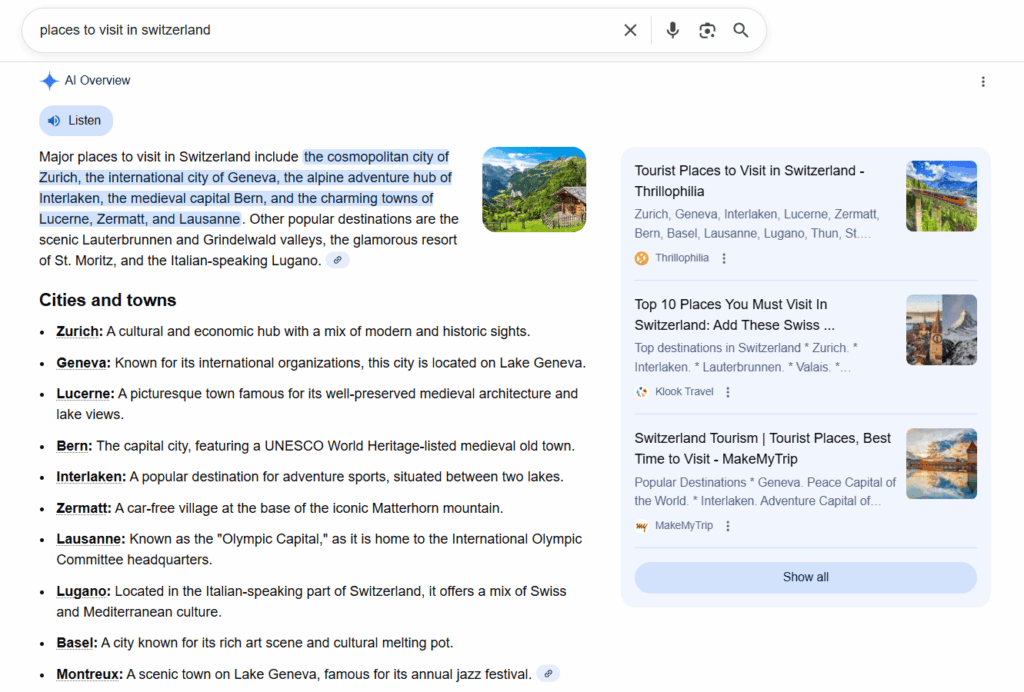
As you can see, the organic results are way down. This means users need to scroll down to find organic results, but most don’t.
If you are not appearing on the overviews or in LLM search tools, people don’t see you online at all, which makes it vital to optimize content for AI answers.
Pro Tip: AI overviews (AIO) offer AI-generated summaries from top-ranking pages and other credible sources. Learn how to rank in Google AI Overviews in 2026.2. AI search engines look for structured, clear content
AI-powered search engines and assistants don’t ‘read‘ web pages the way humans do. They scan for patterns, structure, and signals that indicate what the content is about.
To be pulled into an AI-generated answer, you must optimize content for AI answers specifically and ensure it is machine-friendly.
This means your content must:
- Be structured logically for the tool to understand it quickly
- Answer the query right away without burying it inside related content
- Use consistent terminology across the piece and website to avoid confusion
- Have structured data markup to help AI search engines understand content
Optimizing content with a clear structure can help search engines using AI parse and frame answers, while citing your brand.
3. Zero-click searches are the new normal
More users are getting what they need without clicking any links. AI pulls the best answers and displays them instantly.
According to Semrush, more than a quarter of Google searches are now zero-click.
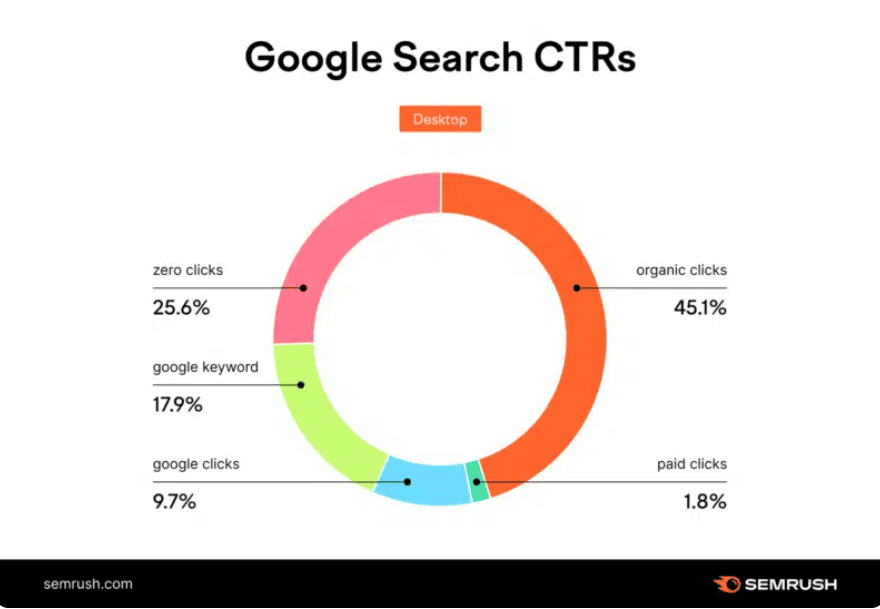
That means visibility depends more on how content is written and structured, not just where it ranks.
Hence, you must optimize content for AI answers and make it a part of your overall SEO strategy.
4. Voice search and assistants are growing
Voice search has been consistently growing over the last few years. Smart assistants, like Siri, Alexa, or Google Assistant, collect answers to the voice queries from your site and read a single answer out.
According to Emarketer, in the US alone, there are 153.7 million voice search users, which is a sizable audience for any business.
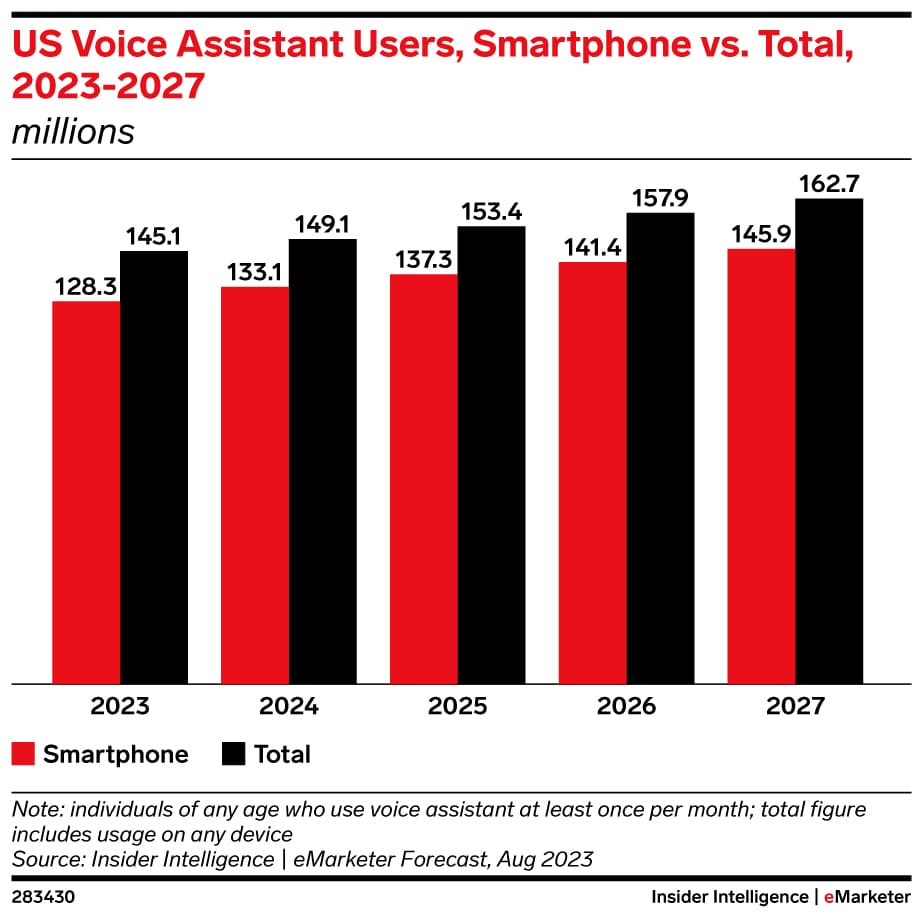
And if you fail to do voice search optimization to make your content AEO-ready, it’s not the one being read. It means LLMs don’t even know you are a player in your field.
When LLMs don’t know who you are or what you do, they don’t cite you, alienating you from these users who constantly use these tools for search.
5. Optimizing content for AI search results future-proofs it
Search and content discovery will keep evolving. AEO helps ensure your content stays relevant in AI-driven platforms, whether it’s Google, Bing, ChatGPT, or whatever comes next.
Hence, optimizing your content for AI-driven search engines can also help you prepare for the future of search.
Monitor AI Search Performance with Track My Visibility for Better Answer Engine Optimization
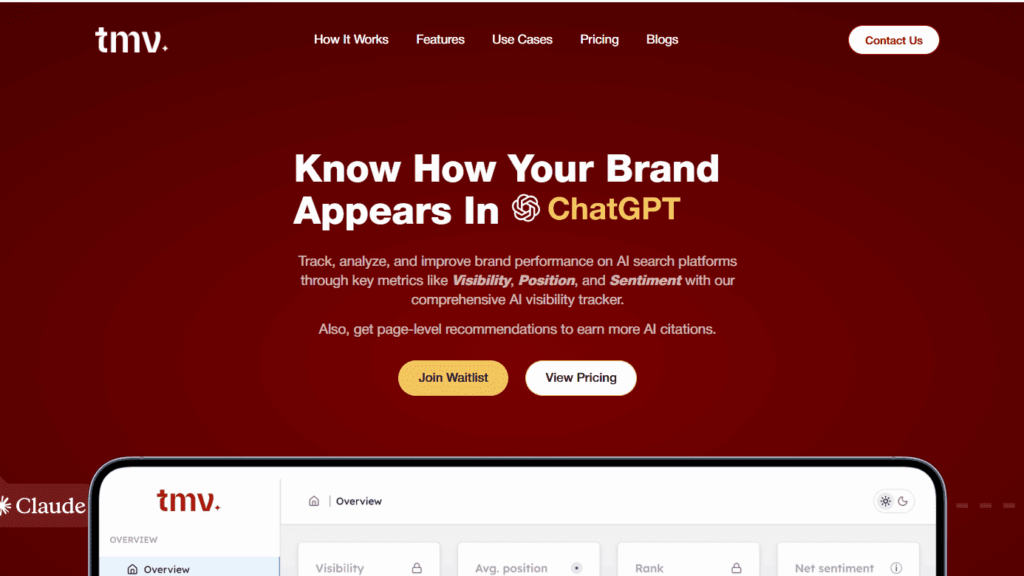
AI SEO is tricky, especially because it is hard to measure what is working and what is not. With traditional SEO, a quick technical SEO audit or a review of the Google Search Console dashboard would give you a lot of information.
But with AI SEO, traditional SEO tools don’t work. They cannot track AI citations with accuracy, and most AI SEO tools only show surface-level data. You cannot see where your content appears in tools like ChatGPT, Perplexity, or Gemini, or how often it is being cited.
That’s where Track My Visibility comes in.
This AI visibility tracker helps you monitor and optimize your content across AI search platforms.
Unlike generic SEO tools, it’s built specifically for AI-driven search and citation tracking. It can help you:
- Monitor real-time AI search visibility (like ChatGPT, Perplexity, Gemini)
- Track where your content is cited across major AI platforms
- Identify which content gets picked up and why
- Get alerts when your brand is mentioned in AI answers
- See performance trends and improve based on actual AI citations
If you are investing in AI SEO, you need data that goes beyond Google.
For a deeper look at how the platform works, you can check the pricing, explore the features, or review practical Use Cases.
Happy Tracking & Growing.