Today, AI has changed how people search online. They are no longer browsing multiple links on Google. They simply ask AI tools like ChatGPT, Perplexity, or Gemini, which are leading AI assistants and AI engines that form the core of the evolving AI search landscape, and trust the responses instantly.
Major AI search platforms are now a place where users go to discover brands, making it crucial for brands to be visible in these new environments.
So, if your brand is missing from AI search answers, you are losing big opportunities.
And you cannot improve what you cannot measure. That is why tracking your brand mentions inside AI answers is essential, because without tracking, you have no idea whether AI is promoting you or skipping you.
If you want your brand to be present in AI answers, you need to understand two things: AI search and how your brand gets mentioned in AI answers.
In this guide, you will learn:
- What AI-driven search looks like today
- How AI models decide which brands to mention
- Why brand mentions have become a critical visibility signal
- How to measure and track your mentions inside AI responses
By the end, you know how AI mentions brands and how you can ensure your brand appears in AI answers. But first, let’s begin with a basic understanding of what AI search looks like today!
What AI Search Looks Like Today?
AI search, powered by large language models, is a new way of finding information. Instead of giving you a list of the top 10 links, it gives you one clear answer right away. It uses artificial intelligence and LLMs to understand what you are asking. It understands your words and answers user queries naturally.
You can also ask follow-up questions. Because the AI remembers the conversation and responds better based on what you asked earlier.

Tools like ChatGPT, Perplexity, Gemini, and DeepSeek are examples of AI search platforms. These platforms play a key role in the new search ecosystem by aggregating data, analyzing search trends, and providing insights into brand visibility within AI-powered search engines.
These platforms can read normal language and provide AI generated responses. They can also summarize content, scan documents, and even suggest recommendations.
You can talk to them naturally, just like you would talk to a real person.
Google’s AI mode is one of the best examples of this, which enhances monitoring and understanding of how brands are discussed in AI-generated responses.
In short, AI search answers are a curation of all the sources that bring you one unified and trustworthy answer. It focuses on your goal and gives you an answer that feels personal and genuinely useful.
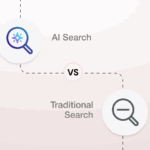
The Evolution from Traditional Search to AI Search
Let’s explore how search evolved from browsing links to receiving personalized AI-powered answers:
| Factor | Traditional Search | AI Search |
| Query Search | User types short keywords | User asks a natural question, like talking to a person |
| Result format | Shows many links to websites | Gives one clear answer or summary |
| Information processing | Looks for keyword matches in existing content | Uses semantic understanding to grasp meaning and context. This semantic capability is shaped by the training data used to build large language models, which influences how AI generates responses and mentions brands. |
| Ranking logic | Based on backlinks, keywords, and SEO | Based on relevance, authority, and conversational context |
| Personalization | Mostly generic results | Personalized answers based on user intent |
| User effort | Requires clicks and manual investigation | You get an instant, ready answer |
| Interaction style | One search, one result | Two-way conversational flow |
| Real example | Searching “best CRM software” gives 20+ links | Upon asking “What is the best CRM for small teams?”, the AI platform returns a few curated brand suggestions |
What Is Brand Visibility in AI Search?
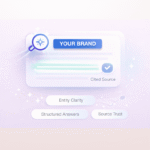
Brand visibility in AI search means how often AI mentions your brand when users ask questions.
This is not about Google rankings. It is about whether search platforms like ChatGPT, Perplexity, Gemini, or Bing see your brand as trusted and relevant enough to mention in their answers, rather than just focusing on search rankings.
If AI keeps using your brand as an example or recommendation, people start to view it as a credible source. Even without clicks, your brand gets seen and remembered.
This kind of visibility matters because AI now influences real decisions. And tracking brand mentions in AI search reveals when that influence benefits you.
AI tools learn from content across the web, including social media mentions. It observes news, reviews, discussions, and trusted sources. If your brand appears often in positive contexts, AI is more likely to mention it. Monitoring brand sentiment in AI-generated answers also provides valuable insights into public perception and overall brand health.
Here is what brand visibility in AI search includes:
- Direct mentions: When AI recommends your brand by name.
- Citations: When AI uses your content as a reference.
- Brand placement in lists: When AI includes your brand among recommended options.
Tracking your brand’s presence in AI responses helps you measure brand awareness and share of voice across AI-driven platforms.
So instead of asking, “Am I ranking on Google?”, you now need to ask, “Is AI mentioning my brand?”
If AI mentions you, you are ahead.
If not, it is time to start building that presence.
Tracking your brand’s performance in AI search helps you assess and improve your visibility and reputation in these emerging environments.
# AI Search and User Behavior: How Consumers Interact with AI Answers
AI search is transforming how people interact with search, shifting from short keywords to natural, conversational questions asked across AI platforms.
Instead of scrolling through links, users now receive direct, relevant AI answers, often generated in a single response by advanced large language models.
This change means brands must pay close attention to how users phrase queries and what they expect from AI search engines. By analyzing real user behavior, AI search tools can track queries, monitor AI responses, and reveal patterns in how and when brands appear in AI answers.
Understanding these behaviors helps brands improve content, improve relevance, and build stronger visibility and reputation by aligning with how people actually use AI search today.
# AI Search and Brand Reputation: Managing Perception in the Age of AI
In the age of AI search, brand reputation is shaped not only by what you communicate, but by how AI systems present your brand through AI-generated answers. These answers strongly influence public perception, credibility, and how consumers view your products and services.
Managing this effectively requires monitoring AI mentions across search engines and AI platforms, tracking your AI Share of Voice, analyzing sentiment, and reviewing the sources and citations AI systems rely on. With the help of specialized AI search tools, brands can understand how they appear in AI search, protect trust, and ensure accurate, positive representation as AI answers become the new standard.
Types of Brand Mentions Inside AI Answers
Here are the four main ways AI can include your brand in its responses:
To fully understand and optimize your brand’s presence, it’s essential to use tools that monitor brand mentions and enable effective search monitoring. This ensures you capture all types of AI mentions across platforms and gain actionable insights into your brand’s visibility.
1. Linked Mentions

This is when AI includes your brand name with a clickable link to your website. It creates instant trust and gives users a direct path to learn more about you. This is the most valuable type of mention.
2. Unlinked Mentions

Here, the AI mentions your brand by name, but without a link. Users still hear about your brand, but they have to search for you manually. It still builds recognition and credibility.
3. Cited Mentions

In this case, AI uses your content as a reference source, even if it doesn’t mention your brand in the visible answer. Your site may appear in the “sources” or “read more” section. This signals authority and expertise.
4. Implied Mentions

This happens when AI describes something that clearly aligns with your brand or product, but without naming you, which you’ll notice when tracking brand mentions in AI search. For example, it might describe a feature that is very specific to your product. Users often recognize the brand anyway.
 Pro Tip: Tracking these mentions manually across multiple AI platforms is not scalable. An AI visibility tracker automates this process by running prompts, analyzing responses, and surfacing brand mentions across models. Learn How AI visibility trackers work.
Why AI Mentions Matter for Brand Visibility? Top 6 Reasons
AI-generated answers are rapidly changing how users discover and trust brands online. As AI mentions become a key factor in brand marketing, they are shaping digital strategies and influencing how brands are perceived in the evolving search landscape.
Here are six reasons why showing up in AI answers can transform your brand presence:
1. It’s New Search Landscape
The way people search online using search engines has changed. Gone are the days when you typed a keyword into Google, skimmed through results, and clicked links until you found something useful.
Users are increasingly relying on AI-powered platforms for answers, bypassing traditional search engines. Tracking your marketing efforts in AI search helps optimize brand positioning and ensures your brand remains visible as user habits evolve.
In fact, a recent study shows that AI search visitors are expected to surpass traditional search by 2030. This shift has given AI the power to decide which brands show up in front of users.
When AI includes your brand in its answers (something you can observe through keyword research, tracking brand mentions, and manual AI searches) it signals that your brand is considered trustworthy and worth paying attention to.
For example, if someone asks “What is the best email marketing tool?”, AI will recommend a few most popular brands instead of listing dozens of options.

The brands mentioned become instant front-runners in the user’s mind.
This creates a new visibility layer that sits above traditional SEO. And if your brand is not included in that answer, you simply aren’t part of the conversation.
2. Helps Improve Brand Visibility
When AI mentions your brand inside its answer, you get noticed instantly at the exact moment users are searching for a solution. Users don’t need to scroll, click, or dig through multiple pages. They see your brand name right there inside the recommended answer.
For example, if someone asks “How to Improve LLM Visibility”, and AI includes your brand among the top suggestions, that creates immediate visibility and authority.

This type of AI brand visibility isn’t based on ads or keyword competition.
It is earned through relevance and trust, delivered by AI at the moment the user is actively seeking reliable recommendations.
Large language models (LLMs) synthesize information from countless sources, surfacing only the most relevant brands in their responses. Mentions across news sites and other platforms influence AI’s perception of your brand, impacting how often and in what context your brand appears in AI-generated answers.
When you rank in AI answers, your brand appears directly inside the response, not hidden among a list of links. And this becomes possible when you start tracking brand mentions in AI search.
3. Helps Build Authority and Trust (E-E-A-T)
Trust is not built by claiming you’re the best. It’s built when a credible source confirms it, something you’ll recognize when tracking brand mentions in AI search.
And today, AI has become one of the strongest validators of brand reliability.
When AI mentions your brand, the user subconsciously interprets it as a strong suggestion. They assume you’ve passed a credibility threshold that many other brands haven’t.
However, AI doesn’t pick brands based on self-promotion. It picks them based on signals it detects across your content, reputation, clarity of information, and presence in authoritative sources.
That means if AI names you, it’s because you have demonstrated expertise in your domain.
- You’ve published helpful content.
- You’ve answered user questions.
- You’ve been referenced, discussed, and trusted by real people.
So building authority and trust signals is an important area for getting AI mentions.
This is the new expression of Google’s E-E-A-T in action: experience, expertise, authority, and trust, not as Google sees it but as AI understands it. When potential customers encounter your brand through AI in this context, they don’t wonder whether they should trust you.
Their brain already assumes credibility because AI itself acted as the validator.
4. It Has a Direct Influence on Consumer Decisions
People don’t ask AI for casual information. They ask it when they need a real decision.
So if your brand appears inside that answer, as identified by tracking brand mentions in AI search, you’re shaping the decision before the user even starts comparing alternatives.
For people. AI acts like a trusted advisor. It filters out noise and only presents a few selected brands. When your brand is included, it instantly feels like a credible choice.
The user might not have heard of your brand before, but once AI suggests you, their mindset shifts from “Do I trust this brand?” to “AI recommended it, so it must be worth considering”.

And that shortens the entire decision-making process. Users move faster, friction decreases, and your brand becomes their starting point, not an afterthought.
This is how AI quietly changes buying decisions by placing brands inside the answers, which can also be tracked with Google Alerts.
5. Essential for Future-Proofing
Search behavior is shifting fast. Many users, especially younger ones, are skipping Google and asking AI for answers directly. AI visibility importance is becoming more important than traditional search rankings.
And AI is not a temporary trend. It is becoming the foundation of modern search, and tracking brand mentions in AI search shows how your visibility evolves within it. When AI repeatedly mentions your brand, it starts treating it as a default reference in your category.
Over time, this builds stronger recognition and authority.
Today, most people are asking tools like ChatGPT or Perplexity questions such as “Which tools should I use for content planning?” instead of doing a traditional search. If your brand shows up in that response, you are already aligned with how users will search in the future.
Brands that wait will eventually struggle to break in because AI will have already formed its “trusted brand set”. So, building AI visibility now means you secure your position before competitors even realize how much it matters. You’re not just keeping up. You’re positioning yourself where the future audience already is.
6. Competitive Advantage
Right now, most brands are still focused on ranking on Google, while only a few are working on getting visibility inside AI answers. That gap is your biggest opportunity.
As search shifts from traditional engines to AI-driven responses, you can position your brand early and become one of the names AI repeatedly recognizes and recommends.
This isn’t just about being first. It’s about shaping how AI understands your identity, expertise, and relevance over time. The earlier AI “learns” you, the harder it becomes for competitors to displace you later. Early adoption compounds your advantage and tracking brand mentions in AI search ensures you measure and grow that advantage.
You build recognition. You earn authority. And you become the default recommended brand long before others even realize this shift is happening. It’s also crucial to track whether your brand is gaining ground in AI share of voice over time, so you can adjust your strategy proactively.
Now, before you can increase your AI visibility, you need to understand how AI actually decides which brands to mention.
Pro Tip: To support these insights, an AI visibility tracker needs to go beyond simple mentions and provide structured, comparable data. Explore Track My Visibility features that come to your use.How AI Models Decide Which Brands to Mention?
AI models like ChatGPT, Perplexity, or Gemini don’t crawl the internet the same way Google does.
They don’t simply scan pages.
AI doesn’t just scan pages. It mentions brands based on trust signals and patterns found across the web. What matters is how relevant, reliable, and helpful your brand is for a specific question. Your overall digital footprint helps AI decide if your brand is genuinely credible in its niche.
- How people talk about your brand
- Who is mentioning you
- How often does your brand appear
- Sentiment behind those mentions
- Whether mentions match your niche or topic
For AI, content quality matters a lot, and AI overviews through tracking brand mentions in AI search tell you when AI recognizes that quality. Creating AI-optimized content tailored to AI algorithms increases the likelihood of your brand being mentioned in AI-generated answers.
If you create useful, original content that genuinely solves user problems, AI notices. The more value your content provides, the stronger your trust signal becomes. Clearly communicating your value proposition on your website also helps AI understand your unique benefits and recommend your brand in relevant contexts.
In simple terms, the more your brand appears in credible, relevant, and positive contexts across the web, the more likely AI is to include it in its answers.
6 Key Metrics to Monitor for AI Mentions
Tracking AI performance metrics is essential to measuring the effectiveness of your AI search optimization efforts. Additionally, AI search monitoring provides actionable data on how your brand is surfaced in AI-driven results across platforms like ChatGPT, Perplexity, and Google AI Overviews.
These key metrics help you see not only if AI is mentioning your brand, but how often, how positively, and in what context, using AI visibility tools. Each one matters for strategic visibility.
Analyzing AI search insights further helps refine your strategy and improve your brand’s presence in AI search. Let’s dive into detail!
1. Citation Frequency Rate

This shows how often AI brings up your brand and supports your tracking of brand mentions in AI search efforts. If you see frequent mentions, it means AI already sees you as relevant. If not, it’s a sign that you need to strengthen your brand presence in your niche.
2. Citation Position

Citation position tells you where your brand appears within the AI’s answer. If your brand shows up first or high in the response, that’s a strong trust signal. If it’s buried, users may skip right over it.
3. Competitive Share of Voice

This AI mentions monitoring metric shows how often you’re mentioned over your competitors, and tracking brand mentions in AI search makes this comparison clear compared to traditional brand monitoring. If they’re being mentioned more than you, AI considers them stronger authorities. If you’re being mentioned more, you’re winning the visibility race.
4. Sentiment Analysis

Sentiment analysis helps you see how AI talks about your brand. Positive language builds trust. Neutral language means you’re known but not yet celebrated. And negative mentions highlight areas to fix before they damage perception.
5. Platform Distribution

This shows where your brand appears, and tracking brand mentions in AI search helps you evaluate presence across platforms. You might be mentioned a lot on ChatGPT, but rarely on Perplexity or Gemini. This helps you identify which platforms need strategic attention.
6. Factual Accuracy

This metric checks how correctly AI describes your brand, which you’ll validate when tracking brand mentions in AI search. If AI is saying the wrong things or outdated info, that hurts your reputation. You want AI to get your facts right every time.
Pro Tip: AI visibility trackers impacts different teams in different ways, from SEO leaders to founders and agency teams. How this data translates into action is best understood through exploring its use cases.Tracking AI Share of Voice To Improve Your Brand Presence
AI Share of Voice (SOV) is rapidly emerging as the ultimate metric that every forward-thinking brand absolutely must have in its digital strategy.
In AI-generated answers, AI SOV captures the amazing percentage of times your brand gets featured compared to your competitors when users pose questions on AI platforms.
This remarkable metric goes far beyond simple brand mentions; it unveils your true visibility and powerful influence within AI responses, making it perfect for brands ready to dominate their space!
Tracking your AI SOV offers you the perfect opportunity to discover how often AI systems choose your brand as the go-to example, trusted authority, or top recommendation. Plus, it brilliantly highlights those crucial gaps where competitors might be outshining you in AI-generated answers, giving you the ideal roadmap for improvement.
By monitoring this share of voice, you gain invaluable insights into:
- How AI systems perceive your brand
- Which sources do they trust most
- How your content strategy is absolutely resonating within the AI search ecosystem
What makes this metric so special is how it combines strategic intelligence with actionable insights, making it suitable for brands at any stage of their AI journey!
How Track My Visibility Helps You Monitor and Improve AI Mentions?
You now understand why AI visibility matters. You also know how AI decides which brands to mention. But knowledge alone is not enough. You need real proof that AI is mentioning your brand today.
And this is where Track My Visibility gives you the edge.
Instead of manually testing prompts across multiple AI models, TMV gives you real data at scale.

You see whether AI is recommending you, ignoring you, or highlighting your competitors by tracking brand mentions in AI search. You get a clear snapshot of your position inside the new AI-driven search landscape.
Brands that measure their AI visibility now will own future discovery and increase their AI share.
Those who wait risk falling behind without even realizing it.
So don’t just guess. Know how AI talks about you by tracking brand mentions in AI search.
Try Track My Visibility Today.
Book demo and start tracking brand mentions in AI search.
Conclusion
You now understand how AI search works, how brands get selected, and why appearing inside AI answers is becoming more valuable than ranking on Google.
This shift is already in motion, and tracking brand mentions in AI search helps you stay aligned with it.
Because people are asking AI instead of browsing links. AI is becoming the trusted middle layer where you can gain insights. And the brands AI chooses to mention are the ones earning attention, credibility, and preference in the minds of users.
And soon, it will be a decisive factor in competitiveness.
If you want your brand to be visible, trusted, and recommended in this new search era, you first need real visibility data and start tracking brand mentions in AI search.
Now you have two paths:
You can continue operating blind to how AI talks about your brand, without tracking brand mentions in AI search. Or you can get full clarity with Track My Visibility by tracking brand mentions in AI search, and actively shape how AI perceives and recommends you.
Start now by tracking brand mentions in AI search, because this is just the beginning.
Ready to take control of your brand’s place in the AI-driven search world? You should be.