Choosing between Claude and ChatGPT? You’re not alone, and the decision matters more than most people realize.
As both models continue to evolve rapidly, choosing between them gets harder. Claude and ChatGPT aren’t interchangeable; they’re built on different philosophies, optimized for different tasks, and perform very differently depending on what you need.
→ Pick the right one for your workflow, and it transforms how you work.
→ Pick the wrong one, and you’ll spend more time working around its limitations than benefiting from its strengths.
There’s another layer worth considering: Claude and ChatGPT answer questions about your brand through AI search engines, chatbots, and recommendation systems, and most businesses haven’t noticed yet.
So this comprehensive guide will help you to understand Claude and ChatGPT’s implications and use cases, which one to use and when, and, more importantly, which one suits best for your business and needs.
So we will discuss:
- Claude and ChatGPT’s difference in real-world performance
- How these AI models influence your brand recommendations
- Which model works best for different use cases
- Why tracking your brand visibility in AI search matters and how
Let’s get into it.
Quick Overview: Claude AI and ChatGPT
Both Claude and ChatGPT are advanced AI assistants that may feel similar on the surface, but they are built with different training philosophies, design goals, and conversation handling strategies. These differences shape how they reason, respond, and perform in real-time use cases.
→ Claude’s Constitutional AI and Design Priorities
Claude uses Constitutional AI, a framework developed by Anthropic, where the model learns to evaluate and revise its own outputs based on a predefined set of principles.
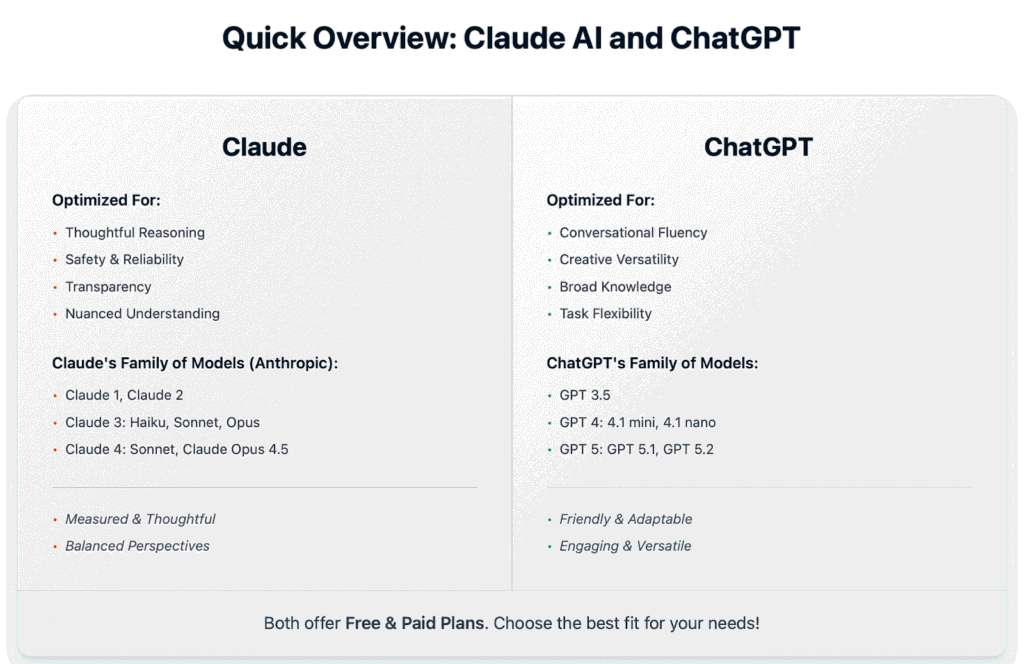
Claude is optimized for:
- Thoughtful reasoning, where it takes time to consider the nuanced aspects of requests
- Built-in guardrails for safety and reliability to avoid harmful or misleading content
- Being upfront about limitations and uncertainties through transparency
- Handling complex instructions with a nuanced understanding and attention to detail
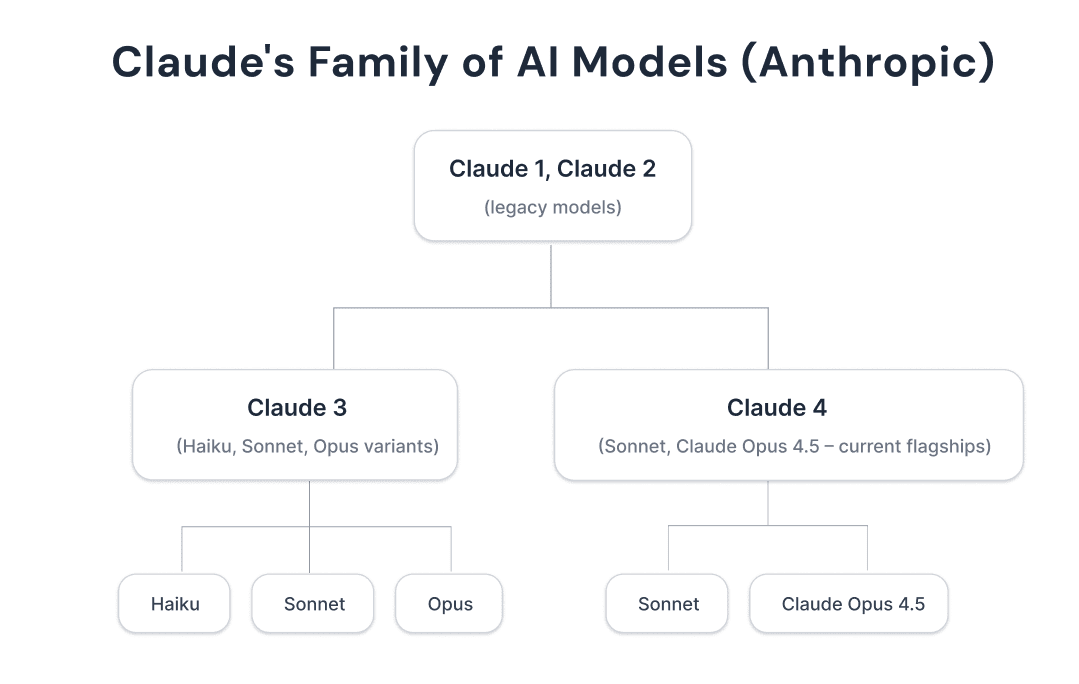
Claude’s family of models (Anthropic):
– Claude 1, Claude 2 (legacy models)
– Claude 3: Haiku, Sonnet, Opus (variants)
– Claude 4: Sonnet, Claude Opus 4.5 (current flagships)
Claude’s output comes across as more measured and considerate. It tends to provide balanced perspectives and is more likely to acknowledge complexity in topics rather than oversimplifying.
→ ChatGPT’s Training Approach and Optimization Focus
ChatGPT models, developed by OpenAI, use Reinforcement Learning, where the model learns from human feedback and is trained on large amounts of internet data.
ChatGPT is optimized for:
- Conversational fluency with natural and engaging human-like dialogue
- Creative versatility by adapting tone based on context
- Broad knowledge application that draws from extensive training data across countless topics
- Task flexibility that can switch between different types of requests seamlessly
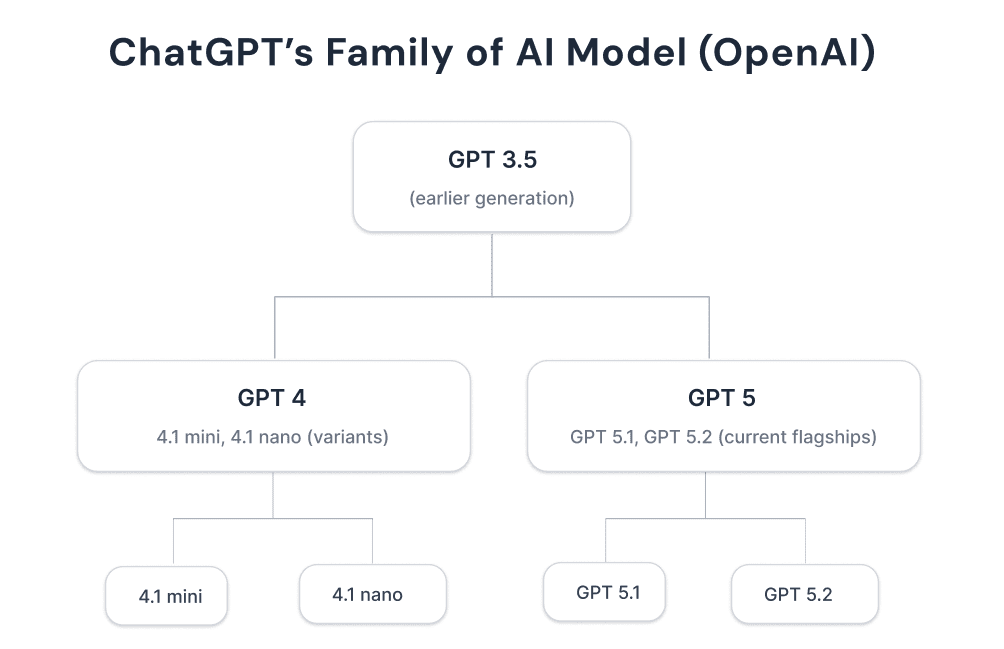
ChatGPT’s family of models:
– GPT 3.5 (earlier generation)
– GPT 4: 4.1 mini, 4.1 nano (variants)
– GPT 5: GPT 5.1, GPT 5.2 (current flagships)
The personality you experience with ChatGPT tends to be friendly, helpful, and adaptable. It aims to match your tone and communication style, making interactions feel natural and approachable.
Both Claude AI and ChatGPT with extended thinking mode offer free plans as well as paid subscriptions with different capabilities. Pick the one most suited to your business needs.
 Pro Tip: Both Claude and ChatGPT now power AI search results that answer your customers’ questions before they ever visit your website. Understanding how these models generate answers is the first step to showing up in them. Learn how ChatGPT generates answers and what it means for your brand visibility.
Key Technical Differences Between Claude AI and ChatGPT
Understanding how these AI systems work behind the scenes helps you choose the right tool for your needs. While both are advanced language models, they take different approaches to training, factual accuracy, conversation handling, and information processing.
# Model Versions and Architecture
Claude uses Anthropic’s Constitutional AI architecture with three tiers:
- Claude Opus 4.5, the most capable model for complex tasks
- Claude Sonnet 4.5, with balanced performance and speed
- Claude Haiku 4.5 is the fastest and most cost-effective for simple tasks.
Claude’s architecture is optimized for long context understanding and stable reasoning, which has a strong emphasis on predictable and principle-driven behavior.
ChatGPT operates on OpenAI’s Generative Pre-trained Transformer architecture:
- GPT-5.2 (current flagship model) optimized for speed and multimodal capabilities
- GPT-4 Turbo is derived from the previous generation with strong reasoning abilities
- GPT-3.5, faster and more affordable
- o1 and o1-mini, specialized models for complex reasoning tasks
Claude’s architecture is optimized for deep reasoning and analytical precision, making it exceptionally strong at handling complex, detail-heavy tasks that require consistency across long inputs. ChatGPT’s architecture, on the other hand, is optimized for general-purpose intelligence supporting multimodal inputs like text, images, and voice, and adapting fluidly across a much broader range of request types.
Where Claude brings methodical depth to a problem, ChatGPT brings speed and versatility, making both models genuinely capable but clearly suited for different kinds of work.
# Technical Specifications
Claude supports a 200,000-token context window across all plans, making it well-suited for research papers, lengthy contracts, and document-heavy workflows. It maintains strong internal consistency across large inputs, which means the quality and coherence of its responses hold up even deep into extended conversations or multi-document analysis.
- Claude Haiku 4.5: 200K tokens (Free & Pro), up to 30MB per file, 20 files per chat
- Claude Sonnet 4.5: 200K tokens (Free & Pro), 500K tokens (Team & Enterprise), up to 30MB per file, 20 files per chat
- Claude Sonnet 4.5: 1M tokens in beta (Usage Tier 4 and above), up to 500MB per file via Files API
ChatGPT supports a context window that varies by plan, paired with efficient token reuse, multimodal processing, and integrated system-level tooling like web browsing, code execution, and data analysis, making it a stronger fit for operational, tool-heavy workflows.
- GPT-5.2 Free: 16K tokens, 3 file uploads per day, up to 512MB per file
- GPT-5.2 Plus: 32K tokens, up to 80 files per 3-hour window, up to 512MB per file
- GPT-5.2 Pro & Enterprise: 128K tokens, no explicit file upload limits, up to 512MB per file
- GPT-5: via API up to 400K tokens, up to 512MB per file
Claude prioritizes context depth for text-heavy workloads. ChatGPT prioritizes system capability breadth across multiple input types and tools.
# Reasoning Capabilities
Claude approaches reasoning methodically. It processes multiple files in a single pass, considers multiple perspectives before responding, and maintains consistency across complex, layered instructions. This makes it particularly strong in legal, policy, and research contexts where detail orientation and conservative, well-grounded responses matter more than speed.
ChatGPT is built for pace and adaptability. It generates responses quickly, handles creative problem-solving and brainstorming naturally, and breaks down complex problems into clear, actionable steps. Its pattern recognition makes it effective at identifying trends from examples and producing ideas across multiple directions in a short amount of time.
In practice, Claude is the stronger choice when the work demands thorough analysis, careful interpretation, and precise output. ChatGPT performs better when the priority is speed, creative ideation, or rapid workflow prototyping.
# Data Processing
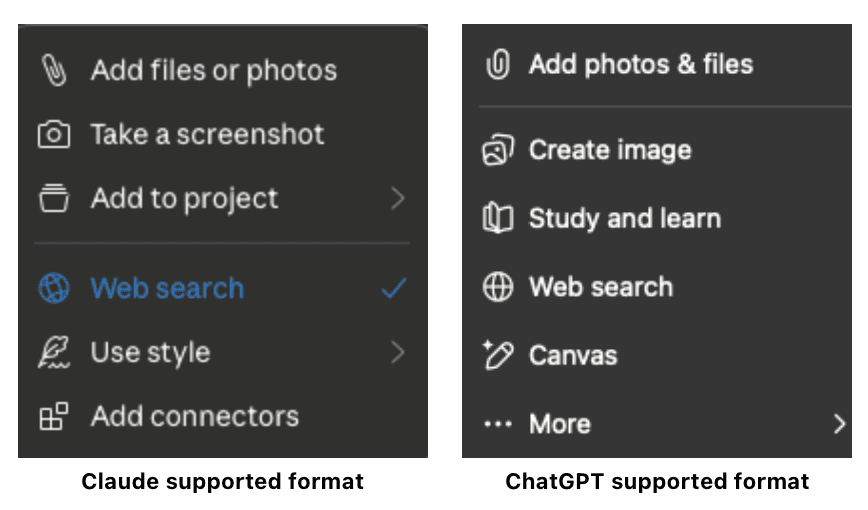
Both ChatGPT and Claude can work with documents such as PDFs, Word files, text and markdown files, spreadsheets, images, and code.
Claude is particularly strong at processing very large documents in a single pass while keeping the context consistent across long inputs. It tends to interpret content carefully and stays closer to the original meaning, often avoiding overly aggressive summarization.
ChatGPT, on the other hand, is effective at extracting, restructuring, and transforming information from documents. It handles chunking content well, adapts easily to follow-up questions, and can switch between tasks quickly. This makes it useful when the goal is to reorganize information, generate structured outputs, or iterate through different document-related tasks.
# Integrations and Ecosystem
Claude offers API access for custom implementations, a Slack integration, developer tools and SDKs, and mobile apps across iOS and Android, functional for teams building custom workflows, but limited compared to what ChatGPT brings to the table.
ChatGPT’s ecosystem is significantly broader, with a plugins marketplace of 1,000+ third-party integrations, native Microsoft Office support through Copilot, Zapier, and automation tool connections, custom GPTs for building specialized assistants, and the same API and mobile access Claude offers.
| Claude’s integrations | ChatGPT’s integrations |
| API access for custom implementationsSlack integration (popular with teams)Developer tools and SDKsMobile apps (iOS, Android)Workspace toolsBrowser extensions | Plugins marketplace (1,000+ third-party integrations)Microsoft Office integration (Copilot)Zapier and automation toolsCustom GPTs (create specialized AI assistants)API access for developersMobile apps (iOS, Android)Browser extensions |
# User Experience
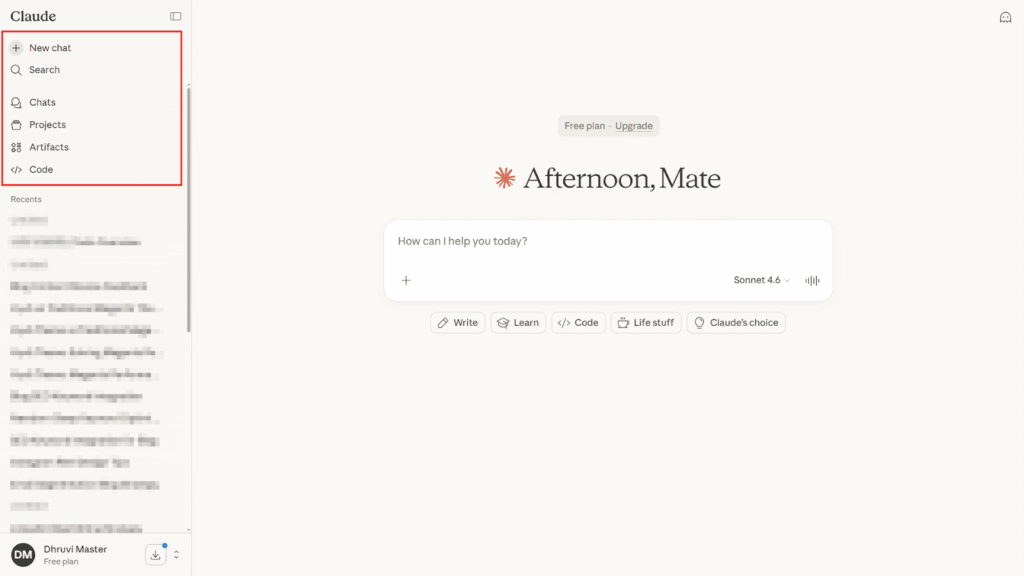
Claude offers a minimalist and distraction-free interface, project features for organizing work, artifact creation like generating documents and codes, clean output formatting with less visual clutter, and strong markdown rendering for technical content.
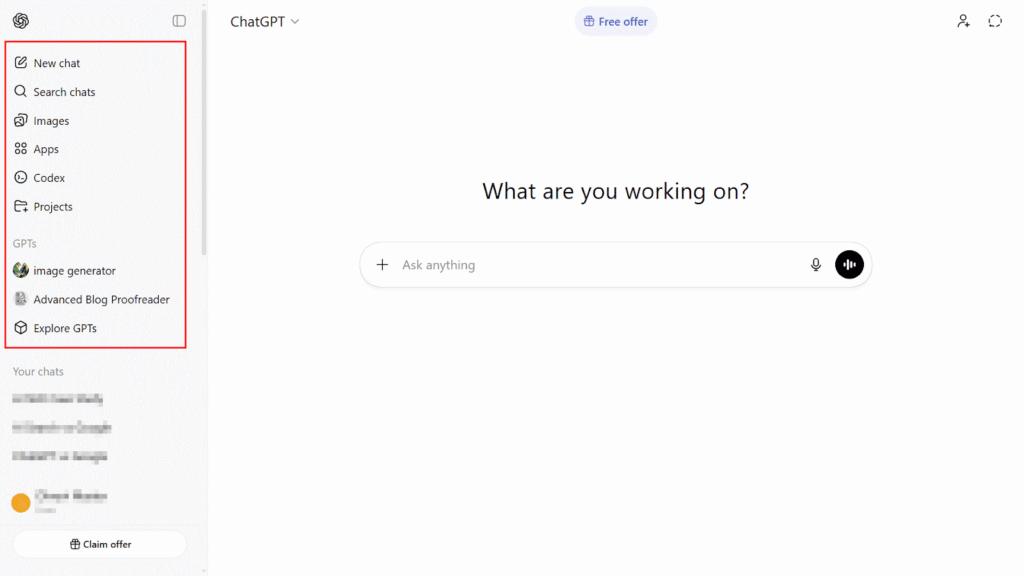
ChatGPT provides a simple and clear conversation-friendly chat interface with easy file uploads, voice conversations, custom GPT’s for specialized tasks, searchable conversation history, and support for editing previous messages and regenerating responses.
Claude prefers clarity and restraint; ChatGPT favors conversational engagement and flexibility.
# Pricing and Access
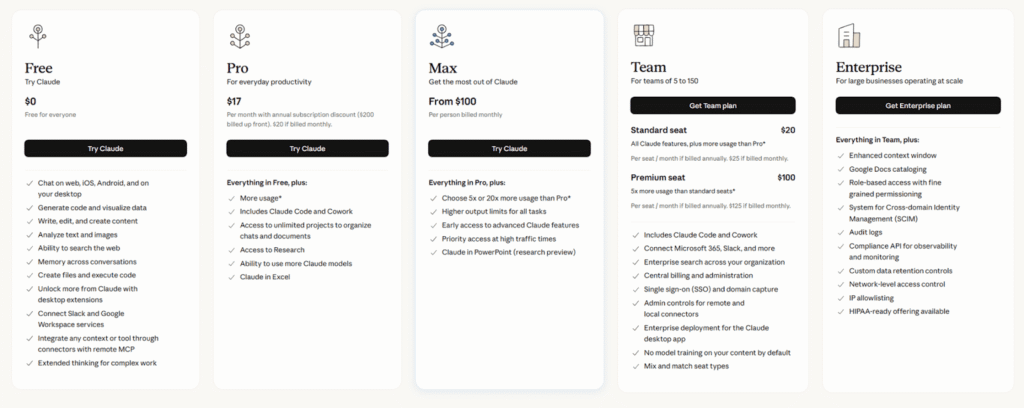
Claude offers a free tier with limited usage, moving up to Pro and Max plans that focus on expanding context capacity and message volume, with enterprise options built around secure, controlled text analysis.
ChatGPT also offers a free tier, but its paid tiers are broader. Go, Plus, and Pro plans each unlock progressively more capability, with business and enterprise plans adding expanded tooling, memory, and team-level features.
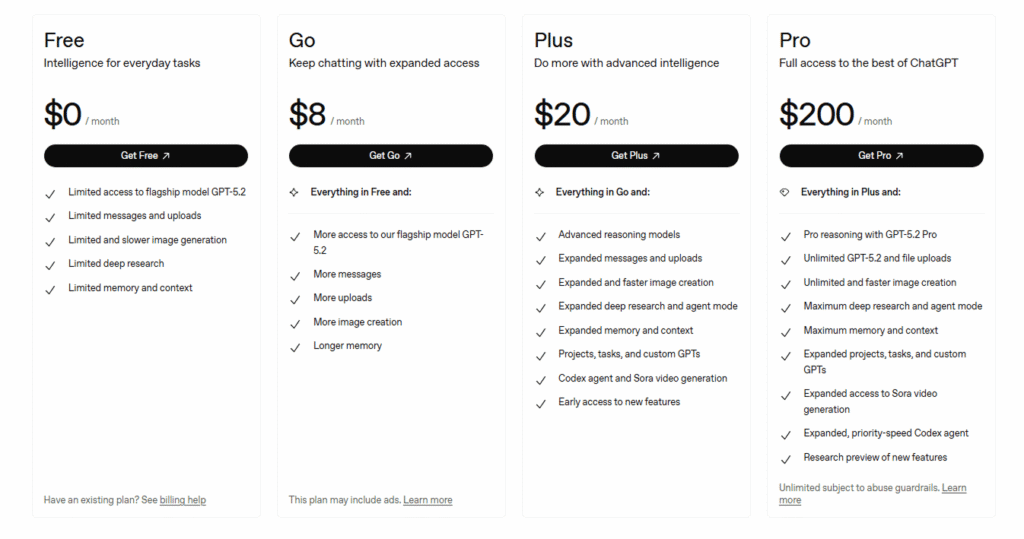
In simple terms, Claude’s pricing scales with how deeply you use it, while ChatGPT scales with how many capabilities you need access to.
When it comes to optimization, Claude is built for long context reasoning, document-heavy analysis, and controlled, safety-conscious outputs, making it the stronger fit for deep reading, policy work, and research-intensive tasks.
On the other hand, ChatGPT is built for real-time interaction, multimodal intelligence, and broad tool usage, making it better suited for operational workflows, technical tasks, and projects that require speed and versatility across different formats and platforms.
# Feature Comparison Summary
| Feature | Claude | ChatGPT |
| Context Window | 200K tokens – better for large documents | 128K tokens |
| Image Generation | Not built-in | Built-in DALL·E integration |
| Integrations | Limited options | 1,000+ plugins |
| Data Visualization | Limited native chart creation | Creates charts and graphs directly |
| Document Processing | Larger context + cleaner formatting | Strong, but smaller context window |
| Response Speed | 2–5 seconds | 1–3 seconds |
| Privacy | No cross-chat memory storage | May use memory features (depending on settings) |
| Creative Tasks | Strong, structured creativity | More expressive, bold, versatile |
| Analytical Tasks | More nuanced, detail-oriented | Strong analysis, slightly more generalized |
Claude vs ChatGPT: Real-World Applications
Claude and ChatGPT both have their strengths, and those strengths become clear when applied to real-world tasks. The way each model approaches a task can make a significant difference in your output quality and workflow efficiency.
Let’s explore how Claude and ChatGPT handle the most common tasks on a daily basis.
# Claude vs ChatGPT – Writing Blog Posts and Marketing Content
Content is often the first impression your brand makes. Blog posts drive organic traffic, social media copy builds awareness, and SEO content brings customers directly to you. How each AI handles that content determines not just output quality, but how fast you can publish and how well your messaging connects with the right audience.
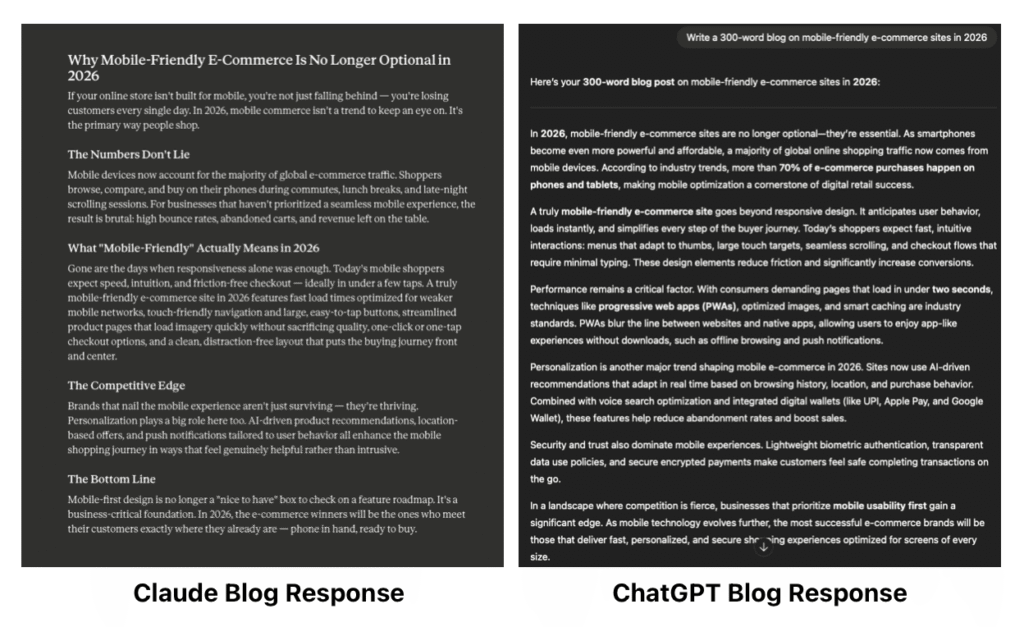
Claude approaches blog writing and marketing content with a more analytical mindset. Before producing a single line, it tends to break down the topic, consider the target audience, and plan the structure. The result is content that feels thorough, well-researched, and logically organized from start to finish. It’s the kind of output that works well when depth and credibility matter more than speed.
ChatGPT takes a faster, more instinctive approach. It moves through the writing process at a pace, generating ideas quickly and producing content that feels energetic, conversational, and immediately engaging. Where Claude builds, ChatGPT flows, making it a stronger fit when the priority is creative momentum over structured analysis.
Let’s see the response to blog generation with Claude and ChatGPT.
PROMPT: Write a 300-word blog on mobile-friendly e-commerce sites in 2026
# Claude vs ChatGPT – Crafting Stories and Creative Content
Storytelling is what separates brands that people remember from brands that people forget. Whether it’s a brand origin story, a customer success narrative, or a creative campaign concept, the quality of that story directly shapes how your audience feels about your business.
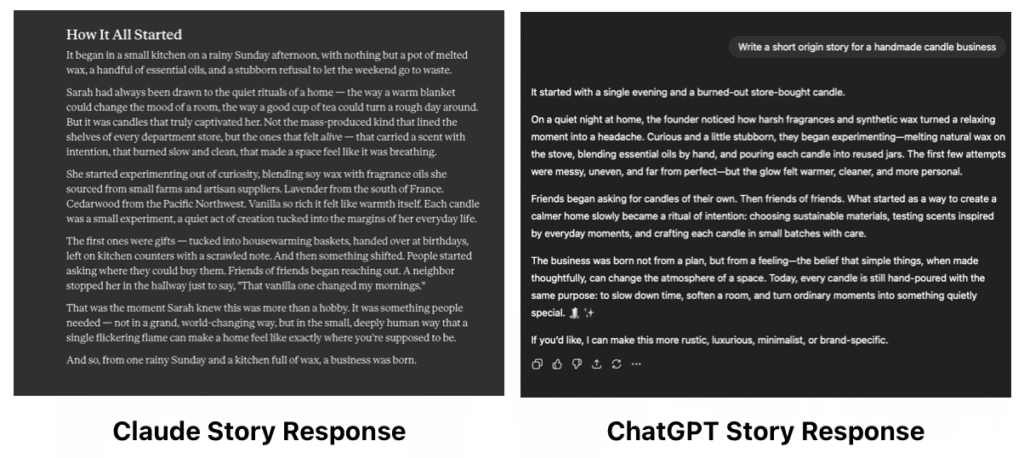
Claude approaches creative writing the way a thoughtful author would. It takes time to develop context, build emotional arcs, and layer meaning into the narrative. The result feels considered and human, the kind of story that resonates because it was clearly constructed with intention rather than generated on autopilot.
ChatGPT brings a different kind of energy to storytelling. It moves fast, generates imaginative ideas naturally, and produces content that feels dynamic and entertaining from the first line. Where Claude builds a story carefully from the ground up, ChatGPT captures attention immediately, making it the stronger choice when the goal is creative momentum, bold ideas, or content that needs to stop a scroll.
Let’s see how Claude and ChatGPT write a story.
PROMPT: Write a short origin story for a handmade candle business
# Claude vs ChatGPT – Analyzing Data and Creating Reports
Data-driven decisions separate successful businesses from guesswork, and both Claude and ChatGPT can help you make sense of numbers just in very different ways.
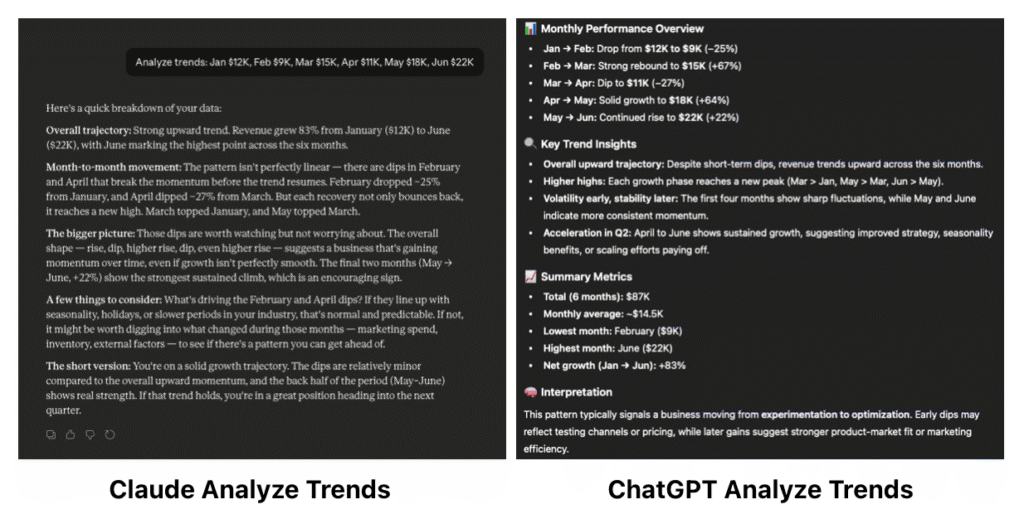
Claude takes a methodical approach, carefully examining patterns, considering multiple angles, and producing reports that are thorough and easy to follow. It’s the stronger choice when interpretation and depth matter more than presentation.
ChatGPT excels at turning raw data into visual stories. Its Code Interpreter creates charts, graphs, and visualizations directly from uploaded files, making it the better fit when you need findings that are fast, clear, and visually compelling.
Let’s analyze trends with Claude and ChatGPT.
PROMPT: Analyze trends: Jan $12K, Feb $9K, Mar $15K, Apr $11K, May $18K, Jun $22K
# Claude vs ChatGPT – Writing and Debugging Code
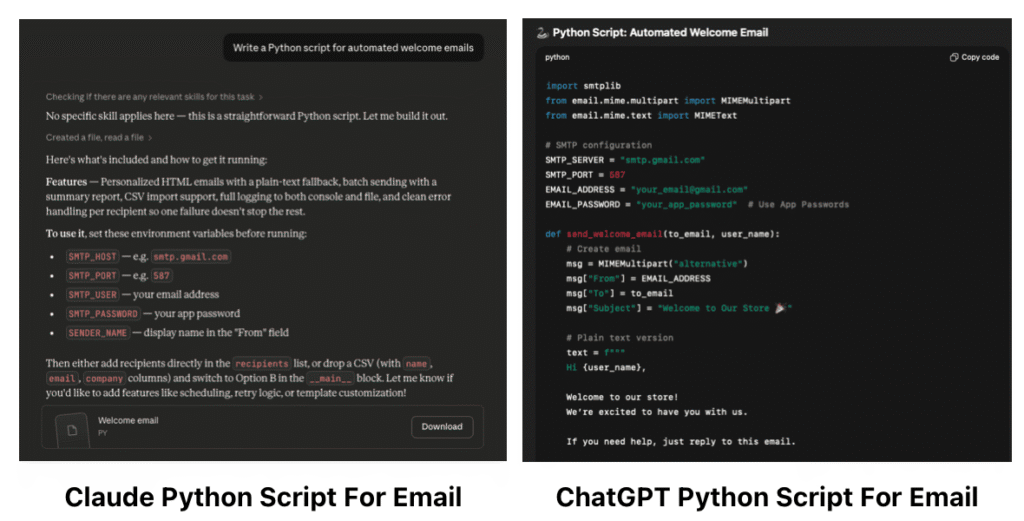
Whether you’re building a website, automating repetitive tasks, or connecting tools, coding capabilities matter even for non-developers who just need simple automations to work reliably.
Claude approaches coding with precision and thoroughness, writing clean, well-documented code and explaining every step clearly. That makes it as useful for understanding code as it is for producing it.
ChatGPT moves faster, generating code quickly and executing it instantly through its Code Interpreter, running, testing, and showing results in real time without switching between tools.
Let’s write a code generation script for email automation in Python with Claude and ChatGPT.
PROMPT: Write a Python script for automated welcome emails
# Claude vs ChatGPT – Understanding User Sentiments
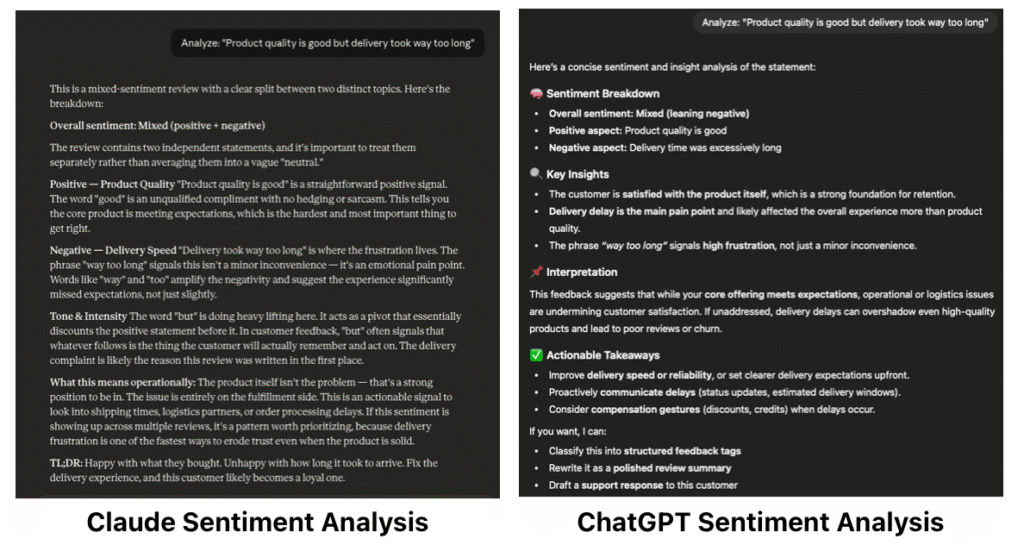
For businesses, understanding what customers truly feel is often more valuable than the feedback itself. Sentiment analysis helps you improve products, refine customer service, and build brand relationships that actually last.
Claude reads between the lines with nuance, going beyond positive or negative labels to understand the layers and context behind customer feedback, making it the stronger choice when individual responses carry real weight.
ChatGPT processes sentiment quickly and at scale, making it the better fit when the priority is analyzing large volumes of feedback efficiently and surfacing patterns across hundreds of responses at once.
Let’s see how Claude and ChatGPT can analyze the sentiments from the product description.
PROMPT: Analyze: “Product quality is good, but delivery took way too long.”
# Claude vs ChatGPT – Researching Markets and Competitors
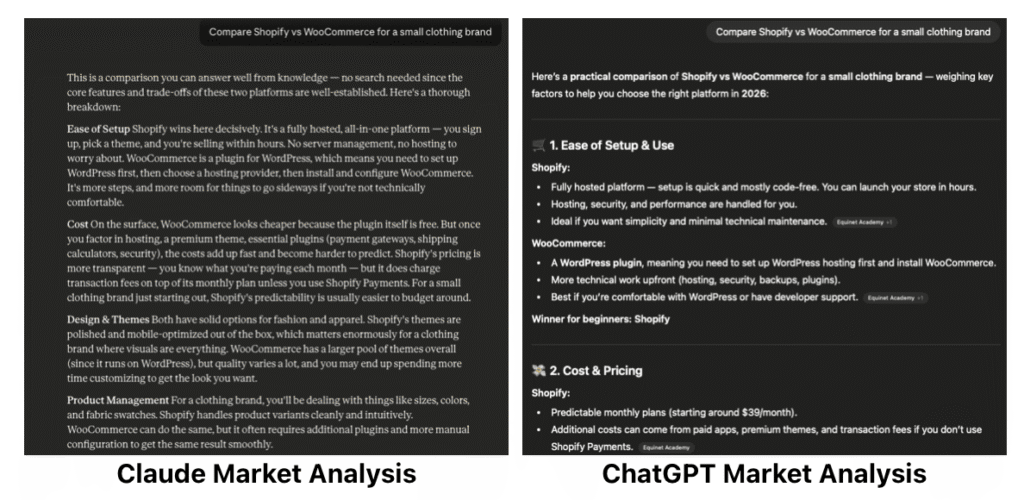
Smart market research gives businesses a genuine competitive edge, and both Claude and ChatGPT can accelerate that process, but they approach it from different directions.
Claude digs deeper, synthesizing information thoughtfully, connecting dots between data points, and producing research outputs that are comprehensive and strategically structured, the stronger choice when depth and context matter.
ChatGPT brings speed and breadth, using its web browsing capabilities to gather current information quickly and present findings in a format that’s fast to read and easy to act on.
Let’s compare two brands with Claude and ChatGPT.
PROMPT: Compare Shopify vs WooCommerce for a small clothing brand
# Claude vs ChatGPT – Creating Images and Visual Content
Visual content drives more engagement than almost anything else, and this is the one area where Claude and ChatGPT have a clear and straightforward capability difference.
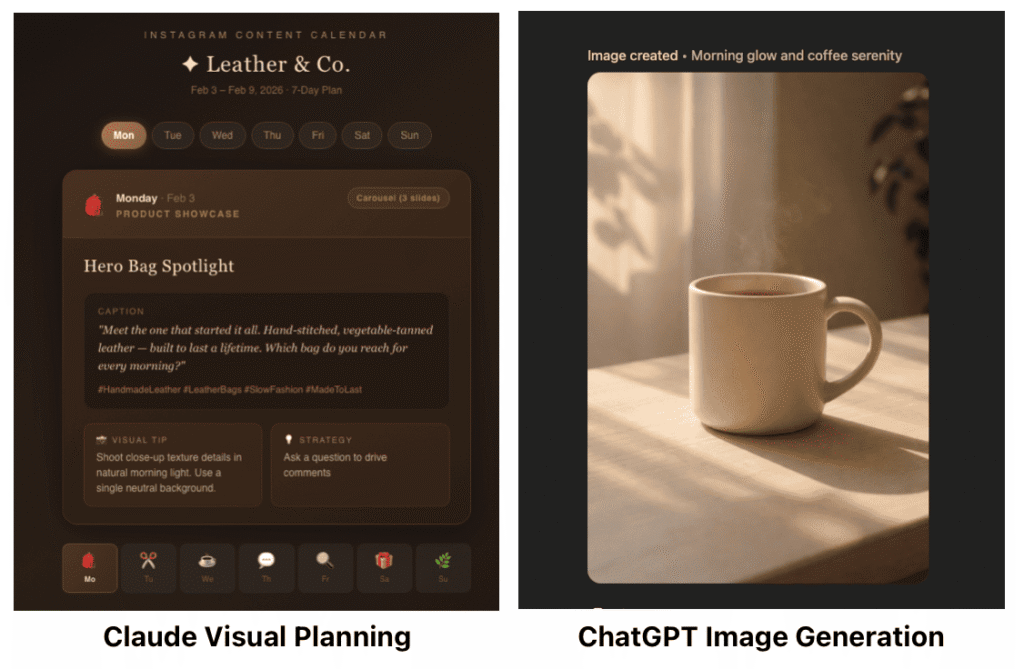
Claude is a text-based model and does not generate images natively. That said, it can still contribute to visual workflows in meaningful ways, writing detailed creative briefs, planning content calendars, and producing structured direction for designers or other tools.
ChatGPT has a significant edge here through its built-in DALL-E integration, generating images directly from text prompts without needing external design tools. It also supports video generation through Sora on Plus accounts, meaning ChatGPT handles both image and video creation within a single platform, something Claude currently does not offer.
Let’s generate images with ChatGPT and visual planning with Claude.
PROMPT (ChatGPT): Generate a minimalist ceramic coffee mug with morning sunlight
PROMPT (Claude): Create a 1-week visual content calendar for an Instagram page selling handmade leather bags
Claude or ChatGPT: When to Use Each
| When to Use Claude | When to Use ChatGPT | ||
| Use Case | Why | Use Case | Why |
| Long-form blog posts | Holds a clear argument across the whole piece, not just paragraph to paragraph | Social media & ad copy | Punchy, varied, and doesn’t need much prompting to get there |
| Brand storytelling & narratives | Gets the tone right without needing five rounds of editing | Creative campaigns & short stories | Moves fast and takes creative swings without overthinking it |
| Sales & customer data analysis | Catches patterns that aren’t obvious and explains what they mean | Performance reports & data visualization | Has native chart tools built in, so you skip the copy-paste step |
| API integrations & large coding projects | Writes code other people can actually read and build on | Quick automation & prototyping | Gets something working quickly so you can test and iterate |
| Individual customer sentiment analysis | Picks up on subtext, not just keywords | Bulk sentiment categorization | Handles volume fast and keeps the labels consistent |
| Deep competitor & market research | Organizes a messy topic into something you can actually act on | Trend spotting & quick market snapshots | Has web access, so data is current |
| Visual content strategy & SEO descriptions | Good at planning the full picture before writing anything | Image & video generation | Creates visuals directly without needing a separate tool |
Pro Tip: Knowing which AI tool to use is only half the equation; the other half is making sure both Claude and ChatGPT are actually recommending your brand when users ask relevant questions. Learn how to rank in AI search for maximum visibility and turn your content into a citation magnet across both platforms.Strength & Weakness of Claude AI and ChatGPT
Both Claude and ChatGPT have unique strengths, and both have areas where they fall short. Understanding these gaps helps you to pick the right tool for the right job. Whether you’re running an e-commerce store, managing a marketing team, or simply trying to get more done in less time, knowing where each model excels and struggles makes all the difference.
Where Claude AI Has the Edge
- Exceptional creative and analytical abilities. Claude produces original, high-quality content from compelling brand stories to detailed strategic analyses. It understands nuance, tone, and context better than most AI models.
- Strong context retention for complex tasks. With up to 200,000 tokens of context, Claude can process entire product catalogs, lengthy reports, or multi-turn conversations without losing track.
- Claude has the lowest hallucination rates. Claude is trained with a focus on accuracy and helpfulness. It’s more likely to say “I don’t know” than fabricate information, making it more reliable for business decisions.
- Ethical AI alignment and safety. Built with Constitutional AI principles, Claude refuses harmful requests and maintains strong ethical guardrails important for brand safety and responsible AI use.
- Multimodal capabilities and file creation. Analyses images, PDFs, spreadsheets, and creates professional documents (DOCX, XLSX, PPTX). Executes code for data analysis and automation.
- Less transparent sourcing. When Claude uses its training knowledge, it doesn’t provide citations. You can’t easily verify where information comes from unless web search is enabled.
- Slower for simple factual queries. Claude’s strength is complex reasoning, not quick facts. For simple questions like “What’s the current price of gold?” It takes time.
- Requires guidance for best results. Claude performs best with clear instructions, context, and examples. Vague prompts may yield generic responses.
Where ChatGPT Has the Edge
- Strong reasoning and structured output. ChatGPT excels at breaking down complex topics into clear frameworks, step-by-step processes, tables, and strategic summaries. Ideal for marketers, consultants, and business operators who need usable output, not just explanations.
- Conversational memory and iterative workflows. Unlike search-first tools, ChatGPT maintains context within a session. You can refine ideas, build layered strategies, edit documents progressively, and evolve outputs across multiple prompts without restarting.
- Customizable tone and format control. You can instruct ChatGPT to write in an executive tone, persuasive sales copy, academic style, or casual voice. It adapts formatting into bullet lists, frameworks, tables, scripts, or long-form articles on demand.
- Advanced file creation and data handling (depending on plan). ChatGPT can generate structured documents, analyze datasets, create presentations, summarize PDFs, and assist with spreadsheets or automation tasks when tools are enabled.
- Integrated multimodal capabilities. ChatGPT can analyze images, interpret charts, process uploaded documents, and generate visual outputs, making it useful for research, design ideation, and data interpretation.
- Can hallucinate when uncertain. While improving, ChatGPT may occasionally present confident but incorrect information, especially in niche or highly specific domains.
- Not search-first by default. It does not automatically cite live web sources with every query unless browsing is explicitly used.
- May require precise prompting for depth. Vague prompts can lead to generic responses. ChatGPT performs best when given context, constraints, and clear objectives.
- Output quality varies by plan/model version.
Capabilities differ across free and paid tiers, affecting reasoning depth, speed, and tool access.
Summary: Claude vs ChatGPT
| Strength Area | Claude | ChatGPT |
| Long Document Processing | ✔ Handles 300+ pages in one pass | ⚠ Good but smaller context window |
| Tone Consistency | ✔ Stays consistent throughout | ⚠ Can shift tone mid-output |
| Following Complex Instructions | ✔ Breaks down and addresses each part | ⚠ May miss smaller details in long prompts |
| Natural Writing Style | ✔ Human-like, less robotic | ⚠ Can sometimes feel more formulaic |
| Plugin Ecosystem | ⚠ Limited integrations | ✔ 1,000+ plugins available |
| Image Generation | ✖ Not available | ✔ Built-in DALL·E |
| Voice Mode | ✖ Not available | ✔ Hands-free conversation |
| Third-Party App Support | ⚠ Requires API setup | ✔ Broad out-of-the-box support |
Claude AI Vs ChatGPT – How These AI Tools Talk About Your Brand
There’s a quiet revolution happening in how customers discover and choose products, and most business owners haven’t noticed it yet. AI chatbots are now answering product questions, making recommendations, and telling customers about brands like yours, often without any awareness from the business owner.
1. Your Customers Are Already Asking AI for Product Advice
Think about the last time you wanted to buy something new. Chances are, you didn’t just Google it. You might have typed a question like “What’s the best budget laptop for students?” or “Recommend a good skincare routine for dry skin” directly into ChatGPT or Claude. You’re not alone.
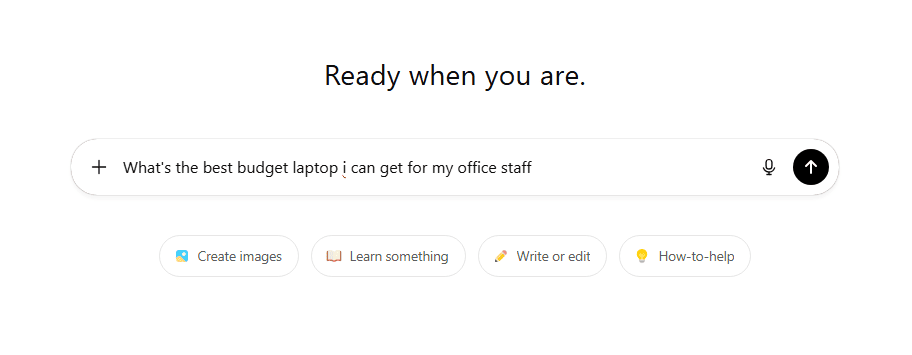
Millions of users now turn to AI models for product recommendations every single day. These conversations are replacing traditional search in many cases. Instead of scrolling through ten Google results and comparing review sites, users get a direct answer with product suggestions within seconds.
This means AI models have become a discovery channel for your products. Whether your brand gets mentioned, recommended, or completely ignored depends entirely on how these language models see and understand your business.
2. AI Recommendations Are Influencing Real Purchasing Decisions
When ChatGPT or Claude recommends a product, users trust that recommendation. According to Attest’s 2025 Consumer Adoption of AI Report1, 54% of consumers under 50 now use AI tools for product research, and trust in AI-generated information is growing year over year.
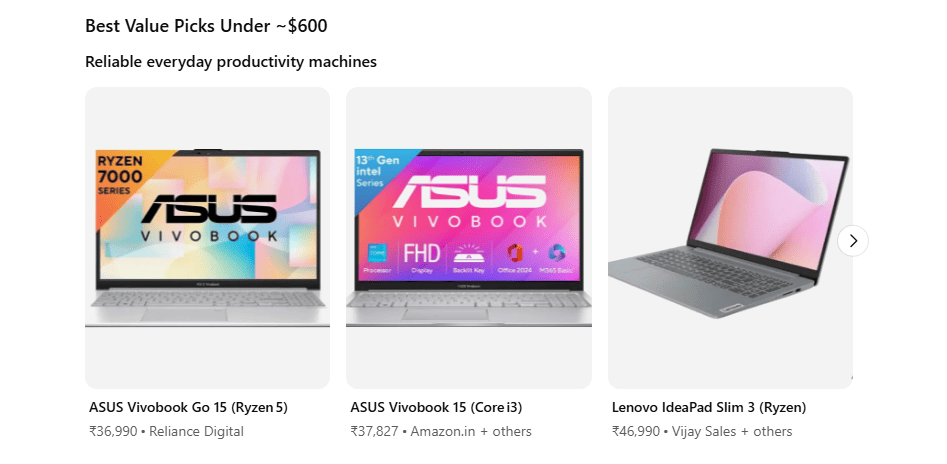
Here’s why this matters for your business:
Trust factor: Users interact with AI chatbots in a conversational, personal way. When the AI says, “This brand is highly rated for quality and value,” it feels like advice from a trusted friend, not an advertisement.
Decision speed: AI recommendations often become the final push before a purchase. A customer already considering options might ask Claude or ChatGPT to help them decide, and whichever brand gets mentioned favorably wins.
Zero ad spend: Unlike paid ads or sponsored posts, AI recommendations happen organically. You don’t pay for them, but you also can’t control them without understanding how they work.
3. How AI Decides What to Say About Your Brand
AI models pull information from multiple sources to form their responses, and understanding that process is the first step to influencing what they say about your business. Understanding this process helps you influence what they say about your business.
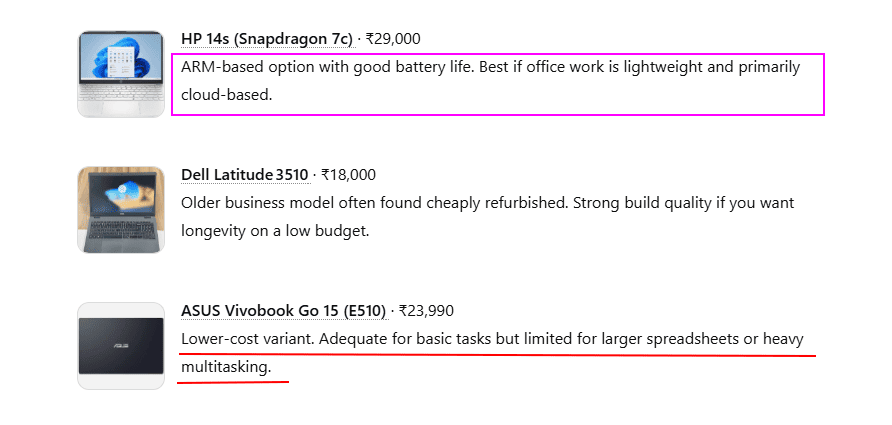
AI gets its information from your website content, like blog posts, product pages, online reviews, and community discussions about your product, social media presence, and industry publications from trusted sources.
This means the content you publish online doesn’t just affect Google rankings; it directly shapes what AI chatbots say about your brand to potential customers.
This is part of Answer Engine Optimization(AEO), a new approach to ensuring AI systems recommend your brand when users ask relevant questions.
Pro Tip: Knowing what content AI models favor is one thing, auditing whether your current content actually meets those standards is another. Use this All-in-One AEO and GEO Audit Checklist to identify exactly where your content stands and what needs fixing before these models form an opinion about your brand.You Can Influence What AI Says About Your Business
The good news is that you’re not entirely at the mercy of these AI models. There are practical steps you can take to improve how ChatGPT and Claude talk about your brand. These content principles form the foundation of optimizing for AI answers the same signals that determine whether your brand gets cited or skipped entirely.
Content that AI models favor citing:
- Detailed, well-structured product pages with clear descriptions, specifications, and unique selling points
- Trustworthy blog posts that genuinely help users solve problems, not just keyword-stuffed articles
- Honest customer reviews and testimonials that reflect real experiences with your products
- Data-backed content like case studies, statistics, and research that adds credibility
- Clear brand messaging that consistently communicates what makes your business different
Just like ChatGPT and Claude, these strategies follow the same principles behind ranking in Google AI Overviews, where structured, trustworthy content gets prioritized in AI-generated responses.
Why Tracking AI Mentions Matters as Much as Google Rankings
For years, Google rankings have been the gold standard of online visibility. If you ranked on page one, you were visible. If you didn’t, you were basically invisible. But that’s no longer the whole story.
Unlike traditional SEO, monitoring how AI tools actually talk about your brand requires a different approach, one that focuses on real-time mentions rather than search rankings alone.
Users are increasingly turning to AI chatbots for answers before or instead of visiting Google, and AI-generated responses are becoming the first touchpoint between customers and brands.
For brands ready to act on this, there’s a structured approach to track AI search visibility over time that goes beyond Google ranking.
And the brands that combine both strategies now are building a visibility presence. And with a tool like Track My Visibility, tracking AI visibility becomes easy.
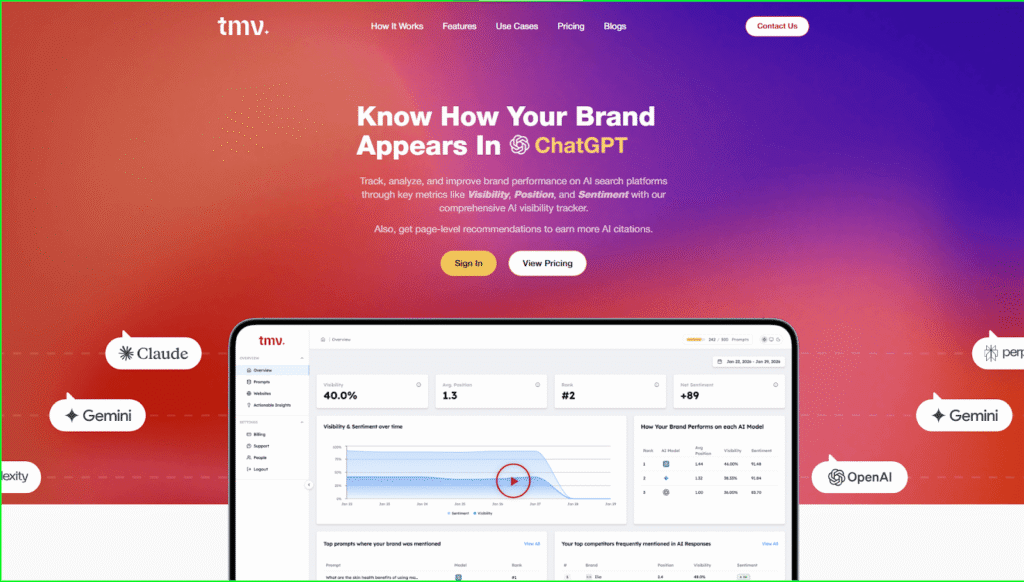
Track My Visibility is a monitoring tool built specifically to track how a brand appears across AI platforms like Claude and Perplexity. Rather than manually running prompts and checking responses, it automates the process of running regular checks and surfacing the results in a single, clear dashboard.
Track My Visibilities tracks:
Visibility in AI Answers: Tracks brand mentions across Claude, Perplexity, and other AI platforms automatically, no manual prompt running required
Sentiment Analysis: Analyzes how AI platforms respond to brand-related prompts, surfacing whether mentions are positive, neutral, or negative
Competitor Tracking: Monitors how competitors appear across the same AI platforms, making it easy to identify visibility gaps
Actionable Reports: Delivers clear, readable reports showing how brand visibility across AI platforms changes over time
See how Track My Visibility works to monitor your brand across AI platforms in real-time.
Claude AI Vs ChatGPT – Which One Should You Choose?
This is the question most people arrive at after comparing features, use cases, and pricing: which one should you pick?
Choosing between Claude and ChatGPT isn’t about picking the “better” AI. It’s about picking the one that fits your workflow, your goals, and the tasks you do most often. The right choice looks different for a content writer than it does for a developer or a marketing manager.
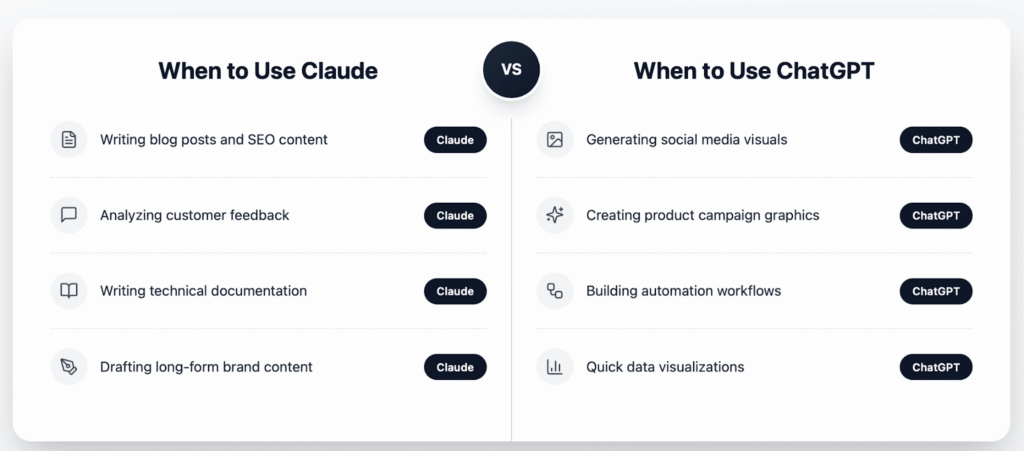
# You’re a Writer or Marketer? – Use Claude
For professionals whose daily work revolves around writing and marketing content, Claude is the stronger choice.
- Produces longer, more structured content without losing quality or tone halfway through
- Naturally integrates keywords and messaging without sounding forced or robotic
- Follows detailed brand guidelines and writing instructions with precision
- Creates content that reads as if a real person wrote it, not like an AI generated it
- Better suited for blog posts, brand narratives, email campaigns, and SEO content
# You Work in Tech or Need Tools to Talk to Each Other? – Use ChatGPT
If you’re a developer or work closely with technical teams, ChatGPT’s ecosystem gives it a clear edge.
- 1,000+ plugins and third-party integrations ready to use out of the box
- Built-in Code Interpreter that runs, tests, and debugs code in real time
- Seamless connection with tools like Shopify, Google Sheets, and Zapier
- Custom GPTs let you build specialized AI assistants for specific tasks
- Stronger support for automation workflows and API-heavy projects
# You’re Drowning in Long Documents? – Use Claude
For professionals who regularly work with lengthy reports, product catalogs, contracts, or research documents, Claude is built for exactly this kind of work.
- 200,000-token context window handles massive documents in a single conversation
- Maintains accuracy and consistency even deep into long outputs
- Extracts specific information from large files without missing details
- Better at summarizing and analyzing multi-document projects
- Keeps instructions and context sharp throughout extended interactions
# Your Work Is All About Visuals and Creative Campaigns? – Use ChatGPT
If your work involves creating visuals, generating images, or producing content across multiple formats, ChatGPT is the more versatile option.
- Generates images directly through DALL-E without needing external design tools
- Creates charts, graphs, and data visualizations from raw data
- Voice conversation mode adds another dimension to how you interact with AI
- Handles text, images, and data processing all within one platform
- Better suited for campaigns that need written content and visual assets together
# The Honest Answer: Most Professionals Use Both
The smartest professionals aren’t choosing one or the other. They’re using both, each for what it does best. Each tool has a lane where it clearly outperforms the other, and professionals who recognize that distinction get better results from both.”
 Pro Tip: Choosing the right AI tool is a smart move, but the professionals who stay ahead aren’t just using these tools; they’re also tracking how these same tools talk about their brand to potential customers. Understand how to measure your visibility in AI content to know where your brand stands right now.
Final Thoughts: Which one to choose?
Both Claude and ChatGPT are powerful, capable tools. The real question was never “which one is better?” It was always “which one is better for you?”
If your work revolves around writing, brand storytelling, and deep analysis, Claude is going to be your go-to. If you need speed, visuals, integrations, and a tool that plays well with everything else in your tech stack, ChatGPT covers that ground beautifully. And if you’re like most professionals who juggle a bit of everything? Use both.
What most business owners overlook is how these same AI tools are already talking about their brand to potential customers. Right now, millions of people are asking ChatGPT and Claude for product recommendations. And what these models say about your business directly influences whether customers choose you or a competitor.
If you want to stay ahead of that game, start by optimizing your online presence, so AI models represent your brand accurately and positively. And Track My Visibility gives you exactly that automated tracking of how your brand appears across AI platforms, all in one clean dashboard.
Try our 7-day trial to find the plan that fits your business.
References
1. Attest Consumer Adoption AI Report
Frequently Asked Questions
Which AI is better for real-time use cases?
ChatGPT is better for real-time tasks like quick research, browsing, coding, and visual generation due to its tool integration.
Is Claude better than ChatGPT for long-form content?
Yes. Claude excels at long-form writing, document analysis, and structured explanations, making it ideal for in-depth blogs, reports, and policies.
Can Claude do everything ChatGPT can do?
No. Claude is strong in analysis and long documents, but ChatGPT offers more tools like image generation, browsing, and automation.
Is Claude more ethical than ChatGPT?
Claude uses Constitutional AI for principled responses, while ChatGPT balances safety with flexibility and broader use cases.
Which AI is better than Claude?
There’s no universal winner. ChatGPT is better for real-time, creative, and tool-based tasks, while Claude excels at deep analysis.
Which is more accurate, Claude or ChatGPT?
Claude is often more precise for document-heavy analysis, while ChatGPT performs better for real-time and iterative tasks.
Does Claude hallucinate less than ChatGPT?
Claude is generally more cautious, which can reduce hallucinations, but both models still require fact-checking.