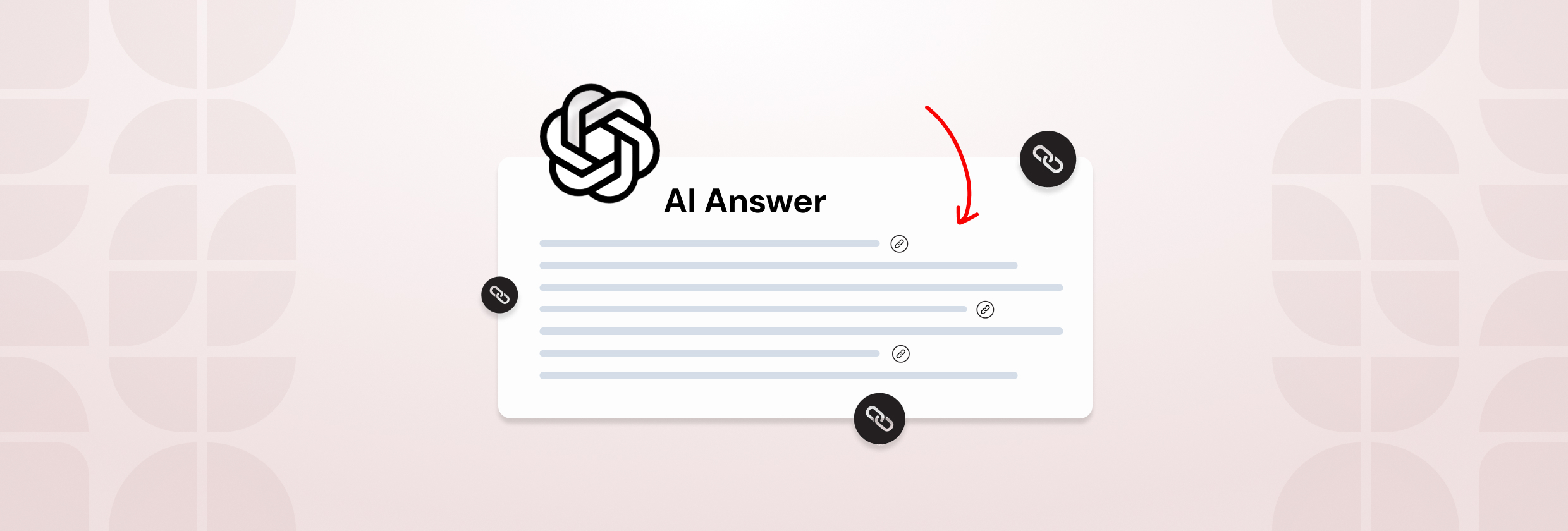



ChatGPT has emerged as one of the most powerful visibility channels available to businesses today.
Users increasingly turn to platforms like ChatGPT for answers to queries, and the brands mentioned in those answers gain visibility. The ones not cited simply do not exist in that moment.
That’s why brands are making it a top priority to get cited by ChatGPT.
Citations determine which sources AI platforms trust, validate, and surface directly inside answers. If your content is not eligible for citation, your brand may remain invisible regardless of how strong your traditional SEO performance is.
When ChatGPT cites a webpage, blog, or website, it signals that the information is credible, authoritative, and relevant, qualities that directly influence whether your business gets discovered or overlooked.
Here’s what you’ll take away from this guide:
- How ChatGPT citations work and how it is different from traditional search
- What data sources does ChatGPT use for generating responses
- What are the common formats of ChatGPT citations
- And how to track your AI visibility inside ChatGPT answers
Whether you’re an ecommerce brand, a marketing professional, or a business decision-maker, understanding how to earn citations inside AI-generated answers is one of the smartest moves you can make right now.
Let’s get into it.
What does “citation” mean in ChatGPT responses?
When ChatGPT generates an answer that requires verification, accuracy, or freshness, it references external sources to support its response. These references are known as ChatGPTcitations.
Asking for “Best eCommerce tool”, ChatGPT sources the websites that have already published data for it, as mentioned in this example:
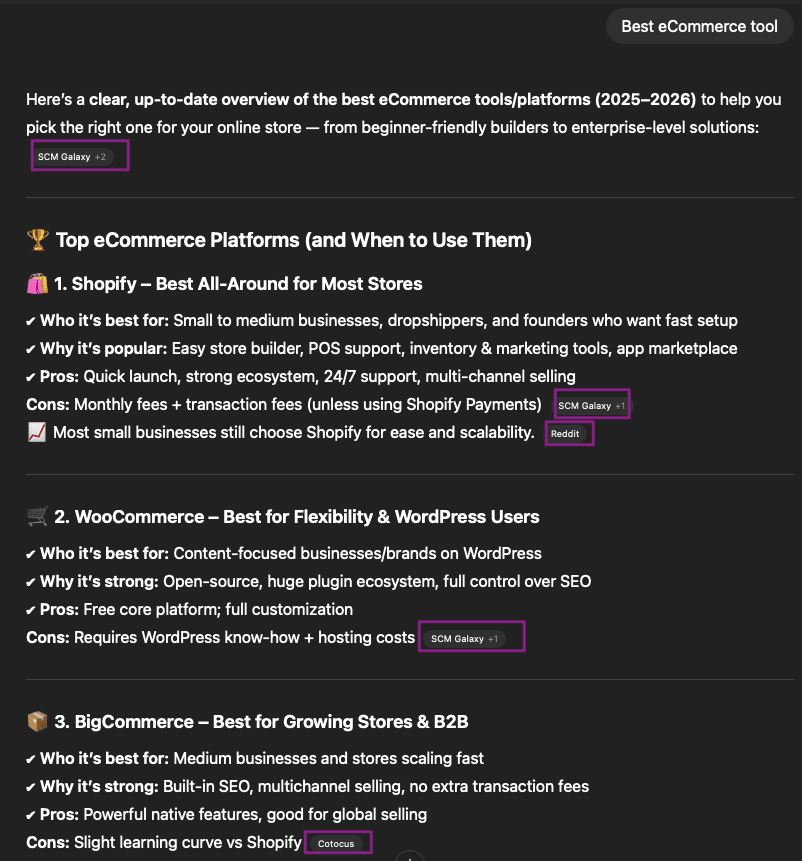
As you can see, unlike traditional search results, where users must decide which links to trust, citations appear inside the answer itself. This makes them highly influential in shaping user perception and trust.
So if your content is referenced in an AI answer, it means your site has passed ChatGPT’s evaluation criteria for relevance, credibility, and usefulness.
 Pro Tip: AI platforms select content based on its structure, freshness, authority, and trustworthiness. The same content that ranks well on Google can still go completely unnoticed by AI if it isn’t structured the right way. Learn how to optimize content for AI Answers.
 Why do ChatGPT citations matter for trust and visibility?
ChatGPT citations matter because they influence two things that directly affect business outcomes: trust and visibility.
Trust is built quickly in AI environments. Users tend to perceive AI-cited sources as more authoritative, even when they do not visit your site immediately. According to the major research from the NIMpulse trust survey, about 64% of ChatGPT users completely trust the information ChatGPT provides. This influences your credibility and authority when users are searching for solutions, and your brand is mentioned.
When ChatGPT references a source, it tells the user that ‘this information is credible enough to support the answers’. Unlike traditional search, where users choose the links they trust.
In simple terms, AI citations help build trust before a click happens.
From a visibility perspective, being cited places your brand within the response, giving it instant exposure in users’ search queries. AI answers often replace the traditional list of links, and not appearing means missing out at the moment when a user is evaluating options.
This also affects your long-term visibility, as ChatGPT favours reliability, consistency, and expertise over time. And visibility in AI is not about being indexed. It is about being selected and surfaced in answers.
This means it measures your content success.
When does ChatGPT show citations vs not show them?
You might have noticed that ChatGPT does not always show citations. So when is it then?
ChatGPT has two modes: Search mode and Knowledge mode.
# Search mode → When ChatGPT shows Citations
In search mode, when ChatGPT needs external, up-to-date verification to answer a user query, it actively searches the web using its AI-enabled source selection process and then footnotes its answer in links.
Queries like “What is the current stock price of Shopify?” or “Latest announcement from MailChimp?” require fact-checking of data, so ChatGPT goes into search mode to bring in accurate information for the user. While doing that, ChatGPT may cite the source URL or website to let the user understand further details.

What Data Sources Does ChatGPT’s Large Language Model Use?
To understand why ChatGPT cites what it does, you first need to understand where it gets its information. ChatGPT is a large language model (LLM) trained on vast datasets, combining pre-trained knowledge, live retrieval, and user-provided inputs to process prompts and generate responses.
ChatGPT data sources include:
- Pre-trained knowledge (articles, white papers, PDFs)
- Open-access repositories (Wikipedia, Project Gutenberg, arXiv)
- Licensed datasets and partnership publishers
- Public web sources indexed via Bing
- Shopping APIs (Amazon, Shopify)
- User-provided inputs (files, URLs, prompts)
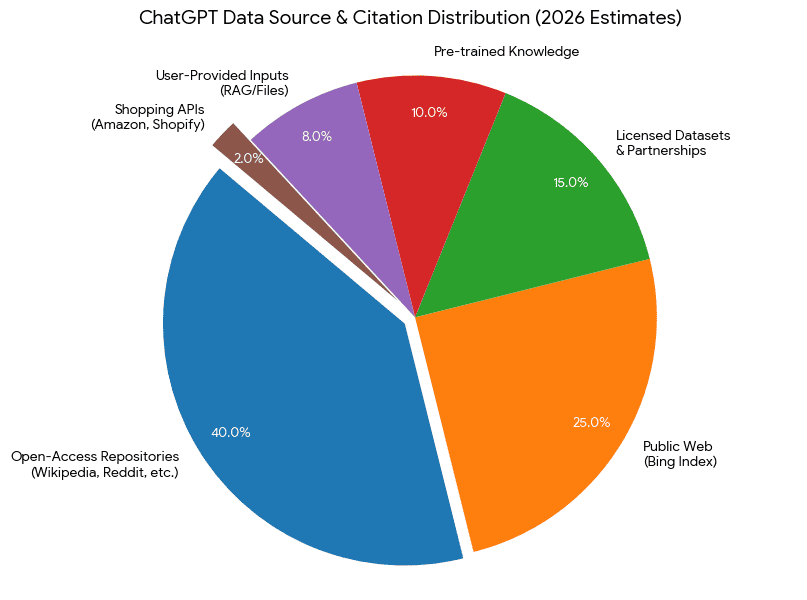
Note: the data may vary over time.
1. Pre-trained knowledge from published content
Before ChatGPT ever connects to the internet, it already holds a vast internal library built from publicly available text. This includes published articles, academic white papers, research reports, and PDF documents that were crawled and ingested during its training phase. Think of it as the foundational knowledge ChatGPT carries into every conversation before any live search happens.
This training data shapes how ChatGPT understands topics, interprets questions, and forms baseline answers. The quality and depth of what was included during training directly influence how confidently and accurately it responds to any given query.
For your content, this means that long-standing, well-published material, particularly white papers, research reports, and in-depth guides that have been publicly accessible for some time, has a higher chance of being part of ChatGPT’s foundational knowledge base.
2. Open-access repositories: Public datasets
Open-access repositories are among the most heavily weighted sources in ChatGPT’s training data. Wikipedia in particular functions as a ground truth reference; it is structured, consistently updated, and covers an enormous range of topics with citations of its own. Project Gutenberg contributes historical and literary texts, while arXiv provides peer-reviewed academic research across science and technology.
These repositories are trusted precisely because they are collaboratively maintained, publicly verifiable, and regularly corrected. ChatGPT leans on them when establishing definitions, historical context, and factual consensus across almost any subject area.
If your brand or product is mentioned or referenced on Wikipedia or cited within an academic paper on arXiv, that association significantly strengthens your credibility in ChatGPT’s eyes, even indirectly.
3. Licensed datasets and partnership publishers
In 2025, OpenAI signed significant data licensing deals with major media organisations, including Axel Springer, The Wall Street Journal, The Atlantic, Vox Media, and Dotdash Meredith. This gave ChatGPT access to vetted, high-quality, and legally protected content that carries far more editorial weight than general web scraping.
These partnerships mean that content published within these ecosystems receives higher priority trust signals when ChatGPT evaluates sources for citation. It is not just about availability; it is about the credibility layer these publishers bring with them.
For brands, this highlights the value of earning coverage or reviews in partner-tier publications. A feature in Wired or a mention in a major media outlet does more than build traditional backlinks; it places your brand inside the content layers ChatGPT is most likely to draw from.
4. Public web sources indexed via Bing
For real-time queries, ChatGPT relies on the Bing index to retrieve live web content. Unlike its pre-trained knowledge, which has a cutoff date, Bing-powered search allows ChatGPT to surface current information, recent announcements, updated pricing, live stock data, and the latest product releases.
This is the layer that makes ChatGPT behave like a living search engine rather than a static knowledge base. When a user asks something time-sensitive, ChatGPT triggers its search mode, pulls results from Bing, synthesises them, and footnotes its answer with citations.
If your site is not indexed on Bing, you are effectively invisible to ChatGPT for any live, real-time query, regardless of how well you rank on Google. Ensuring your site is submitted to and regularly crawled by Bing is a fundamental step in any AI visibility strategy.
Pro Tip: Understanding that Bing feeds ChatGPT’s live results is one piece of the puzzle. The more interesting question is what happens after retrieval, how ChatGPT synthesizes, weights, and decides what to include. Read how ChatGPT generates its answers to see the full process. 5. Shopping APIs: Real-time product information
For product-related queries, ChatGPT connects to shopping APIs, most notably Amazon and Shopify, to retrieve real-time product data, including pricing, availability, ratings, and descriptions. This is what powers responses to queries like “best wireless headphones under $100” or “where to buy X product.”
These APIs allow ChatGPT to pull structured product data dynamically, which means the information it surfaces is live and transactional rather than editorial. This gives ecommerce brands a distinct pathway to citation that operates separately from content authority.
For brands selling on Amazon or Shopify, maintaining accurate product listings with rich descriptions, updated pricing, and strong ratings is not just good retail practice it directly influences whether your products appear inside ChatGPT’s AI-generated shopping answers.
6. User-provided contextual data as inputs
When a user uploads a PDF, shares a URL, pastes a document, or provides any direct input into a ChatGPT conversation, that content becomes an active data source for that session. ChatGPT reads, analyses, and draws from whatever is provided in real time, treating it as contextual evidence to support its answers.
This creates what is known as contextual visibility, a situation where your content is being evaluated and potentially cited within a live conversation simply because a user chose to share it. For example, if a prospect uploads your product brochure and asks ChatGPT to compare it against a competitor, your content is now directly influencing the AI’s response.
This also means that well-structured, clearly written documents, whether brochures, guides, or reports, perform better in this context. The easier your content is to extract and interpret, the more confidently ChatGPT will draw from it when forming an answer.
Can ChatGPT cite real-time or the latest information?
Yes, as of 2026, major research shows that ChatGPT is no longer just a pre-trained AI model; it is a living search engine. Sam Altman (OpenAI’s CEO) described his goal of turning ChatGPT into a tool that blends the benefits of a natural language interface with up-to-date information in his post on X, stating:
“Search is my favourite feature we have launched in ChatGPT since the original launch!”
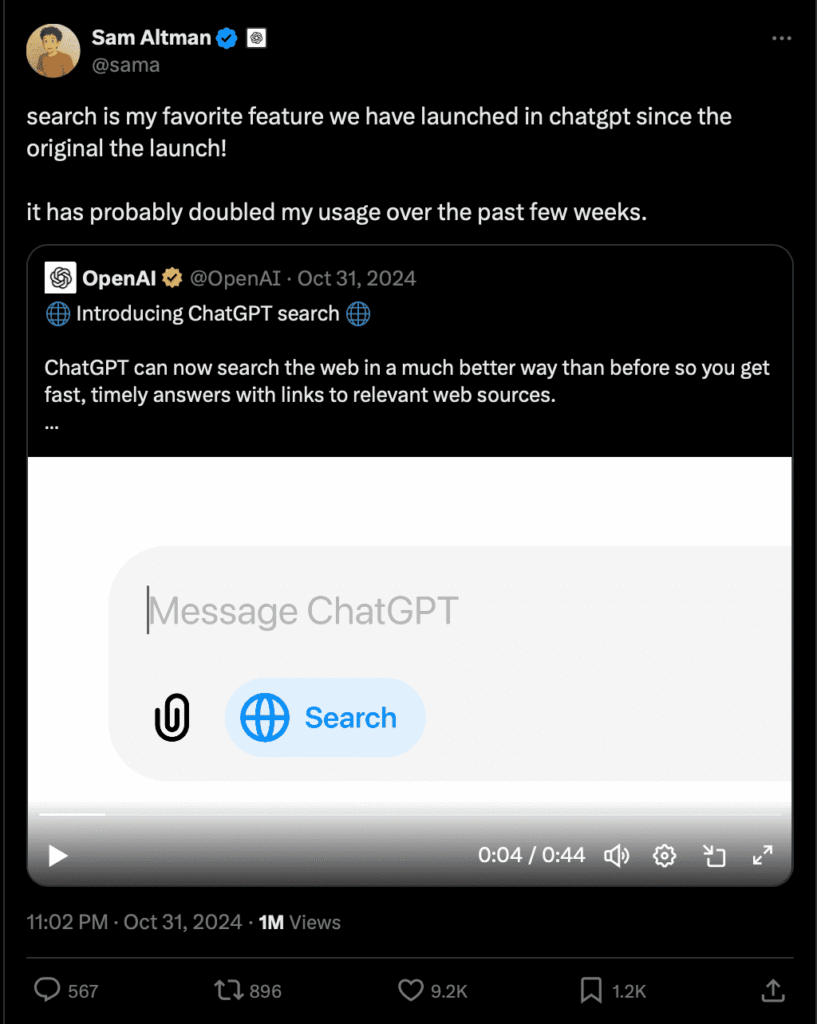
When you ask ChatGPT for current or time-sensitive information, it activates its search mode, called SearchGPT. In this mode, it performs the live web search via Bing index or partner networks to synthesise the response based on the results it got from.
In search-enabled scenarios, AI systems may use a retrieval-augmented approach. This means they retrieve relevant live web pages, combine that information with internal reasoning, and generate a response, in line with citations.
Prioritising the updated content within 90 days is the most critical development in ChatGPT’s search algorithm; the “Freshness Factor” matters more now.
According to this, if your competitor has a “Best CRM 2026” guide updated this week and yours is from last year, the AI will be more likely to cite and link to the competitor, even if your site has higher traditional SEO authority.
How Does ChatGPT Choose Which Sources to Cite?
You get the idea about what data sources ChatGPT uses to build an answer, but how exactly does it weigh down on sources? ChatGPT uses a multi-layered trust model for AI source selection with specific evaluation criteria to assess the quality, relevance, and credibility of potential sources before citing them. Let’s explore this.
What is AI source selection in ChatGPT?
AI source selection is the process by which ChatGPT identifies the top 3 to 5 snippets of information from across the live web to synthesise a response. In this, the AI model chooses the information from its knowledge or live web pages trained on a neural network to generate relevant responses that prioritise authenticity, high quality, and reputable sources.
This process prioritises:
- Authenticity
- Technical merit
- Reliability
- Relevance to intent
What signals influence source selection the most?
1. Relevance to the exact question
When you ask a specific question, ChatGPT rewrites this prompt into micro invisible queries to find the best answers, not just matches your keyword, but also your intent.
2. Authority and credibility
To enhance your trustworthiness, ChatGPT prefers content that has author bios, credentials, and links to the original proprietary data.
3. Freshness and update frequency
ChatGPT trusts the source of information that is fresh and timely. Even if you have the best content and SEO optimisation, it won’t help you rank in ChatGPT answers, unless it is updated and refreshed regularly.
4. Clarity, structure, and answer formatting
Just like every other AI system, ChatGPT prioritizes content that is logically structured and easy to interpret. Clear headings, well-defined sections, comparison tables, FAQs, and bullet points help models identify key information and extract precise answers. Overall, it’s not about visual presentation but semantic clarity.
Pro Tip: Now that you know what ChatGPT weighs, the next step is building a content strategy around those signals. See the specific strategies to rank in ChatGPT for a practical breakdown of what actually moves the needle. What Are Common ChatGPT Citation Patterns?
ChatGPT’s source selection process represents authoritative citing, comprehensive, and recently updated sources from Wikipedia, Reddit, and major publications; like The New York Times, Forbes, and more.
To understand how ChatGPT selects sources, we’ll examine citation patterns across major page types and query categories.
Which types of pages get cited most often by ChatGPT?
ChatGPT prefers well-formatted, clean, and structured content that is frequently updated with the latest information. Your content will most likely be cited by ChatGPT if it is updated, well-formatted, and easy to read.
# Research and original data pages
Research and original data pages are more likely to be cited by ChatGPT when they present proprietary surveys, industry benchmarks, or statistically supported findings. AI systems tend to reference content that contains verifiable numbers, named studies, and clearly stated conclusions.
Such original datasets and clearly attributed findings increase the likelihood of being used as a primary source. Also, if your content supports ‘Answer Capsules’ like word summaries of your articles or key findings, then ChatGPT will cite your data as the primary source of information asked by the user.
# Expert explainers and definitions
Pages that clearly define concepts or explain processes in depth are commonly surfaced for informational queries such as “What is…” or “How does…”. Overall, these pages tend to perform well as they:
- Demonstrate subject expertise rather than surface-level summaries
- Provide accurate, well-structured definitions early in the content
- Break down complex ideas into logical steps
- Include examples or use-case explanations
- Maintain consistency in terminology
AI systems tend to reference content that shows topical authority and clear reasoning, where the expertise is explicit and verifiable.
# Comparison and “best of” pages
Comparison and “best of” pages frequently surface in decision-stage queries as users often ask questions to ChatGPT where they want to compare brands on multiple aspects to make a choice. These queries signal evaluation intent.
- “Should I buy from Brand A or Brand B?”
- “What would be the prices of product Z on Brand A and Brand B?”
- “Compare these two Brands for prices.”
And here, ChatGPT tends to retrieve and synthesize content that clearly compares features, pricing, benefits, and limitations across options. Here, the pages that organize information in clearly defined sections, comparison tables, or concise bullet summaries become easier for AI crawlers to parse.
How do citation patterns vary by query type?
From 2026, ChatGPT citation patterns are more strategic, prioritising the most logical and trusted sources that match the user’s intent.
# Informational Queries – “What is …” & “How to …”
When a user asks ChatGPT for informational queries, it triggers BLUE (Bottom Line Up Front) formatting. So if your content has clear definitions at the top, your content is more likely to be cited for these types of queries.
Let’s see the ChatGPT response for “What is AI visibility in SEO?”
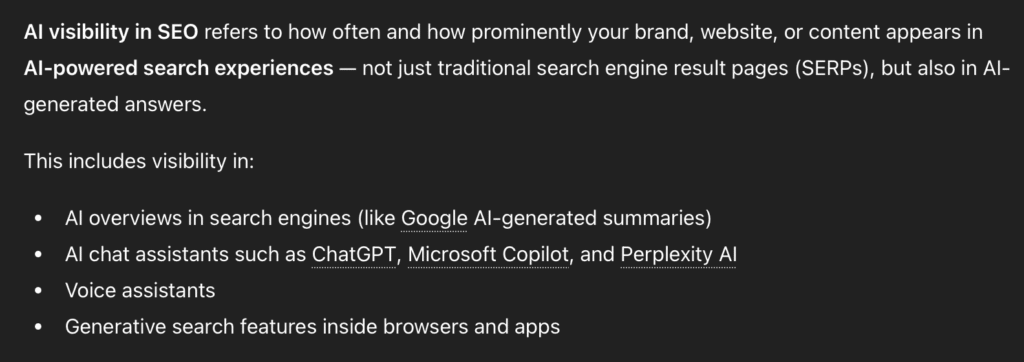
Notice how the response begins with a direct definition and then expands into structured points. Also, the added citations are pulled from content that is aligned exactly with the query intent.
# Commercial Queries – “Buy …” & “Best …”
For “Buy” and “Best” queries, the intent shifts from learning to choosing. The user is closer to a purchase decision. In these cases, ChatGPT prioritizes sources that signal commercial trust and decision clarity.
Here, citations are typically pulled from sources that feature recognized product brands, present clear summaries of key features, display transparent pricing information, implement structured product data such as schema markup, and organize options in a clean comparison format.
For “Best CRM software for small business”, ChatGPT responds with:
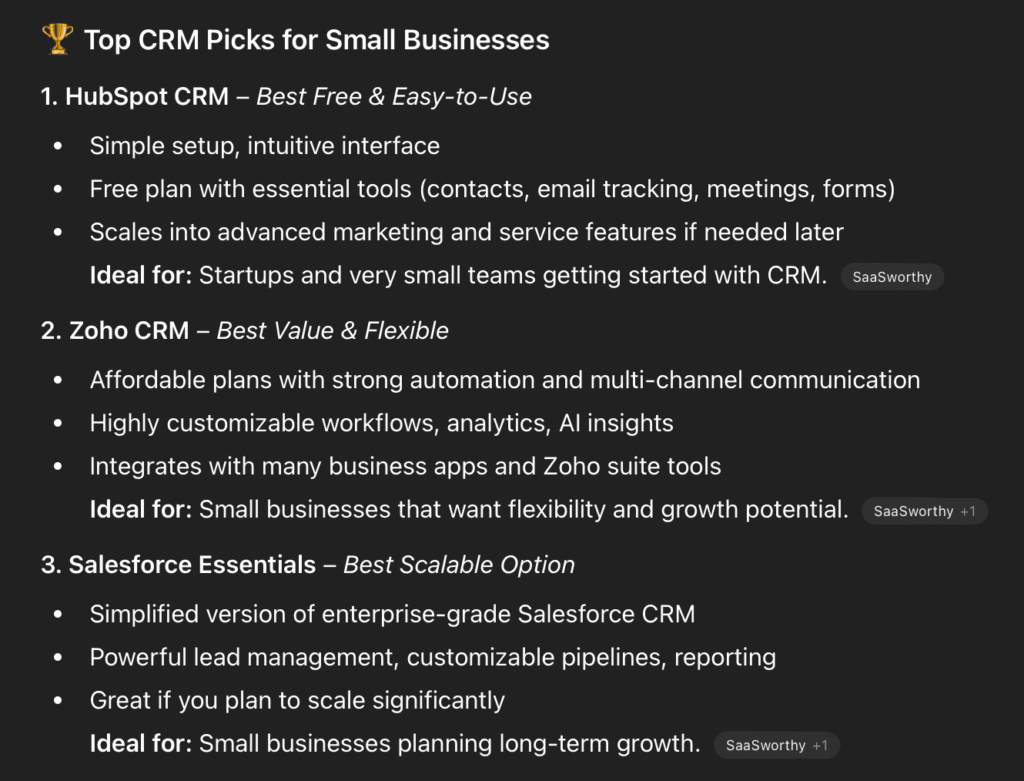
In short, for commercial queries, ChatGPT favors content that reduces evaluation effort and makes decision-making easier.
Pro Tip: What you’re seeing across these query types is the foundation of Answer Engine Optimization. If you want to build a content strategy that maps to how AI platforms respond to each intent type, what AEO and GEO mean for your SEO is a good starting point. # Comparative Queries – “Top …”
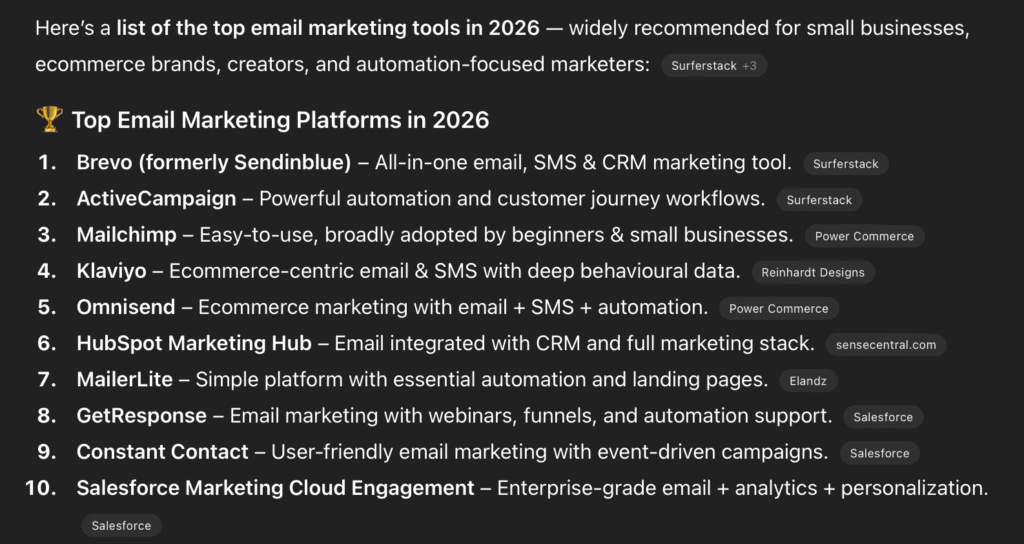
These types of queries fall under the ‘consideration’ phase, as the user seeks comparative information. If your content has a comparison table that lists all the features and competitors, ChatGPT will cite your data as a source for the specifications.
The “Top” queries typically signal comparison intent where the user is in the consideration phase.
The user is not ready to buy immediately but wants to evaluate multiple options side by side. If your content has a comparison table that lists all the features and competitors, ChatGPT will cite your data as a source for the specifications.
In the example, the response lists platforms in a structured, ranked format with summaries for each. This makes it easy for the model to extract, compare, and present options clearly.
# Opinion-Based Queries – “Review …”
“Review” queries reflect opinion-driven intent. The user is not looking for definitions or feature comparisons, but for real experiences and balanced feedback.
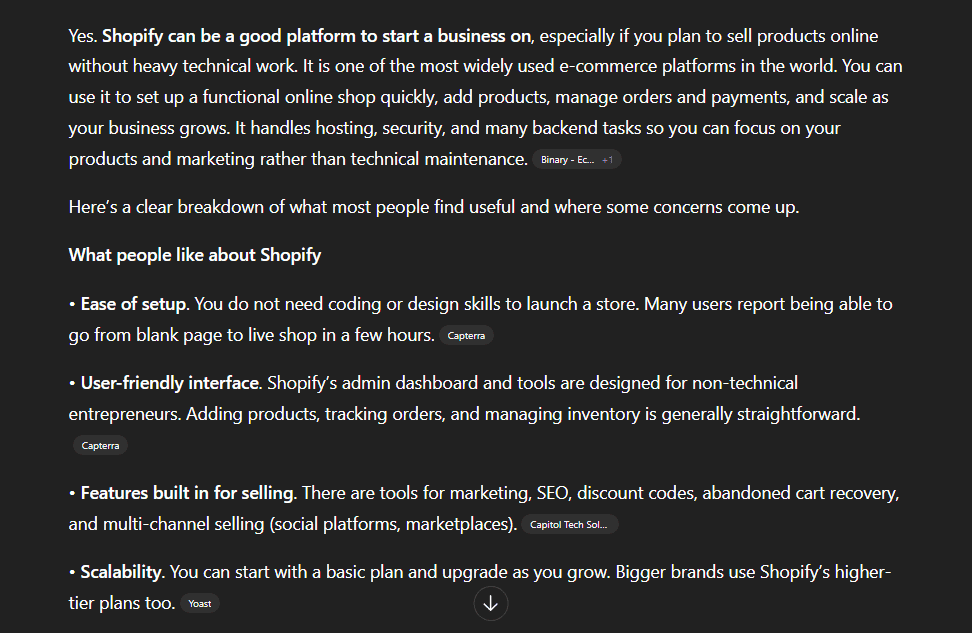
In these cases, ChatGPT tends to cite sources that demonstrate collective sentiment rather than promotional messaging. It often pulls from community discussions, independent review platforms, or content that clearly outlines both strengths and drawbacks.
In the example, the response summarizes what users commonly appreciate and where concerns typically arise. That tone mirrors aggregated opinion, not brand marketing.
Ask ChatGPT for “Shopify review”, and you’ll get:
Why do some brands never get cited, even with good SEO?
Are you worried about why, even with the best practices and good SEO, you are still not on ChatGPT’s citation? This is your AI Visibility Gap.
Here are a few reasons why your traditional SEO activities are not helping your AI citations.
- Traditional SEO rewards long-form content. However, ChatGPT looks for clean and liftable content. If your content is too promotional, then ChatGPT will cite the content who used a simple yet bulleted list instead.
- A beautiful page doesn’t mean good visibility. AI systems rely heavily on structured JSON data and schema markup for AI visibility to identify and cite authoritative sources. ChatGPT prioritises sources with ‘Schema.org’ markup rather than unverified review schema pages.
- Keywords are all that traditional SEO is about, but Entity is what ChatGPT wants. It cross-references live search with its training data. If your brand isn’t mentioned on Reddit, Wikipedia, or high-tier news sites, it lacks consensus. Your content is visible to a crawler, but not trusted enough to recommend.
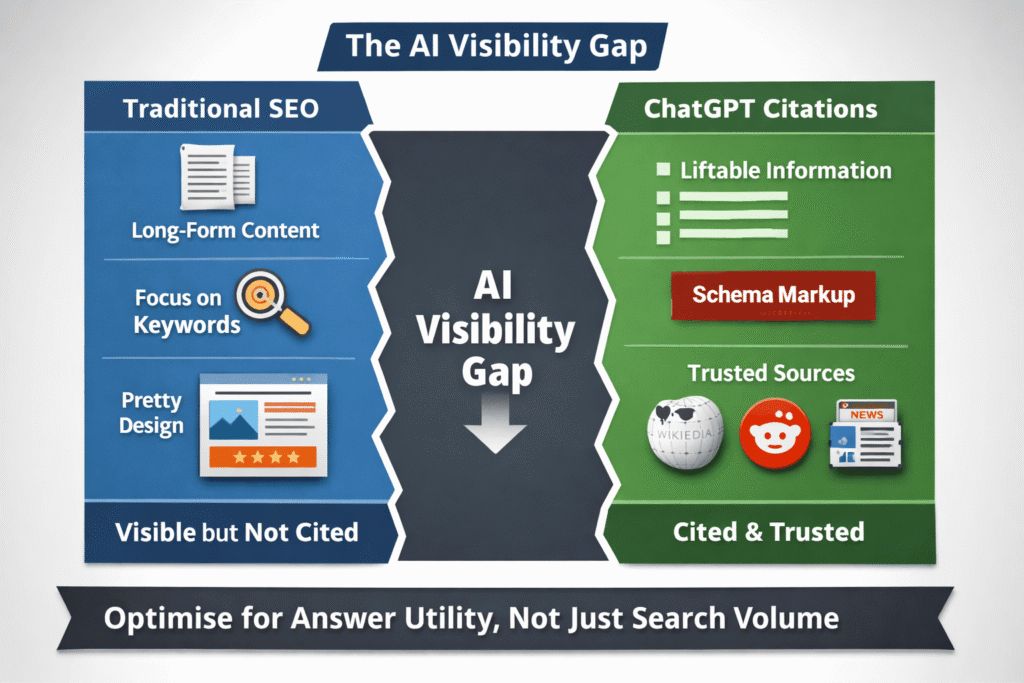
Therefore, optimise your content for answer utility, not just search volume.
Pro Tip: SEO gets you ranked. AI search gets you cited. The two are related, but they don’t follow the same rules. Learn the key differences between AI Search vs SEO: Key Differences to understand how both work together to get AI citations. How to write content that AI can cite confidently?
Most businesses, even with good content, suffer from an invisibility gap. The problem isn’t always content quality; it’s that the content was never built with AI extraction in mind. Implementing these strategies ensures your content is accurate, consistently structured, and positioned to earn a ChatGPT citation. The good news is that the fixes are practical and don’t require rebuilding everything from scratch.
Here’s what you need to do:
1. Put Important Information at the Top
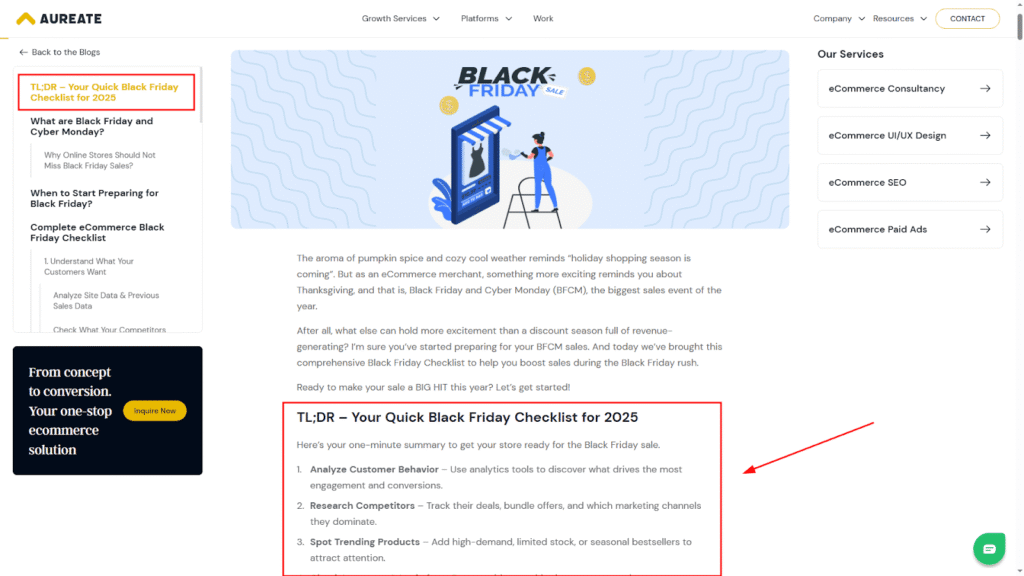
ChatGPT skims for relevant information the same way a researcher would; it looks for the clearest, most direct answer first. If your key point is buried three paragraphs down, AI will likely skip past it entirely and cite a competitor who put the same answer at the top.
Structure your content so the most important information appears within the first few lines of each section, not at the end of a long explanation.
This is also where on-page SEO and AI visibility overlap. ChatGPT favours content that is easy to extract, verify, and trustworthy.
On-page SEO disciplines like clear heading hierarchies, descriptive subheadings, and front-loaded paragraphs make that happen naturally. A page optimised for human readability and search crawlers is, in many ways, already halfway optimised for AI citation.
2. Keep Your Content Fresh and Publicly Accessible
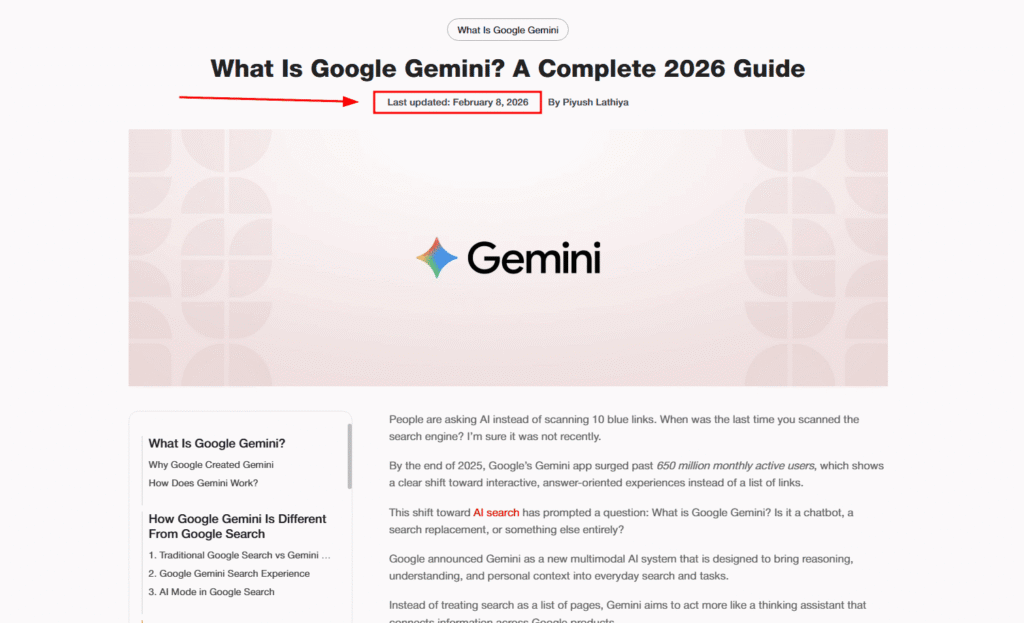
ChatGPT prioritises content updated within 30 to 90 days. Even the most authoritative, well-written piece will lose citations to a newer, better-maintained competitor if it hasn’t been refreshed recently. Build a content update schedule into your workflow, revisit statistics, update examples, and refresh publication dates regularly to stay within ChatGPT’s freshness window.
Equally important is accessibility. ChatGPT cannot cite content sitting behind login walls, paywalls, or gated forms. If your best content is locked away, it simply doesn’t exist from AI’s perspective. Make sure your most citation-worthy pages are fully publicly accessible and crawlable by AI crawlers without any friction.
3. Use Question-Style Headings and Add Real Proof
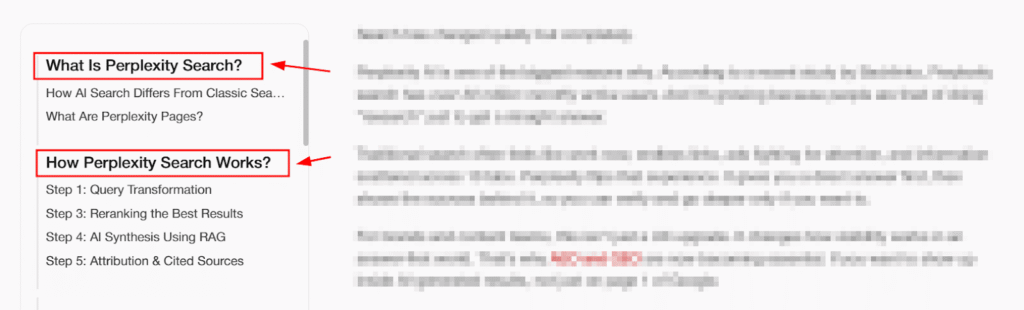
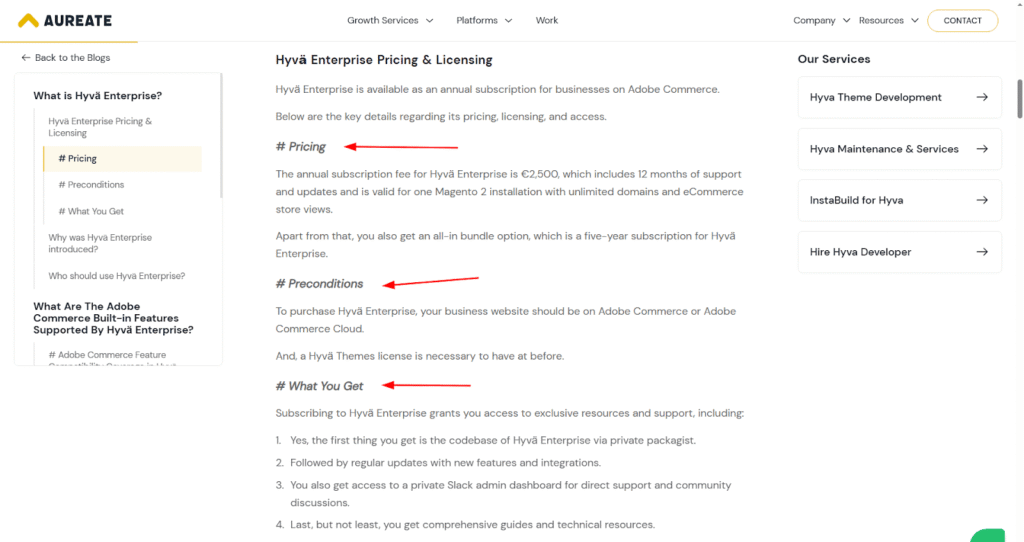
When users ask ChatGPT a question, it looks for content that mirrors that question structure. Headings framed as direct questions, “What is X?” or “How does Y work?”, signal to AI exactly where the relevant answer lives inside your content. Pair those headings with short, directly answerable opening sentences, and you dramatically increase the chance of that section being extracted as a citation.
Back every claim with proof. White papers, case studies, original statistics, timestamps, and sourced data all signal to ChatGPT that your content is trustworthy and worth referencing. Vague, promotional language gets filtered out entirely. A sentence like “We’re a revolutionary provider” carries no citation value, while “We serve 25,000+ customers across 12 countries” is specific, verifiable, and citable.
4. Write Lean, Specific Content That AI Trusts
AI models are ruthless editors. Anything that reads as noise, generic claims, filler sentences, or self-promotional language gets deprioritised or ignored entirely during the citation selection process. Write the way a subject matter expert would brief a colleague: direct, specific, and free of unnecessary padding.
It’s also worth noting that traditional content tools weren’t built for this. Relying on general-purpose word processors to optimise content for AI citations misses the point; these tools have no awareness of AI readability signals, freshness markers, or structural citation patterns. A more deliberate, structured approach to content creation is what the current AI search landscape demands, and the brands that build that discipline now will be the ones consistently appearing in AI-generated answers six months from now.
How to track ChatGPT citations and measure progress?
Tracking ChatGPT citations requires specific measurements like manual query testing, traffic signals, and citation checks. A ChatGPT rank tracker can make this easier. But it’s hard to get it all done with a traditionally performed approach, and the process is quite different from what you’d do with Google. That’s where an AI citation tracking tool like Track My Visibility helps.
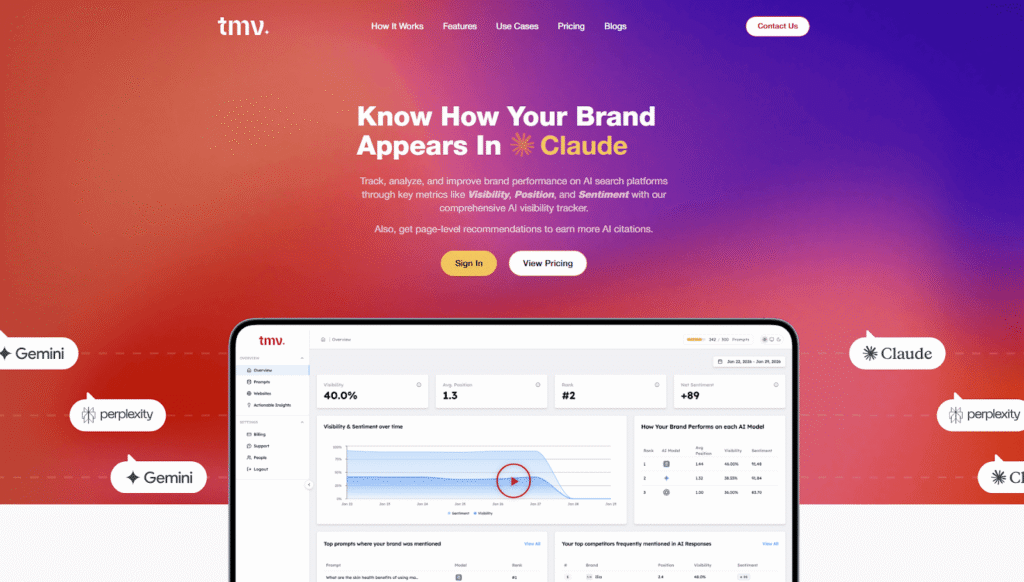
You can check your visibility, position, and sentiment across top AI platforms and use them with traditional search engine optimisation strategies with Track My Visibility’s features. Let’s understand use cases for this AI visibility tracker & optimizer tool:
- See where you are cited: Track brand mentions and URL-level citations across major AI platforms like ChatGPT.
- Get URL-level citation reports: See exactly which pages from your site get cited, how often they appear, and which AI engines reference them most.
- Competitor analysis: Track how competitors get mentioned in AI answers, which URLs they are cited for, and where they outrank you.
- Find AI readiness scores: Each page is scored on its AI-readiness for citations, with recommendations to boost visibility.
- Boost your visibility: Follow actionable recommendations to boost your chances of being cited in AI-generated content.
With Track My Visibility, you can monitor brand mentions and analyse citations in ChatGPT and other search engines powered by AI. And you also get citation tracking, sentiment analysis, and visibility scoring across major AI platforms.
Explore our 7-day trial to get started & stay visible in AI searches.
Frequently Asked Questions
1. Does ChatGPT always show citations?
No. ChatGPT shows citations mainly for fact-based, high-trust, or research-driven queries. For general explanations, opinions, or creative content, it often does not include sources.
2. How does ChatGPT decide which sources to cite?
ChatGPT evaluates relevance, search intent, content freshness, source credibility, trustworthiness, and topical depth before selecting a citation.
3. Is optimising for ChatGPT citations worth it for e-commerce brands?
Yes. AI-generated answers increasingly influence product research and buying decisions, making citations a valuable channel for early-stage visibility and trust.
4. Does ChatGPT use Google Search for citations?
Not directly. ChatGPT does not rely on Google Search results but may reference publicly available, widely trusted content when citations are required.
5. Does ChatGPT cite real-time or the latest information?
ChatGPT does not natively access real-time data. It can cite recent information only when web access is enabled or when the data is widely published and stable.
6. Why are citations important in AI-generated answers?
Citations build trust and credibility. Being cited places your brand inside AI answers, increasing visibility and influencing user decisions before a click happens.