


You search for something. Instead of clicking a link, you get a complete answer right there with the help of AI tools like ChatGPT, Perplexity, or Google’s AI Overview. No click needed. That shift is already happening, and it is picking up speed fast.
According to Gartner, by 2026, search engine volume will drop 25%. If your brand is not showing up inside those AI generated answers, you are not just losing rankings, you are also losing visibility. And ranking in AI search requires a fundamentally different approach than what most teams are doing right now.
A GEO strategy is the practice of optimizing content so that AI platforms cite, quote, and recommend your brand when users ask relevant questions. This guide is built for SEO professionals, PR managers, and marketing agencies who want a practical roadmap for AI visibility before it’s too late.
Here is what you will learn in this guide:
- What GEO is and how it actually differs from traditional SEO
- The core pillars that make content readable and citable by AI models
- How AI systems decide what to cite and the three signals that matter most
- A step-by-step implementation plan with phases you can act on right now
- A GEO strategy checklist and the common mistakes that kill AI search visibility
Key Takeaways
- AI platforms cite sources based on authority, structure, and citability, not just keyword relevance.
- Zero-click searches are projected to exceed 70% by 2026, making AI visibility no longer optional.
- Off-site mentions on Reddit, LinkedIn, and industry publications drive roughly 91% of AI-generated answers.
- GEO is an ongoing system, not a one-time content refresh.
- Different AI platforms (ChatGPT, Perplexity, Gemini) pull from different signals and need platform-specific optimization.
What Is Generative Engine Optimization (GEO)?
Generative Engine Optimization is the process of optimizing content. So that AI-powered platforms such as ChatGPT, Perplexity, Gemini, Claude, and Google’s AI Overviews pull from your content when generating answers.
It is not only about ranking on a results page. It is about being the source that an AI search engine trusts enough to quote.
Traditional SEO gets you onto the page. GEO strategy gets you to the answer. And right now, the answer is all the user ever sees.
Search has evolved into an answer. We’re no longer optimizing for 10 blue links. We’re optimizing for AI-generated answers, agentic commerce, and brand visibility across large language models.” – Lily Ray, Keynote at Affiliate Summit West 2026
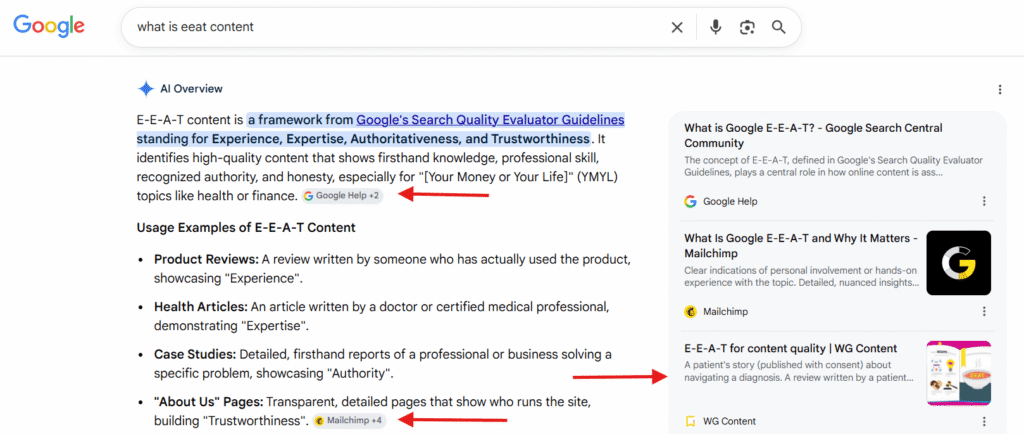
Here, I added my query on Google, and Google AI Overviews answered my query with citations, so that I can check the details.
How GEO Differs From SEO
This is where GEO differs from everything most teams have been doing for the last decade. Traditional search engines rank pages that earn clicks. AI platforms rank content that answers questions clearly, cites its sources, and carries genuine authority. Unlike traditional search engines, AI does not serve a list of options; it chooses on your behalf.
Over 70% of searches are expected to be zero-click by 2026 (Digital Bloom). That means the user asks a question, gets a full answer from an AI system, and never visits a website. Ranking number one on Google no longer guarantees you appear in AI search results.
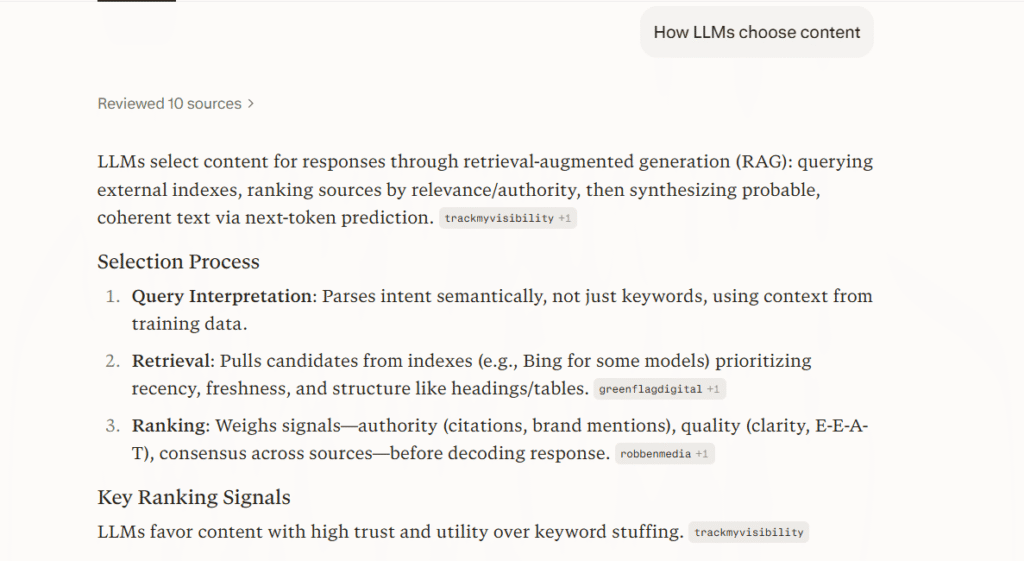
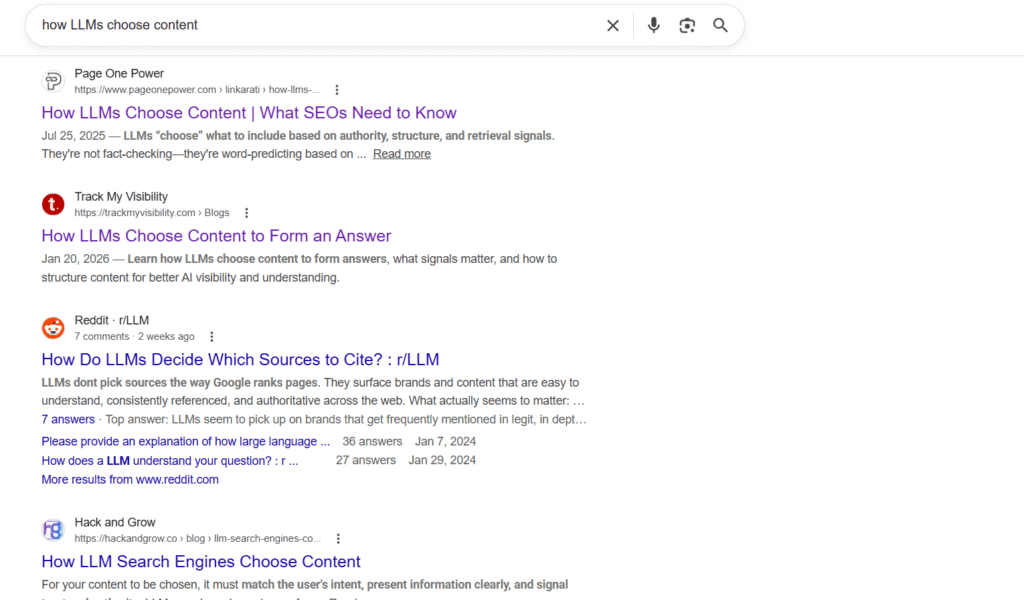
For a detailed look at how AI search differs from traditional SEO across signals, metrics, and content strategy, the differences are more fundamental than most teams expect. Here is a practical example: I asked the same query to Perplexity, “How LLMs choose content.” It gave me a brief answer with citations, so that I can verify the sources.
I added the same query on Google, and it provided me with links. I have to go through to find the perfect answer to my question.
Core Pillars of a Strong GEO Strategy
Before getting into the step-by-step, it helps to understand the foundations that make AI optimization work. These are important pillars that every piece of content you publish should have.
1. Atomic Content Structure
Each piece of content should answer one question completely. AI systems do not read entire pages the way humans do. They look for discrete, self-contained answers. Tight, focused content wins over long, sprawling articles that bury the point at the end.
2. Intent and Context Alignment
Your content needs to match user intent precisely. If someone asks a comparison question, your page should compare. If they ask for a definition, lead with one. AI models are good at detecting when content is genuinely answering the question versus just containing the right keywords.
3. High Authority and Trustworthiness (E-E-A-T)
Both Google and third-party AI search tools weigh experience, expertise, authoritativeness, and trustworthiness heavily. Credible sources, author credentials, accurate data, and external brand mentions are all important for this.
4. Technical Machine-Readability
Clean HTML, proper schema markup, and clear headings make it easier for AI crawlers to parse your content. If the page is messy or slow, AI assistants may skip it entirely. Structured data is not optional in 2026. It is a baseline requirement for any AI visibility strategy.
5. Conversational and Natural Language
Write the way people actually ask questions. Use conversational language that mirrors how someone phrases a query to an AI assistant. If your content reads like a press release, it will not perform well in AI driven discovery.
6. The Inverted Pyramid Model
Lead with the answer. Give the most important information first, then provide supporting context. AI generated summaries pull from the top of your content. If your main point is buried in paragraph seven, the AI will likely miss it entirely.
GEO vs. AEO: Understanding the Key Differences
People get confused because of these two terms. AEO and GEO are related, but they are not the same thing. Understanding the key differences between them helps you allocate your content strategy and budget correctly.
| Feature | Answer Engine Optimization (AEO) | Generative Engine Optimization (GEO) |
| Primary Goal | To be the specific “featured snippet” or direct answer to a query. | To be included and cited within a synthesized AI summary. |
| Target Platforms | Voice assistants (Alexa, Siri) and Google’s “Position Zero.” | LLMs and AI Search (Perplexity, ChatGPT, Google Gemini). |
| Content Focus | Short, factual, and punchy answers (Definitions, FAQs). | Context-rich, authoritative, and data-backed explanations. |
| Success Metric | High “Zero-Click” search results and voice trigger hits. | Brand mentions and citations within AI-generated responses. |
| User Intent | Specific, immediate information needs (e.g., “What is…”). | Complex, exploratory, or comparative research queries. |
| Structure | Schema-heavy, Q&A formats. | The Inverted Pyramid: high information density with citations. |
The overlap is real. Good AEO habits like clear headings, direct answers, and FAQ sections also support GEO. But the GEO strategy goes further, requiring off-site authority, platform-specific optimization, and a long-term approach to brand visibility across AI platforms.
How AI Models Actually Decide What to Cite
This is the part most teams skip, and it is probably the most useful thing to understand if you want your AI visibility strategy to actually work. AI models do not crawl the web the same way Google does. They work from two different pools: training data, which updates slowly over months, and live retrieval, which platforms like Perplexity use to pull current visibility data in near real-time.
Your content strategy needs to work on both timelines. Strong, well-structured content that earns authority over time feeds training data. Clean, indexable pages with fresh information feed live retrieval. Getting your brand visible across both is where you want to be.
One concept worth understanding here is query fan-out. When a user asks a question, AI systems expand that query into related concepts and entity relationships before pulling sources. That means a narrow piece of content targeting one keyword is less likely to get cited than a cluster of content covering a topic thoroughly. Content gaps in your topic coverage are genuine GEO liabilities.
The three core signals AI uses to select and cite sources:
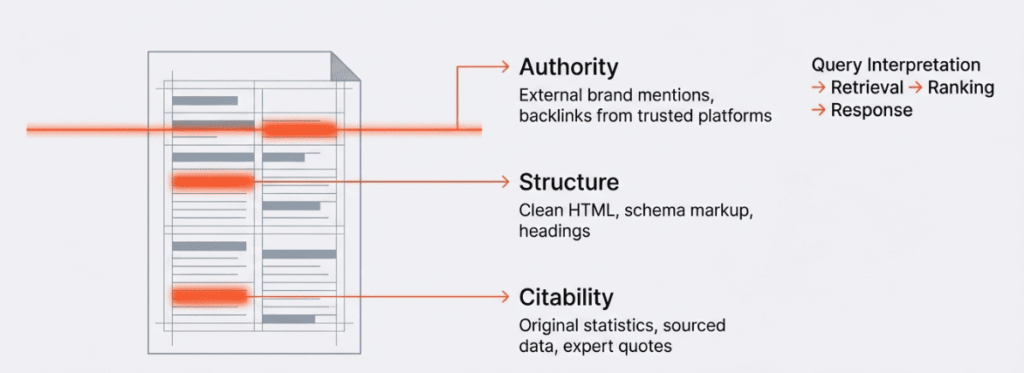
- Authority: Is the source recognized as credible in its domain? External brand mentions, backlinks, and presence on trusted platforms all feed this signal.
- Structure: Can the AI search tool parse the content easily? Clear headings, structured data, and answer-first formatting give clearer signals than dense, unbroken text.
- Citability: Does the content include original statistics, sourced data, or expert quotes? These are the elements AI models prefer to pull directly into their responses.
Important Note: Adding statistics to content can increase AI search visibility by 30 to 40% in controlled testing environments (Superlines). That is not a marginal gain, but one of the highest-impact optimizations you can make right now.
Here is how each major platform behaves slightly differently:
- ChatGPT: Relies more on training data. Consistent, long-standing content authority matters here. So, it is good for building brand visibility through topical depth over time.
- Perplexity: Uses live web retrieval. It focuses on fresh, well-indexed pages with citations that rank well. This platform responds strongly to page structure and credible sources.
- Gemini: Tied into Google’s index. Strong traditional SEO signals like E-E-A-T and schema markup carry over here more than on other platforms.
- Google’s AI Overviews: Pulling from a mix of Google’s index and real-time data. Featured snippet optimization overlaps heavily with performance in AI Overviews.
 Pro Tip: Understanding citation logic is one thing. Knowing whether AI is actually citing you is another. Learn how LLMs choose content to understand what signals push your brand into AI-generated answers.
How Third-Party Platforms Impact AI Visibility
91% of AI generated answer content comes from publishers, review sites, and user-generated content, and not brand-owned pages (Linksurge). LinkedIn, industry publications, and niche forums all play a role in shaping what AI sees as authoritative. A user mentioned that Perplexity cited Reddit in up to 20% of its responses during peak periods, while ChatGPT peaked at just 5% citation share for any single domain, based on Evertune’s analysis of 200+ million prompts.
For PR managers, this reframes the entire job. Earned media placements are not just reputation; they are also AI visibility strategy signals. A mention in a respected industry publication, a thread on Reddit where your brand is discussed accurately, a LinkedIn post from a recognized expert citing your data. All of these feed the AI discovery ecosystem.
A user mentioned that Reddit alone is now cited in 13% of ChatGPT answers and 46.7% of Perplexity responses, based on a Semrush study of 217,000 prompts. The most cited posts had under 20 upvotes and were about 2.5 years old on average. AI is not rewarding popularity; it is rewarding clarity and relevance.
Reddit is now cited in 13% of ChatGPT answers and 46.7% of Perplexity citations. Here is what that means for anyone building in public.
by u/rashi_saini1340 in SaaS
Where your brand is discussed matters as much as what your own website says. Consistent messaging across multiple sources helps AI systems build a full picture of what your brand stands for and where it holds genuine authority.
Implementing a GEO Strategy Step-by-Step
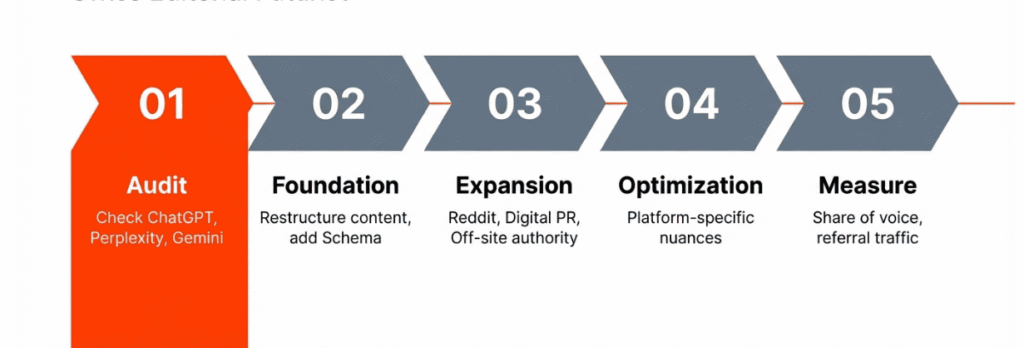
This is the part you can act on. This is your step-by-step GEO strategy for AI visibility broken into five phases. You do not need to do all of this at once, but you do need to work through all of it over time to build your brand’s real AI search visibility.
Phase 1: Audit Your Current AI Visibility
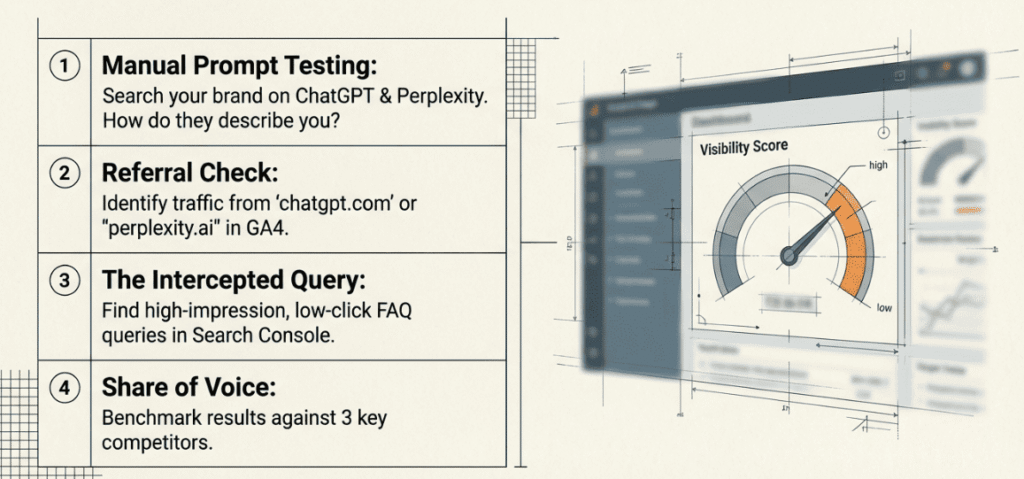
Before changing anything, find out where your brand actually stands. Current visibility in AI search is something most teams have never measured. And outdated information about your brand floating around in AI responses is a real problem you can only fix once you know it exists.
Run these checks manually:
- Open ChatGPT, Perplexity, Gemii, and Google’s AI Overviews. Search for your brand name, your main product category, and the top questions your target audience asks.
- Check if your brand is being cited. See, how does AI describe your brand? Is any information inaccurate or missing?
- Look at your referral traffic. Platforms like ChatGPT and Perplexity now show up as distinct sources. This tells you exactly how many users are clicking through from an AI conversation to your website.
- In Google Search Console, filter for FAQ-style queries with deep impressions but low CTR. These are often intercepted by AI-generated summaries before the user ever clicks.
- Run the same brand and topic queries for two or three competitors so you have a benchmark for your AI search share of voice relative to theirs.
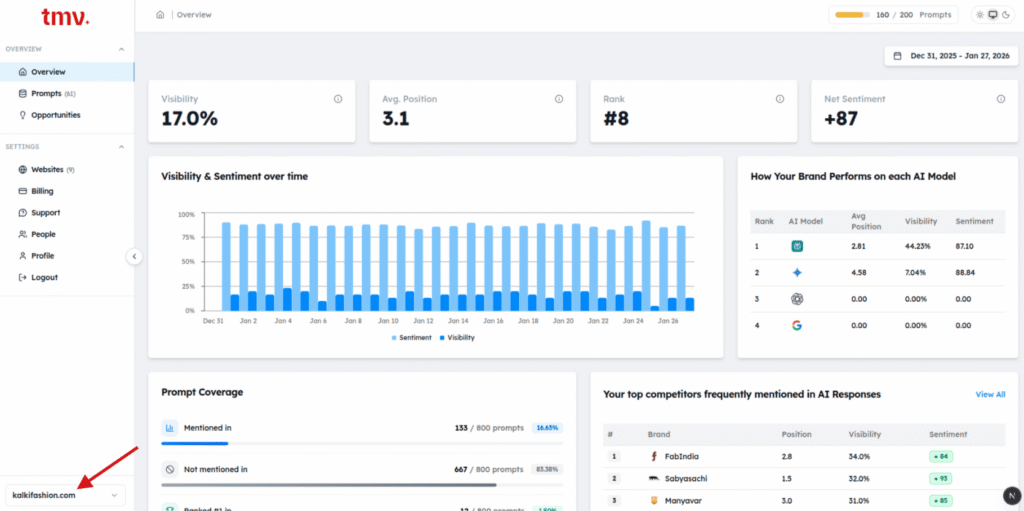
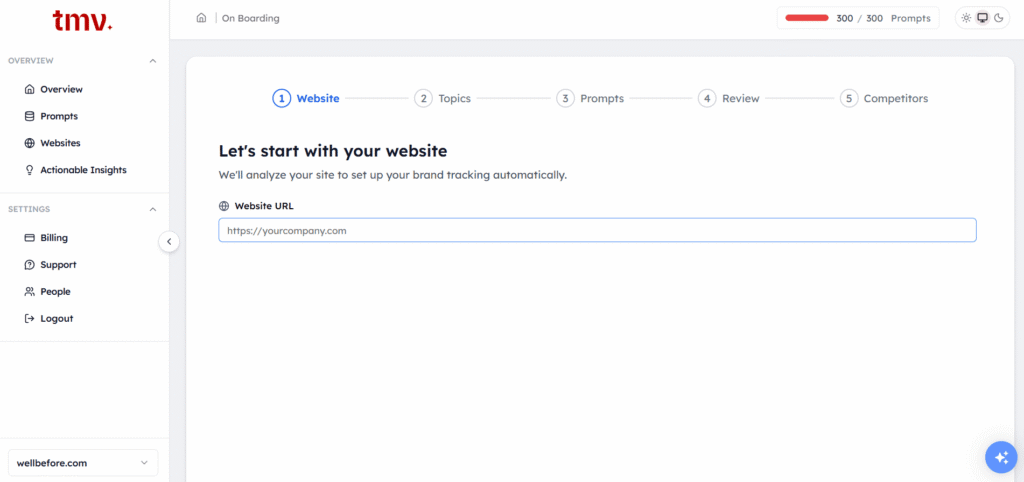
To do this more efficiently, add your domain to Track My Visibility and select which AI models you want to track. Then it will automatically suggest prompts that reflect the questions your audience is actually asking.
And then it will run those prompts across all four platforms at once and show you exactly where your brand appears, how it is described, and where competitors are showing up instead.
Phase 2: Build Your Content Authority Foundation

Your on-site content is the foundation everything else rests on.
AI search runs on three layers: training data that updates slowly, high-volume AI search that depends on existing SEO strength, and agentic AI tools that scrape key pages in near real-time.
You need to serve all three, which is why traditional SEO still has a role to play alongside GEO. The practical side of optimizing content for AI answers covers the page-level changes that make the biggest difference.
On-site priorities to work through:
- Lead every major section with a direct answer. Use clear headings (H2 and H3 hierarchy), FAQ sections, and concise definitions that AI models can extract without needing to interpret.
- Every claim should be backed by a statistic, a source citation, or named research. AI systems prefer valuable content that they can verify and skip vague statements.
- For schema markup, you should prioritize FAQPage, Article, Organization, and Product schema. This structured data tells AI crawlers exactly what kind of content they are processing.
- Start by fixing your existing pages before creating new ones. Restructure priority pages with answer-first formatting rather than starting from scratch.
- Add Alt text on images, clean up your HTML, and improve load times. All of these contribute to how well AI sees and processes your pages.
Once you have updated your pages, use Track My Visibility’s pages section to check the AI-readiness score for each URL. It tells you how optimized each page is to be cited by AI engines, flags what is missing, and shows citation counts per page so you know exactly which ones are pulling weight and which still need work.
Phase 3: Expand Your Off-Site Authority
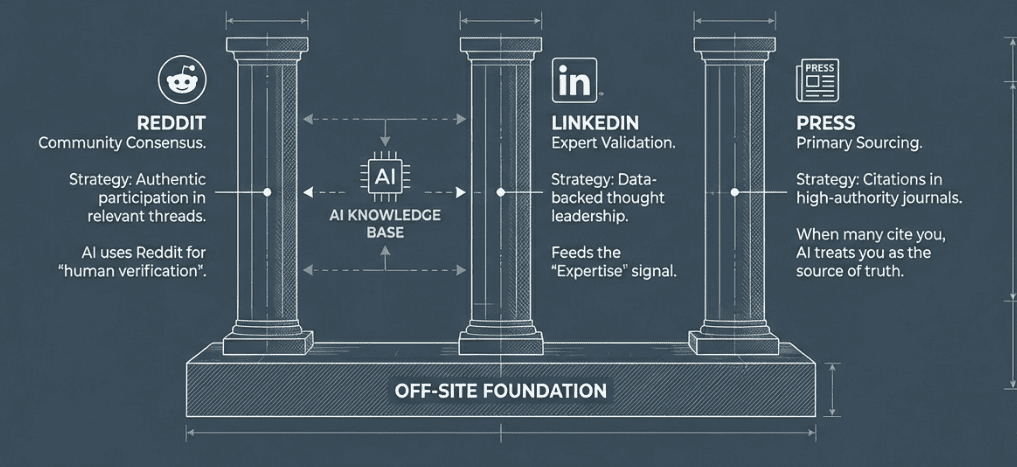
This is where the PR team becomes a core part of the GEO strategy. Earned media placements, journalist mentions, and industry roundups are all signals AI platforms pick up. Brand mentions in respected publications carry real weight in AI driven sourcing decisions.
So, you should treat them as part of your digital strategy, not just PR.
Where to focus off-site efforts:
- Build a genuine presence on Reddit in communities relevant to your space. Don’t just focus on non-promotional posts, but actual participation in user questions that your brand can answer credibly.
- Publish LinkedIn posts and long-form thought leadership that reference your original data. This feeds both AI discovery and professional authority signals.
- Pursue guest articles and data citations from high-authority publications. Because when multiple sources reference your data, AI models start treating you as a primary source in that topic area.
- Add source citations with publication dates to all factual claims on your site. AI systems prefer verifiable information with clear provenance over unsourced assertions.
As your off-site presence grows, Track My Visibility’s Overview Dashboard shows you whether those external mentions are translating into actual AI citations. You can see which platforms are picking up your brand, where competitors are still dominating, and whether your share of voice is moving in the right direction month over month.
Phase 4: Optimize by AI Platform and Audience
One of the gaps most teams miss is that different platforms behave differently, and different audiences use different platforms. Your digital strategy should account for this rather than treating all AI search platforms as interchangeable.
- SEO teams should focus on semantic footprint expansion. Your team should create content clusters around your main topics, apply schema markup consistently, and restructure thin pages that answer nothing clearly.
- PR managers map existing media coverage to GEO signals. Which placements are on platforms AI models pull from? Which publications appear in AI answers for your target queries?
- Agencies build a GEO strategy audit as a standalone service offering. So, start with AI visibility benchmarking, as most clients have no idea where they currently stand.
- B2B brands prioritize Perplexity and Claude for AI search. LinkedIn and whitepapers are your authority-seeding channels. Focus on the buyer questions your sales team hears repeatedly in calls.
- B2C brands prioritize ChatGPT and Gemini. Consumer reviews, Reddit threads, and product comparison content matter most for AI driven discovery in your category.
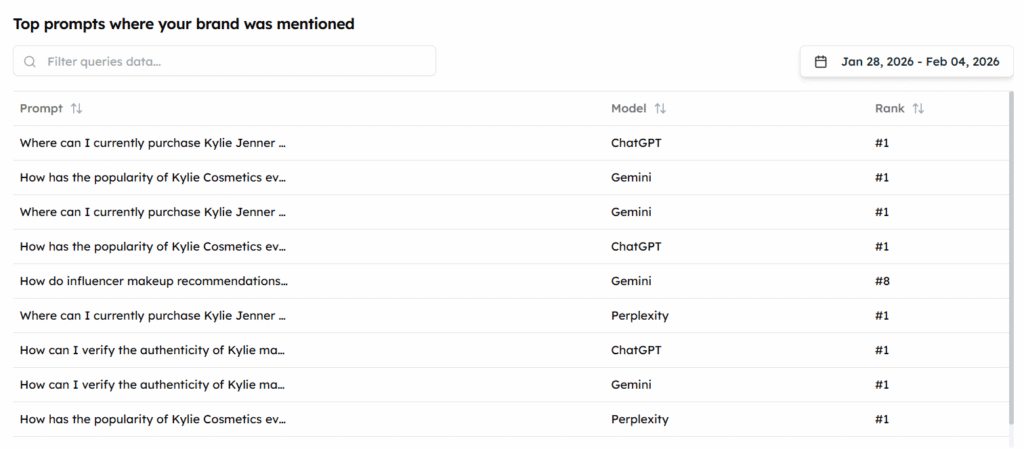
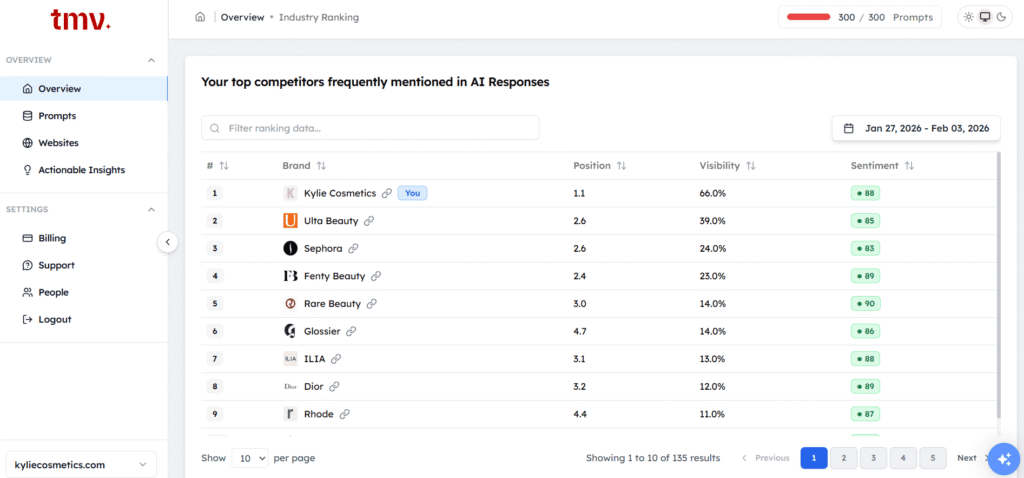
Track My Visibility’s cross-model comparison shows your brand’s visibility broken down by each platform individually. So instead of treating all AI platforms the same, you can see exactly which ones are citing you, which ones are citing your competitors, and where a focused effort would move the needle fastest.
Phase 5: Measure and Iterate
The key metrics for GEO are different from traditional SEO metrics. Rankings and organic clicks still matter, so do not abandon them. But it’s important to add these AI visibility indicators alongside your existing reporting:
- Citation frequency: How often does your brand appear in AI responses for your target queries?
- Sentiment accuracy: When AI describes your brand, is the framing accurate and positive?
- Share of voice: Compared to competitors, how often does your brand show up in AI search results for the same queries?
- AI referral traffic: Are you seeing month-over-month increases in traffic coming specifically from AI engines?
Free methods to track these without specialist tools:
- Monthly manual prompt testing across ChatGPT, Perplexity, Gemini, and Google’s AI Overviews.
- GA4 referral source filtering for AI referrals and AI driven traffic sources.
- Search Console monitoring for FAQ-style queries that are losing CTR despite deep impressions.
Free manual testing gives you a starting point, but it does not scale well across multiple platforms. Tracking brand mentions in AI search with a dedicated tool gives you the consistency and comparable data that manual checks simply cannot.
That said,
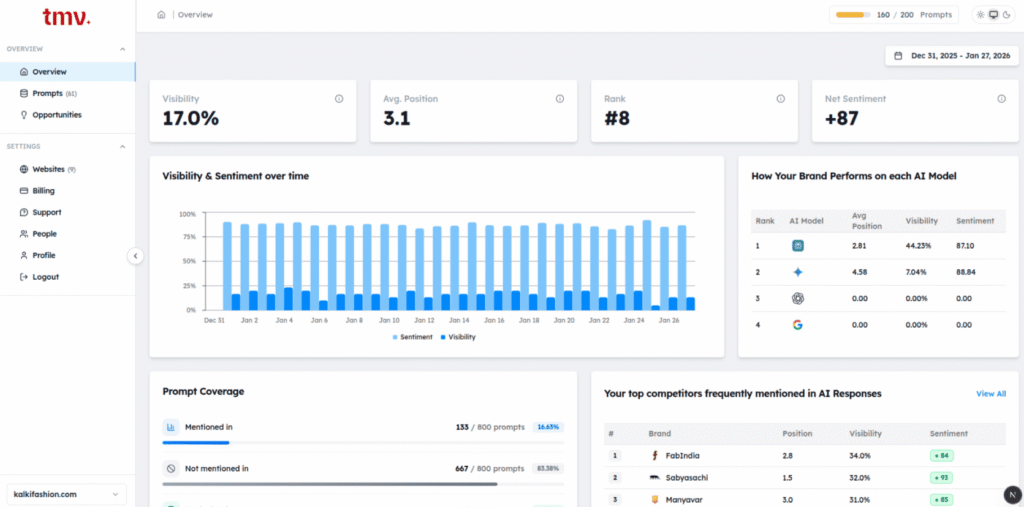
If you want to skip the manual spreadsheet juggling and track all of this in one place, the Track My Visibility tool is worth bookmarking. With this AI visibility tool, every prompt runs automatically once every 24 hours across all selected AI models.
The dashboard tracks citation frequency, sentiment, share of voice against competitors, and performance trends over time, so your reporting is always current without the manual effort. When you make content changes, hit Refresh to re-score your pages and see immediately whether your fixes moved the numbers.
 Pro Tip: Running this audit manually works, but it helps to have a structured framework to follow. Download the all-in-one AEO/GEO audit checklist to make sure you are not missing any visibility gaps across platforms.
Common GEO Mistakes to Avoid
Plenty of teams are starting to pay attention to AI visibility, but most are making the same handful of mistakes. Here is what to watch for before they cost you ground.
1. Treating GEO as a One-Time Project
This is not a project you finish and move on from. AI models are constantly being retrained, and their retrieval logic shifts regularly. If you treat GEO as a one-off content refresh rather than an ongoing system, your authority will quietly decay over time. Showing up consistently is what tells an AI you are a reliable, current source and not a one-time effort from eight months ago.
2. Optimizing Only for One Platform
It is easy to focus entirely on Google’s AI Overviews and call it done. But your target audience is spread across multiple platforms. People use Perplexity for research, ChatGPT for questions, and Gemini for integrated tasks. If you only optimize for one, you are invisible to a large chunk of the people you are trying to reach.
3. Publishing Content Without Original Data or Citations
Generic content is a GEO liability. If your article does not include original data, expert quotes, or verifiable citations, AI models have no reason to pick you over a competitor who does. These systems gravitate toward valuable content with clear attribution; vague claims without sourcing get skipped.
4. Burying the Answer
This is the most common structural mistake. If the direct answer to a user question is sitting in paragraph eight, the AI will likely pull from a competitor who answered it in paragraph one. Lead with the answer and use the rest of the page to support it with context and detail.
5. Ignoring Your Off-Site Presence
You cannot win at GEO by working only on your own website. Roughly 91% of AI generated answer content comes from third-party sources such as publishers, forums, review sites, and industry directories. If your brand mentions are not spread across the broader web, you are missing the majority of where AI driven discovery actually happens.
6. Under-Investing in GEO Tactics
By 2026, GEO should not be a small experimental line item in your budget. If you are not committing at least 20 to 30% of your content optimization efforts to AI driven discovery, you are actively handing ground to competitors who are.
7. Expecting Fast Results
Traditional SEO was a long game, and GEO is no different. Plan for three to six months before you see meaningful movement in your visibility score. Authority signals take time to compound, but once you have built that trust with the models, you become very hard to displace.
Conclusion: Build Your GEO Strategy Before the Gap Widens
The brands working on their GEO strategy right now are building authority signals that late movers will find very hard to close the distance on. That is not a reason to stress. It is actually good news if you are reading this. AI search visibility is still early enough that consistent effort today translates into a real advantage six months from now.
The roadmap for AI visibility in this guide gives you a clear order of operations: audit where you stand, fix your on-site foundation, build off-site presence, optimize for the platforms your audience uses, and track what actually reflects AI discovery. None of these demands a massive budget. It demands showing up consistently and writing content that earns trust from AI systems and not just traditional search engines.
If you want to keep tabs on how your GEO strategy is actually performing over time, Track My Visibility is worth checking out. It tracks AI search visibility, brand mentions across platforms, and AI share of voice, so you always know where your brand stands instead of guessing.
Three months later, AI models began citing them regularly in that category. That is the GEO strategy in practice.
Frequently Asked Questions
GEO strategy refers to the Generative Engine Optimization strategy. It is the practice of optimizing content so that AI-powered platforms like ChatGPT, Perplexity, Gemini, and Google’s AI Overviews cite and recommend your brand when generating responses to user queries. It focuses on authority, structure, and citability rather than traditional ranking signals.
GEO stands for Generative Engine Optimization. It is the process of making your content readable, authoritative, and citable for AI platforms that generate answers rather than returning a list of links. The term reflects the shift away from search engines that index and rank pages toward AI systems that synthesize and respond.
GEO does not replace SEO, but it will increasingly run alongside it. Traditional SEO still matters for driving traffic through search results pages. But as zero-click AI search grows, GEO determines whether your brand appears in AI generated answers at all. For most teams, a 50/50 investment split between the two is a practical starting point for 2026.
Lead with a direct answer. No buildup, no preamble. Back every claim with a statistic, sourced data, or original research rather than making generic statements. Use schema markup and structured data so AI crawlers can actually understand what your content is about. Beyond your own site, build brand mentions through earned media and real community participation. That off-site presence carries serious weight. And instead of targeting isolated keywords, cover your topics in depth so AI models see you as a reliable, comprehensive source in your space.
A SaaS company notices its brand is not mentioned when users ask ChatGPT, “best project management software for small teams.” They restructure their comparison pages to lead with direct answers, add a FAQ section with schema markup, publish original data on team productivity benchmarks, and earn mentions in three industry publications
Resources:
- Gartner Predicts Search Engine Volume Will Drop 25% by 2026, Due to AI Chatbots and Other Virtual Agents
- 2025 Organic Traffic Crisis: Zero-Click & AI Impact Analysis Report
- AI Search Statistics 2026: 60+ Data Points on Visibility, Citations, and Traffic | Superlines
- 91% of AI Answers Come from Sites That Aren’t Yours: A 2026 Guide to Off-Site Brand Visibility | LinkSurge Blog