


Search has changed quietly but completely.
Perplexity AI is one of the biggest reasons why. According to a recent study by Backlinko, Perplexity search has over 30 million monthly active users. And it’s growing because people are tired of doing “research” just to get a straight answer.
Traditional search often feels like work now, endless links, ads fighting for attention, and information scattered across 10 tabs. Perplexity flips that experience. It gives you a direct answer first, then shows the sources behind it, so you can verify and go deeper only if you want to.
For brands and content teams, this isn’t just a UX upgrade. It changes how visibility works in an answer-first world. That’s why AEO and GEO are now becoming essential. If you want to show up inside AI-generated results, not just on page 1 of Google.
In this blog, you’ll learn:
- How perplexity search differs from traditional search engines
- Why answer-first search is changing user behavior
- How Perplexity selects, ranks, and explains results
- How AI search reshapes SEO strategy in 2026 and beyond
Let’s get started!
What Is Perplexity Search?
It is an answer-first AI search engine that mixes the reach of a search engine with the reasoning power of an AI model. Instead of handing you multiple links, it delivers a direct response with citations.
It’s like a research assistant who has already done the reading for you. As soon as you ask a question, Perplexity AI search pulls relevant sources from across the web, synthesizes what it finds, and gives the answer in simple language. And every answer comes with a source so that you can double-check the information.
Now, let’s see how it is different from search engines like Google.
How AI Search Differs From Classic Search Engines?
When it comes to search engines like Google and Bing, they solely rely on matching keywords and ranking signals.
On the other hand, Perplexity uses generative AI and retrieval systems to understand your query. Once it understands your query, it tries to get information from various sources and then builds a response that addresses your problem.
And because of this, you’re not forced to go through multiple websites to get an answer. A Perplexity AI-powered tool connects the dots for you.
This shift from “search” to discovery helps users move from surface answers to a deeper understanding, especially when exploring complex topics.
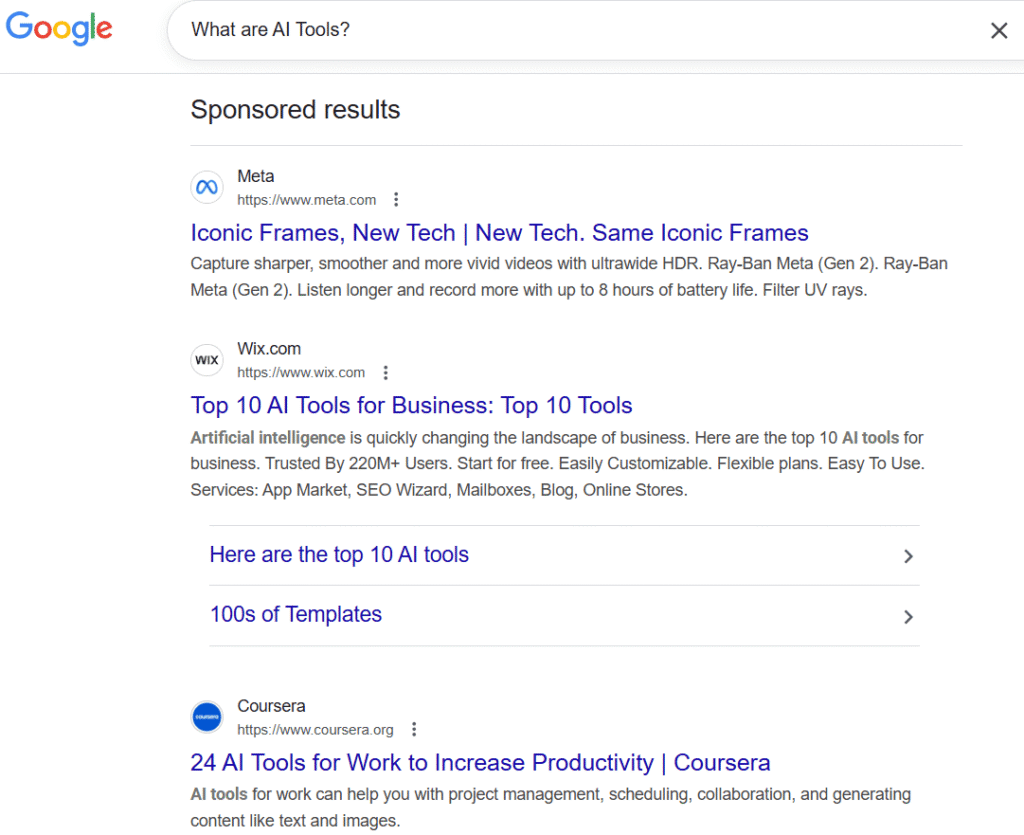
Here is an example for search engine result:
Another example showing how Perplexity top AI model responses to a query “what are AI tools?”:
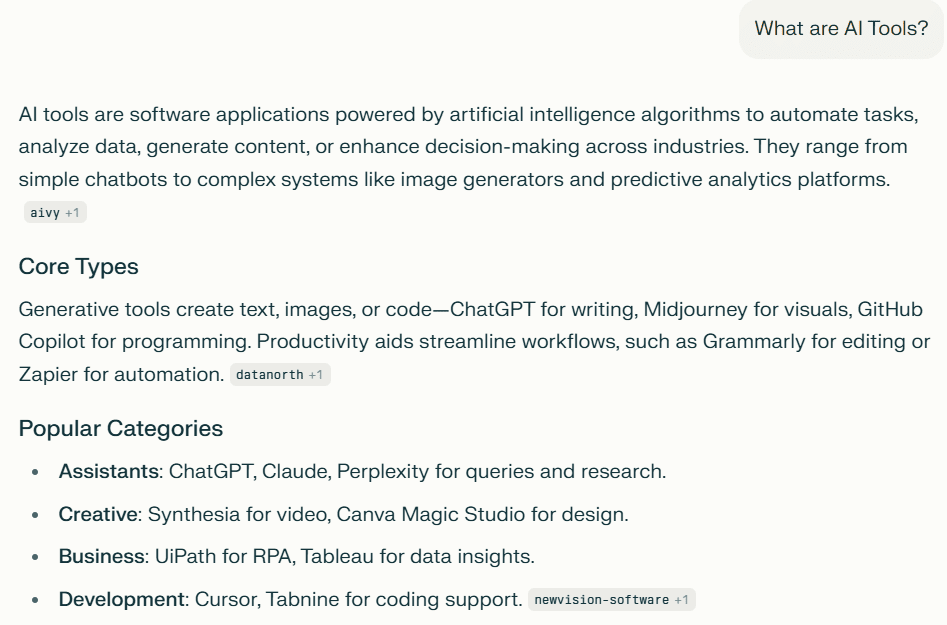
So, this is how Perplexity answers look.
Well, we’ve mostly used Perplexity to search for answers, explore new topics, and expand our knowledge. But, here’s another way Perplexity responses known as: Perplexity Pages!
What Are Perplexity Pages?
Perplexity pages turn search results into full articles that are completed with sections and also have citations. These pages are not written by humans, but are generated on the basis of user queries and relevant sources.
Here’s how the Perplexity page looks:

It is really important for publishers and content creators as pages introduce a new visibility question. Let’s say your content gets pulled into a page, then this will help you gain more exposure, which you might not get with clicking through to your site.
But if your content doesn’t show up, this means your content has poor structure, clarity, and credibility; signals covered in detail in an AI search visibility audit checklist.
How Perplexity Search Works?
Before we start with how Perplexity works, let’s clear where it gets its data from. It first gathers all the information, then ranks it, and then it creates a clear summarized answer for you with citations so that you can verify the sources.
Now, let’s look at the 5 major steps that Perplexity follows:
Step 1: Query Transformation
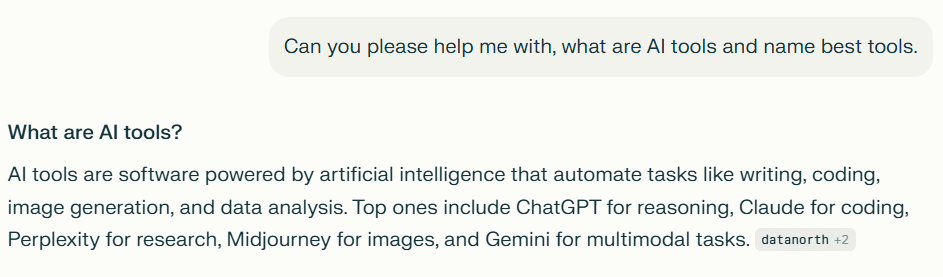
As soon as a user types a question or speaks a question, it uses an AI translator to understand the clear intent of the query. It removes any filler language like “can you please” to help you get the information that you need.
This is really important because if the question is not structured properly, then there are high chance of you getting an irrelevant answer.
Here’s an example of how perplexity provides the exact information after structuring the query properly:
Step 2: Parallel Searching Across Indexes
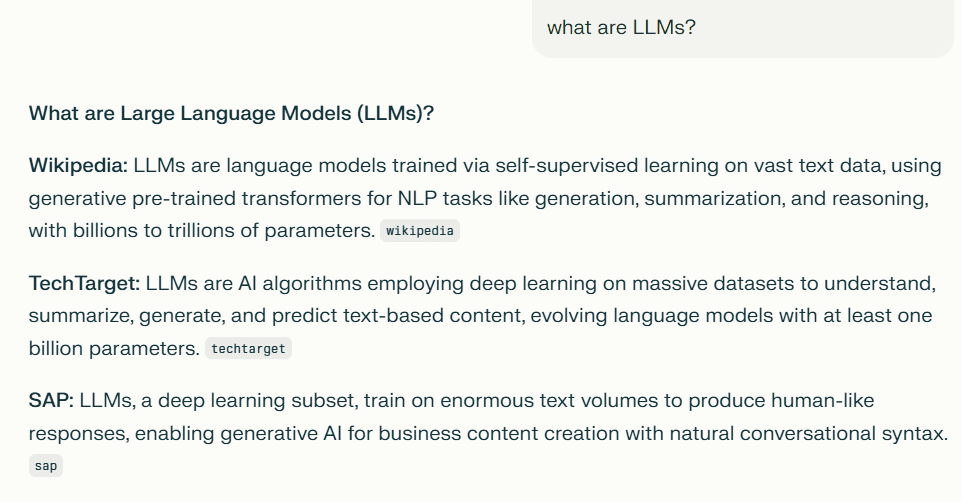
To provide users with the perfect answer, Perplexity goes through multiple sources such as the web, forums, and uses its own Sonar, etc.
In 2026, Perplexity doesn’t just crawl the web to answer users query but it also pulls out the data from various sources:
- It uses Licensed Google and Bing indexes (if permission is granted)
- uses its own crawler called Perplexity Bot
- It has direct API partnerships and the Publisher Program
Perplexity uses a $42.5 million revenue-sharing pool. They don’t just “access” data; they have an 80/20 revenue split with partners like Time, Fortune, and Der Spiegel.
With the help of these sources, you get the well combined answer for your query.
Here’s an example where you can see how Perplexity provides the answer after going through different websites, to provide the perfect answer.
But there are still a few places that Perplexity cannot access, such as personal messages, emails, private real-time data, and visual details inside the uploaded video.
Step 3: Reranking the Best Results
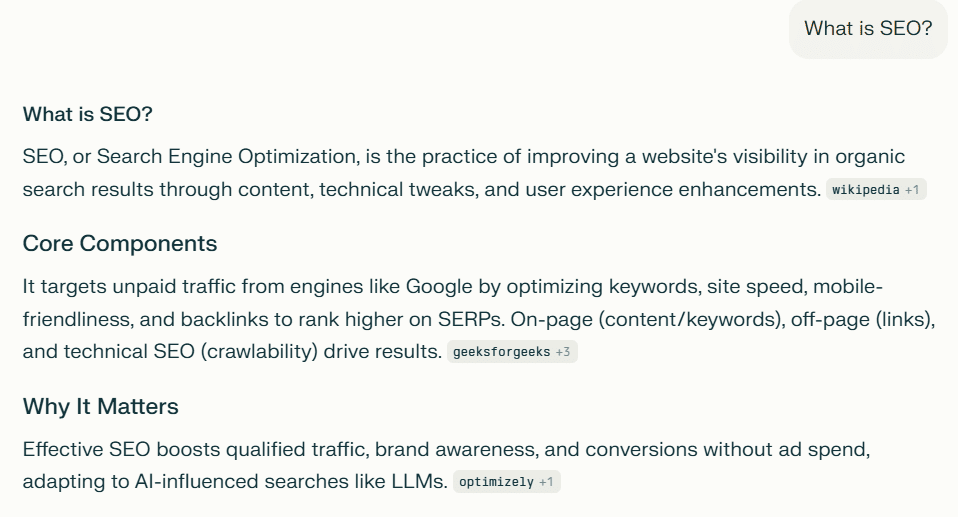
It’s very easy when it comes to choosing links for answering a query, but ranking them in order to provide users with the best answer is difficult. The Perplexity AI tool uses a ranking system to prioritize the best sources for you. The AI model goes through each link based on clarity, relevance, content freshness signals, and source credibility.
Everyone thinks that Perplexity crawls the entire web in real-time. But that’s not how it works. Crawling with Perplexity Bot is just one input; other than that, results mostly come from already existing index pages and trusted datasets.
Here’s an example where you can see how Perplexity reranked the best results based on credibility, content structure, and relevance:
Step 4: AI Synthesis Using RAG
Perplexity now uses something called Retrieval-Augmented Generation (RAG) to build the final answer. It means that it uses fresh information every time you ask a query, and because of this, there are very few chances of getting wrong information.
RAG keeps AI away from inventing details. The system only uses information pulled from the search results, which gets analyzed, and cuts down on errors.
This is really important because AI isn’t filling blanks with its responses. They are actually explaining things on the basis of verified sources.
This is why Perplexity delivers accurate answers even on topics it wasn’t explicitly trained on.
Step 5: Attribution & Cited Sources
Every time Perplexity responds, it is backed by a specific source. On which you can easily click to see if the information provided to you is correct or not. This helps in building transparency and confidence.
Let’s look at the example where you can see the sources mentioned by Perplexity while giving the response:

Now that you have understood how Perplexity gathers the information, access the sources, and set the final answer step by step. Let’s see what makes it different to use? So, here are the key features that make it stand out from other tools.
Key Features of Perplexity Search
There are so many features that quietly shape how perplexity search feels different from traditional search tools. And the difference isn’t just visual, it’s also behavioral. It lets users interact with the information in a more thoughtful way.
1. Answer-First Responses
Instead of directing users to multiple links, Perplexity responds with a summarized and structured response. For users who want the accurate answer, without going through multiple links, this saves a lot of time and effort. The goal is simple: reduce friction between a question and understanding.
2. Clear, Verifiable Sources
Each and every response has clickable citations. Because of this, users can trust. They
can check sources instantly, which supports learning rather than passive consumption. Over time, this creates better knowledge, not just quick takeaways.
3. Follow-Up Questions that Encourage Learning
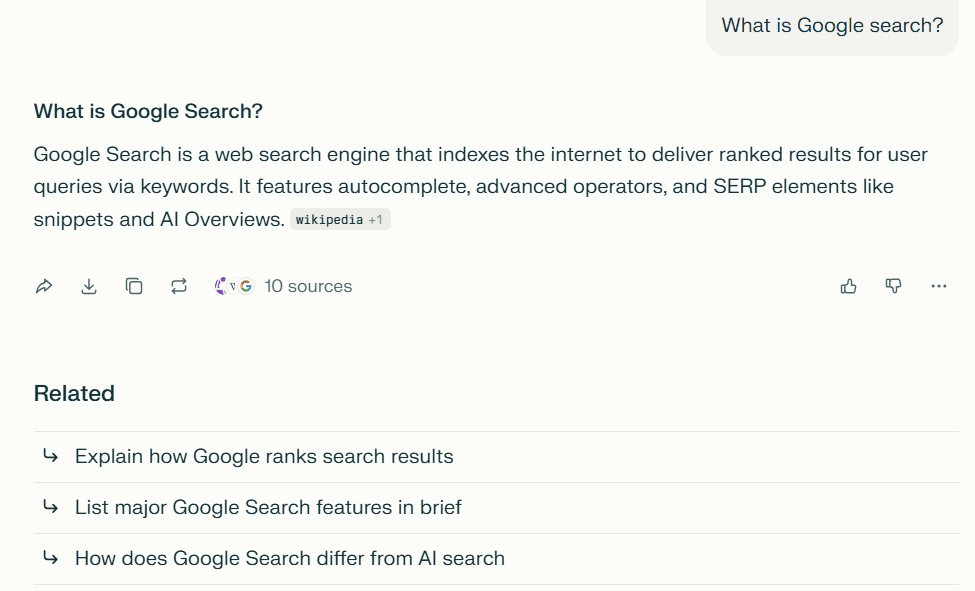
It automatically suggests related queries based on the original topic, similar to how a ChatGPT query fan-out generator maps follow-up questions. These prompts mirror how humans think; one question naturally leads to another. This design encourages deeper exploration instead of stopping at surface-level information.
Here’s an example of the type of follow-up question that Perplexity sends after your query:
4. Voice and Mobile-First Use
You can use Perplexity smoothly on mobile and can also send a voice input. Some people speak differently than they type, and Perplexity adjusts to that. Spoken user queries tend to be longer and more contextual, which pushes content creators toward optimizing for voice search and writing in a clearer, more natural way.
5. Pages for Topic Discovery
Perplexity Pages organizes information into structured sections, turning search results into readable articles. This is especially useful when users want to simultaneously search multiple aspects of a topic without opening dozens of tabs.
These features make perplexity search useful for both quick questions and deep research.
Why Is AI- Powered Tool Perplexity Search Growing So Fast?
Perplexity AI is experiencing rapid growth in 2026, with its valuation hitting $18–$20 billion, part of current AI platform growth data worth watching.
This is because people want direct answers and not access to links to search for answers. With the help of AI-powered tools, users don’t have to go through multiple ads and similar, incomplete answers.
Users can just type their query and get valid information with the sources, so that if they have doubts, they can verify the answer.
Also, search engines are crowded with sponsored links and SEO-optimized fillers. Whereas in AI Tools like Perplexity, you don’t have to go through multiple ads to find an answer.
Perplexity, which you can track with a Perplexity visibility tracker, offers both paid and unpaid versions, which sync across devices, and it also supports voice inputs. Whether you’re on your phone, laptop, or using the Perplexity Assistant, it stays consistent.
What AI models Perplexity AI offers?
Perplexity doesn’t use one AI model. It uses various models together, and each model is optimized for performing different tasks.
The approach combines search, reasoning, and summarization to deliver better results. Models like Sonar excel at understanding user queries. Other models, such as GPT-5.2 and Claude 4.5, handle synthesizing information or tackling complex topics better.
By switching between them strategically, Perplexity adapts to what each request actually needs.
Users can switch between different reasoning models, according to their needs, such as:
- Sonar Deep Research: The flagship for 100+ source synthesis. This provides deep research, expert-level subject analysis, detailed report generation, etc.
- GPT-5.2: It’s the fastest and most trustworthy option if you want high-quality answers such as answers related to complex logic and math.
- Claude 4.5 Opus: Reserved for the Max Plan, used for deep reasoning, coding, and computer use.
- Gemini 3 Pro: It is best for doing high-context research and for analyzing complex files. It’s perfect to find specific data from a 500-page PDF.
- Grok 4.1: It’s best if you’re looking for up-to-date information, and you can monitor your own visibility there with a Grok rank tracker. It can help you in summarizing trending topics from social media and news.
- Kimi K2 Thinking: It can help in solving advanced problems and provide a step-by-step breakdown of any technical topic.
- R1 1776: It is a specialized reasoning model for high-security tasks. It is trained to provide you with factual and accurate information.
This flexibility is especially useful for advanced research tasks. Different models handle different types of questions better.
Perplexity Pro: What It Offers?
The Perplexity Pro version unlocks advanced features that are built especially for professionals, researchers, and teams who need more than the free version offers.
Perplexity Pro Search Key features include:
- Comet AI Browser is a workspace that automates tasks like booking flights, scheduling meetings, and managing shopping checkouts.
- Comet Plus funds and unlocks premium content from partner publishers.
- This model also provides you with unlimited file uploads for analysis (PDF, CSV, etc.).
- You can also go for unlimited Pro Searches with deeper internet analysis.
- This model helps in generating better quality images and videos.
For enterprise pro users, this supports work involving internal files, long documents, and complex topics.
Perplexity vs Google Search vs ChatGPT
Each platform serves a different purpose. Knowing when to use each one helps you work smarter.
Google search prioritizes ads and then adds answers as a layer. Google AI overviews reflect this shift, but Perplexity was designed around explanation from day one. ChatGPT, on the other hand, has chosen a different path: it focuses on Action and Creation.
Let’s understand the difference with a simple comparison:
| Feature / Dimension | Google Search | Perplexity | ChatGPT |
| Core Purpose | Navigate the web and find links | Provide cited answers from the web | Generate explanations, ideas, and reasoning |
| Primary Output | Ranked list of links + SERP features | Synthesized answers with source citations | Conversational responses without default citations |
| Source Transparency | Indirect (user clicks links) | High (visible citations for each answer) | Low–Medium (sources only if explicitly prompted or enabled) |
| Best Use Case | Navigation, local search, shopping, real-time info | Research, learning, comparisons, fact verification | Brainstorming, writing, reasoning, strategy |
| Ads & Commercial Bias | High (ad-driven SERPs) | Low (answer-first, minimal ads) | None (subscription-based, not ad-driven) |
| Follow-up Questions | Requires new searches | Built-in conversational follow-ups | Native conversational flow |
| Real-Time Web Access | Yes (constantly updated index) | Yes (pulls live web sources) | Limited / model-dependent (not always real-time) |
| Content Creation | Not designed for creation | Limited (summarizes existing info) | Strong (original writing, ideation, frameworks) |
| Ideal User Intent | “Where do I go or buy?” | “What is true and how does it work?” | “How do I think, plan, or explain this?” |
Perplexity is the best choice if you want accurate answers with citations. Google Search is still the go-to for finding websites, products, or local businesses. ChatGPT works best when you need creative input, drafting help, or exploratory thinking.
How Perplexity Impacts SEO in 2026 and Beyond?
Perplexity AI is redefining what “ranking” means. This system prioritizes site authority signals, clarity, and trustworthiness instead of only matching keywords. The goal is to find the best few sources that can provide the user with the best explanation.
Keywords still play a role, but they’re no longer the deciding factor. When it comes to AI search, what you explain, how well you explain it, and whether your brand is trusted to explain it matter far more than exact-match optimization.
From Keyword Optimization to Entity & Intent Optimization
Traditional SEO focused mainly on keywords and backlinks. Whereas AI search shifts the focus toward entity optimization and actions.
Perplexity checks your authority, brand relevancy in mainly 4 areas. That includes:
- AI agents like Perplexity prioritize licensed publisher partnerships. So, if your brand is mentioned in high authority industry articles and news coverage, then you gain their trust.
- If real people are recommending your brands on forums and discussion platforms like Reddit, then your content will be treated as authentic, a pattern closely tied to community brand mentions.
- If your brand is talked about by expert commentary and is mentioned continuously. Then there are high chances that your brand will be considered as a leader of that niche.
- If your content is written clearly and has factual explanations, then you can be a cited source.
In short: If you want to be visible, you’ll have to be relevant. If your brand appears in meaningful conversations around a topic, AI systems are more likely to treat it as a reliable source and surface it when users ask related questions.
Why Authority Signals Matter More Than Backlinks Alone?
Backlinks still matter, but they are no longer the strongest signal on their own. AI search engines weigh expertise and consistency more heavily than sheer link volume, the exact framework laid out in an E-E-A-T checklist.
As a result, SEO strategies must evolve from “ranking pages” to building authority ecosystems around core topics.
How Tracking AI Visibility Changes SEO Strategy?
One of the biggest challenges with AI search is that visibility becomes harder to detect. You may rank #1 in Google and still never appear inside an AI-generated answer.
That’s because LLMs like Perplexity, Gemini, and ChatGPT cite only 2-7 domains per response. If you aren’t in that tiny circle of trust, your traffic from that query drops to zero.
They look for specific entities like brands/experts that are consistently mentioned across Reddit, YouTube, and high-authority news sites. If the “web consensus” doesn’t include you, the AI won’t either.
There is no “Page 2” in an AI response. Search has shifted from a browsing experience to a deliverable experience.
So, if your content is not selected, it’s effectively invisible; a free AI visibility checker can confirm exactly where you stand.
This creates a real visibility risk for brands that rely solely on traditional SEO metrics.
Platforms like an AI citation tracking tool help bridge this gap by showing where and how brands appear inside AI-driven search answers.
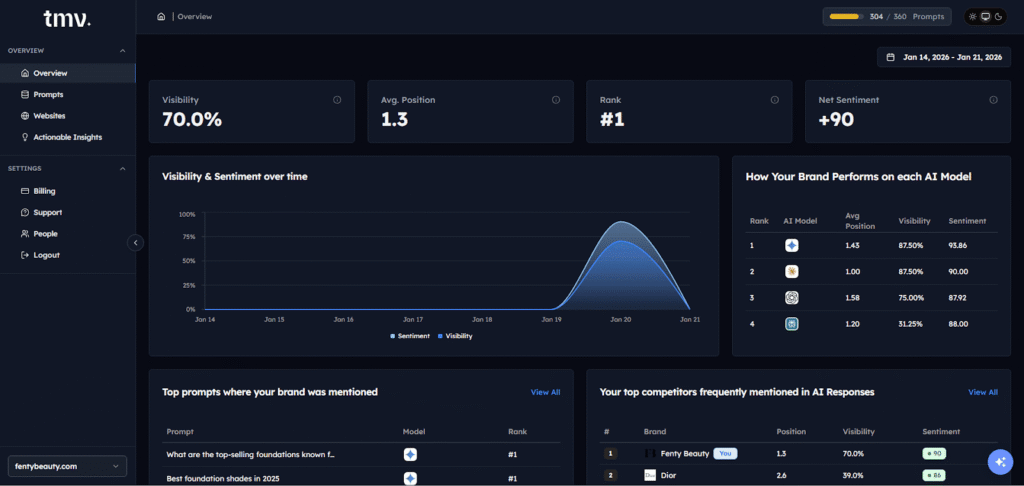
As AI search grows, tracking presence across these systems will become as essential as keyword tracking once was. If you know how AI works and how they choose the link for a query, then you’ll be able to create more helpful content that shows up in AI responses.
Final Thoughts
Perplexity search represents the future of AI-driven discovery.
Understanding how it works is no longer optional for brands, publishers, or SEO professionals. Visibility is shifting away from pages and toward answers.
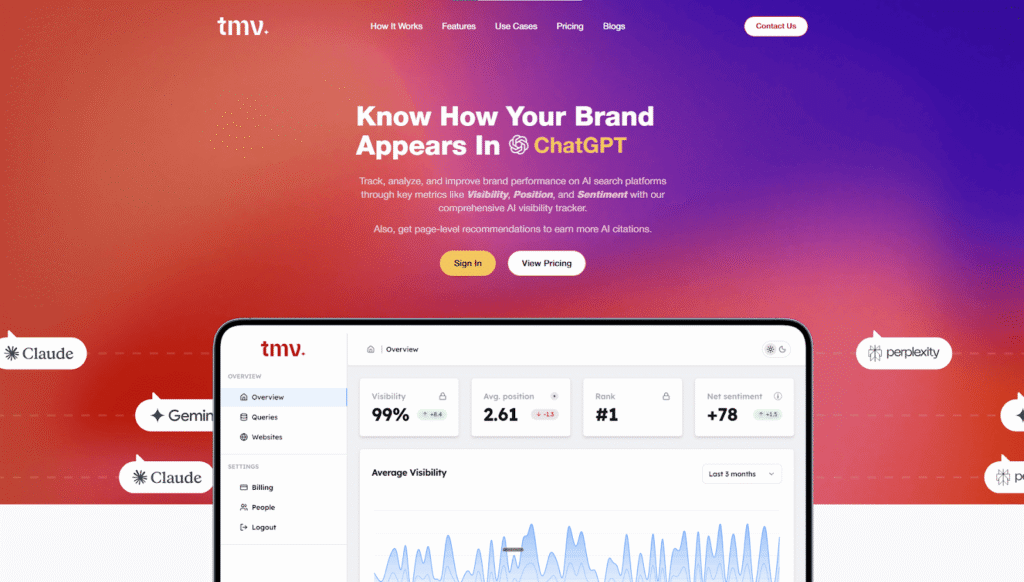
Tools like Track My Visibility empower you to see exactly where your content appears inside AI search results, before your competitors do. When decisions are made inside answers, not links, knowing your AI visibility becomes a competitive advantage.
Search isn’t disappearing. It’s being rewritten.
And the Perplexity AI search tool is leading that change.
Frequently Asked Questions
Is Perplexity AI a search engine?
Yes, Perplexity AI functions as an answer-first search engine that explains topics clearly instead of listing links, making the search experience feel more conversational and useful.
How does Perplexity find sources?
It processes search queries, pulls data from publicly available websites, research sources, and indexed content, then selects and cites the most relevant material it can collect.
How to use Perplexity AI for search?
You simply ask a question in natural language using the web interface or perplexity assistant, treating it like an AI tool built for real world research and learning.
How Perplexity AI works?
It interprets intent, retrieves supporting data from trusted sources, and synthesizes an explanation grounded in those materials rather than generating answers in isolation.