



AI search doesn’t rank pages. It selects sources. When platforms like ChatGPT or Google AI Overviews generate an answer, they pull from a small set of pages they treat as credible enough to cite. That decision hinges on one foundation: the E-E-A-T checklist.
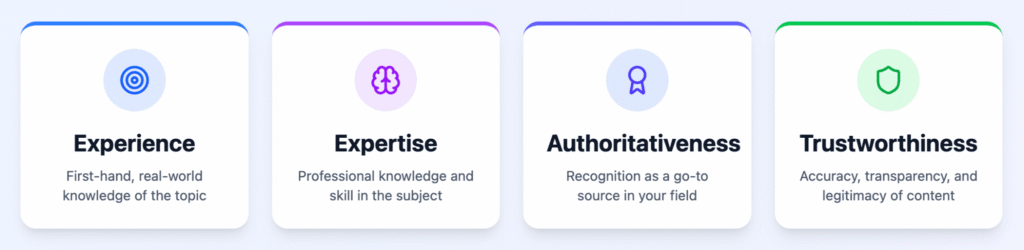
E-E-A-T: Experience, Expertise, Authoritativeness, and Trustworthiness, signals whether your content is citation-worthy, not just index-worthy.
The selection process behind the scenes is fairly clear. AI first retrieves a shortlist of trustworthy pages. It then weighs each page on author credibility, depth, citations, and consistency with other authoritative sources. Finally, it picks citations from the pages that look most reliable: recognized brands, named experts, and well-cited content.
In this guide, you’ll learn how to operationalize E-E-A-T to align with this process and turn your content into a source that AI systems choose to cite.
TL;DR
- E‑E‑A‑T (Experience, Expertise, Authoritativeness, Trustworthiness) is the key filter AI engines use to decide which sites they cite in search answers.
- Strong E‑E‑A‑T boosts your search visibility across Google AI Overviews, ChatGPT, Perplexity, Gemini, and Claude; weak signals make your pages practically invisible.
- To win citations, define your core topical authority, show real experience and data, use clear author bios with schema, and earn quality backlinks and off‑site mentions.
- Optimize for AI extraction with answer-first writing, clear headings, FAQs, bullet points, and comparison tables, with technical trust signals like valid HTTPS, and proper schema markups.
- Use tools like Track My Visibility to monitor AI citations, spot gaps, and refine your E‑E‑A‑T content strategy so your brand becomes a default source in AI search results.
What is EEAT
E-E-A-T is an acronym created by Google that stands for Experience, Expertise, Authoritativeness, and Trustworthiness. Google uses it to evaluate the overall content quality of a page, especially its credibility, the author behind it, and the reliability of the website. Originally outlined in Google’s Search Quality Rater Guidelines, AI platforms have since adopted Google E-E-A-T guideline as the criteria for selecting citation sources to select citation sources.
Experience
Experience means the content reflects real-world use or hands-on exposure to the topic, not just theoretical knowledge. This typically shows up as real-life examples and case studies, first-hand product usage or workflows, original data or campaign results, and visual proof such as screenshots or performance metrics.
Take this review showing the user experience of using the app, for example.

Expertise
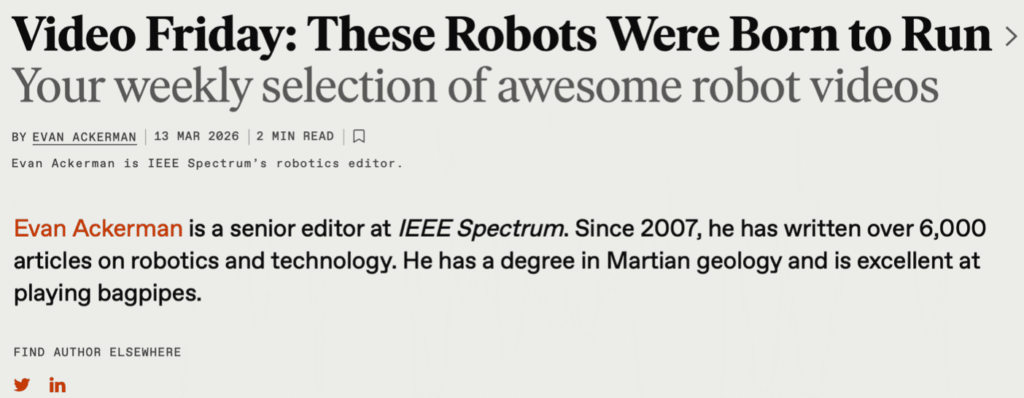
Expertise signals that the author or organization has deep, relevant knowledge in the subject area, often shown through detailed explanations, technical depth, consistent coverage of a niche, and clearly defined author credentials or professional background.
For instance, this robotics news article, written by a senior editor, highly shows subject matter expertise.
Authoritativeness
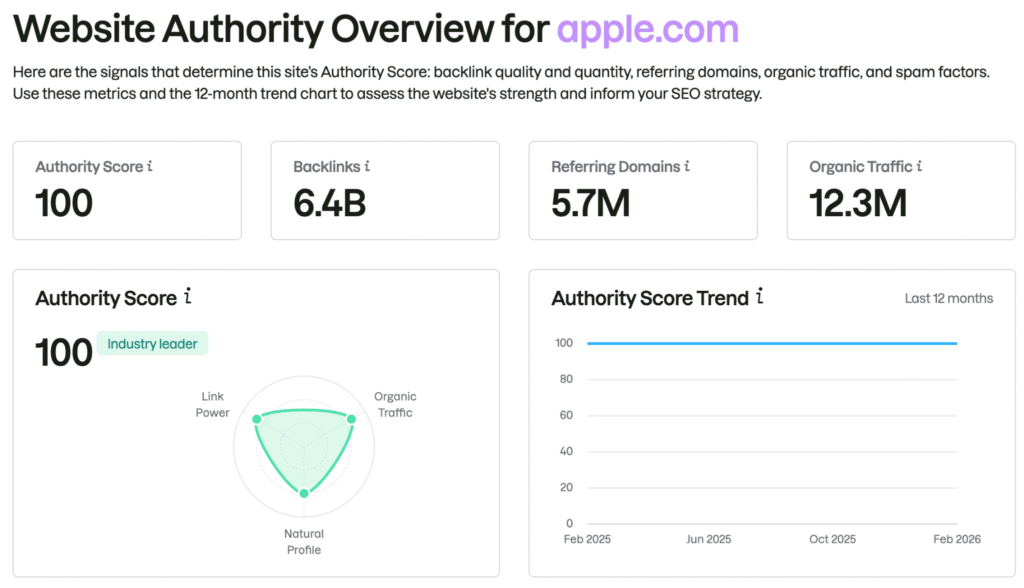
Authoritativeness reflects how recognized and respected a brand or site is within its niche, typically built through high-quality backlinks, media mentions, third-party validations, and a consistent presence across trusted platforms.
For example, Apple has high authority as it is mentioned across major media platforms and earns backlinks from authoritative sources.
Trustworthiness
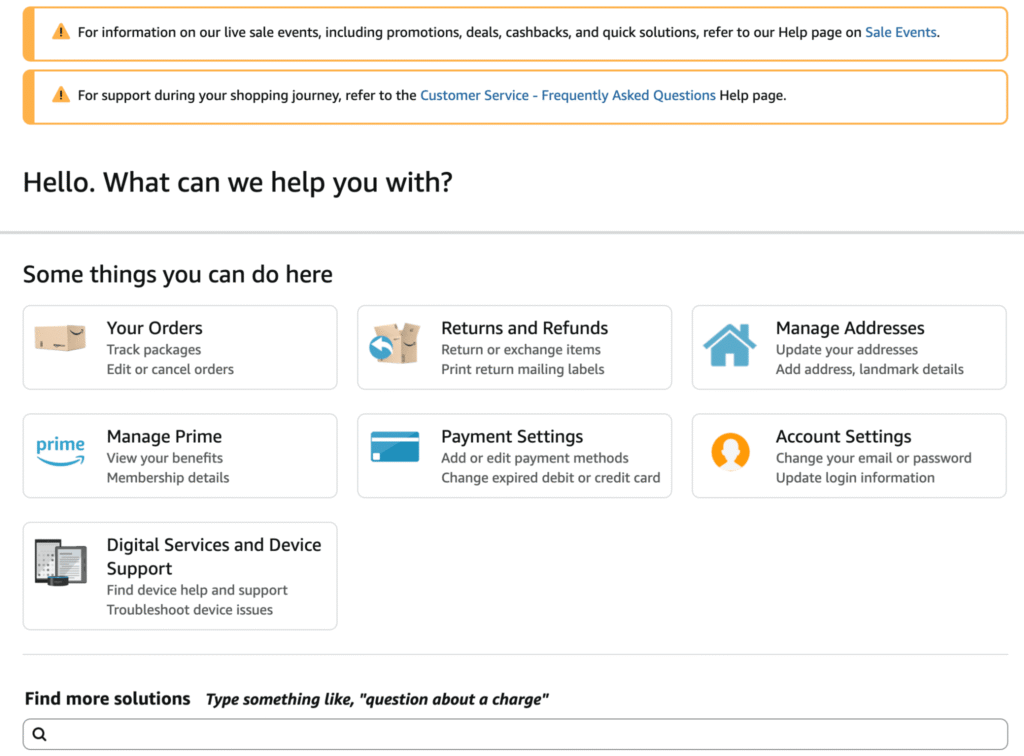
Trustworthiness means the content is accurate, transparent, and safe for users. The signals that drive it include clear authorship, credible citations, updated timestamps, a secure website experience (HTTPS), and honest disclosures. These are especially critical for high-stakes or YMYL queries.
Amazon, a well-known shopping site with clear policies and helpful customer support, earns trust as an authoritative source.
For a complete audit across all E-E-A-T signal areas, look out for this Google E-E-A-T Audit Checklist covering all 40 signal items with performance rating to track improvement over time.
Why EEAT Matters for AI Search Results
E‑E‑A‑T matters for AI search results because AI engines now use it as the quality credibility filter to decide which sources are safe, credible, and useful enough to cite in their answers. In other words, strong E‑E‑A‑T determines whether your brand appears in AI‑driven search results at all.
Why it matters:
AI needs trustworthy defaults. Generative systems don’t quote thin, sketchy, or unverified content. They lean on signals like author expertise, domain authority, and clear citations, all core E-E-A-T cues.
Weak E-E-A-T means invisibility. AI search systems pull citations from pages that clearly demonstrate strong E-E-A-T. Low-signal pages rarely surface in AI search visibility.
It bridges SEO and GEO. Better-ranked, E-E-A-T strong pages are retrieved more often by the underlying search engine. AI tools then pull from that shortlist, so good E-E-A-T lifts both search rankings and AI-answer visibility.
How E‑E‑A‑T shows up in AI search results
1. Retrieval filter: Search engines first surface pages that already look credible (expert‑backed, authoritative backlinks, consistent topic coverage); AI then pulls from that shortlist for citations.
2. Citation selection: Within that shortlist, AI favors pages with named experts, clear dates, original data, and citations, because those are easier to justify as trustworthy answers.
3. Brand authority scaling: The more your brand appears as a cited, named source across AI‑search platforms, the more the system treats you as a default authority for future queries in your vertical.
 Pro Tip: Don’t want to lose AI visibility for your brand? See where your brand already appears in AI responses and where it doesn’t. Run a quick audit to check your AI visibility and see how your brand currently shows up across major AI platforms.
Step-by-Step Framework: How to Use E-E-A-T for AI Citations
If you want your brand to appear not just in search engine results pages but inside AI-generated answers, you need a deliberate E-E-A-T strategy. AI citation pipelines don’t reward generic content. They reward clear topical authority, verifiable expertise, and explicit trust signals.
This framework walks through 10 practical steps to engineer E‑E‑A‑T into your own content, site structure, and off‑site presence so AI engines don’t just rank you, they cite you.
Step 1: Define Your E-E-A-T Surface Area
Before you can win AI citations, you need to decide where your brand should be treated as an authority. This is your E-E-A-T surface area: the core topics and content clusters where you commit to owning the conversation (for example, “best LLM visibility tools,” “how to track ChatGPT citations step by step,” or “comparing AI search visibility platforms for ecommerce brands”).
- Start by listing your true verticals (service lines, product categories, or high-intent use-case topics).
- Group them into clear topic pillars such as “E-commerce SEO,” “AI search visibility,” or “product-level optimization.”
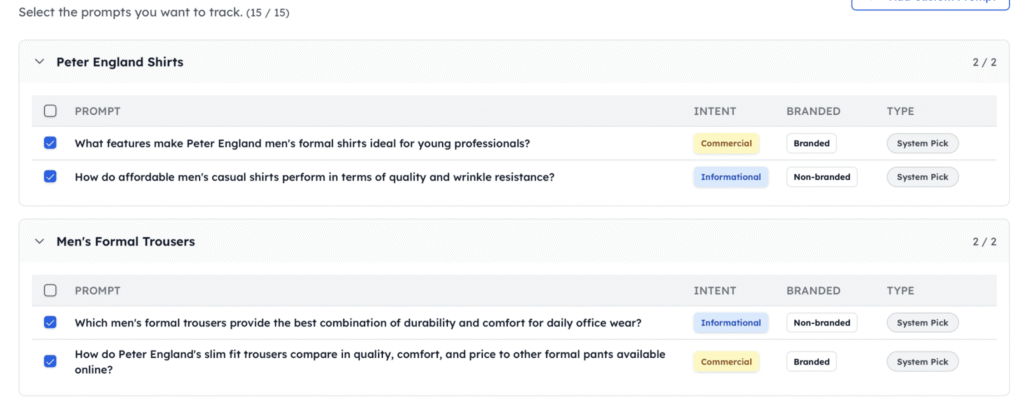
- Test common queries in AI-search tools like Track My Visibility to see which brands and pages are already being cited. Then consciously pick the clusters you can realistically dominate with differentiated content, case studies, original data, and practical guides.
Step 2: Build Experience Signals Into Content
To win AI citations, your content has to look grounded in real-world use, not theory. AI engines favor pages that show clear evidence that you’ve actually done what you’re describing, not just that you’ve read the best practices.
In practice, that means building experience signals directly into your content: running real experiments, documenting them transparently, and turning them into concrete examples.
Instead of “brands see uplift with X,” write “we tested X with [specific setup] and saw Y uplift in [metric] over [timeframe].” Use case‑study‑style sections that walk through your objective, method, and results. Tie each result back to a practical takeaway for the reader.
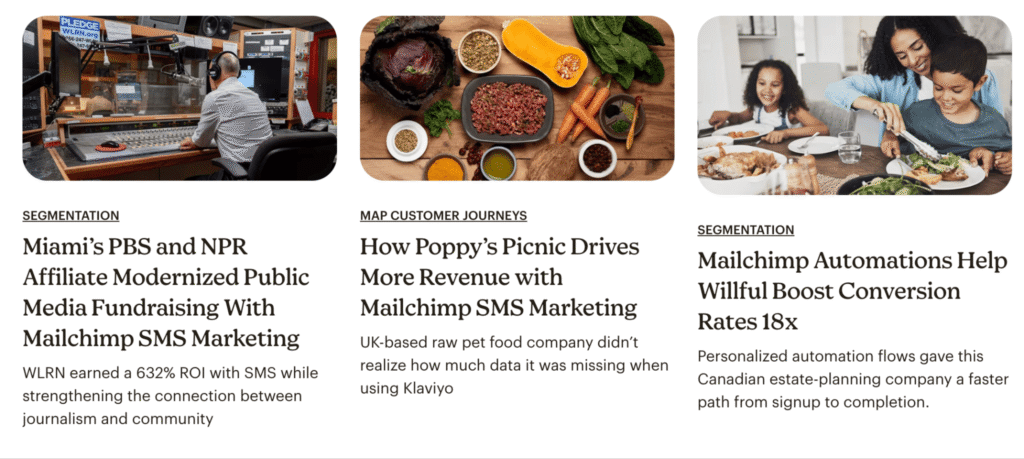
Wrapping key claims in proof of real-world experience, like A/B tests, store-level optimizations, or campaign results, you give AI a clear reason to trust your content as a lived-in, authoritative source rather than generic advice.
Step 3: Demonstrate Expertise Structurally
To rank in AI search for maximum visibility, expertise must be visible not just in the text but in the structure and metadata of your pages. AI engines look for clear signals that a real, qualified person or team stands behind the quality content, and that expertise is easy to verify.
This means:
- Writing strong, credential‑rich author bios that state who wrote the piece, their role, and their specific domain expertise (for example, “Head of SEO with 8+ years experience scaling e‑commerce brands, has published over 3000 articles”).
- Adding Person schema and ‘Article’ or ‘HowTo’ markup so AI can read author, role, and publication date as structured data.
- Linking from key on-site content to dedicated author profiles or team leadership pages that reinforce professional background and authority.
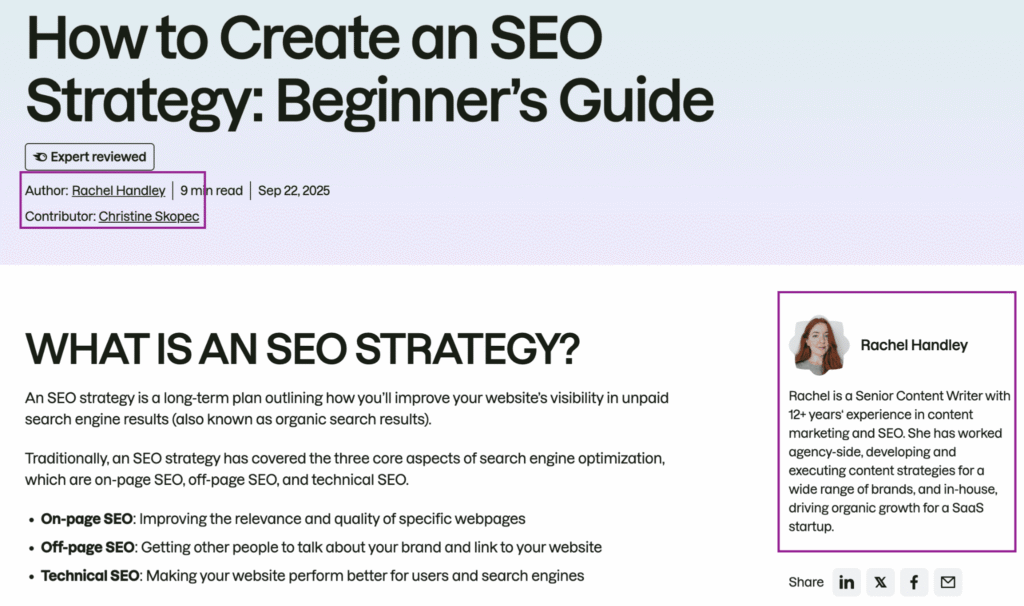
When you bake expertise into your page structure and schema, you make it easy for AI to resolve “who knows this best?” and to choose your brand as the cited expert. This isn’t just theoretical: BrightEdge analysis (2025) found that pages with author schema appear in AI answers 3x more often, and 70.4% of sources cited by ChatGPT include Person schema.
Step 4: Build Authoritativeness Across the Web
AI doesn’t form opinions about your authority in isolation. It looks at how your brand is treated across the web. That means deliberately building off‑site authoritativeness so AI repeatedly sees your brand cited or referenced in trusted places.
This starts with earning high-quality backlinks from industry-relevant blogs, directories, and media outlets, especially those that already rank well for core queries in your niche.
Beyond links, you want visible brand mentions and discussions wherever your target audience hangs out on LinkedIn, Reddit threads, Social media posts, and niche communities where your brand is named as a recommended tool, go‑to resource, or expert voice.
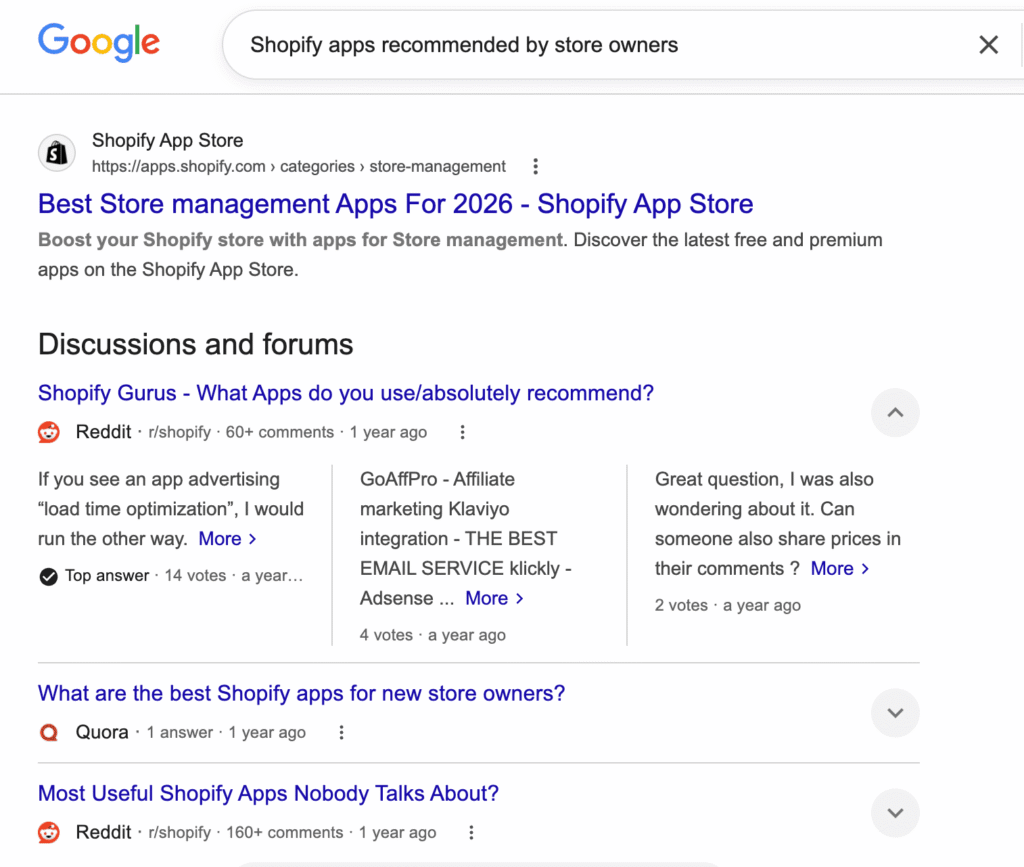
Grow these external signals systematically, and AI engines will begin treating your brand as a default authority, making your content far more likely to appear; and earn citations; in AI search results.
Pro Tip: Authority-building strategies look very different when mapped against how AI platforms actually weigh external signals. Learn what citation patterns reveal about off-site presence, and which platforms respond to it most in this AI Search Statistics 2026.Step 5: Engineer Trustworthiness Signals
For AI to confidently cite your content, it must first classify your site as trustworthy, transparent, and secure. This is especially critical for brands that handle product decisions, pricing, and user data in the YMYL category.
Start by making sure your key pages are clear, well‑organized, and easy to verify: concise language, logical headings, and visible publication or “last updated” dates that show the information is current. Support claims with links to reputable sources or your own data, and avoid unsubstantiated marketing hype.
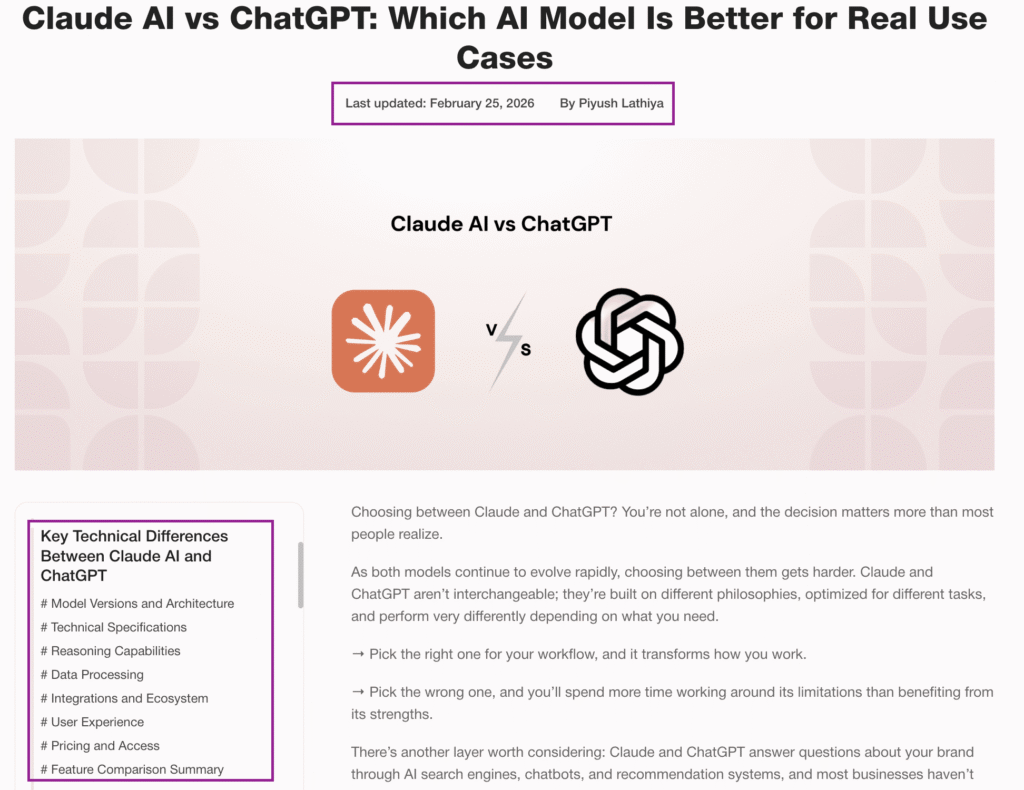
Technically, reinforce trust with HTTPS, valid security certificates, clear privacy policies, and straightforward terms of service on product and checkout‑related pages.
When AI sees consistent trust cues, secure connections, transparency about sources, and clear accountability, it is far more likely to treat your brand as a reliable citation source rather than a generic vendor.
Step 6: Structure Content for AI Extraction
To get cited in AI search results, your content has to be helpful and extractable. When a model chooses content to form an answer, it pulls clean, self-contained passages. That means writing in a way that lets AI lift a clear answer without parsing or guessing.
- Start with an answer‑first structure: open key sections with a direct, concise response (2–3 sentences), then follow with context, examples, or data. Many AI platforms specifically extract from the first 200 words of a section.
- Use clear, descriptive headings that mirror real user intent (e.g., “How to optimize PDPs for higher conversion”).
- Wrap important Q&A blocks into FAQs, and use bullet points, short paragraphs, and comparison tables to break information into digestible chunks that AI can easily cite.
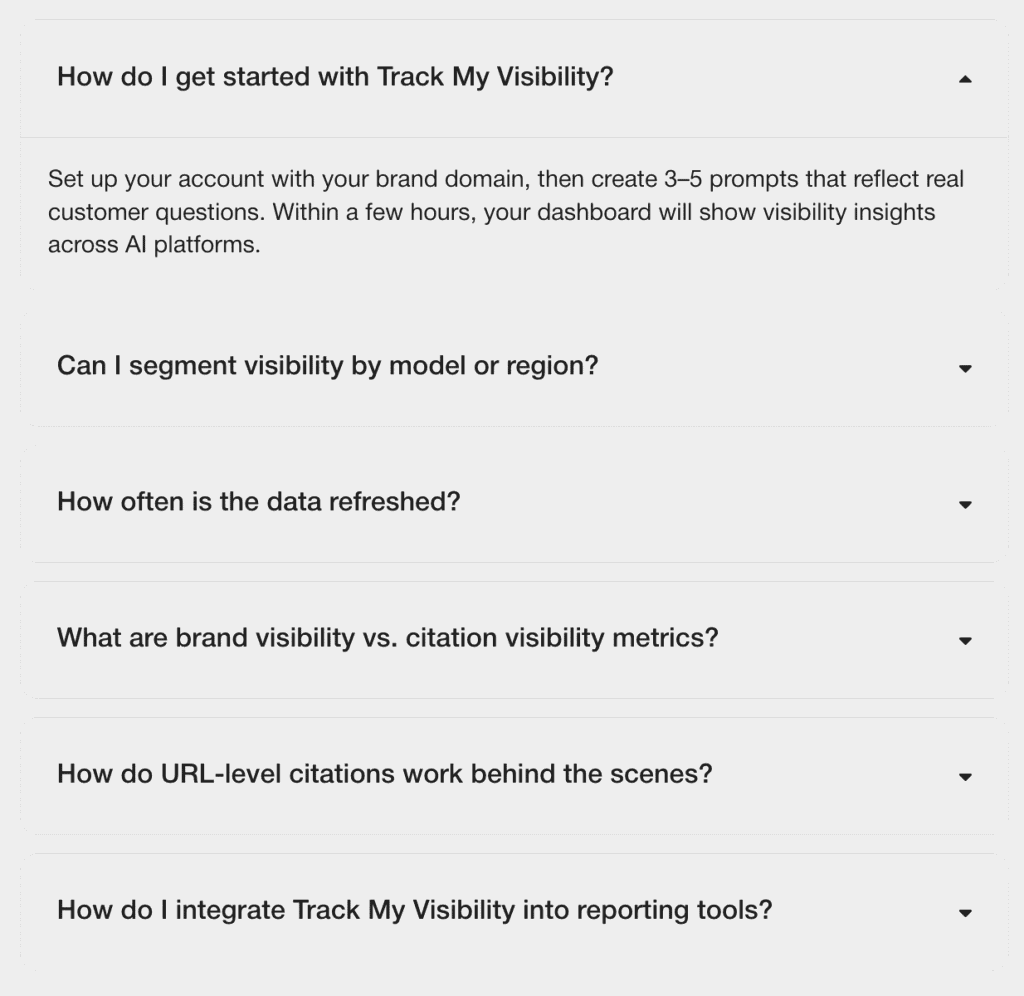
Step 7: Reinforce E-E-A-T with Internal Linking
Internal linking is one of the quietest but most powerful ways to strengthen E‑E‑A‑T in AI‑search contexts. When you strategically connect related content, you help AI understand your topical authority, depth, and consistency across a cluster.
Start by building topic‑based hubs (pillar pages) around your core E‑E‑A‑T surface areas (e.g., “E‑commerce SEO,” “AI‑search visibility,” “Shopify optimization”) and link them to detailed, supporting articles.
Use keyword‑relevant anchor text that clearly describes what the linked page covers, and make sure each hub links back to authoritative guides, case studies, and data‑driven posts.
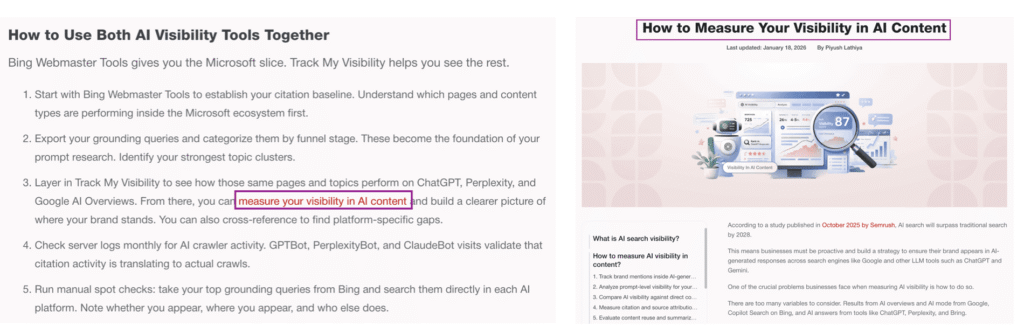
Over time, this creates a tightly woven internal ecosystem where AI sees expert-level content networks instead of isolated pages. That’s what gets your brand treated as a comprehensive, trustworthy source worth citing.
Step 8: Add Proof Layers
To make your content citation-worthy, you need visible proof layers AI can use as evidence of real expertise and results.
That means embedding original research (tests, benchmarks, or proprietary data), expert quotes or commentary from your team or external authorities, and concrete data results (e.g., “we increased organic traffic by X% over Y months” or “CTR rose Z points after changing the layout”). Where possible, pair these statements with visuals like charts or tables that summarize the outcome.
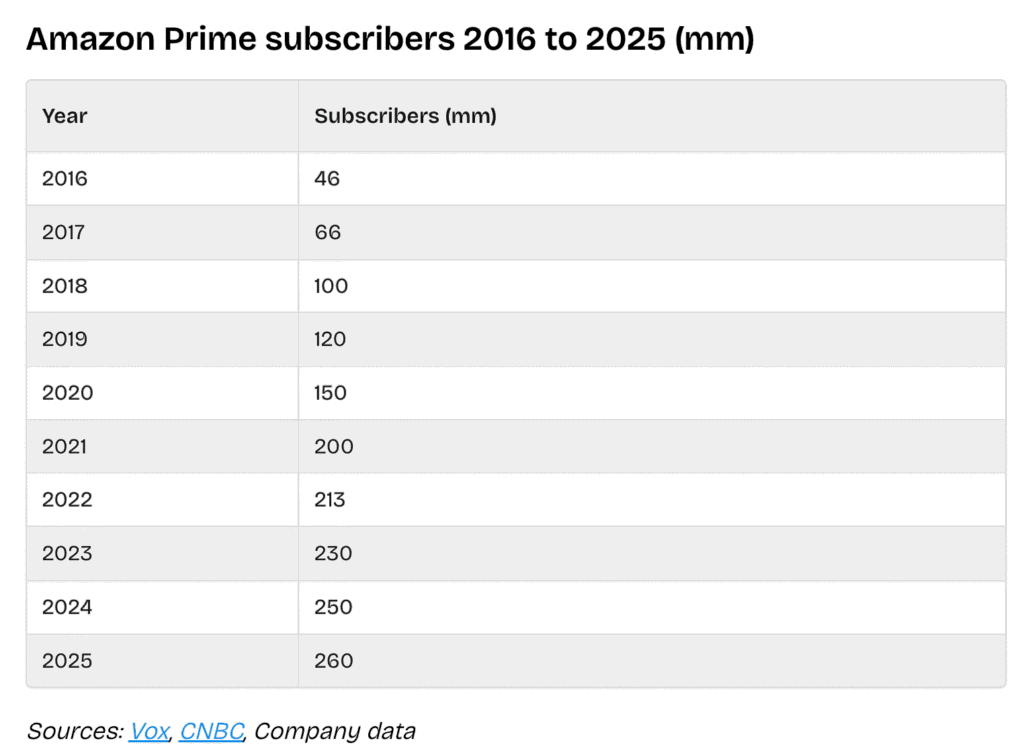
When you wrap your key claims in proof, like experiments, numbers, and named subject matter experts, you give AI a clear reason to trust your page as a primary source.
Step 9: Validate with External Signals
If your E‑E‑A‑T signals live only on your own site, AI will treat them as self‑serving. To become a credible citation source, you need third‑party validation that lives outside your domain and reinforces your authority.
This means:
- Publishing guest posts or expert commentary in relevant industry blogs, newsletters, or trade publications.
- Earning podcast mentions or interviews where you’re positioned as the expert in your niche.
- Giving community talks, webinars, or live Q&As on platforms like LinkedIn, Reddit AMAs, or Discord groups, where your brand is named as a go‑to resource.
- Collecting public testimonials or case study mentions from clients, partners, or influencers that link back to your content.
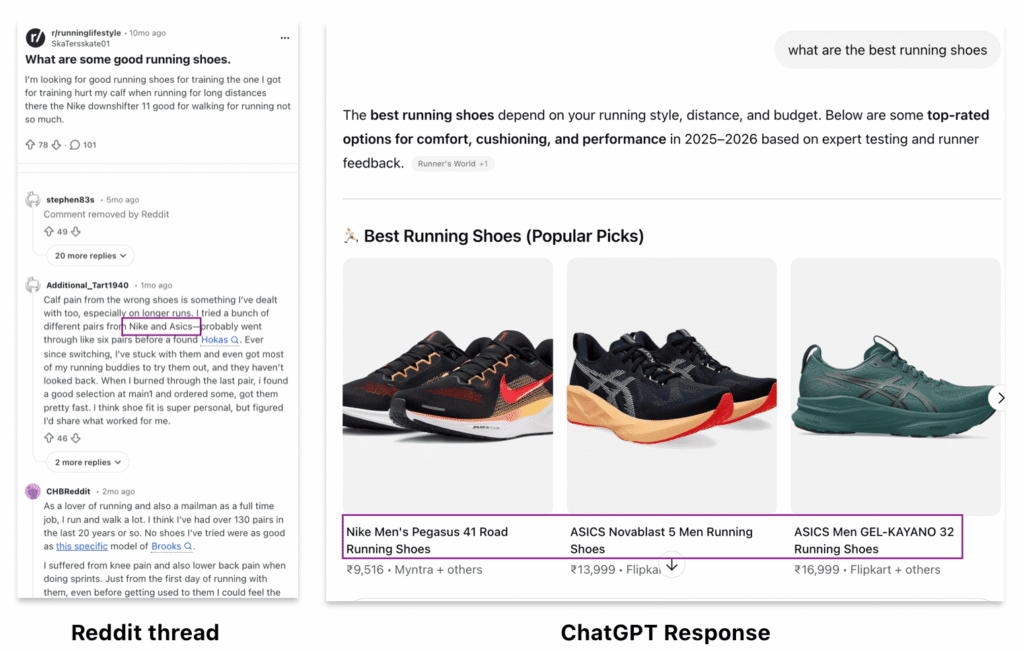
A brand cited, interviewed, or recommended outside its own domain, it treats those external signals as confirmation that you’re a real authority. That makes your pages far more likely to show up in AI search results.
Step 10: Monitor & Iterate Based on AI Citations
Winning AI citations isn’t a one‑time project; it’s an ongoing feedback loop. To refine your E‑E‑A‑T content strategy, you must actively measure your visibility in AI content and how your brand is being cited, and then optimize from there.
Start by tracking which pages earn citations and which queries or prompts trigger those citations (for example, “best tools for tracking” or “how to clean a laptop step by step”).
Analyze the context to determine whether AI Search cites your brand as a recommended product, a data source, or an expert opinion.
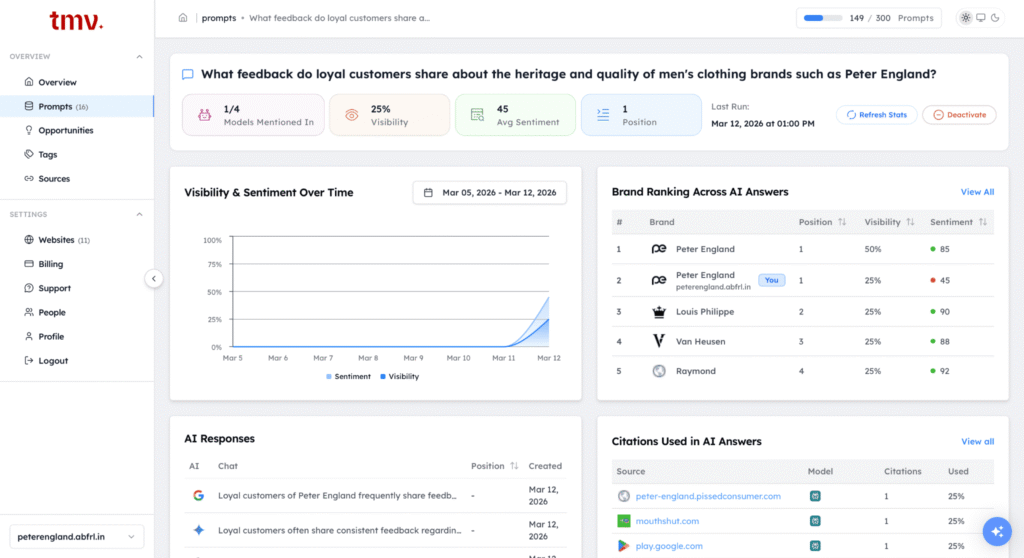
Tools like Track My Visibility help to monitor citation tracking patterns, AI responses, and competitor citations.
Identify the prompts where citation frequency is high, then fix the weak spots: places where competitors earn citations while your content gets overlooked.
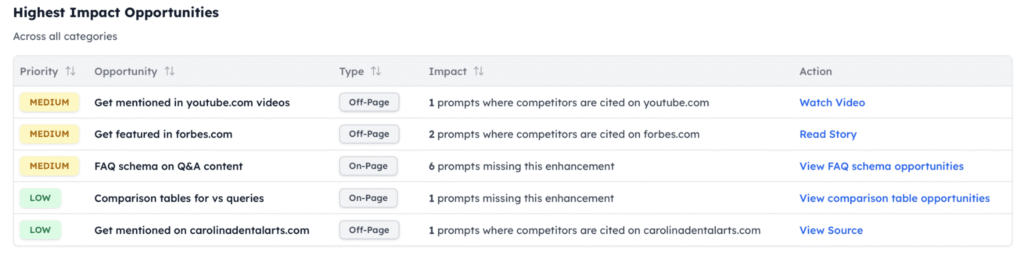 Pro Tip: Refining the E-E-A-T strategy is easier when there is a clear picture of which sources are cited across AI platforms. Review this comprehensive AEO GEO audit checklist for citation signals to identify which prompts are worth tracking.
E-E-A-T Across Platforms: What Changes and What Stays the Same
E‑E‑A‑T (Experience, Expertise, Authoritativeness, and Trustworthiness) remains the core logic AI engines use to decide which sources are safe enough to cite. What changes from platform to platform is how each system weighs and surfaces those signals.
Google cares more about technical trust, Perplexity emphasizes fresh, cited sources, and ChatGPT leans on off‑site authority. Tools like Gemini and Claude prioritize structured data and depth.
Let’s break down how E‑E‑A‑T plays out on each major platform.
1. Google (AI Overviews / Search): Prioritize Technical Trust Signals
Ranking in Google AI Overviews starts with the same trust stack that drives traditional search, so E‑E‑A‑T plays out through crawlability, markup, and security‑related signals.
- Strong HTTPS, clear structured data (Article, FAQ, HowTo, Person), and visible authorship, dates, and citations help a page survive retrieval into AI Overview style answers.
- For brands, this means clean technical foundations, rich schema, and entity-rich content are the bare minimum for AI citable visibility.
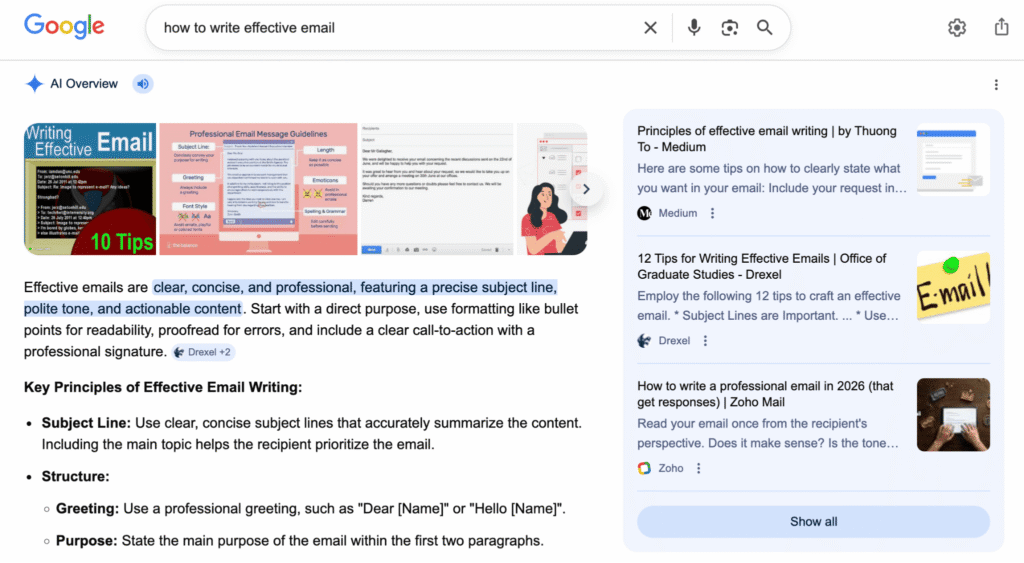
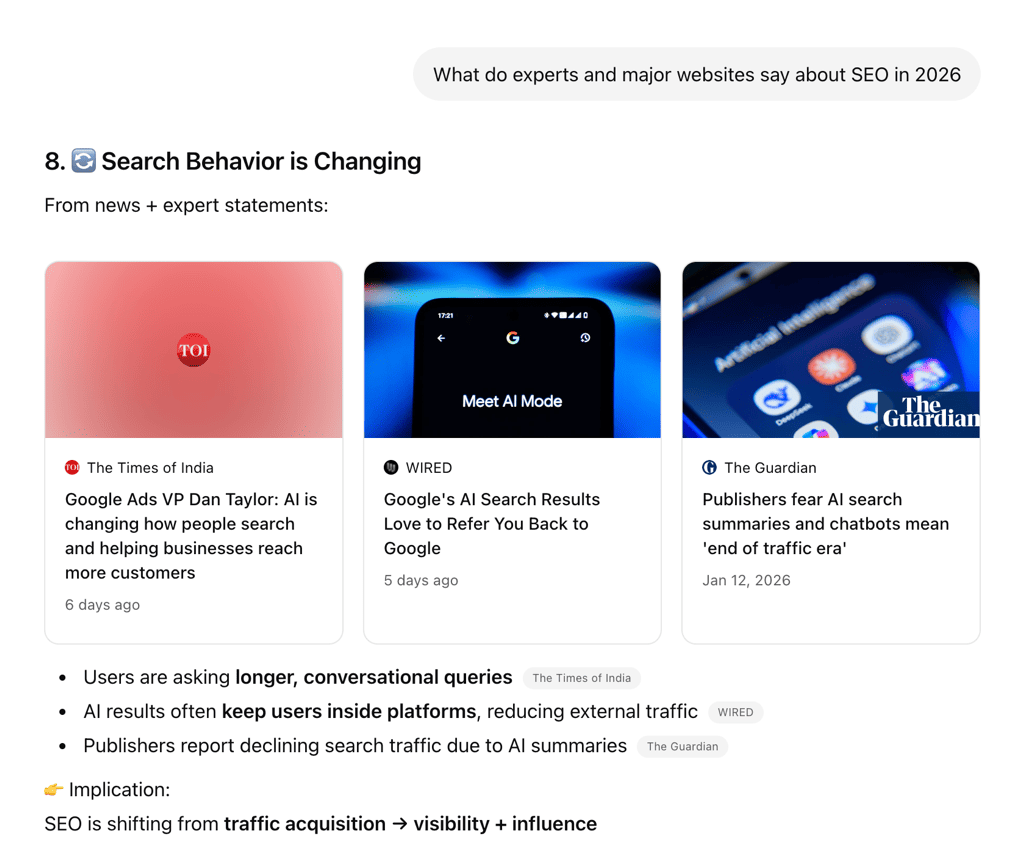
2. ChatGPT: Prioritize Off-Site Authority Building
In browse or search-enhanced modes, ChatGPT responses lean heavily on external reputation and off-site signals, the primary levers behind ranking in ChatGPT rather than deep markup or schema.
- ChatGPT pulls pages more often when high-authority domains link and cite them.
- That makes backlinks, guest post placements, and mentions in reputable roundups critical for becoming a source in ChatGPT answers.
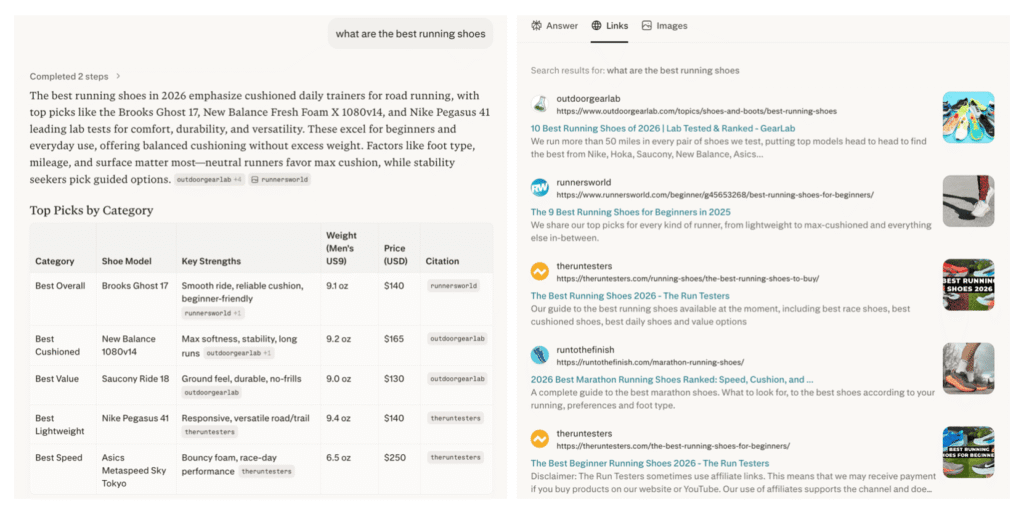
3. Perplexity: Prioritize Community Presence & Recency
Perplexity is built as a search-first, citation-heavy research assistant, so it privileges fresh, community-validated information.
- Perplexity searches for pages that are recently published or updated, and frequently discussed or linked in Reddit, LinkedIn, niche forums, or Q&A communities. These pages are more likely to appear as numbered references.
- Staying active in product-specific communities and keeping data pages current directly improves citation frequency..
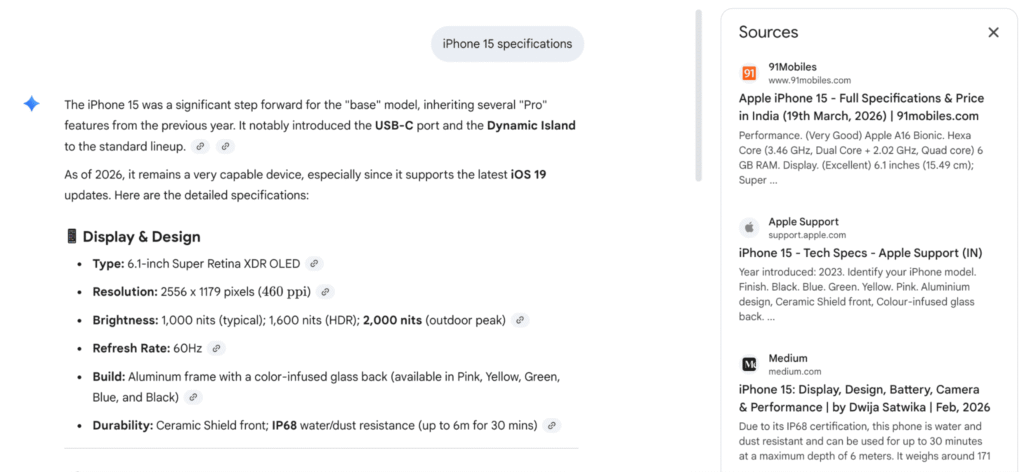
4. Gemini: Prioritize Schema & Entity Disambiguation
Google Gemini, tightly integrated with Google’s ecosystem, responds well to structured data and entity-rich content that aligns with Google’s knowledge graph.
- Rich schema (Article, Product, FAQ, Organization, Person) and clear, consistent entity references (brand, product, category) help Gemini resolve who knows what and which source matches the query best.
- Brands that invest in schema-driven product, FAQ, and how-to content see stronger representation in Gemini answers and side panel citations.
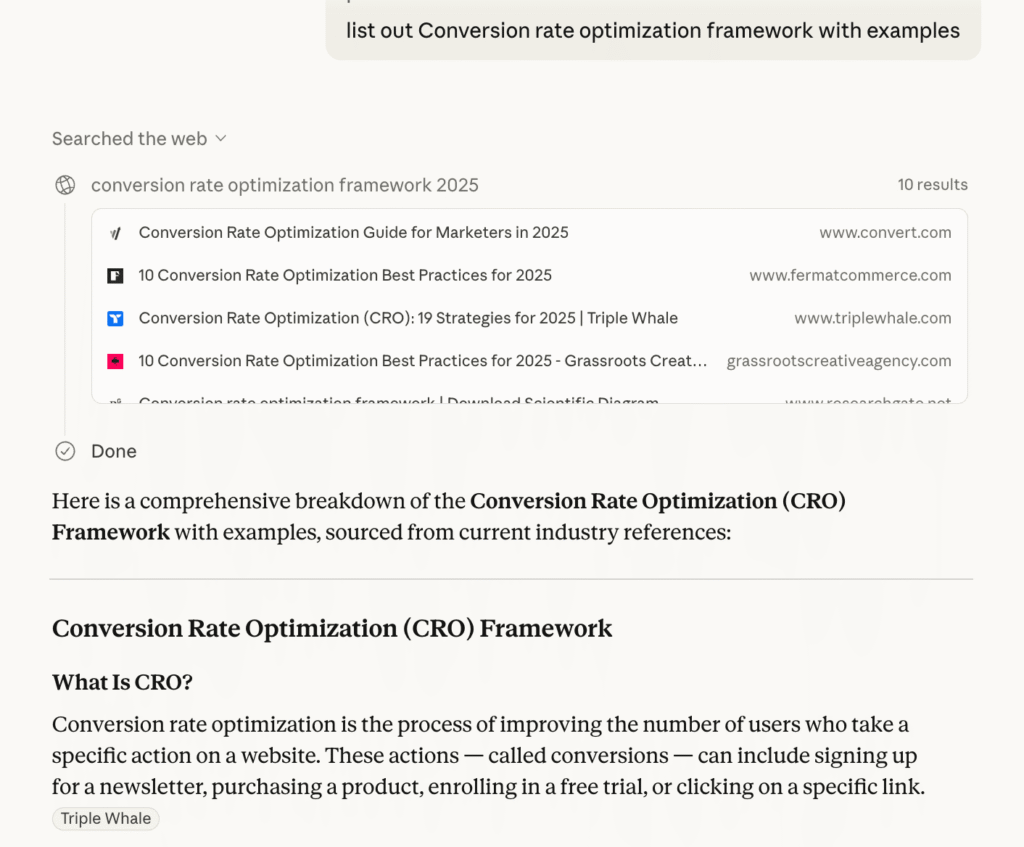
5. Claude: Prioritize Depth Of Expertise & Verifiable Sourcing
Claude emphasizes reasoned, in-depth, well-sourced answers, so it skews toward pages that read like true expert material rather than generic overviews.
- Long form, technically deep content with clear citations, case-study sections, and explicit method (approach, dataset, timeframe) tends to surface more often in Claude outputs.
- Creating specialized deep dives, CRO frameworks, funnel mapping templates, or A/B test breakdowns with clear sources and repeatable methodologies.
→ What stays the same Across all platforms:
- Accuracy and clarity still matter. AI avoids citing sources that contradict other high-quality references or show obvious misinformation.
- Named entities and topical relevance are important. Sites that clearly own a topic through consistent content, schema, and citations are more likely to surface as authorities and rank in AI search results.
- Transparency around dates, sources, and conflicts boosts trust. Pages that explain where figures come from, when they were updated, and whether they’re affiliate‑driven do better in any AI‑driven pipeline.
Common Gaps in E-E-A-T That Prevent AI Citations
Many brands create content that looks good on the surface but fails to earn AI citations because core E‑E‑A‑T signals are weak or missing. A large part of that gap traces back to inconsistent brand presence across platforms, which is why tracking brand mentions in AI search is a useful diagnostic before addressing individual signal gaps.
Here are the most common gaps, explained so you can recognize and fix them.
# Neglecting Author Credentials
AI engines look for named experts, not anonymous brand answers. When pages omit clear author bios, roles, and qualifications (e.g., head of SEO with 12+ years of experience), AI engines deprioritize that content and rarely cite it.
Every major guide should list who wrote it, their role, and relevant experience to pass the “who is actually speaking here?” test.
# Over‑reliance on AI-generated Content
AI-generated content often lacks original insights, lived experience examples, and data, making it look generic and low value in AI pipelines. When multiple tools pull from the same pattern, AI rewritten fluff, AI engines treat those pages as untrustworthy because they conflict, repeat, or lack verifiable proof.
AI helps structure and draft. Humans inject real data, case studies, and brand-specific expertise. That combination is what increases the chances of an AI citation.
# Lack Of Citations And Sources
AI doesn’t trust unsourced claims. If a page states “conversion rates improved by X%” or “brands see Y uplift” without hyperlinks to studies, tests, or reputable references, it’s easy for AI to sideline that page in favor of more transparent, source-backed alternatives.
Every important stat, framework, or recommendation should be tied to your own experiments or external, credible sources.
# Superficial Content Coverage
Short overviews with no depth, examples, or step‑by‑step breakdowns fail to establish E‑E‑A‑T because AI interprets it as low confidence. Deep, intentionally structured content (e.g.,c“the A/B test setup and result breakdown”) signals real expertise and makes it more likely for AI to quote a specific passage rather than skip the page.
# Ignoring User Experience
AI answers often mirror how real users would judge a page’s trust and quality. Pages with cluttered layouts, unclear navigation, or poor readability suffer in E‑E‑A‑T perception because they look spammy or low quality.
Prioritize clean UX, readable line lengths, clear headings, and fast-loading pages. Those traits indirectly signal trust and professionalism, both factors AI engines weigh in citation decisions.
# Overlooking Technical Trust Signals
HTTPS, proper redirects, clear canonicals, and solid crawlability are trust signals that AI systems inherit from the underlying search engine. If your site is flagged as insecure, messy, or hard to crawl, AI systems demote or exclude even strong content from insecure or hard-to-crawl sites.
Check secure checkout, consistent schema, and clean architecture as a part of your E‑E‑A‑T equation.
# Overemphasis On Keywords
Pages built purely around keyword density, stuffing, or template-style structures often miss the nuance, depth, and natural language that AI looks for in quality citations. When every H2 is a “best product” or “top tips,” AI can detect patterns like content and favor pages that answer real user questions in a conversational yet authoritative way.
For AI citations, focus on clear headings and semantic coverage rather than rigid keyword layouts.
Conclusion
E-E-A-T is becoming the hidden language AI engines use to decide who gets quoted and who gets filtered out. When you tighten experience, expertise, authoritativeness, and trustworthiness across your content, technical setup, and external footprint, you position your brand as a default citation source rather than an afterthought in AI search results.
To make this work in practice, you need visibility into where and how your brand appears across AI platforms. Tools like Track My Visibility help you monitor and measure your AI visibility across Google, ChatGPT, Perplexity, Gemini, and Claude, showing which pages earn citations, which queries trigger them, and where competitors are winning the attention you could own.
Try a 7-day trial to see how your brand is cited and referenced across AI-generated responses.
FAQs
Focus on building experience-driven, expert-led, and trustworthy content. Combine strong content quality with author credibility, backlinks, and structured formatting so AI systems can easily evaluate and extract your content.
Yes. E-E-A-T acts as a filter for source selection. AI systems are far more likely to cite content that demonstrates credibility, authority, and trust over generic or low signal pages.
Content that is clear, well-structured, and backed by proof, including case studies, original data, expert insights, and properly cited information, has the highest chances of being cited. Tools like Track My Visibility help to track which content gets cited and on which platform.
Most likely due to weak E-E-A-T signals, such as a lack of authority, no clear authorship, thin content, or poor structure, making it harder for AI systems to trust and select your content for citations.
Improve E-E-A-T by adding real examples, showcasing author expertise, building backlinks and brand mentions, and keeping your content accurate, transparent, and up to date.