


When someone searches your brand name today, they’re not always scrolling through blue links. They’re reading a direct answer from ChatGPT, Perplexity, or Google’s AI Overviews. And that answer comes from a very short list of sources. Your press release could be one of them, or it could be skipped entirely. That’s the core of how PR affect on AI search is changing the game for brands.
Understanding how PR affects AI is no longer optional for PR professionals working in 2026 and beyond. AI-referred sessions jumped 527% year over year in 2025 (Search Engine Land). AI search has quietly become a primary discovery channel, and most PR teams are still writing for journalists instead of AI models. If you’re not thinking about how to optimize your content for AI answers, you’re already behind.
This guide is for SEO and AEO teams, PR firms, marketing agencies, and content creation teams who want their press releases to show up in AI search results, not just newswire archives.
Here’s what you’ll learn:
- How AI models actually read and evaluate a press release
- What writing and structural changes improve citation rates
- Where to publish for maximum PR for AI visibility
- How to track brand mentions and citations across AI engines
TL;DR
- AI models cite only a handful of sources per response, making press releases a high-value but competitive citation asset.
- The first 75 to 150 words of your release decide whether AI search surfaces it or skips it entirely.
- Consistent entity naming, sourced data, and credentialed quotes are the three writing habits that most directly improve AI visibility.
- Always publish on your owned newsroom before any newswire to protect your authority signals.
- Publishing without post-publication media monitoring means you have no way of knowing whether your PR strategy is actually working in AI search.
What AI Visibility Means for Press Releases
AI visibility means your content gets cited inside AI-generated summaries and answers, not just ranked in traditional search engines. This is the core of how PR affect on AI visibility today.
In traditional search engines, a well-optimized page earns a spot in a list of results. In AI search, one consolidated answer gets assembled from a handful of trusted sources. If your press release isn’t in that source pool, your brand simply doesn’t appear in that response, regardless of your domain authority.
The shift from SEO to GEO (Generative Engine Optimization) and AEO (Answer Engine Optimization) has fundamentally changed what it means for a brand to appear in search. Being cited is the new being ranked, and how AEO and GEO are changing SEO is something every PR team needs to understand going into 2026.
As Lily Ray, VP of SEO Strategy & Research at Amsive, puts it: Optimize for visibility, citation, and brand presence across AI platforms.
And press releases, when written correctly, are one of the fastest ways to improve AI visibility without rebuilding your entire content strategy.
Most PR pros still treat press releases purely as media relations tools rather than strategic tools for AI visibility. They write for journalists, distribute on newswires, and move on. But the most successful PR professionals today are also thinking about machine readability, entity clarity, and how AI tools will interpret every paragraph.
This shift in thinking is already widespread. 71% of PR professionals see AI as vital for the future of the industry (PRSA).
How AI Tools Actually Read a Press Release
AI models don’t scan for keyword density. They extract entities, verify factual consistency, and build a contextual picture of To understand how PR affect on AI search, you should start with how these models actually process content. AI models don’t scan for keyword density. They extract entities, verify factual consistency, and build a contextual picture of what the content is claiming and who is claiming it.
The first 75 to 100 words carry disproportionate weight. If your opening paragraph doesn’t establish who is making the announcement, what it is, when it happened, and why it matters, most AI systems will move on to a cleaner source.
LLMs that power platforms like Perplexity and Google’s AI Overviews use Retrieval-Augmented Generation (RAG), which means they retrieve real web pages and documents to construct their answers. Your press release needs to be that document. Understanding how LLMs choose which content to cite helps you write with that filter in mind.
LLMs typically cite between 2 and 7 domains per response, and Google’s AI Overviews typically cite 6 to 14 sources, with 9 being the most common (SellersCommerce). As AI capabilities advance, that shortlist is becoming harder to break into without deliberate structural choices.
That’s a far narrower competition window than traditional search engines.Structured, factual, and unambiguous releases make it through.
Consistent messaging also matters more than most teams realize. If your release calls your company “Acme Corp” in the headline, “Acme” in the body, and “we” in quotes, AI engines have to work to connect those references. Inconsistent entity naming is one of the fastest ways to lose citation potential.
What Language and Tone Does AI Engines Trust?
Plain, declarative sentences outperform polished marketing copy in AI-generated summaries. This isn’t a style opinion. It reflects how LLMs are trained to extract and validate claims.
Vague phrases like “industry-leading” or “revolutionary approach” mean nothing to an AI model. What gets picked up is a specific claim made by a named subject matter expert with a verifiable credential. Spell out acronyms on first use. Abbreviations introduce entity ambiguity that AI systems don’t always resolve.
How to Optimize a Press Release for AI Search (Step-by-Step)
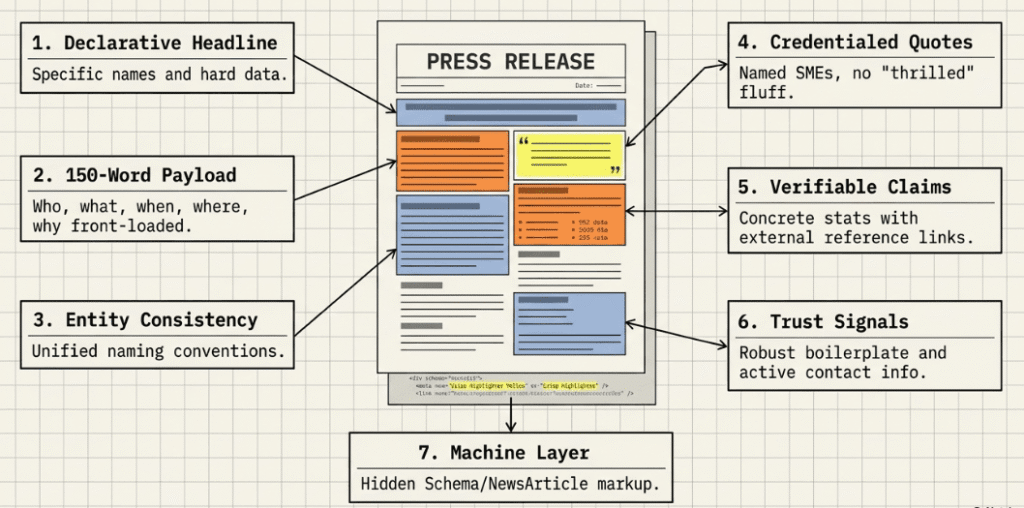
Now that you know how AI search tools read press releases. Here’s a practical process for every press release before it goes live.
Step 1: Front-Load Your Facts
Answer who, what, when, where, and why in the first 75 to 100 words. The inverted pyramid structure that journalists have relied on for decades works just as well for AI search.
Before: “We are excited to share that after an extensive development process, our team has launched a new product we believe will change how businesses approach customer support.”
After: “Acme Corp launched ResponseDesk, a customer support platform built for mid-sized retailers, on April 15, 2026. The platform reduces average ticket resolution time by 34%, based on a 90-day pilot with six retail brands.”
The second version gives AI models what they need in two sentences.
This matters more than most teams realize. As a user noted on Reddit, content that answers the query within the first 150 words gets significantly more weight in Perplexity citations, which makes front-loading not just good writing practice but a direct AI visibility lever.
Perplexity crossed 100M users. Here’s exactly what gets cited in their answers
by u/automata_n8n in getAIcited
Step 2: Write a Declarative, Entity-Rich Headline
Because PR affect on AI citation through entity recognition, your headline needs to be declarative and specific. Your subheadline should add a second layer of factual context, not repeat the headline.
Weak: “A Smarter Way to Handle Customer Support”
Strong: “Acme Corp Launches ResponseDesk, Reducing Support Resolution Time by 34% for Mid-Market Retailers”
Step 3: Use Consistent Entity Naming Throughout
Pick one name for your brand, one for your product, and one for each executive, then use it every single time. This is one of the most practical, actionable insights from studying how AI systems process press releases.
AI engines build entity maps as they read. Inconsistent naming creates gaps in that map, which lowers citation confidence. This is especially important for global brands with multiple product lines and subsidiaries.
Step 4: Add Quotes That Carry Real Information
Generic excitement quotes are invisible to AI. A quote like “We’re thrilled about the future” adds nothing to what an AI model is trying to extract. Successful PR professionals know that named, credentialed subject matter experts making specific claims are what gets picked up.
“ResponseDesk cut onboarding time by 40% across our pilot group,” said Jane Holloway, VP of Product at Acme Corp.
One quote like that beats five vague ones. It’s also what builds brand presence in AI-generated responses over time.
Step 5: Include Verifiable Data and External References
This is one of the most direct ways PR affect on AI visibility. Verifiable data gives models something concrete to cite.
Concrete numbers increase citation probability significantly. Princeton’s GEO research found that adding statistics can boost AI visibility by up to 41%, while adding expert quotations boosts it by 28% (Xseek).
If your announcement includes a statistic, link to the source. Connecting your content to external authority signals helps AI search tools cross-reference and validate your claims.
Cut speculation and unverifiable superlatives. AI tools don’t weigh enthusiasm. They weigh evidence. This is one of the clearest differences between writing for PR and writing for AI optimization.
Step 6: Optimize the Boilerplate and Contact Info
The “About” section at the bottom of a press release helps larger language models (LLMs) connect your announcement to your broader brand entity. Don’t treat it as an afterthought.
Contact information is also a trust signal. It tells AI systems this is a genuine press release from a real organization, not promotional content masquerading as news.
Step 7: Implement Schema Markup
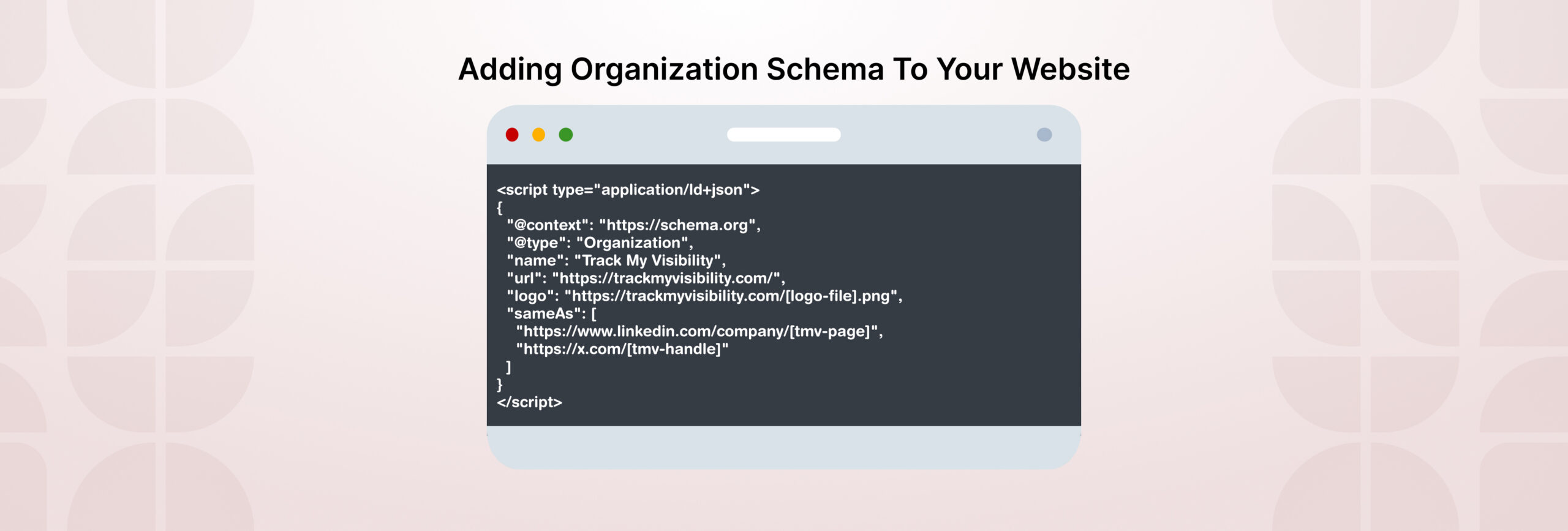
Add schema.org/NewsArticle or PressRelease markup to your hosted release. Set a clean canonical URL, a precise meta title, and a meta description that reflects what the release actually contains.
A schema is what makes your release machine-readable beyond just human-readable. Without it, AI engines do extra classification work. In a competition for limited citation slots, that extra friction matters.
Where Should You Publish Press Releases for Maximum AI Reference?
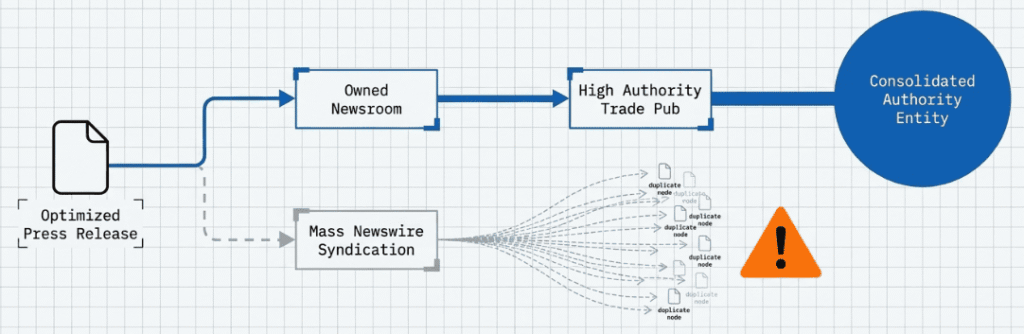
Publish on your own newsroom first. Distribution decisions are another area where PR affect on AI visibility in ways most teams underestimate.
Newswires copy your content across dozens of domains simultaneously. That duplication creates source ambiguity. AI models trying to identify the source encounter the same text spread across low-authority aggregators, which dilutes the authority signals your release would otherwise carry.
After owning a newsroom, target high-authority publications that your different audience segments actually read, and that AI systems have learned to trust. A placement in a respected trade publication will generate more AI visibility than mass newswire syndication.
Social media posts on LinkedIn and Reddit, and videos on YouTube, are heavily cited by LLMs in certain query types. Think about how your PR strategy feeds narrative into those channels. Media coverage that generates discussion on Reddit or LinkedIn becomes its own citation pathway for AI search.
Earned media placements on authoritative sites also create backlink clusters that reinforce your brand’s entity profile across AI systems. This connection is backed by data. “Branded web mentions are the number one correlation with AI visibility, indicating that AI answers are built on the signals created by public relations efforts.
The data backs this up further. 95% of AI-generated citations originate from PR-driven content like optimized press releases, which means the brands investing in AI visibility optimization today are the ones showing up in answers tomorrow (axiapr).
This is a feedback loop: strong media relations produce strong earned media, which produces stronger AI visibility.
Not all syndication is equal. The only way to know which placement is actually generating AI citations is to track it. This is where media monitoring becomes essential, not optional.
How Do You Know If Your Press Release Is Being Cited in AI Search Results?
Publishing without tracking is the most common mistake PR teams make in the AI era. Media mentions in a traditional news database and citations in AI-generated summaries are two completely different metrics.
You can use a manual method: use relevant prompts that your audience actually types. Run them through ChatGPT, Perplexity, Gemini, and Google’s AI Overviews. Note what sources appear. Check whether your release is cited, misrepresented, or absent. Also, check knowledge panels and any AI mode results for branded searches.
What you want to track over time: brand mention rate in AI-generated answers, citation accuracy, sentiment analysis of how your brand is being described, and which releases get cited versus ignored.
A strong brand presence in traditional search engines does not guarantee the same in AI search. A brand can rank on page one and still be completely wrong, or missing entirely, in AI answers. These are separate problems.
Response strategies for fixing AI misrepresentation are also worth having ready. Brands use AI-driven monitoring tools to detect sentiment shifts early, identifying reputational risks before they escalate into crises. If AI engines are citing outdated or inaccurate information about your brand, the fix starts with publishing clearer, more authoritative content that gives AI-powered tools a better source to pull from.
Manual checks are a good starting point, but they don’t scale. For a structured approach, this guide on AI citation tracking walks you through how to set this up without manual queries every week. Platforms like Track My Visibility are built for monitoring AI visibility across AI engines, so PR pros can see what’s working and what needs attention without manually running queries every week.
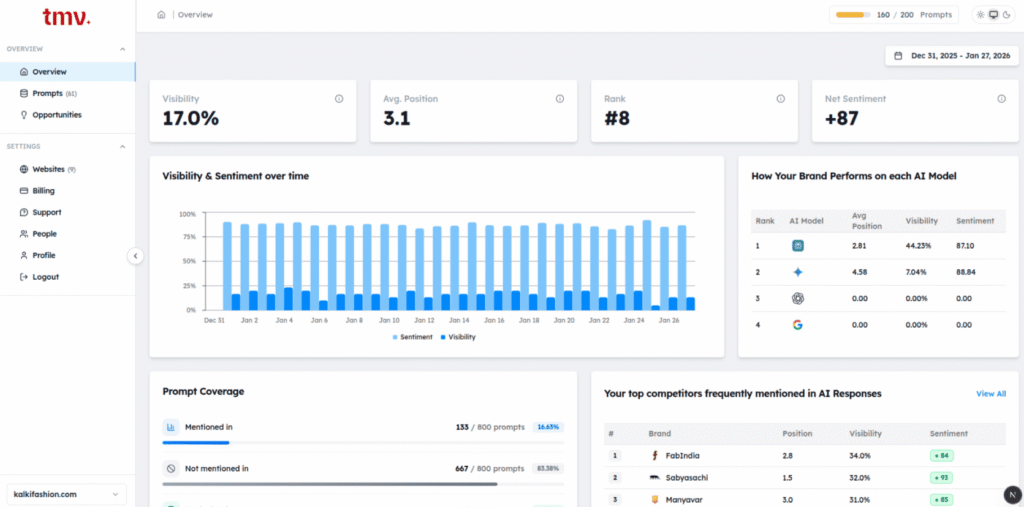
This is the kind of systematic media monitoring that separates teams reacting to AI search from those managing it proactively.
 Pro Tip: Before your next press release goes live, run a quick audit of where your brand currently stands in AI search. The All-in-One AEO & GEO audit checklist from Track My Visibility gives you a structured way to assess your current AI visibility gaps so you know exactly what to fix before you hit publish.
What Mistakes Are Killing Your Press Release’s AI Visibility?
Understanding how PR affect on AI citations starts with knowing what’s quietly working against you. You put the work in, hit send, and assume it’s doing its job. Often, it isn’t.
Here’s what’s quietly working against you:
1. Burying the Key Facts
AI models make their decisions fast. If your key facts don’t appear in the first paragraph, they don’t get surfaced. Front-load everything that matters, because AI engines are not going to go looking for it on paragraph four.
2. Inconsistent Brand Naming
If your release says “Acme Corp” in the headline, “Acme” in the body, and “we” in the quote, AI systems struggle to connect those references into a single entity. That confusion lowers your citation confidence. Pick one name and use it every single time.
3. Newswires Before Your Newsroom
When you push to a newswire before your owned newsroom, the same content gets duplicated across dozens of low-authority domains. AI models trying to find the source get confused. Your authority signals take the hit.
4. No Schema Markup
Your press release might read perfectly to a human and still be half-invisible to a machine. Without schema.org/NewsArticle or PressRelease markup, AI engines have to do extra work to classify your content. In a competition for a handful of citation slots, that extra friction is enough to knock you out.
5. Vague Claims, No Data
Phrases like “significant growth” or “major improvement” are not citable. A specific number tied to a named source is. If you don’t have data to back up a claim, either find it or don’t make the claim.
6. Writing Only for Journalists
A press release written solely for media relations often fails the machine-readability test. Journalists can read between the lines. AI models cannot. If your release relies on implied context or industry shorthand, AI engines will miss it.
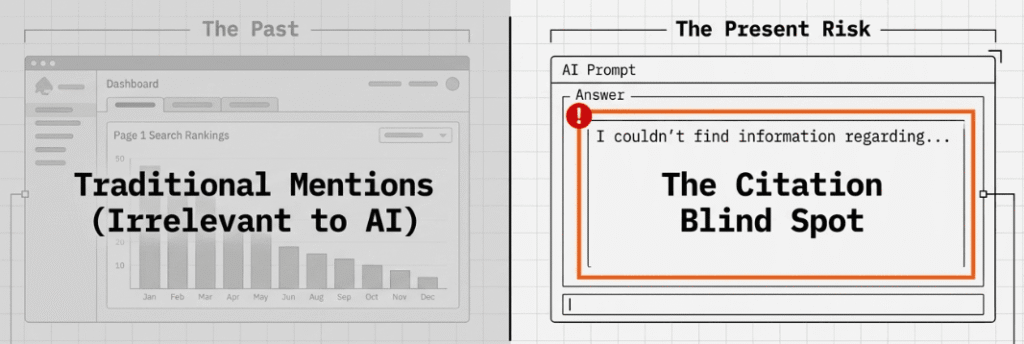
7. No Post-Publication Tracking
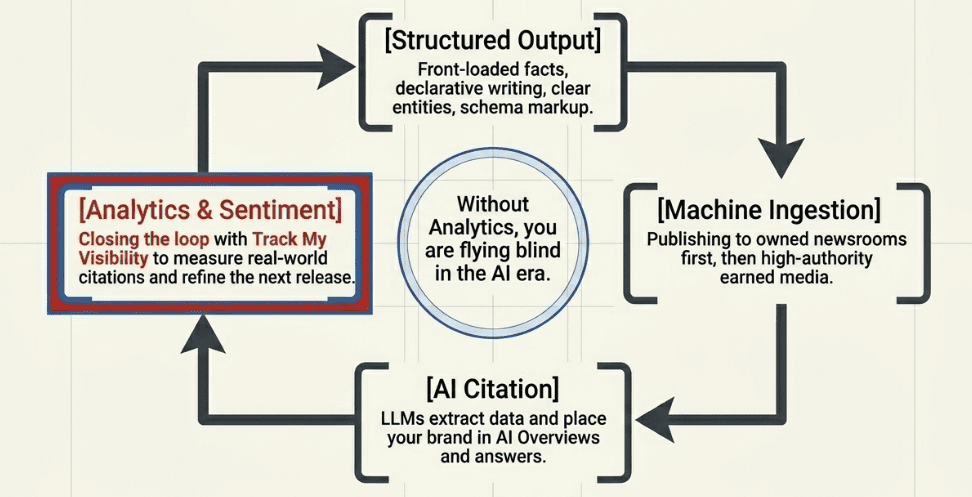
Publishing without media monitoring is like running a campaign with no reporting. You have no idea whether AI engines are citing your release, ignoring it, or worse, misrepresenting your brand. Post-publication tracking is where the whole process closes the loop.
8. Ignoring Social and Earned Media
Your press release doesn’t live in isolation. Social media posts, Reddit threads, and earned media placements are all secondary citation pathways that AI models pull from. If your PR strategy stops at the press release itself, you’re leaving citation channels unused that your competitors are quietly benefiting from.
Pre-Publish Checklist: Is Your Press Release AI-Ready?
- First paragraph answers who, what, when, where, and why within 75 to 100 words.
- Headline uses specific names, products, or data.
- Brand, product, and executive names are consistent throughout.
- At least one data-backed quote from a named, credentialed subject matter expert.
- External links to authoritative references included.
- Press release published on the owned newsroom before syndication.
- Schema markup (NewsArticle or PressRelease) implemented.
- Meta title and canonical URL are correctly set.
- No unverifiable superlatives or marketing jargon.
- AI visibility tracked post-publication via Track My Visibility.
Conclusion
The issue was simple: your press release either gets cited or gets ignored. That gap is almost entirely within your control.
The core of how PR affect on AI is the same as traditional PR, trust and credibility, but the signals are now machine-readable. PR professionals who treat press releases as AI visibility assets, and who back that up with real media monitoring, will hold a citation advantage as generative AI continues to reshape how people find information.
The PR profession is not disappearing. But the way it measures success has to change. Most successful PR professionals in 2025 are not just tracking media coverage and media mentions. They’re tracking brand appears in AI-generated summaries, citation accuracy, and user behavior signals that indicate whether their PR strategy is actually influencing what AI tools say about their brand.
If you want to know where your brand stands in AI search right now, start with an honest audit. Track My Visibility gives PR teams and SEO professionals a structured way to monitor AI visibility across AI engines, identify gaps, and measure which press releases are generating real citations.
Don’t guess at what AI models are saying about your brand. Find out, fix it, and stay ahead of it.
Contact us, and start monitoring your AI presence with Track My Visibility.
Frequently Ask Questions
It can. Mass syndication duplicates your content across low-authority domains, which makes it harder for AI models to identify the original source. Your owned newsroom should always be the first point of publication to preserve your authority signals.
Entity clarity, factual consistency, verifiable data, and structural logic. AI systems are not impressed by marketing language. They pick up specific claims made by credentialed subject matter experts with external references to back them up.
Yes. AI engines don’t automatically weight by company size. They weight by clarity, credibility, and structure. A well-written press release from a smaller brand will outperform a vague one from a global brand every time.
Traditional search engines rank pages. AI search cites sources. The signals are different. SEO focuses on backlinks, keyword density, and technical structure. AI optimization focuses on entity consistency, factual density, declarative writing, and schema markup. Both matter, but PR affects AI search through a completely different mechanism.
Sentiment analysis matters because AI models pick up not just whether your brand is mentioned, but how it’s described across sources. If media mentions and social media posts consistently frame your brand positively and accurately, that reinforces the entity profile AI systems build around you.
Resources:
- AI traffic is up 527%. SEO is being rewritten.
- The State of AI and SEO in 2026 with Lily Ray
- Creative Collaborators: How AI Is Driving PR Innovation | PRSA
- Google’s AI Overview Statistics (2025) | SellersCommerce
- 11 GEO Strategies That Increase AI Citations by 40% – Learnings – xseek
- 95% of AI-generated citations originate from PR-driven content