


AI search has shifted optimization from keyword tracking to prompt tracking. Users no longer type short queries. They ask AI assistants natural questions, and the model often reformulates that question internally before generating an answer. This means visibility now depends on prompts to track on AI search your audience uses and how AI interprets them, not the keywords they type into a search bar.
For marketing and SEO teams, that makes prompt tracking the new starting line. To monitor and improve AI visibility, you have to identify the prompts most likely to trigger citations, recommendations, and brand mentions in AI answers.
In this guide, we’ll walk through how to choose the prompts worth tracking. The goal is simple: focus on the questions and topics that actually move the needle for your brand in AI search.
TL;DR
- AI search visibility depends on the prompts users ask, not just traditional keywords, making prompt tracking essential for the team.
- Instead of tracking every phrasing, focus on topic-level prompts that represent the underlying user intent.
- Follow a structured workflow: define core topics, validate AI relevance, generate prompt variations, and select representative prompts.
- Prioritize prompts that trigger AI citations, recommendations, or tool mentions, as these influence brand visibility.
- Continuously monitor and refine your prompt list to keep up with evolving AI responses and user behavior.
Why Tracking Prompts in AI Search is Important
AI systems interpret queries differently from traditional search engines. Many AI platforms rely on retrieval-augmented generation (RAG), where the model extracts user intent from natural language prompts and retrieves relevant sources before generating an answer.
Instead of matching keywords, the system analyzes the meaning and context of the prompt, which means visibility depends on how users phrase their questions and how the AI interprets that intent.
AI tools also answer in a conversational format, often expanding or rewriting the original prompt before generating a response. That’s why teams need to track prompt variations that can trigger citations, brand mentions, or recommendations.
Monitoring these prompts with tools like Track My Visibility, Bing Webmaster Tools, and Ahrefs helps SEO teams see which prompts surface their brand and where the optimization gaps sit.
Challenges of Choosing Which Prompts to Track
Identifying the right prompts to track in AI search is not always straightforward, as prompt behavior is more dynamic and less transparent than traditional SEO keyword data.
- High prompt variation: The same intent can appear in many conversational forms.
- LLM prompt reformulation: AI models often rewrite prompts before generating answers.
- Limited prompt visibility: Most AI platforms do not provide prompt-level data.
- Evolving user behavior: Prompt phrasing changes as users adapt to AI search.
- Inconsistent citations: Different AI engines cite sources differently.
- Hard to prioritize impact: Not every prompt triggers citations or recommendations.
These challenges look intimidating, but the answer isn’t tracking more prompts. It’s tracking the right ones, with a topical approach.
 Pro Tip: Before diving into prompt identification, it helps to understand how AI search visibility works at a foundational level. Review this comprehensive AEO GEO audit checklist for citation signals to identify which prompts are worth tracking
Use a Topical Approach to AI Prompt Tracking
“Prompt tracking is basically keyword research for conversational AI. It’s more about understanding real questions and intent rather than tracking every query,” as per this Reddit discussion on prompt tracking and AI SEO.
Is prompt tracking the new ai seo keyword research, or am just confused?
by u/bambidp in seogrowth
LLM chooses answers by understanding topics and context, not just isolated prompts. A topic-based approach helps you group related prompts under broader themes, making it easier to track how AI platforms surface information and cite sources across different variations of the same user intent
Starting with topics also gives you a systematic way to expand into multiple prompt variations. Instead of tracking random questions, you identify prompts (for example, “Can you give me copywriting tips for product descriptions?”) that all stem from the same topic cluster. The result is a structured prompt list that mirrors how users actually explore a subject in AI search.

If your content shows up repeatedly for prompts within the same topic cluster, it signals stronger topic-level visibility in AI search results.
How to Choose Which AI Prompts to Track
AI systems interpret prompts in multiple ways and often expand them into related queries. Tracking individual phrasing rarely produces meaningful insight on its own. The goal is to identify representative prompts that reflect real user intent within a topic. Here’s the workflow we recommend.
1. Define Your Core Topics
Start by identifying the core topics where you want your brand or content to appear in AI-generated answers. These topics should align with your product category, expertise, or the problems your audience is trying to solve.
Defining clear topic areas creates a foundation for discovering relevant prompts tied to those subjects. You can also use your existing SEO data, including ranking pages, historical performance, and content already optimized for AI answers, to spot which topics already have traction and where gaps exist.
2. Validate AI Relevance and Intent
Before expanding into prompt variations, confirm the topic actually triggers responses on AI search platforms.
Check whether AI Generates Answers for the Topic: Test the topic on ChatGPT, Perplexity, Gemini, and Claude. Look for detailed responses, citations, or recommendations. If the major AI platforms don’t actively answer queries about the topic, tracking prompts around it has limited upside.

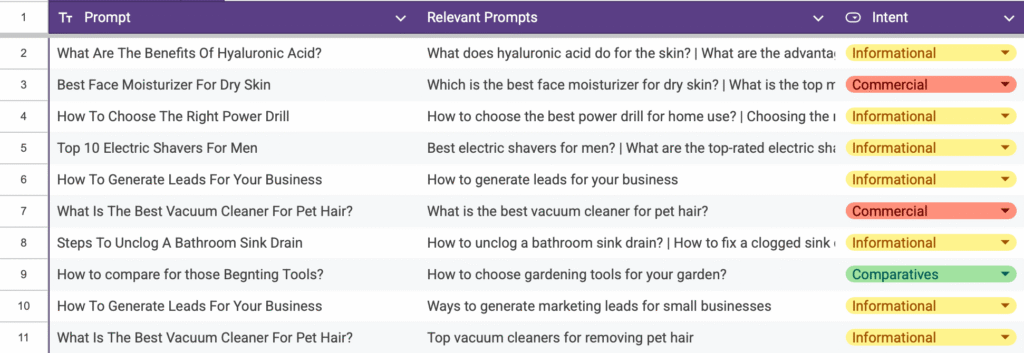
You can use this manual prompt testing log sheet to track AI citations and identify patterns across queries and platforms.
Assess User Intent Behind the Topic: Are users researching, comparing tools, or looking for solutions? Knowing the intent helps you prioritize prompts tied to real decision-making moments rather than casual exploration.
3. Generate Relevant Prompt Variations
Once the topic and intent are validated, expand the topic into multiple natural-language prompts users might actually ask.
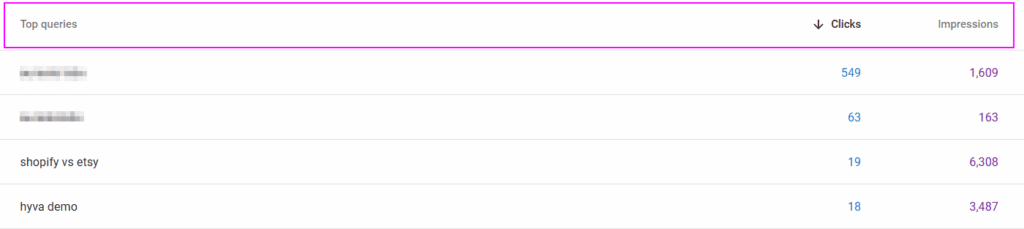
Turn Topics Into Conversational Prompts: Convert each topic into the kind of question someone would type into ChatGPT or Perplexity (for example, “Why isn’t my brand showing up in AI answers?”). Pull source material from Google Search Console long-tails, People Also Ask clusters, Reddit and Quora phrasing, sales call transcripts, and LLM follow-up questions.

Identify Common Question Variations: Map out the different ways users phrase the same underlying question. AI platforms often respond to many variations of a prompt, so capturing common alternatives like comparison queries, “best of” patterns, and recommendation requests helps you cover the full topic.
4. Select Representative Questions to Track
Don’t track every possible variation. Focus on a smaller set of prompts that represent the topic well.
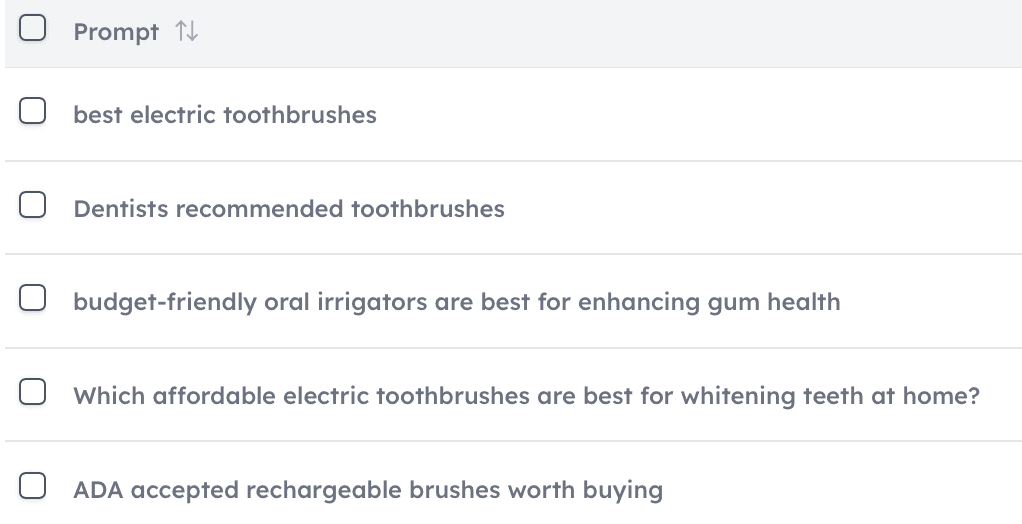
Choose Prompts That Reflect Real User Intent: Pick the questions your audience would realistically ask while researching the topic (for example, “best CRM for startups”).
Prioritize Prompts Likely to Trigger AI Citations: Citation-worthy prompts are the ones that directly influence brand visibility, so they deserve the most attention. Score each candidate prompt against five factors:
- Business impact: Does the prompt tie to revenue or pipeline?
- Intent strength: Does it carry commercial signals?
- Competitor presence: Are competitors already showing up here? That’s a gap you can fill.
- Representativeness: Does it cover variations of the same intent?
- Visibility potential: Is this a rising trend or a low-competition opportunity?
Identifying the right prompts is ultimately what determines which topics a brand can realistically rank for in AI search. The scoring criteria above narrow the focus to prompts with the highest visibility potential.

5. Continuously Refine Your Prompt List
AI behavior and user habits change. Your prompt list should change with them.
Monitor AI Responses Over Time: Re-test your prompts across platforms regularly. Watch for changes in answers, citations, sentiment shifts, and brand mentions in AI content. Understanding how to measure visibility in AI content helps your team move beyond manual checks and track shifts more consistently.

Update Prompts Based on Emerging Trends: As new questions, features, or industry topics emerge, refresh your list to reflect how users are currently interacting with AI search right now.
Quick Decision Framework for Choosing AI Prompts to Track
Use this framework to evaluate any prompt before adding it to your tracking list.
| Steps | Question to Ask | Decision Signal |
| Define Core Topic | Is this topic directly related to our product, expertise, or customer problems? | If yes, move forward. If not, deprioritize. |
| Validate AI Relevance | Do AI platforms generate detailed answers, citations, or recommendations for this topic? | If AI answers exist, the topic is worth exploring further. |
| Check User Intent | Does the topic reflect research, comparison, or solution-seeking intent? | Prioritize topics tied to decision-making intent. |
| Generate Prompt Variations | Can this topic produce multiple natural-language prompts that users may ask? | If several prompt variations exist, the topic is strong for tracking. |
| Select Representative Prompts | Do these prompts trigger citations, tools, or brand mentions in AI answers? | Track prompts that consistently surface sources or recommendations. |
| Monitor and Refine | Are AI responses changing or new prompt patterns emerging? | Update the prompt list as AI behavior and user queries evolve. |
Common Mistakes When Selecting Prompts for AI Tracking
Selecting the right prompts is essential to measuring AI search visibility accurately. Most teams trip on the same handful of mistakes, and avoiding them keeps your tracking focused on the questions that actually drive AI-generated answers and citations.
- Tracking too many variations: Trying to monitor every possible phrasing makes tracking unmanageable. Stick to representative prompts that reflect the broader topic.
- Focusing only on keywords: AI systems interpret natural language. A traditional keyword list misses important conversational prompts.
- Ignoring the underlying topic: Tracking isolated questions without grouping them under topics makes it hard to measure topic-level visibility.
- Prioritizing low-intent prompts: Some prompts produce general answers without citations or recommendations. They give limited insight into where you actually stand.
- Not testing across AI platforms: Different engines respond differently to the same prompt. Monitoring only one platform leaves you with incomplete data.
- Failing to update the list: User behavior and AI responses change quickly. A static prompt list goes stale fast.
Conclusion
AI search is changing how visibility is earned and measured. Instead of focusing only on keywords, the team now needs to understand the prompts and topics that trigger AI-generated answers.
By identifying representative prompts, validating their intent, and tracking them over time, teams can gain clearer insight into how AI platforms surface their content and where competitors appear. Consistent prompt tracking helps reveal true topic-level visibility in AI search.
Tools like Track My Visibility can make this process easier by monitoring prompts, citations, and brand mentions across AI platforms in one place.
To see exactly how it works in practice, watch this quick walkthrough on measuring AI visibility before you get started.
Frequently Asked Questions
Start by identifying the core topics related to your product or expertise. Then expand those topics into a few representative prompts that reflect real user intent and are likely to trigger AI answers or citations. Tools like Track My Visibility help identify which prompts are worth tracking through citation gap analysis.
No. AI systems often rewrite or expand prompts internally, so tracking every phrasing is unnecessary. Instead, monitor a representative set of prompts that reflect the underlying topic.
Test the prompt on AI platforms and see whether it generates detailed answers, citations, or recommendations. Prompts that consistently surface sources or tools are usually the most valuable to track.
You can start with your existing SEO keywords, customer questions, support queries, and industry discussions. These sources often reveal the real questions users may ask AI tools.
Each AI platform uses different models, retrieval systems, and data sources. As a result, the same prompt may trigger different citations or recommendations across platforms.
Prompt tracking should be reviewed regularly. As user behavior and AI responses evolve, adding new prompts and refining existing ones helps maintain accurate visibility insights.