



Most brands already have the content, but brands optimize it for traditional search engines like Google AI platforms largely ignore it.
That is the real issue. It was structured to attract clicks, not to answer questions cleanly enough to be cited. The result: extensive content libraries that AI platforms consistently pass over when constructing responses.
The solution is not more content. It is smarter repurposing.
Repurposing existing content for getting LLM citations means systematically converting what already exists into formats that language models can extract, attribute, and cite with confidence. It requires a structured pass identifying the right blog content, restructuring it for retrieval, and adding the factual signals that trigger citation across ChatGPT, Perplexity, Gemini, Claude, and Google AI Overviews.
This guide covers exactly that: a five-step content repurposing strategy built around how AI platforms actually select and cite sources.
TL;DR
- Repurposing existing content strategically increases the chances of AI citation by improving clarity, structure, and factual signals.
- Focus on content that targets informational, definitional, or comparison queries and demonstrates genuine expertise or internal authority.
- Enhance extractability by using answer-first headings, definition blocks, concise summaries, and short, declarative paragraphs.
- Strengthen credibility with factual signals, named entities, original data, timestamps, and schema markup to guide AI systems.
Why Most Existing Content Fails to Get an AI Citation
Good content. Well-researched topics. Consistent publishing. And AI platforms still are not citing it. The problem is not the effort. It is the structure.
AI platforms do not read content the way humans do. Language models choose content for extractable, attributable answers. When existing content does not surface those answers clearly, AI platforms skip it
Four structural problems account for most citation failures.
# Answers Buried Under Long Context
Legacy content opens with background and framing before reaching the point. AI platforms extract from the top of each section. As a result, If the answer is not there, it gets skipped.
# Topics Covered Broadly With No Real Depth
Surface-level posts with no specific claims, named entities, or defensible explanations give language models nothing worth citing.
# Entities Referenced Vaguely Or Inconsistently
When platforms, tools, and brands are named loosely or avoided altogether, AI systems cannot anchor the content to a recognizable subject.
# Claims Made Without Source Attribution
More importantly, AI systems ignore unattributed statistics and unsourced generalizations. Named sources, publication dates, and verifiable figures make content citation-eligible.
These are structural problems, and structure is exactly what repurposing addresses.
 Pro Tip: What makes content citation-worthy in AI search when the same content performs well in traditional SEO? Run a quick audit with a free AI visibility checker and see how your content currently performs across AI search platforms, which citations are being earned, and where visibility gaps exist.
5 Content Repurposing Strategies to Get AI Citations
Repurposing for AI citations requires transforming existing content into clear, structured, and verifiable formats that AI systems can easily extract, which further helps to rank in AI search results.
Let’s explore these strategies that help increase the likelihood of earning AI citations.
1. Identifying What Is Worth Repurposing
Select content that already aligns with AI retrieval patterns and can be strengthened into citation-ready formats.
Focus on content that targets informational, definitional, or comparison queries. Prioritize pages that answer “what,” “how,” or “which” type queries, as these are most frequently used in AI-generated responses.
Identify sections that contain factual claims, named entities, FAQs for AI search, or process explanations. Extract content that references specific tools, platforms, or includes step-by-step guidance, even if the content currently buries these elements.
Prioritize topics where the brand demonstrates genuine depth or original insight. Select content that goes beyond surface-level explanations and reflects expertise or unique perspectives.
Additionally, leverage content that already has internal linking authority or historical traffic. At the same time, use performance signals to identify pages that carry existing credibility and can be amplified through restructuring.
This focuses repurposing effort on content AI platforms are already inclined to cite.
2. Restructure for Extractability
Restructure content so key information is immediately accessible and easy for AI systems to extract.
Start with an answer-first H2 or H3 that mirrors how queries are phrased. Frame headings as direct questions or statements and follow them with a clear answer in the first line, instead of leading with context or storytelling.

Add definition blocks at the beginning of each new concept. Introduce the term with a one-line, precise definition before expanding further, keeping the core meaning clear and immediately quotable.
End each section with a concise summary sentence that reinforces the main takeaway. Use this line to restate the key point in a clear and self-contained way that stands alone when AI systems extract it.
Finally, replace dense paragraphs with short, declarative statements. Break long text into smaller units where each sentence communicates a single idea, avoiding layered or complex phrasing.
For example, a blog post with a section can open with “AI content optimization is the process of structuring content for better extraction and citation,” followed by supporting details, and end with a one-line summary that reinforces the same idea.
This structure improves content extractability and clarity, making it easier for AI systems to identify precise answers and reuse them for generating long-form content.
3. Add the Factual Signals That Trigger Citation
Furthermore, strengthen repurposed content by embedding signals that make information verifiable, specific, and trustworthy. In practice, this means upgrading general statements into evidence-backed insights that AI systems can confidently reference.
Include statistics with clearly named sources, publication year, and context directly within the flow of content. For example, instead of stating that AI is restructuring the labor market, reference a specific report with a year and a brief methodology context to make the claim traceable.
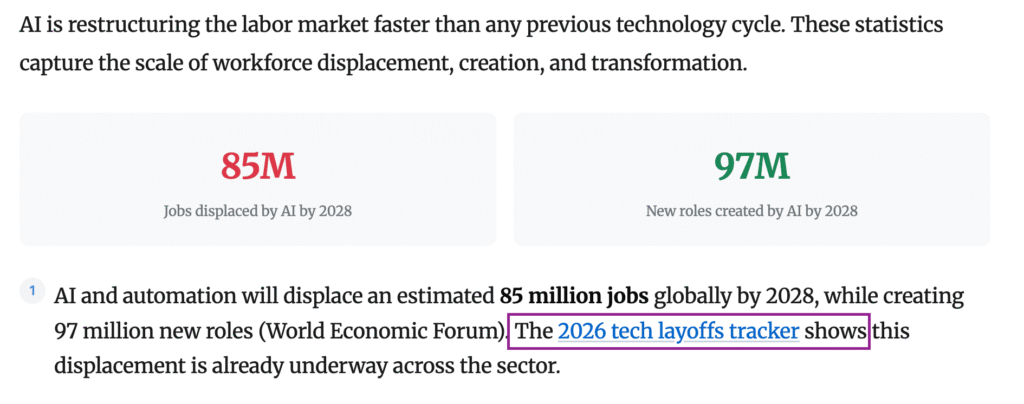
Use named entities such as platforms, tools, standards, organizations, or notable figures rather than generic terms. A mention of “SEO tools” can be replaced with specific platforms, making the content more concrete and easier for AI systems to associate with known entities.
Introduce original data points or proprietary observations, even at a small scale. Insights derived from internal analysis, such as performance trends or content experiments, brands can present them as unique findings, adding differentiation and citation value.
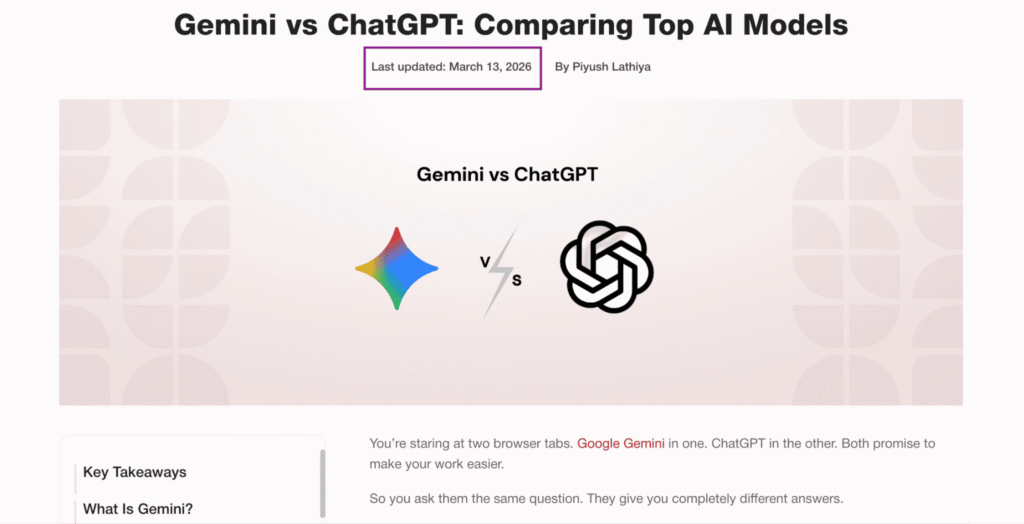
Add timestamps, version details, or last-updated markers within the content or at the page level to signal recency. For instance, noting that a dataset reflects 2026 trends or that a guide was last updated in a specific month helps establish relevance.
These additions improve traceability, entity recognition, and freshness, making content more likely to earn citations by AI systems.
4. Reformat Into Citation-Ready Content Types
When planning content optimization strategies for AI answers, reformat existing content into structures that align with how AI systems extract and reuse information. This involves reshaping sections into distinct, citation-ready formats rather than leaving them embedded in long-form narratives.
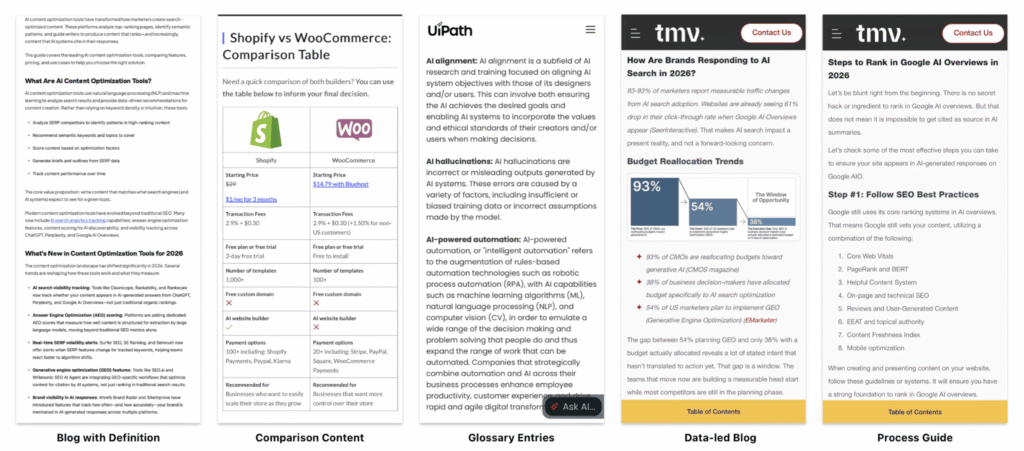
- Definition posts: Convert explanatory sections into clear definition-led formats, where the first line delivers a crisp, quotable meaning, followed by context and named examples. For instance, a paragraph explaining AI content optimization tools reframe it to open with a precise definition, then expanded by referencing specific tools or use cases.
- Comparison content: Transform scattered comparisons into structured, verdict-first summaries supported by attribute-by-attribute breakdowns. A section discussing multiple tools organizes it to lead with which tool performs better in a given context, then systematically compares features, pricing, or outcomes.
- Process guides: Rework descriptive content into step-by-step instructions with action-oriented language, incorporating named tools and clear outcomes. For example, a general discussion on improving content restructures it into numbered steps such as auditing content, extracting key answers, and restructuring for clarity.
- Glossary entries: Isolate key terms and turn them into single-concept, entity-rich entries that act as reference points. Instead of briefly defining a term within a blog, expand it into a focused section or page that includes a definition, context, and relevant associations.
- Data-led posts: Repackage insights or observations into data-driven formats, where claims are supported by original or synthesized statistics with proper attribution. Performance insights can be reframed as benchmark findings with supporting context.
Reformatting content into these structures improves clarity, modularity, and alignment with AI retrieval patterns, making it easier for systems to extract and cite specific sections as reliable answers.
5. Apply Schema Markup to Signal Structure to AI Systems
To improve search visibility, use schema markup to make content structure and intent clearly understandable to AI systems at a machine-readable level, and align it directly with how the content has been repurposed.
- Implement FAQPage schema for sections converted into Q&A format, typically placed below core sections or as a dedicated FAQ block at the end of the page. Structure each question as a clear query and pair it with a concise answer
,; for example, a section answering “What is AI citation?” followed by a direct definition can be marked up so each pair is explicitly extractable. - Add Article or BlogPosting schema at the page level, usually in the head section or via CMS plugins, to define authorship, publish date, and last-updated signals. For instance, after updating a blog with new data and structure, include an updated timestamp and author details to reinforce credibility and recency.
- Use different formats of the HowTo schema within process-oriented sections that have been restructured into steps, often placed alongside or wrapping numbered instructions. A section like “Steps to optimize content for AI citation” with clearly defined actions and outcomes marks it step-by-step to signal sequence and intent.
- Apply the Organization or Brand schema site-wide, typically in the header or global schema setup, to consistently define the brand as a recognized entity. This includes brand name, logo, and associated properties, linking all repurposed content back to a single authoritative source.
Pro Tip: Wondering whether the repurposed content is sending the right signals beyond schema? The AEO GEO audit checklist goes beyond schema to surface every credibility signal AI systems check before deciding what to cite, helping identify what is already optimized and what still needs work.Quick Reference: 5 Repurposing Strategies
| Strategy | What to Do | Why It Earns Citations |
| Identify What Is Worth Repurposing | Prioritize informational, definitional, and comparison content with factual depth and existing authority signals | Focuses effort on content, AI platforms are already inclined to cite |
| Restructure for Extractability | Use answer-first headings, definition blocks, summary sentences, and short declarative paragraphs | Makes answers immediately extractable without requiring a model to interpret or scan |
| Add Factual Signals That Trigger Citation | Insert attributed statistics, named entities, original data points, and recency markers | Gives language models verifiable claims worth attributing to a specific source |
| Reformat Into Citation-Ready Content Types | Convert existing content into definition posts, comparison pages, process guides, glossary entries, or data-led posts | Matches content structure to the formats AI platforms cite most consistently |
| Apply Schema Markup | Add FAQPage, Article, HowTo, and Organization schema to repurposed pages | Translates visible content structure into machine-readable signals that AI systems parse directly |
Repurposing Mistakes That Reduce Citation Probability
Repurposing improves AI citation potential only when it strengthens structure, clarity, and verifiability. When done superficially, it weakens these signals and reduces citation likelihood. Together, these mistakes below limit how effectively AI systems can extract and trust content.
1. Updating Publish Dates Without Real Content Changes
Simply refreshing the publish or “last updated” date without improving the content itself does not add value. AAI systems look for new information, improved structure, or stronger signals; not just recency tags. As a result, without substantive updates, AI systems still find the content difficult to extract and validate.
Instead, updates need to reflect real improvements in content quality, adding new data, refining structure, and clearly enhancing how information is presented.
2. Adding FAQ Sections Without Integrating Them Into Answers
FAQs are often added as an afterthought, placed at the bottom without connection to the main content. This creates fragmentation instead of clarity. When FAQs are not aligned with core sections, they fail to reinforce key answers, reducing their usefulness for AI extraction.
FAQs work best when they are closely aligned with core sections or embedded where they naturally extend the main answer, reinforcing clarity rather than duplicating information.
3. Repurposing For Keyword Density Instead Of Clarity
Focusing on inserting more keywords rather than improving how information is presented can dilute the message. AI systems prioritize clear, direct, and well-structured answers, so content overloaded with keywords but lacking precision becomes harder to interpret and reuse.
A better approach is to focus on clear, precise answers. Each section directly addresses a query in a structured and readable way.
4. Removing Narrative Without Adding Structured Information
When narrative sections get cut without being replaced with definitions, steps, or factual blocks, the content feels thinner and less informative. Repurposing should enhance clarity while preserving and restructuring valuable insights, not eliminating them.
Narrative elements should be converted into structured formats such as definitions, step-by-step processes, or data-backed statements. That way, the content keeps its depth while improving extractability.
5. Ignoring Consistency In Entities And Terminology
Inconsistent use of brand names, product terms, or key concepts creates confusion. That’s why tracking brand mentions matters, as inconsistent references make it harder to measure and reinforce brand recognition across AI systems.
When the same idea is described in multiple ways across a page, AI systems struggle to establish clear associations. Consistency is essential for building strong entity recognition and trust signals.
Additionally, maintaining consistent terminology and entity references across the content helps reinforce clarity and strengthens how AI systems associate and trust the information.
Monitor Citation Performance After Repurposing
Repurposing content is just the first step; performance monitoring is what realizes its full impact. Tracking is important because AI systems constantly update how they interpret, extract, and cite information.
Without measuring your AI visibility, it is impossible to know which sections AI systems are recognizing, which formats work best, or whether the updates are actually improving citation potential.
First, map repurposed content to the queries it targets. Then, track how often it appears in AI-generated responses. Next, identify which pages, definitions, or process guides earn citations. Finally, look for recurring patterns in the content types and structures that attract citations most consistently.
This approach strengthens brand authority and expertise because consistently cited content signals reliability and relevance to both AI systems and human audiences.
Regular review cycles, performance-based updates, and structural refinements build long-term trust signals. Over time, they help brands establish a reputation as a credible and topical authoritative source in their niche.
Ready For The Next Step
Repurposing content requires a long-term strategy with AI visibility tracking to ensure that updates continue to deliver visibility, citations, and authority. Without ongoing tracking, even the best-structured content can lose relevance as AI systems evolve.
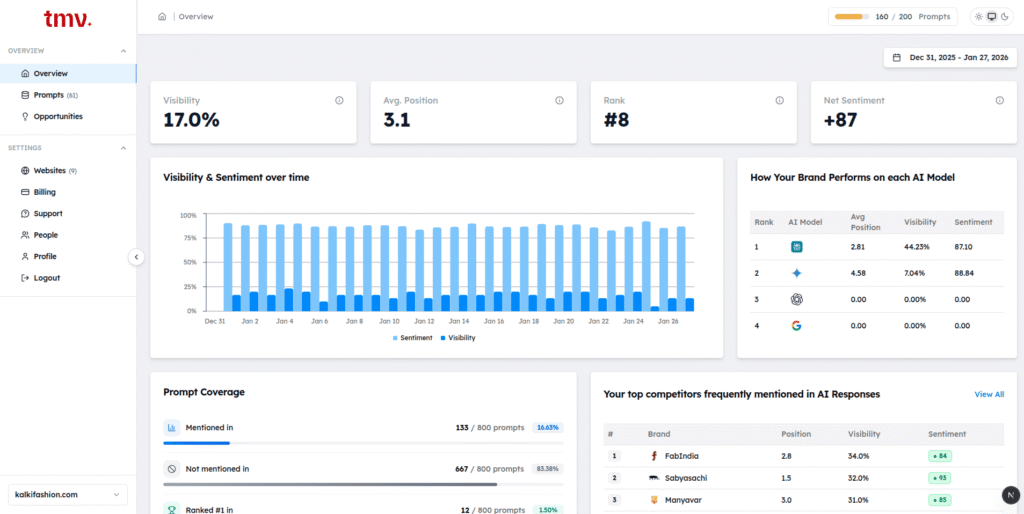
Tools like Track My Visibility help you with this. It allows brands to monitor citation performance, track entity recognition, and measure which content is driving visibility.
By consolidating these insights in an easy-to-read dashboard, it provides a clear view of what works, what needs improvement, and where to focus future repurposing efforts, making it easier to maintain authority, trust, and long-term AI presence.
Try our 7-day trial to see where you stand.
FAQs
Content that targets informational, definitional, or comparison queries, contains factual claims or named entities, and demonstrates genuine expertise or internal authority is most likely to be cited.
Use an answer-first format, start sections with definitions, end with summary sentences, and break dense paragraphs into short, declarative statements for clarity and extractability.
Incorporate statistics with sources, named entities, timestamps, version details, and original data points. These signals make content verifiable, credible, and AI-ready.
Updating dates without content changes, adding disconnected FAQs, prioritizing keywords over clarity, removing narrative without structure, and inconsistent entity usage can all reduce citation likelihood.
Monitor AI mentions, citation frequency, query triggers, and entity recognition. Tools like Track My Visibility help assess performance, optimize content, and maintain long-term brand authority.