



eCommerce keeps changing how products get found. First, it was print and newspaper ads, then search engines, then marketplaces and performance ads. Now, shoppers are skipping the search bar and asking AI directly.
That changes the job your product page has to do. It is no longer just a conversion asset. It is the source AI pulls from when someone asks for a recommendation. If AI cannot easily extract, validate, and reuse your page, your product quietly disappears from those answers. Clean, complete, trustworthy product data is what makes AI systems comfortable enough to cite you when generating answers.
This is the shift. Here is how to approach e-commerce product page optimization for AI citations so your products stay visible in AI-driven discovery.
TL;DR
- AI pulls information based on clear product identity, structured attributes, and validation signals like reviews and consistency.
- Optimize descriptions with specific, query-matching attributes and use-case context to improve extractability.
- Implement a complete schema (Product, Offer, Review, FAQ) and keep it accurate to support validation and direct answer extraction.
- Use attribute-rich titles, strong review signals, and complete product feed data to improve product identification and trust.
- Build supporting content clusters and ensure technical accessibility so AI can crawl, connect, and interpret product data effectively.
How AI Pulls Information from Your Product Page
AI looks for product information that is clearly defined and easy to extract. That makes e-commerce product page optimization for AI a critical part of modern SEO. AI systems rely on product identity (name, brand, category), explicit attributes (price, specifications, availability), and supporting signals like reviews and on-page consistency to verify that the data is accurate.
For eCommerce pages, the practical version is simple. Effective e-commerce product page optimization for AI means making key details easy to find and clearly labeled. Important attributes should sit in their own section, separate from long marketing descriptions. Titles, specs, and structured data should all agree with each other.
Consider a shopper asking, “quiet dishwasher for an open-plan kitchen.” The query is interpreted first. AI then matches it to relevant product entities like dishwashers. Next, it looks for extractable attributes, such as noise level in decibels. If your product page explicitly lists “42 dB” in a structured specification section, AI can pull that data directly, increasing the likelihood that your product appears in AI-generated recommendations.
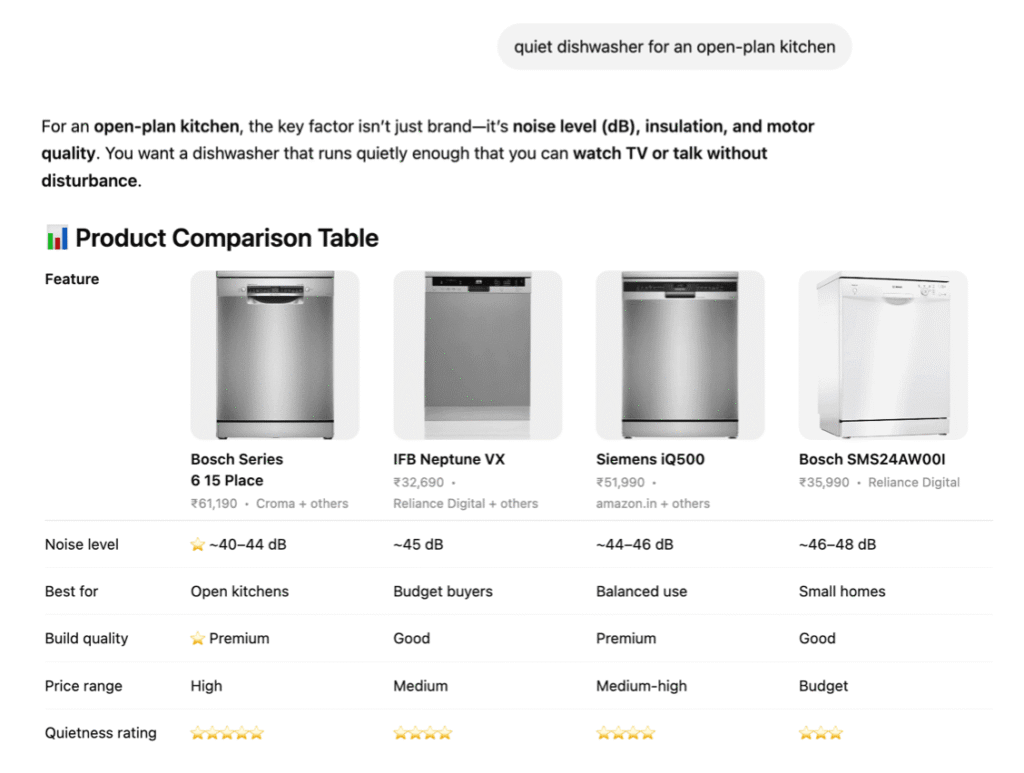
The system then validates that information by checking consistency across the page, scanning customer reviews for confirmation, and comparing your data with similar listings before deciding to use it in a response.
 Pro Tip: Not sure which product page is currently earning AI citations and which is being skipped? Run a quick audit with a free AI visibility checker and see how your content currently performs across AI search platforms, which citations are being earned, and where visibility gaps exist.
8 eCommerce Product Page Optimization Strategies for AI Citation
The job here is to make product information easy to extract, validate, and reuse. Clear structure, precise details, and query-aligned content do most of the work. The eight strategies below align your pages with how AI systems actually process and surface product data.
1. Write Product Descriptions That Answer Queries
Use clear, specific, factual language when shaping your content optimization strategies. Include exact attributes like material, size, performance metrics, and use-case context. Replace vague phrases like “high quality” with measurable specs. Then add a few scenario lines that connect the product to real situations.
When a shopper asks “best breathable bedsheets for summer,” AI scans for fabric type, thread count, and cooling properties. A description that reads “Naturally cooling and breathable, designed to regulate temperature in hot climates” can be matched and extracted directly.
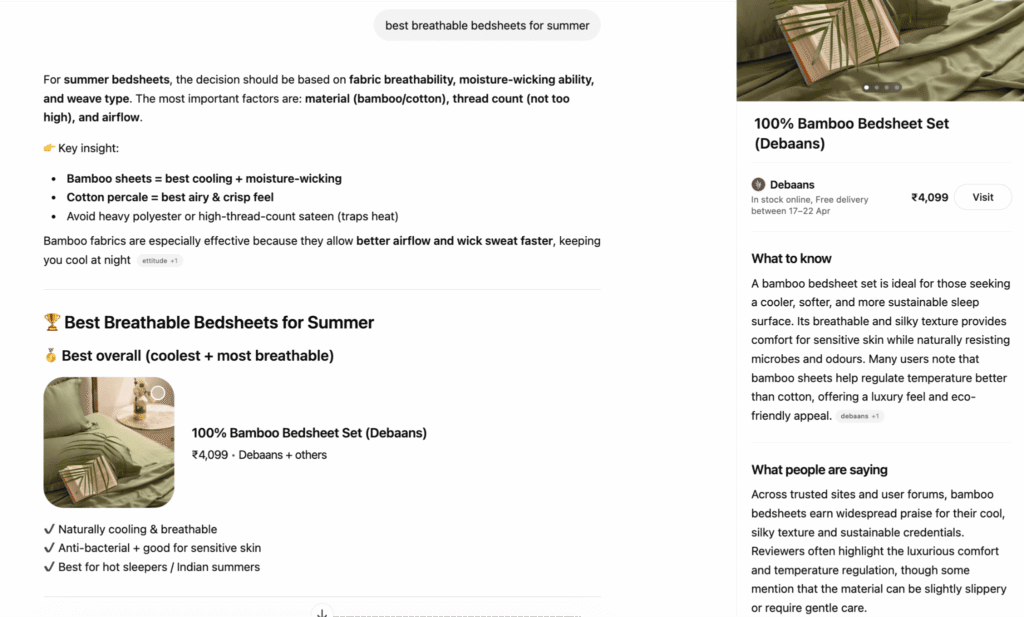
Descriptions with explicit attributes, measurable details, and clear use-case context are easier for AI to match, extract, and validate. That is what increases the odds of your product showing up in a citation.
2. Implement Complete Product Schema
Cover every essential schema type, including Product, Offer, AggregateRating, Review, and FAQPage. Populate the detailed attributes instead of leaving fields empty. Use the FAQ schema to answer product-specific questions in a direct format so the key details are explicitly stated.
When a shopper asks, “Does this laptop support fast charging?” AI scans structured data for a clear match. A defined entry like “battery fast-charge capability” can be picked up instantly without relying on interpretation.
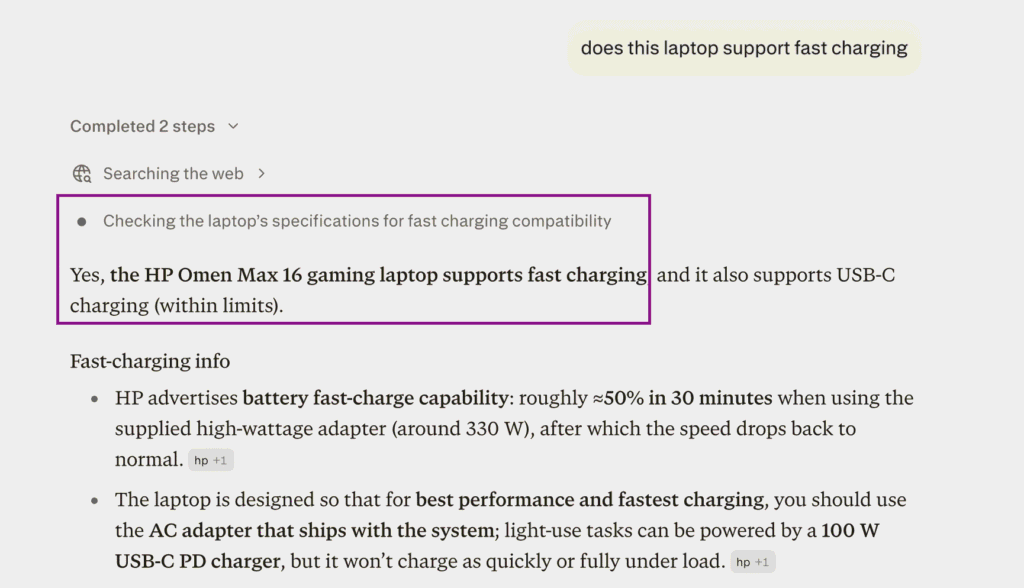
A complete and accurate schema gives AI clean data it can verify. That makes your product easier to include in generated answers when relevant queries come up.
3. Optimize Product Titles for Conversational and Attribute-Based Queries
Write product titles with clear, descriptive attributes instead of short or generic phrases. Include material, size, use case, and key differentiators directly in the title so the product can be precisely identified. Avoid keyword stuffing and vague wording that creates ambiguity during extraction.
A title like “Blue Running Shoes Men” provides minimal information and does not signal specific use cases or attributes. In contrast, “Men’s Lightweight Waterproof Trail Running Shoes, Wide Toe Box, Sizes 8–14” clearly defines product type, features, and fit. This level of detail helps AI understand exactly what the product is and where it fits.
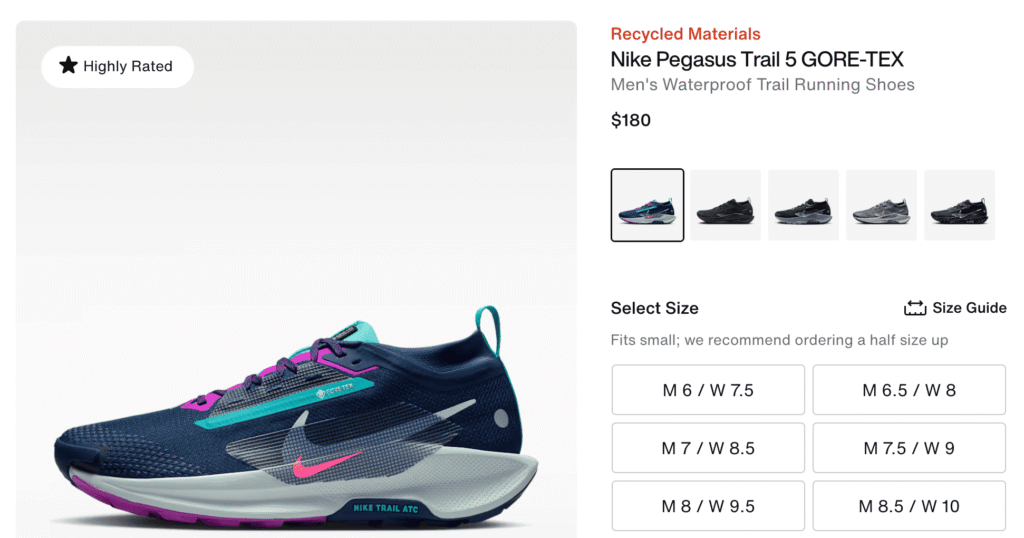
Detailed, attribute-rich titles give AI stronger signals to match queries and identify the product correctly, which improves how often it gets picked up and referenced in AI-generated shopping results.
4. Build Review Volume and Structured Rating Signals
Increase review volume and keep ratings visible on the product page. Collect consistent customer feedback and ensure reviews are recent and relevant. Low or missing review data limits how much confidence AI can assign to a product.
Display review counts and ratings prominently above the fold. Implement the AggregateRating schema so ratings and counts are structured and easy to interpret. Products with a strong review base, often 150+ reviews, provide a clearer signal of reliability compared to those with minimal feedback.
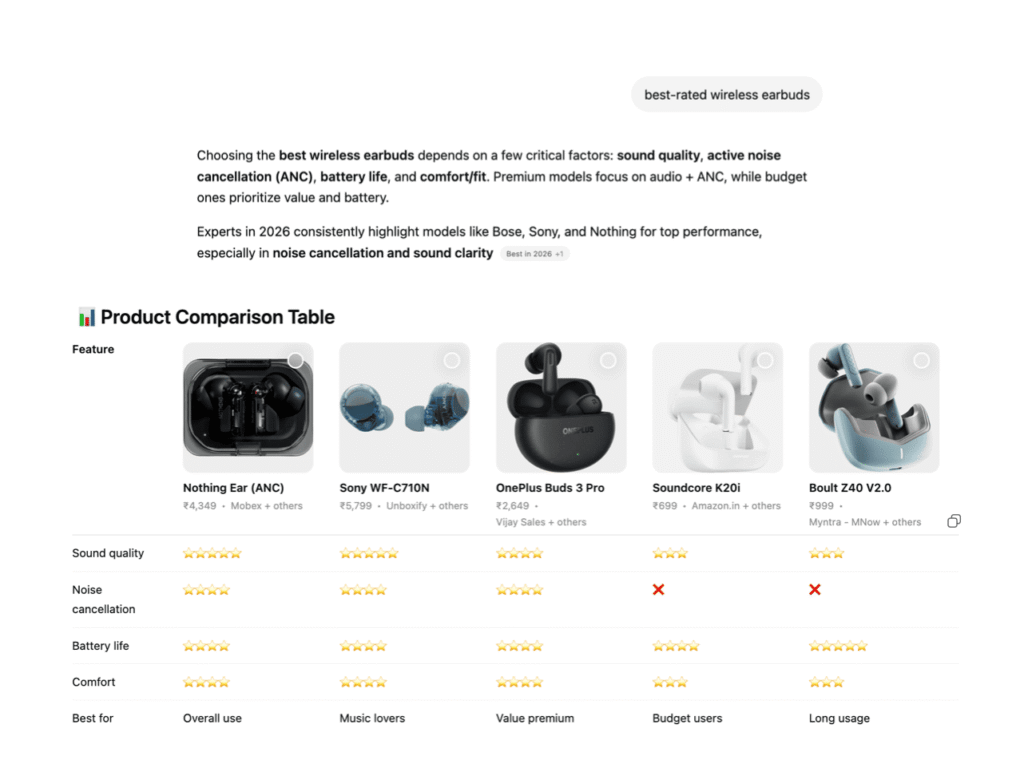
When a shopper asks for “best-rated wireless earbuds,” AI checks review volume and rating consistency to validate recommendations. Products with visible ratings and structured review data provide stronger validation signals, making them more likely to be ranked in AI-generated responses.
 Pro Tip: Review signals build the validation confidence AI needs, but do they carry the same weight across every platform? The answer differs more than most e-commerce brands expect. Explore the strategies to appear in AI search results.
5. Keep Product Feed Data Complete, Accurate, and Current
Maintain a well-structured product feed across your eCommerce platform. Include GTINs, pricing, availability, variants, images with descriptive alt text, and detailed material and dimension specs. Missing or inconsistent feed data limits how reliably AI-powered shopping engines can interpret your product information.
Keep the feed in sync with the live page. Pricing, stock status, and variant availability should match at all times. Repeated mismatches, especially around availability, create reliability issues that quietly reduce how often the product is considered for LLM citation during retrieval.
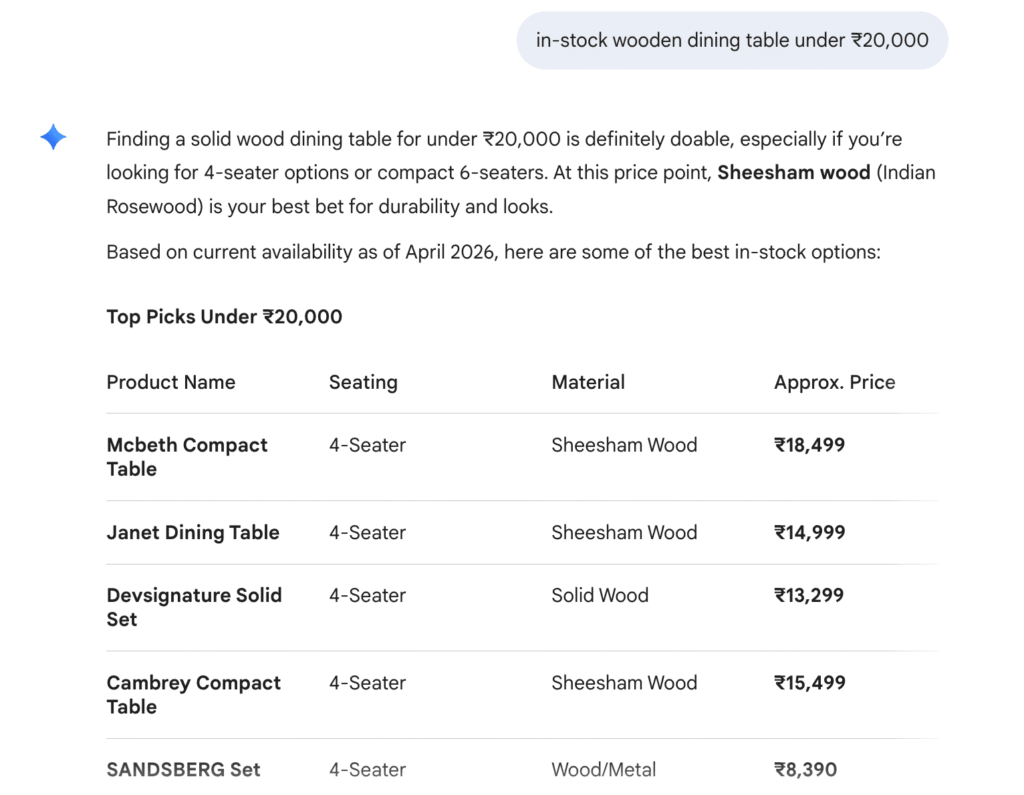
When a shopper asks “in-stock wooden dining table under ₹20,000,” AI checks feed-level signals for pricing and availability before selecting products. Clean, consistent, and current feed data makes it easier for generative AI tools to trust and include your product in responses where real-time accuracy matters.
6. Add Contextual Supporting Content Around Product Pages
Build supporting content such as buying guides, comparison pages, and detailed FAQs around your product pages. These assets expand the context AI uses to understand when and why your product is relevant. Relying only on the product page limits how often your product can be matched to broader or research-driven queries.
Create a contextual content cluster by linking related products, “similar items,” and “also bought” sections. This group’s products are within the same use case or category, and help define relationships between them. It also improves user navigation by guiding them through closely related options within the same topic.
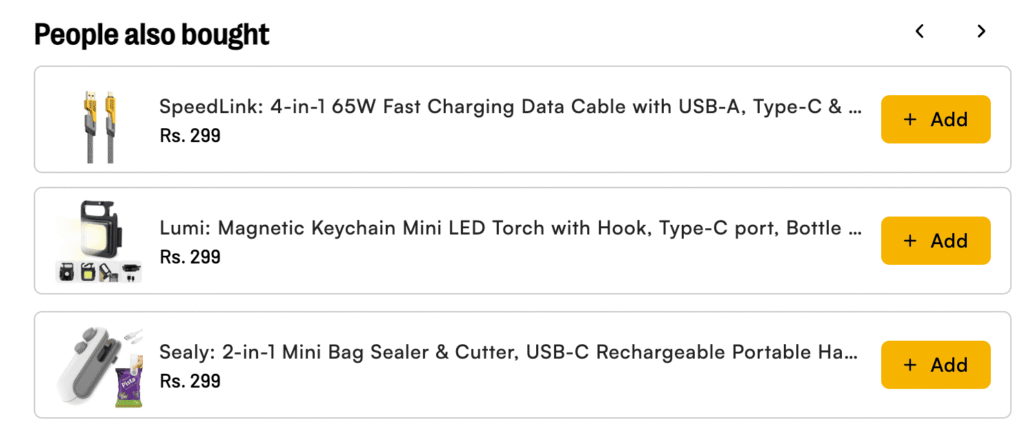
When AI models evaluate products within a shared context, these connections reinforce category relevance and attribute similarity. This broader, well-linked content environment makes it easier for AI to associate your product with specific use cases, increasing how often it is picked up and referenced in AI-generated shopping results.
7. Fix Core Technical Issues That Block AI Crawling and Parsing
Resolve technical issues that prevent AI systems from accessing and reading your product pages. Improve page load speed, avoid heavy JavaScript that delays or hides content, and ensure all critical information is visible in the initial HTML. If AI crawlers cannot parse the page, product data will not be extracted.
Check robots.txt and crawl settings to confirm that AI crawlers work properly and are not blocked. Render important elements like product schema server-side instead of relying on client-side scripts. Optimize Core Web Vitals on product templates to ensure fast and stable loading.
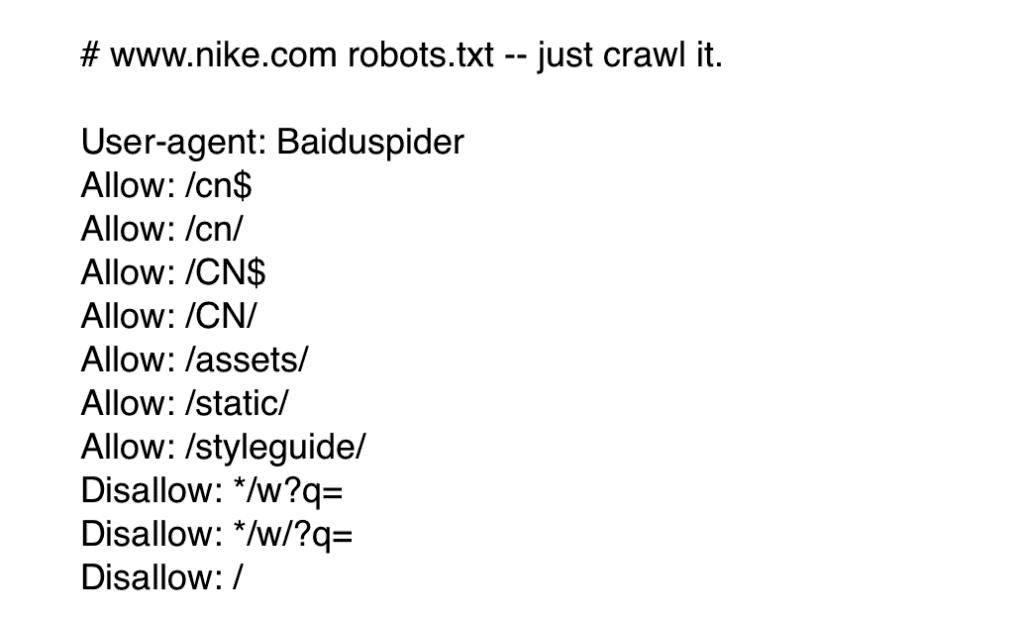
When AI attempts to access a product page and encounters blocked paths, missing content, or delayed rendering, it skips the page entirely. Ensuring full accessibility allows product data to be read, extracted, and considered, which is essential for getting included in AI-generated responses.
8. Optimize Images With Descriptive Alt Text and Contextual File Names
Use descriptive file names and write alt text that clearly explains what the product image shows. Avoid generic names like “IMG_1234.jpg” or vague alt text. Include key attributes such as product type, material, color, and use case so the image adds meaningful context.
Align image alt text with the language used in product descriptions and structured data. This keeps signals consistent across the page and helps AI connect visual content with product attributes.
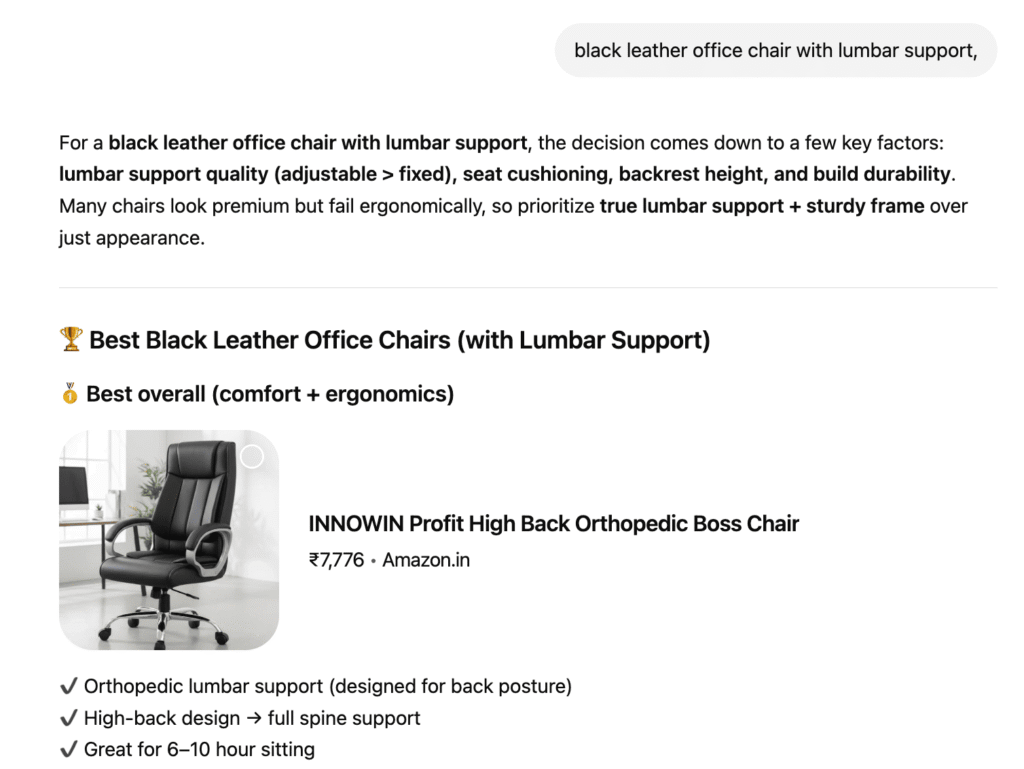
When a shopper asks “black leather office chair with lumbar support,” AI uses alt text and file names to confirm visual details alongside written content. Well-described images reinforce product attributes and improve validation, making it easier for AI to include the product in relevant responses.
How to Track and Measure AI Visibility for Product Pages
Tracking LLM visibility is different from traditional analytics, because discovery happens inside generated responses, not on a results page. The job is to find where and when your product pages are being referenced across AI platforms.
Start by analyzing referral traffic in GA4 from AI sources such as ChatGPT, Gemini, or Perplexity. These sessions show users arriving at your product pages through AI-generated answers. Go deeper by tracking assisted conversions and measuring scroll depth on specifications, reviews, comparative contents, and FAQ sections, as these are commonly used for extraction.
Run regular prompt-based checks by querying product-related searches across different AI systems. Observe which products appear, how they are described, and which attributes are being used. Compare this with competing products to identify gaps in structure, completeness, or validation signals.
Account for platform differences. AI Mode, AI Overviews, and Gemini surface product information differently, so visibility needs to be evaluated separately for each environment.
For consistent tracking, tools like Track My Visibility help monitor product mentions, citation frequency, and presence across AI platforms. This provides a clearer view of how your product pages perform in AI-driven discovery and where improvements are needed.
Common Mistakes That Kill Brand Mentions in AI
AI systems rely on clear, complete, and verifiable product signals. When key information is missing, unclear, or unsupported, product pages fail to get picked up during extraction and validation. This is why tracking brand mentions matters, as it helps identify when your products are not being referenced and highlights gaps in structure, content, or validation signals. The following mistakes limit how often your products are referenced in AI-generated responses.
# Mistake 1: Thin or Feature-Only Descriptions
Listing specifications without explaining use cases makes it harder for AI to match products with conversational queries. Without context, attributes remain isolated and are less likely to align with intent-driven searches.
# Mistake 2: Incomplete or Outdated Schema
Missing schema fields or outdated values prevent AI from confirming product details. Even if the page exists, gaps in structured data reduce how often the product is used in responses.
# Mistake 3: Ignoring Review Volume
Products without consistent review data appear less reliable. Limited or no reviews weaken validation signals, which affects how confidently AI systems can recommend the product.
# Mistake 4:Treating All AI Surfaces as One Platform
Optimizing only for one platform, such as Google AI Overviews, ignores how other AI chatbots like ChatGPT, Perplexity, and Gemini evaluate product data. Each platform uses different signals, which require separate optimization, content optimization, and tracking.
# Mistake 5: No Supporting Content Ecosystem
A standalone product page without related guides, comparisons, or contextual links limits its coverage. Products connected to a broader content cluster gain more context, which helps AI associate them with a wider range of queries and increases how often they are referenced.
What’s next
Product discovery is moving toward AI-driven search, and e-commerce product page optimization for AI is becoming essential for brands that want visibility. Product pages that are clear, structured, and aligned with query intent are the ones AI systems will continue selecting, citing, and reusing.
Successful e-commerce product page optimization for AI starts with descriptions that match shopper queries, a complete and accurate schema, and attribute-rich titles. Strengthen validation through reviews, keep feed data clean, and build supporting content around your product pages. Technical accessibility ensures AI systems can read and interpret all of that information in the first place.
Optimization alone is not enough, though. AI systems keep evaluating multiple sources, and citation visibility shifts with competition and query variations. Without tracking AI visibility, it is hard to know where your pages show up or where the gaps are.
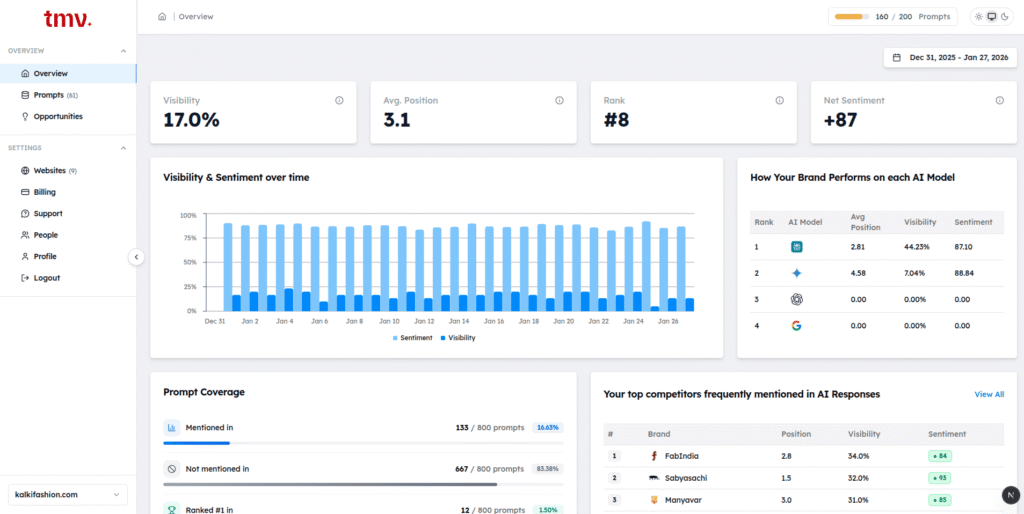
Tools like Track My Visibility help monitor how product pages perform across AI platforms. They make it easier to identify citation gaps, track product mentions, and understand which queries surface your listings, allowing you to refine your pages based on actual visibility data.
Try our 7-day trial to see where your product stands.
FAQs
It is the process of structuring product pages so AI systems can easily extract, validate, and reuse product information in generated responses. This includes clear attributes, structured data, and query-aligned content.
AI systems use product pages as primary data sources to answer shopping-related questions. Pages with complete and well-structured information are more likely to be selected and referenced in responses.
Focus on adding clear product attributes, detailed schema, descriptive titles, and query-focused descriptions. Strengthen validation signals with reviews and ensure data is consistent and up to date across the page.
Yes. Structured data helps AI systems interpret product details accurately. A complete schema with attributes like price, availability, and ratings improves how easily information is extracted and verified.
You can monitor referral traffic from AI platforms, run manual query checks, and use tools like Track My Visibility to track product mentions, citation frequency, and overall visibility across AI systems.