


Search visibility has shifted. Traditional SEO has standardized metrics like rankings, impressions, and click-through rates. AI visibility doesn’t, at least not yet.
Making matters worse, AI platforms like Google AI Overviews, ChatGPT, and Perplexity don’t tell you when, where, or how often your brand is mentioned.
There’s no built-in way to know when your brand disappears from AI-generated results. You’re left guessing whether your content strategy is winning or losing when measuring AI search visibility.
With AI Overviews now appearing more often in Google AI mode and across zero-click searches, tracking AI overviews is no longer optional.
The payoff for getting this right is real. AI citations build brand authority and position you as the source that AI systems recommend to millions of users daily. That directly shapes how your brand shows up across the AI search ecosystem.
So this guide will walk through:
- How to set up AI Overview tracking
- The key metrics for tracking AI Overview citations
- How to increase AI Overview citations
Let’s get into it.
TL;DR
- AI Overview tracking starts with building a prompt library of queries that trigger the AI block, then systematically logging citation presence, position, sentiment, and competitor mentions across platforms
- Zero-click searches are reducing overall traffic volume, but visitors arriving through AI citations tend to convert at higher rates, making citation tracking essential for understanding the true business impact of AI search
- Measuring AI visibility requires a layered metrics framework: trigger rate and share of voice to assess breadth, citation position and intent match to assess quality, and assisted conversion analysis to connect citations to revenue
- Content structure, fact density, and E-E-A-T signals are the three factors AI systems consistently weigh when selecting citation sources. Formatting alone is not sufficient without underlying authority and verifiable information
- GEO operates on a longer timeline than traditional SEO citation authority compounds gradually, and brands that establish tracking and optimisation program
How to Set Up AI Overview Tracking
Google AI Overviews change how visibility works in search. Instead of tracking rankings alone, you now need to monitor whether your brand appears in AI-generated summaries.
Here’s how to set up structured Google AI Overview tracking manually and at scale.
Method 1: Manual Tracking with a Traditional Approach
Step 1: Create Your Prompt Library That Triggers Google AI Overviews
| Informational Queries (High AIO Trigger Rate) | Comparison Queries (Very Strong AIO Triggers) | “Best” & List Queries (Consistently Trigger AIO) |
| What is e-commerce? How does dropshipping work, and how to reduce cart abandonment | shopify vs wix, HubSpot vs. Salesforce, Klaviyo vs. Mailchimp | best crm for startups, best email marketing tools, best website builder |
| Commercial-Intent Queries (Growing AIO Coverage) | Problem-Based Queries (Strong AIO Pattern) | Advanced Queries (Good for GEO Blogs) |
| affordable crm software, email marketing software cost, Shopify pricing comparison | Why is CTR declining? Why is the email open rate low? Why is Google traffic decreasing | How to track AI overviews, AI overview tracking tools, and why AI overviews reduce clicks |
Search these queries in Google using incognito mode for consistency, and log whether an AI Overview appears or not.
Step 2: Run these queries across Google and record the following:
- Is your brand mentioned or not? (Yes/No)
- Position inside summary: primary recommendation, supporting mention, listed in sources
- Are your competitors mentioned?
- Context (positive, neutral, comparative)
Citation position is more important than simple inclusion.
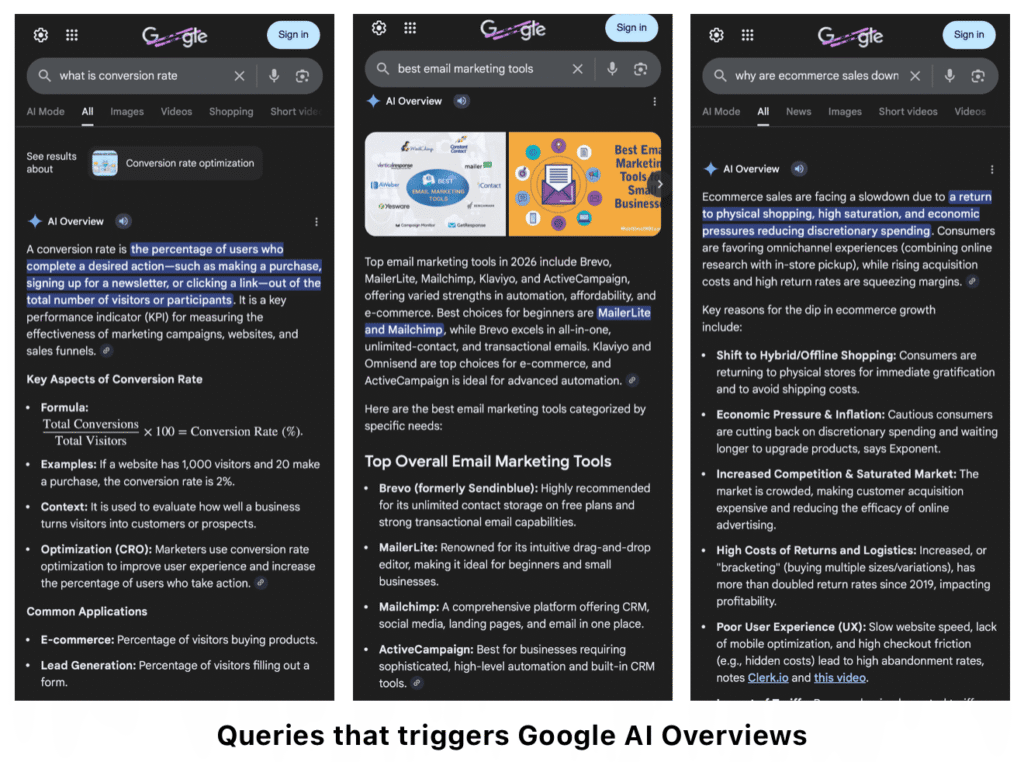
Step 3: Screenshots are your proof of citation performance over time.
Step 4: Spreadsheets turn those observations into trackable data.

Refer to our Manual prompt testing log sheet to track AI citations.
Method 2: Using a Dedicated Tracking Tool
Manual tracking establishes the fundamentals, but it doesn’t scale. Monitoring 20+ queries manually can consume 8–10 hours a month time better allocated to content optimization. Dedicated AI search monitoring platforms eliminate this bottleneck.
Here’s how automated tracking platforms work.
Step 1: Prompt Libraries at Scale
The foundation of automated tracking is the prompt library, the collection of queries monitored across AI platforms. Instead of testing one by one, queries are uploaded once, and the platform handles all future testing.
Most automated platforms support two methods for building a prompt library:
- Manual entry: Add queries one at a time through the platform interface
- CSV upload: Export the existing manual tracking spreadsheet
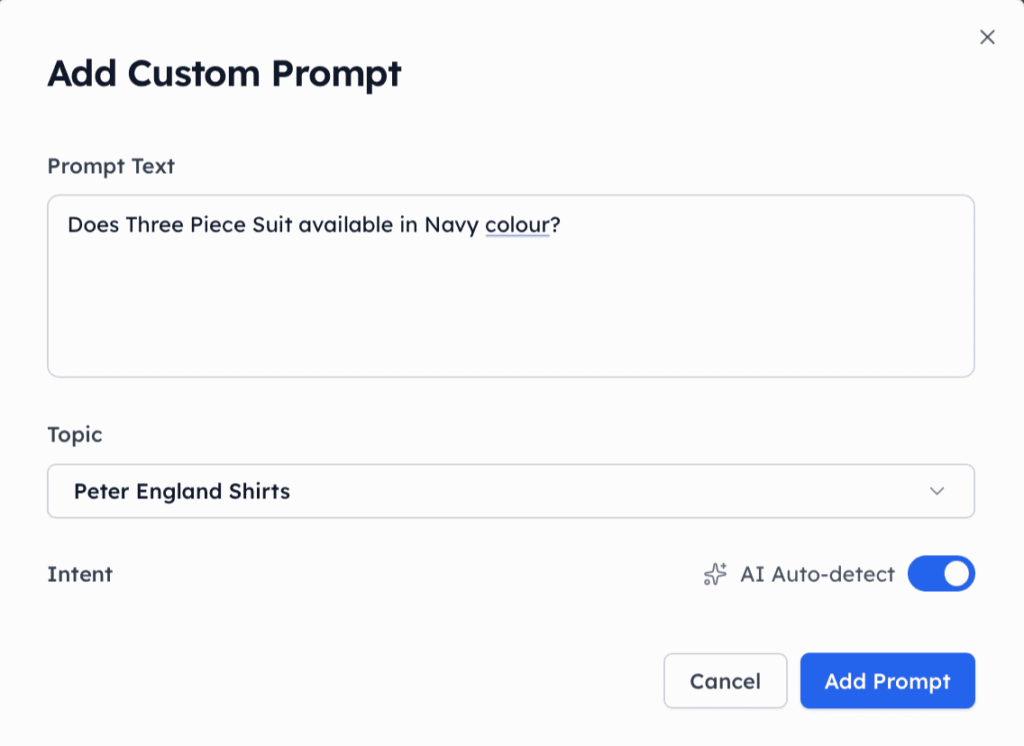
Beyond just existing queries, platforms like Track My Visibility provide the flexibility to add new prompts.
Step 2: Automated Google AI Overview Detection
Once the prompt library is uploaded, the platform begins automated testing across all major AI platforms, including Google AI Overviews, on a configured schedule.

 Pro Tip: Most brands focus on whether they appear in AI Overviews; the more strategic question is where they appear and how often relative to competitors. Citation position and frequency reveal far more about AI search standing than simple inclusion. Explore strategies to rank in Google AI Overviews for determining that positioning.
Step 3: Visibility Scoring
Raw citation data (cited vs. not cited) is useful but incomplete. A visibility score aggregates multiple performance factors into a single trackable metric, giving a clearer picture of overall AI presence strength.

Step 4: Competitor Gap Analysis
Automated platforms track competitor citations alongside your brand, revealing where ground is being won, lost, and where opportunities exist.
Platforms identify competitors through several methods:
- Analyzing AI responses to tracked queries
- Identifying brands frequently mentioned alongside the tracked brand
- Suggesting competitors based on citation co-occurrence
- Allowing manual addition of known competitors
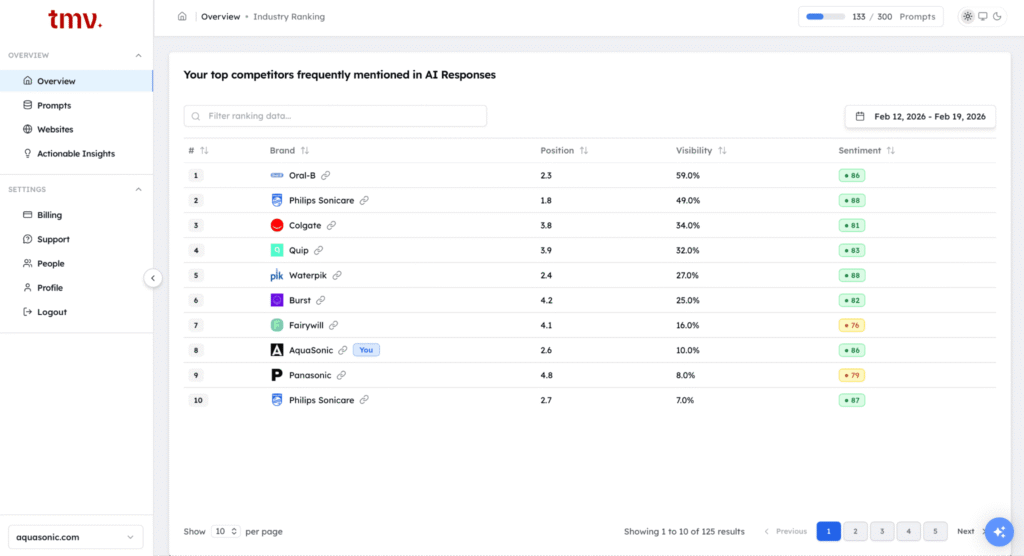
The platform identifies specific areas where competitors outperform and surfaces actionable recommendations.
Step 5: Monitor changes
The most useful aspect of automated tracking is response speed: how quickly the platform detects changes and surfaces them for action.
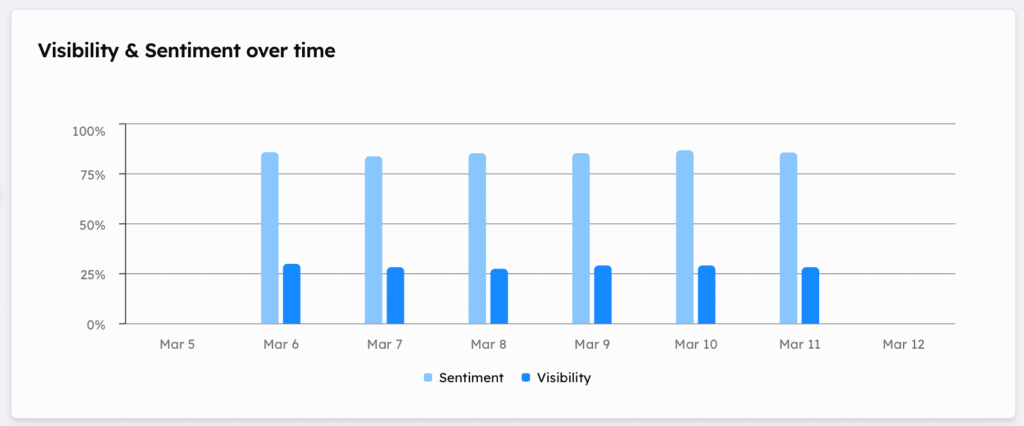
The platform handles the mechanical work testing, capturing, and analyzing so teams can focus on the strategic side: creating content that earns citations and drives measurable results.
Why Your Brands Need to Track AI Overviews
AI search is reshaping how information is found, how purchase decisions are made, and how brands build visibility across every industry. Understanding these shifts is the foundation of an effective AI visibility strategy.
# Declining Organic Click-Through Rates and Zero-Click Searches
The most immediate impact of AI Overviews is the dramatic reduction in website traffic, even when rankings remain stable across the Google search platform.
AI Overviews Answer Queries Directly On SERP
AI Overviews synthesise information from multiple sources and present comprehensive answers directly on the search results page.
This means:
- Users get detailed explanations, comparisons, and recommendations without leaving Google
- AI Overviews combine information from 2-7 websites into a single, coherent response
- Users can ask follow-up questions, refining their search without clicking any links
Users Consume Content Without Visiting Websites
Content is being used, but brands receive no credit or traffic in return.
- AI systems scrape and summarise proprietary insights
- Users consume brand expertise without knowing it came from you
- There is no opportunity to build relationships, capture leads, or guide users toward conversion
Brands Lose Early Awareness Opportunities
The top of the marketing funnel, where customers first discover brands and products, is being disrupted:
- Instead of browsing the category page, users see AI-curated recommendations
- Users arrive at your site further along in their journey, but the awareness interaction is lost entirely
- AI systems may feature 3-5 competitor brands while omitting yours entirely
# Shift in Customer Journey and Purchase Path
AI Overviews aren’t just reducing traffic. They’re restructuring how customers research, evaluate, and buy.
AI Changes Buyer Research Behaviour
Traditional way: Search query → Click multiple websites → Read reviews → Compare options → Make a decision
AI-Powered way: Search query → Read AI synthesis → Maybe click 1-2 sites → Make decision
What changes:
- What used to take 8-12 website visits now happens in one AI interaction
- Fewer opportunities to influence the buyer
- Trust shifts from individual brands to the AI system itself
- Users ask follow-up questions to AI instead of searching multiple sites
Traditional Funnel Metrics Are Being Disrupted
Marketing funnel analytics are becoming unreliable:
At the Top of Funnel (TOFU), awareness traffic is declining, users no longer visit “beginner” or “what is” content, and educational content loses its discovery function.
The Middle of Funnel (MOFU) is also affected. Comparison and “best of” content sees dramatic traffic loss, users consume comparisons inside AI Overviews, and evaluation happens before they reach the site.
At the Bottom of Funnel (BOFU), users arrive more informed but in smaller numbers, traditional conversion rate calculations get skewed, and multi-touch attribution breaks down.
In simple terms, users are researching in AI Overviews, arriving more qualified but bypassing early funnel content entirely.
Competitors Cited While Your Brand Disappears
Competitors are being recommended by AI systems while your brand is invisible.
This creates:
- A perceived authority gap: AI citation signals credibility and subject matter expertise to the reader
- Market share erosion. Cited competitors capture demand that was previously shared
- Brand consideration loss. The brand is excluded from the shortlist before evaluation even begins
# New Source of Qualified Traffic and Attribution Challenges
AI traffic shows different user behaviour. While AI Overviews reduce overall traffic volume, they’re creating a new category of highly qualified visitors that require different tracking and attribution approaches.
Users Are More Informed
Visitors arriving from AI citations have already consumed the content. They’ve read key points in the AI summary, understood the methodology, and formed an initial impression of the brand.
They’ve moved past basic education and are ready for deeper engagement, looking for specific details that help them act.
A visitor from an AI Overview searches: “Best ABM software for enterprise SaaS companies.”

Higher Conversion Potential, Smaller Volume
The AI traffic paradox presents a clear trade-off: fewer visitors, higher intent.
Consider a site with 10,000 monthly organic visitors before AI Overviews. If AI citations reduce that to 4,000 visitors but drive a 10% conversion rate compared with 3% before, the business is converting more value from less traffic. Volume is down, efficiency is up.
Brand Needs Proper Pipeline Attribution Models
Traditional attribution models were not built for AI-influenced journeys.
- ❌ First-touch attribution fails: AI Overview exposure isn’t captured in standard tracking, meaning early influence remains invisible.
- ❌ Last-touch attribution misleads: Over-credits bottom-funnel channels and underinvests in the content that feeds AI systems.
- ❌ Multi-touch attribution is incomplete: AI interactions aren’t captured as touchpoints, and content credit is misassigned.
Pro Tip: Attribution gaps are partly a tracking problem and partly a visibility problem. A buyer can encounter a brand three times inside AI responses before ever visiting the website, and none of those interactions leaves a trace in standard analytics. That’s why tracking brand mentions in AI search is important.# Competitive Visibility and Market Share Protection
AI Overview citations are becoming powerful signals of market authority and brand credibility.
Citations Grant An Implicit Google Trust Endorsement
When AI Overviews cite a brand’s content, they signal credibility. It implies subject matter expertise and editorial quality, and it builds cumulative trust with audiences over time.
This influences brand perception and awareness, consideration set inclusion, purchase decisions, and long-term brand equity.
Direct Impact On Brand Perception And Positioning
Consistent citations across category-defining queries shape how people perceive a brand. Each query type maps to a distinct positioning outcome:
- “Best [product category]” → the brand is positioned as a category leader
- “How to [solve problem]” → the brand becomes the expert advisor
- “[Product A] vs [Product B]” → the brand becomes the definitive comparison source
Product Category Queries Directly Answer Brand Questions
AI now answers product category, comparison, and how-to queries directly, including the highest-intent searches in any market.
Example queries: “Best over-ear headphones.” “Which is best between Product A and Product B?” , “How to use this product?”, “Accounting software for eCommerce.”
For brands that aren’t being cited:
- Challengers can use AI citations to leapfrog established players
- Market position no longer reflects AI visibility
- Traffic and leads flow to cited competitors
- Competitors gain a structural advantage in the exact channels where target audiences conduct research
# Content ROI Optimization and Resource Allocation
Tracking AI Overviews turns content strategy into data-driven optimization. Understanding which content earns citations helps teams allocate resources toward the formats and topics that actually perform in AI search.
Identify Which Content Appears In AI
Knowing what’s getting cited informs content planning across Google AI Overviews, ChatGPT answers, Perplexity search, Claude, and Gemini. Citation data consistently points to certain content types as high performers:
- How-to guides with step-by-step instructions
- Data-rich comparison tables
- Comprehensive topic guides and keyword research
- FAQ pages with direct answers
- Statistical research and original data
Spotting these patterns lets content teams prioritize the formats AI systems are more likely to cite.
Product Descriptions Require Structured, AI-Readable Formats
A structured, specification-led format significantly improves the likelihood of AI citation. Let’s see a product description example:
Generic product description:
Our revolutionary XR-5000 running shoe features cutting-edge technology and premium materials for the ultimate running experience.
AI product description:
XR-5000 Running Shoe Specifications:
– Weight: 8.2 oz (men’s size 9)
– Drop: 6mm heel-to-toe offset
– Cushioning: Dual-density EVA foam midsole
– Upper: Engineered mesh with reinforced toe cap
– Outsole: Carbon rubber in high-wear areas
– Best for: Neutral runners, daily training, 5K to marathon
– Price: $259
Structured specifications with concrete numbers allow AI systems to match content directly to user queries, including specific questions like ‘What does the XR-5000 weigh?’ or ‘Is it suitable for marathon training?’
Key Metrics for Tracking AI Overview Performance
To track AI overviews effectively, you need a measurement framework that goes beyond traditional SEO, since AI search operates differently from conventional search models. The metrics below are organized by category to give you a structured approach to AI Overview performance tracking.
1. Visibility Metrics
Visibility metrics measure a brand’s presence and prominence within AI search results across platforms.
# AI Overview Trigger Rate
Tracks the percentage of monitored keywords that produce an AI Overview in search results. Not every query triggers the AI block, so identifying which categories and topics do is the starting point for any tracking programme. This metric helps prioritise the query categories that warrant the closest attention.
# Citation Frequency
Measures how often a brand’s domain appears as a cited source within AI Overviews. It is one of the most direct indicators of trust and credibility in AI search. Tracking this over time reveals whether content investments are translating into measurable AI recognition.
# Citation Position
Tracks where a brand appears within the AI Overview source carousel, whether as the primary reference, a supporting mention, or one of several listed sources. A brand consistently cited in the first or second position signals stronger competitive authority. This metric provides a clearer picture of competitive strength than citation frequency alone.
# Share of Voice
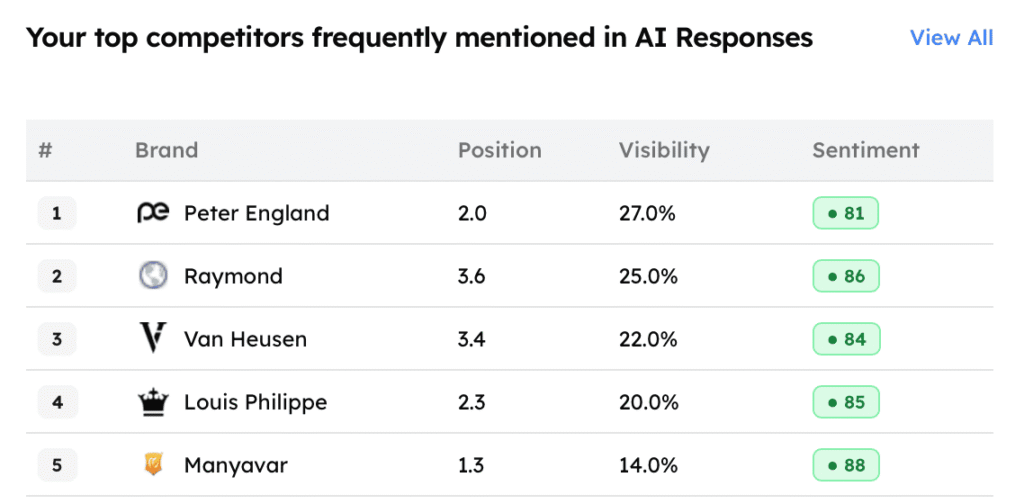
Measuring your AI visibility for a brand’s citation presence relative to competitors within a specific industry or category matters. A brand may earn frequent citations, but competitors weaken its competitive position when they earn more citations across the same query set. This metric is useful for tracking market share implications and competitive momentum over time.
2. Traffic and Engagement Metrics
These metrics measure how AI Overview presence affects actual user behaviour and business outcomes.
# Organic CTR Change
Tracks click-through rate shifts correlated with AI Overview appearances across monitored keywords. When an AI Overview appears, organic clicks often decline even when rankings remain stable. This metric provides a direct measure of traffic impact and helps attribute changes to AI Overview expansion rather than ranking fluctuations.
# AI-Attributed Traffic Quality
Measures engagement and conversion metrics for visitors arriving via AI-assisted research. Visitors from AI sources tend to arrive further along in the decision process, resulting in stronger conversion behaviour. This metric validates the business value of AI optimisation investment beyond raw traffic volume.
# Brand Search Volume Trend
Monitors changes in branded search queries correlated with increases in AI citation frequency. Consistent AI citation often generates a measurable lift in direct brand searches as awareness builds. This metric captures the longer-term brand equity impact that direct attribution models typically miss.
3. Content Performance Indicators
These metrics help you understand which content earns citations and how to optimize for better LLM visibility.
# Content Citation Rate
Measures the percentage of indexed pages cited at least once within AI Overviews. It serves as a broad indicator of content quality and relevance across the site. Teams use this metric to guide content creation priorities and identify which formats are earning AI recognition.
# E-E-A-T Signal Strength
Tracks the presence of Experience, Expertise, Authoritativeness, and Trustworthiness signals in cited content compared to non-cited content. AI systems prioritize sources that demonstrate these qualities, making them reliable indicators of why certain content earns citations while comparable content does not.
# Schema Markup Health
Tracks the correlation between structured data implementation and citation rates across the site. Pages with properly implemented schema give AI systems cleaner, more parseable signals, which correlates with higher citation probability. This metric guides structured data strategy and helps justify developer resource allocation for technical optimisation work.
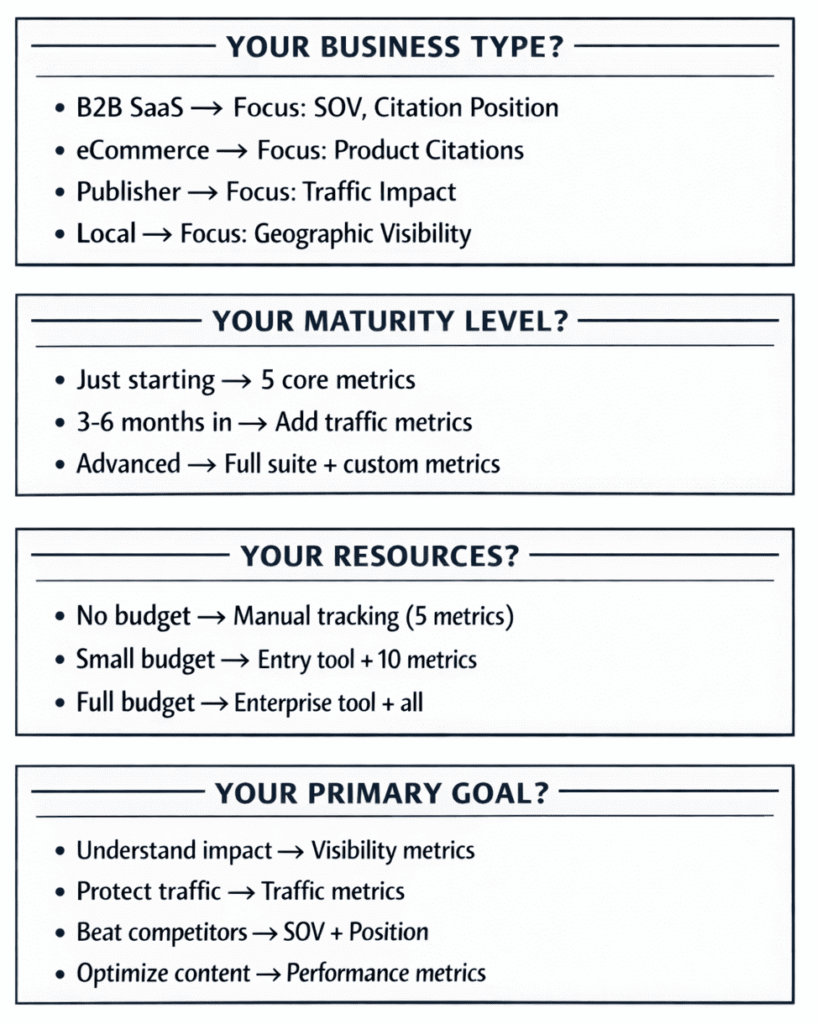
Which one to use and when?
How to Increase Your AI Overview Citations
Earning citations in AI Overviews takes a different approach than traditional search optimization. SEO focuses on ranking in the top 10. AI citation is about being selected as one of the 2–7 sources AI systems trust enough to reference.
# Understand the Differences Between SEO, AEO, and GEO
Most content strategies are built around SEO, optimizing pages to rank in traditional search results and capture organic clicks. That foundation is still relevant, but it isn’t sufficient on its own anymore.
Answer Engine Optimization (AEO) extends that foundation by structuring content to be extracted directly by search engines for featured snippets, People Also Ask boxes, and other answer-focused formats. The goal shifts from ranking to being the direct answer.
Generative Engine Optimization (GEO) takes this further. Rather than optimizing for a position on a results page, GEO focuses on becoming a source that AI platforms trust enough to cite when generating an answer. It requires a different kind of authority, built on fact density, source credibility, and content structure that AI can parse and synthesize.
The Key Differences: SEO vs. AEO vs. GEO
| Aspect | SEO | AEO | GEO |
| Primary Focus | Rankings | Featured Snippets | AI Citations |
| Competition | 10 organic results | 1 featured snippet | 2–7 cited sources |
| Click Goal | Maximize clicks | Accept zero-click | Quality over quantity |
| Content Style | Keyword-optimized | Answer-focused | Citation-worthy |
| Authority Signal | Backlinks | Domain trust | Multi-source validation |
| Optimization Target | Search crawlers | Answer extraction | AI understanding |
| User Intent Match | Keyword match | Question match | Conversational match |
| Update Frequency | Periodic | Regular | Continuous |
| Brand Mention | Title/snippet | Limited | Featured in AI text |
Pro Tip: The distinction between SEO, AEO, and GEO reflects a broader shift in how search engines evaluate and surface content. Explore what AEO and GEO are and how they change SEO to know why these disciplines require different content strategies and how they work together rather than in isolation.# Optimize Your Content Structure for Search and AI
AI search engines need to quickly parse, understand, and extract information from content. Poor structure is the most common reason quality content gets overlooked, not poor quality itself.
- Use hierarchical header structure like H1, H2, and H3
- Structure content around questions users actually ask
- Break content into discrete, self-contained modules
- Structure content from most to least important
# Increase Fact Density to Improve AI Citations
AI systems consistently prioritise content with verifiable facts, specific data, and concrete information over vague claims or generalised language.
- Add specific statistics from industry reports, academic studies, government data, company-published whitepapers, case studies, and survey platforms
- Provide date stamp information in published data or content
- Include methodology and sample size while mentioning any research
- Add primary source citations link to original research, not secondary summaries
# Strengthen E-E-A-T Signals Across Your Content
AI systems apply E-E-A-T principles (Experience, Expertise, Authoritativeness, and Trustworthiness) when deciding which sources to cite. Content that provides verifiable information and meets editorial quality standards is significantly more likely to be selected.
How to demonstrate this principle:
| Experience | Expertise |
| → Case studies with real client/company names (with permission)→ Before/after screenshots from actual projects→ Photos from implementation processes | → Industry certifications (display badges/logos)→ Speaking engagements at conferences→ Published books or research papers |
| Authoritativeness | Trustworthiness |
| → Get mentioned in industry publications→ Earn backlinks from authoritative sites→ Testimonials from recognized experts | → Provide publication and update dates→ Easy-to-find contact page→ About page with company history |
# Improve Technical Foundations for GEO Performance
Technical SEO focuses on making a site crawlable and indexable by search engines. Technical GEO applies the same discipline to a different goal: making content parseable and citable by AI systems.
Core technical requirements for AI citability:
- Make sure AI bots can crawl your site
- Render content reliably with JavaScript SEO best practices
- Implement schema markup (Article, FAQPage, Product, HowTo, and Comparison schema where relevant)
- Use proper canonical URLs and an XML sitemap
Common Mistakes to Avoid When Tracking AI Visibility
Even with the best tools and intentions, many businesses make critical errors when they track AI overviews and measure performance. These mistakes lead to misguided strategies, wasted resources, and missed opportunities. Here are the most common pitfalls and how to avoid them.
Mistake #1: Over-Relying on Single Metrics
The most dangerous tracking mistake is tunnel vision, focusing on one metric while ignoring the complete picture. A single metric in isolation can produce misleading conclusions that look positive on the surface but mask significant strategic gaps.
Example: a brand is cited in position 1 for “history of email marketing” (10,000 searches/month, informational) but not cited for “best email marketing software” (50,000 searches/month, commercial investigation). The metrics look strong. The business impact isn’t.
Solution: A Balanced Metrics Approach
Track these three layers together:
- Visibility Metrics (Breadth): Citation frequency, AI Overview trigger rate, share of voice
- Quality Metrics (Depth): Citation position, query intent distribution, competitive context
- Business Metrics (Impact): Traffic quality and conversion, revenue attribution, brand search lift
Mistake #2: Ignoring Query Intent Variations
Not all AI Overview appearances carry equal value. Treating informational, commercial, and branded queries the same way leads to misallocated resources and missed revenue opportunities.
Example: a SaaS company celebrates 100 citations across its keyword portfolio without analysing intent. Of those, 60 are informational (“what is project management”), 25 are branded (“CompanyName tutorial”), and only 15 are commercial (“best project management software,” “Asana alternatives”).
The instinct is to keep producing educational content, but the 15 commercial citations are the ones driving the pipeline, and competitors own that ground.
Solution: Understanding Query Intent Types
| Intent Type | Characteristics | Example |
| Informational | Learning-focused; “what is / how does / why does” queries; early awareness stage; high volume; low conversion | “What is email marketing automation?” |
| Commercial Investigation | Researching and comparing options; “best / vs/alternatives/review” queries; mid-funnel evaluation; high conversion potential | “Best CRM for small business” |
| Transactional | Ready to act; “pricing/demo / buy/sign up” queries; bottom-of-funnel; highest conversion rate | “HubSpot pricing plans” |
| Branded | Searching for a specific brand, company name + keywords, existing brand awareness | “HubSpot email automation features” |
Mistake #3: Not Tracking Competitors
AI citation performance is inherently competitive; there are only 2–7 citation slots available per query. Performance tracked in isolation, without competitive context, produces a dangerously incomplete picture.
Example: a dashboard shows 68 total citations, an average position of 2.8, and a month-over-month growth of 12%. That looks positive. In reality, the brand is in 4th place in its category, and its growth rate is the slowest among direct competitors.
Solution: Build Competitive Tracking Into the Programme
- For competitive citation frequency, track:
- How many citations does each competitor earn?
- Week-over-week and month-over-month changes
- For competitive positioning, track:
- Average citation position for each competitor
- Position distribution across slots 1, 2, 3, and beyond
- For competitive query coverage, track:
- Which high-value queries competitors are cited for
- Query gaps where competitors are cited and the brand is not
Mistake #4: Expecting Immediate Results
The most common reason organisations abandon AI Overview optimisation is unrealistic expectations about timing. GEO is not a short-term tactic; results are built gradually as content authority compounds.
Example: a company implements GEO strategies and checks citations the following week. With no visible change by week three, the conclusion is that GEO does not work. In reality, meaningful citation movement typically takes months of consistent effort.
Solution: Set a Realistic Timeline from the Start
- Set realistic expectations from day one: Align stakeholders on a 3–6 month horizon before drawing conclusions
- Establish a review cadence: Weekly check-ins for anomalies, monthly reviews for trend analysis, daily checks produce noise, not insight
- Build for sustained visibility, not quick wins: Focus on comprehensive topic authority rather than isolated content pushes
- Document the process: Maintain regular logs so progress is visible even when citation movement is gradual
Mistake #5: Neglecting Technical Foundations
Strong content cannot earn citations if AI systems cannot access, parse, or understand it. Technical foundations are a prerequisite, not an afterthought.
Example: a company invests heavily in GEO content over several months and sees zero AI visibility improvement. The cause isn’t the content. It’s the technical infrastructure. AI crawlers receive empty HTML shells because JavaScript isn’t rendering server-side, which makes the content invisible.
Solution: Audit Technical Foundations
- Use server-side rendering or a static site generator for JavaScript-heavy sites
- Improve site speed and core web vitals to meet baseline performance thresholds
- Ensure the site is fully responsive and mobile-friendly
- Implement proper HTTP security protocols
Final Thoughts
The expansion of AI Mode across all major platforms is accelerating rapidly, making multi-platform tracking no longer optional. AI platforms are all competing for user attention. Brands need visibility across this entire ecosystem, not just Google.
AI Overviews are also spreading beyond informational queries into transactional searches. SERPs increasingly answer queries containing “buy,” “pricing,” and “demo” directly, bypassing brand touchpoints that once reliably drove website clicks.
Static tracking is no longer sufficient. Brands need dynamic, real-time visibility into how AI systems present them across different scenarios and audience segments.
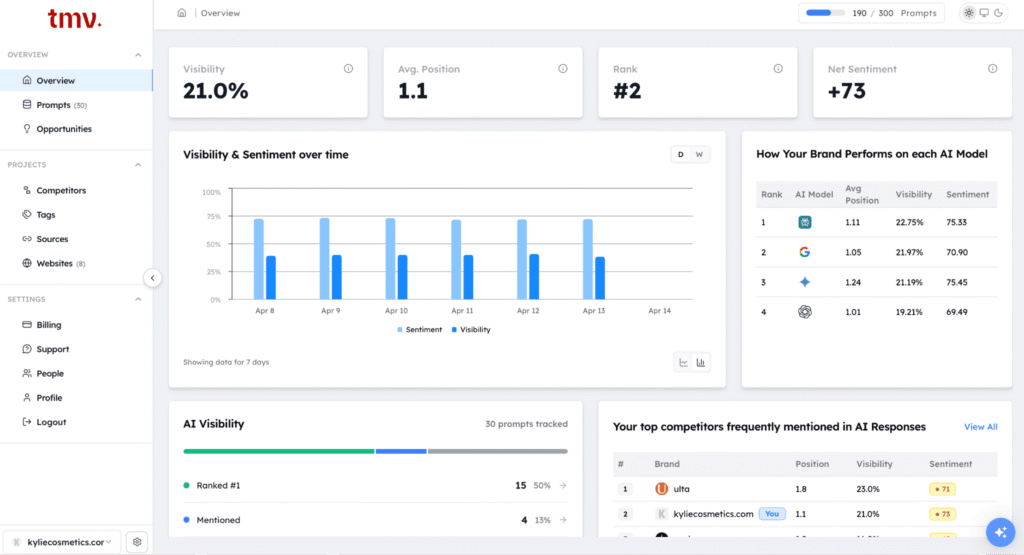
This is precisely why Track My Visibility is important. The platform surfaces citation gaps, competitive movements, and optimisation opportunities in real time, giving teams the intelligence needed to adapt as AI search continues to evolve.
Try our 7-day trial to see where your brand appears across AI platforms.
Frequently Asked Questions
Tracking AI Overviews means monitoring when and how your brand appears in AI-generated summaries across search engines and AI platforms.
Not directly, but you can infer impact through impression growth, CTR decline, and question-based query trends. GSC also offers a “Search Appearance” filter that surfaces queries where your pages appeared in AI Overviews.
AI tracking focuses on citations and references in generated answers, not just page rankings in search results.
Weekly tracking is ideal for catching shifts early, with monthly and quarterly reviews layered on top to measure long-term visibility trends.
They can reduce clicks due to zero-click answers, but they often increase brand exposure and assisted conversions.
Both category-level prompts drive discovery, while product-level prompts influence purchase decisions. Platforms like Track My Visibility help track these prompts.