


If you’re tracking your brand in ChatGPT, you’d probably want to see where you show up in the answer and who’s ranking above you. The catch is that ChatGPT’s answers don’t sit still. In our report on the sources ChatGPT cites, we found that the sites it relies on change noticeably from one month to the next. So a ranking you checked a few weeks ago may not be your ranking today.
To make things easier, we’ve listed out a few tools on how it tracks and shows position in ChatGPT’s answer.
Disclosure: I’m part of the team behind Track My Visibility, so I have a direct interest in the product. This comparison is based on each tool’s current features, pricing, strengths, and limitations.
How I Evaluated These ChatGPT Rank Tracking Tools
ChatGPT rankings keep shifting from one week to the next, so I looked at each tool on these six things:
- Position tracking accuracy and transparency: How the tool decides where you rank in a ChatGPT answer, and whether you can open that answer to check it.
- Prompt tracking and reporting: Support for your own prompts, how often they’re rechecked, and how much ranking history you get.
- Brand mentions and citations: Whether the tool separates being named in the answer from being cited as a source.
- Competitor visibility: How clearly you can see who ranks above you, per prompt and across your list.
- Actionable insights: Whether the results point to something you can fix or publish.
- Pricing and accessibility: Entry price, how many prompts that price covers, and how quickly a team can get started.
If you just want a quick look at where your brand ranks in ChatGPT right now, you can run a check with our free ChatGPT rank tracker within a couple of minutes.
7 Best ChatGPT Rank Tracking Tools
| Tool | Best for | ChatGPT tracking | ChatGPT starting price |
| Track My Visibility | ChatGPT rankings plus fix recommendations | Daily position, mentions and citations | $89/mo |
| Profound | Enterprise teams with procurement | Daily, up to 10 engines, with prompt volumes | Free trial, then custom |
| Peec AI | Prompt-level rankings against competitors | Daily, 50 prompts across 3 models | $95/mo |
| Otterly.AI | Simple, low-cost monitoring | Daily mentions, position and citations | $29/mo |
| SE Ranking | Google SEO and ChatGPT in one platform | Daily, 25 prompts on base plans | $129/mo, or $71/mo standalone |
| AthenaHQ | Turning ranking gaps into content actions | Credit-based, 11 models | Free (300 credits), then $295/mo |
| Ahrefs Brand Radar | Market-wide ChatGPT research | Monthly index of 565M+ prompts, plus daily custom prompts | $50/mo custom prompts, $199/mo index |
*Pricing as of Nov, 2026.
1. Track My Visibility: Best for Tracking ChatGPT Rankings and Finding Optimization Opportunities
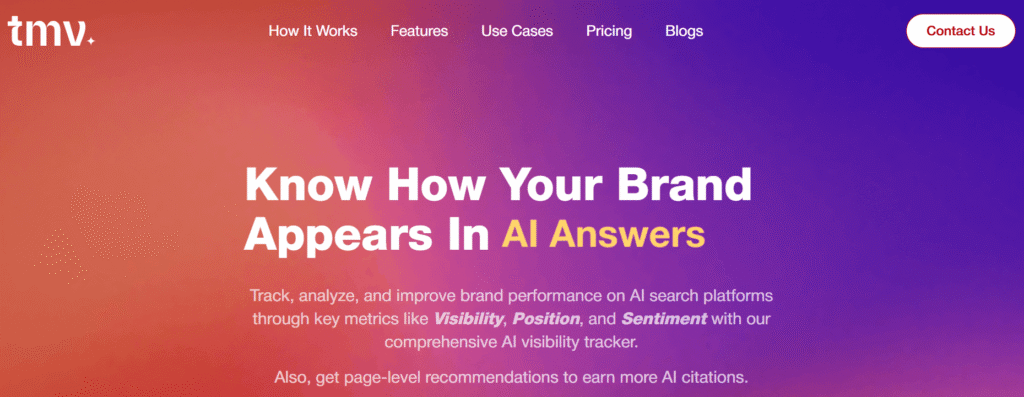
Quick peek: Track My Visibility is an AI visibility platform that shows where your brand ranks inside ChatGPT answers, then points you to what to fix. ChatGPT pricing starts at $89/mo, including optimization recommendations, ChatGPT Shopping tracking, and MCP support.
Tracking Brand Positions Across ChatGPT Prompts
Every tracked prompt is rerun in ChatGPT every 24 hours through the actual ChatGPT interface rather than the API. For each prompt, you see the position your brand landed at, whether it was mentioned at all, and your overall visibility percentage across the prompt set. Prompts are also sorted into ranked first, mentioned, and not mentioned, so the ones you’re missing from don’t get buried in an average.
You can follow every metric over time to spot when a ranking slips. Prompts can be grouped by intent (informational, commercial, or transactional), which makes it easy to watch “best X for Y” and “X vs Y” prompts on their own. If you sell products, ChatGPT Shopping tracking goes down to individual SKUs.
Competitor Rankings and Citation Source Analysis
Competitors are tracked against the same prompts as you (unlimited on paid plans), so you can see who sits above you prompt by prompt. The citation data then shows why they’re there:
- Competitive gap: Prompts where a competitor is mentioned and you aren’t.
- URL-level citations: The exact pages ChatGPT pulled from for each prompt, including your competitors’ pages.
- Source type split: Whether each cited page is yours, a competitor’s, or a third party’s.
- Competitor source analysis: Sites that cite your competitors but not you, which works as a ready-made outreach list.
Turning ChatGPT Ranking Data Into Practical Improvements
Opportunities come in three groups: content gaps, authority and trust signals, and technical fixes. Each one comes with a priority, an effort level, and steps you can copy. A typical recommendation names the page most relevant to a prompt and suggests what to add to it, such as FAQ content.
For ecommerce brands, the SKU-level shopping data is the obvious draw. Agencies get URL-level citation reports that slot into monthly client reporting. Marketing teams can query everything from Claude or ChatGPT through MCP instead of exporting spreadsheets.
Refer to our Track My Visibility docs for detailed information on ChatGPT tracking and how-to’s.
2. Profound: Best for Enterprise-Level ChatGPT Rank Intelligence
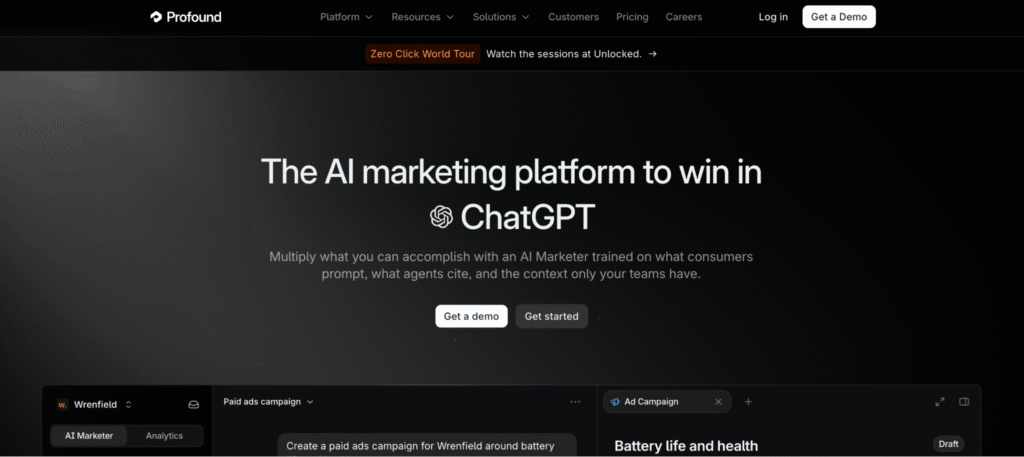
Quick peek: An enterprise AI marketing platform for ChatGPT rank tracking across up to 10 answer engines, with Prompt Volumes, content agents, ChatGPT Shopping tracking, and AI crawler analytics. ChatGPT pricing is a free 7-day trial, then custom Enterprise pricing.
Enterprise-Scale Prompt and Answer Monitoring
Profound runs your tracked prompts daily and records where your brand appears in each answer, along with citations, sentiment, and competitor presence. Enterprise plans cover up to 10 answer engines, including ChatGPT, Claude, Perplexity, Gemini, DeepSeek and Qwen, across custom languages and regions.
- Prompt Volumes: Real-user prompt data, so you choose what to track by demand rather than by guesswork.
- ChatGPT Shopping: SKU-level product visibility across merchants and retailers, available on Enterprise only.
- Agent Analytics: AI crawler and referral traffic across unlimited domains, with integrations for Cloudflare, Akamai, Vercel, and others.
- Multi-brand setup: An agency plan with separate client workspaces, plus SSO, SOC 2 and unlimited seats for larger organizations.
Advanced Analytics and Competitive Benchmarking
Answer Engine Insights gives you a category-wide visibility baseline, a visibility score per platform, and citation analytics across every answer. You can follow those numbers over time against named competitors and benchmark your site against industry peers.
Enterprise accounts get full history, CSV and JSON exports, and API access, so the data can flow into whatever BI setup your team already reports from. Profound also publishes research on its own methodology, including whether checking once a day is enough.
Enterprise Investment and Adoption Considerations
The $99 and $399 plans that most roundups still quote are gone, so it’s now a free trial or a custom quote. The trial runs a fixed prompt set with no history or exports, which means a demo and procurement come before you see a price or your own rankings.
With credit-metered agents and content workflows on top of tracking, it’s also a lot of platforms if all you need is ChatGPT positions. It fits best for enterprise teams tracking several markets or brands, with a content team ready to put the agents to work.
3. Peec AI: Best for Prompt-Level ChatGPT Ranking and Competitor Analysis
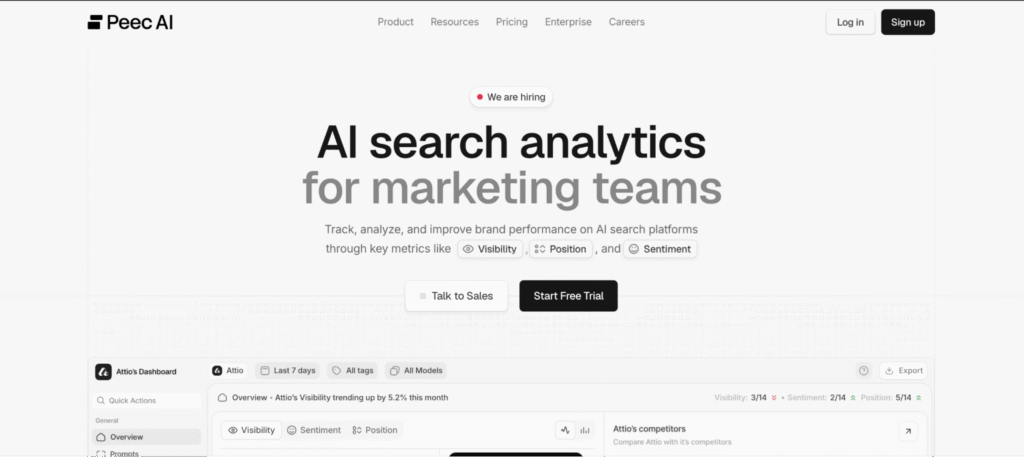
Quick peek: An AI search analytics platform for prompt-level ChatGPT tracking. It gives you daily visibility, position and sentiment scores, competitor gap analysis, AI Shopping tracking, and MCP access on every plan. ChatGPT pricing starts at $95/mo (Starter: 50 prompts, 3 models).
Detailed Visibility Across Tracked Prompts
You add prompts yourself, pull suggestions from your brand context, or generate them from keywords. You then tag them by persona or funnel stage. Peec runs each prompt once every 24 hours on ChatGPT and your other selected models.
For every prompt, you see whether your brand was mentioned, where it was positioned, and how it was described. You can filter by model, country, or tag, so a ChatGPT-only view of your commercial prompts takes a couple of clicks. The prompts where you’re missing stand out right away, and the daily cadence gives you a clean trend line for spotting when a ranking slips.
Measuring Competitive Share of Voice
Competitors are unlimited on every plan, and each one is measured on the same prompts with the same visibility, position, and sentiment scores. That makes the share of voice a like-for-like comparison rather than an estimate. Where this gets useful is in deciding what to work on first.
- Competitor suggestions: Brands that keep appearing next to you in answers, including ones you hadn’t thought to add.
- Gap analysis: Sources that mention your competitors but not you, broken down to domain, subdomain, and URL.
- Source classification: Whether each source is a competitor, editorial, reference, or UGC site. This tells you whether the fix is your own pages or a pitch to a publisher.
- Recommended actions: Ranked opportunities, split into earned and owned.
Prompt Coverage, Tracking Limits, and Team Fit
Pricing is driven by prompts multiplied by models. Starter works out to 4,500 AI answers a month, which is almost exactly the allowance on TMV’s Discover plan at $89. The real differences are elsewhere: Peec gives you unlimited users but one project, while TMV gives you two websites and five users.
Starter’s 50 prompts across three models, checked daily, works out to 4,500 AI answers a month. That’s enough for one brand, but Starter is capped at a single project, so teams managing several brands often start comparing Peec alternatives at this point. A fourth model costs $30/mo extra. Claude is Enterprise only, API access starts at Pro, and multi-country tracking and Looker Studio starts at Advanced ($495/mo).
4. Otterly.AI: Best for Straightforward ChatGPT Rank Monitoring
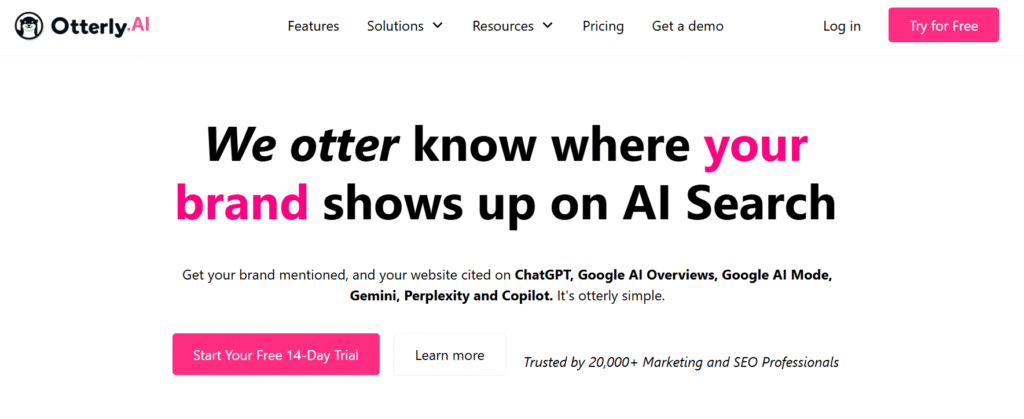
Quick peek: A budget-friendly AI search monitoring tool for ChatGPT brand mentions, citations, and average position. ChatGPT Ads tracking, prompt research, and GEO audits are included on every plan. ChatGPT pricing starts at $29/mo (Lite), with a free trial.
Getting Started With ChatGPT Visibility Tracking
Setup is simple, which is a big part of the appeal. You add your brand and competitors, then build a prompt list. You can bulk import prompts, or use the Prompt Research tool to suggest them from your URL, a keyword list, or your brand name. Next, you choose which engines to track, and Otterly runs every prompt daily. Your first brand report shows up shortly after.
For a smaller team on Lite, I’d skip broad informational questions at first. Start with the 15 or so prompts closest to a buying decision, like “best X for Y” and “X alternatives,” because that’s where a ChatGPT ranking actually turns into a pipeline. Brands, competitors, countries, and team seats are unlimited on every plan, so you can add a sub-brand or a colleague later without upgrading.
Monitoring Mentions, Links, and Ranking Changes
Each daily run records whether ChatGPT mentioned you, where you landed in the answer, and which pages it linked to (BTW, Otterly runs prompts without personal memory or history).
- Brand coverage and mentions: How often you appear compared with your top competitors, charted over time.
- Average brand position: Where you typically land in the answer, broken down by engine.
- Citation and domain tracking: The domains and URLs ChatGPT cites for each prompt, with each source classified.
- Brand Visibility Index: One score that combines how often you appear with how prominently.
- ChatGPT Ads tracking: Which brands run sponsored placements on your prompts, including on Lite.
Affordability and Scaling Considerations
The $29 Lite plan advertises 16 prompts, but that figure assumes four engines. Credits are charged per prompt, per engine, per day. So if ChatGPT is the only engine you care about, the same 2,000 monthly credits should cover roughly ~64 daily prompts.
There are trade-offs. Lite has no API, MCP, Looker connector, or extra credit packs, and you get three recommendations a week. Otterly’s own guidance suggests 50 to 100 prompts per topic before trends become reliable. The next step up is Standard at $189/mo. Lite is a good fit for small businesses and consultants. Growing teams and agencies will probably need Standard sooner rather than later.
5. SE Ranking: Best for Combining Google SEO and ChatGPT Rank Tracking

Quick peek: An all-in-one SEO platform with AI visibility tracking built in through SE Visible. It covers ChatGPT, AI Overviews, AI Mode, Gemini and Copilot alongside Google rank tracking, audits and backlink research. ChatGPT pricing: included from$129/mo on Core (103.20/mo billed annually), or SE Visible on its own from $71/mo.
Bringing Traditional and AI Search Rankings Together
Most SEO teams already know where they rank on Google. What they’re missing is whether those same pages show up when someone asks ChatGPT. SE Ranking keeps both in one account. Your daily keyword rankings, site audit, and backlink data sit next to your AI visibility, so you can check whether a page that ranks well in Google also gets cited in ChatGPT, or whether a competitor beats you in one channel and not the other.
The practical benefit is workflow. There’s no second login, no second set of competitors to configure, and reporting already flows into GA4, GSC, and Looker Studio. For a team that runs its week out of an SEO platform, that saves real time.
ChatGPT Visibility and Competitor Performance
On the AI side, you track prompts daily across five engines, and ChatGPT is one of them. Each prompt shows whether your brand was mentioned, which sources were cited, and which competitors appeared instead. If you’re not sure which prompts to track, our target prompt generator suggests the questions people actually ask AI in your category, so your limited prompt slots go to the ones that matter.
- Mentions and sentiment: How often ChatGPT names you and how it describes you.
- Share of voice: Your presence compared with your competitors across the tracked prompt set.
- Prompt and source analysis: The prompts and cited pages behind each answer, which point to the gaps worth closing.
- Cross-channel comparison: AI visibility next to Google Top 100 rankings and share of voice, so you can see where each channel diverges.
Platform Value for Existing SEO Teams
On the base plans, AI tracking is the thinnest part of the package. Core and Growth both include 25 daily prompts for one project in one location. So moving from Core to Growth ($279/mo) adds SEO capacity but not a single extra prompt. If you need more, SE Visible is sold separately for $71/mo for 75 prompts, with 200 and 1,000 prompt tiers above that.
That makes SE Ranking the better choice when you already pay for it, or when you were planning to buy an SEO suite anyway, and a small ChatGPT prompt set is enough. If ChatGPT ranking is the main job and you need more than 25 prompts or several brands, a dedicated tracker gives you more for the money.
6. AthenaHQ: Best for Connecting ChatGPT Rankings With AI Search Optimization
Quick peek: An AEO and GEO platform that pairs prompt-level ChatGPT tracking with on-page and off-page actions, a content optimization agent, and numerical prompt volume estimates. ChatGPT pricing: free on the Essential plan (300 credits), then $295/mo on Starter (3,600 credits), with 17% off annual billing.
ChatGPT Ranking and Brand Performance Insights
You set up topics and prompts, and AthenaHQ tracks how ChatGPT and up to 10 other models answer them. For each response, it records whether your brand is mentioned, how it’s described, and which sources were cited.
That rolls up into a share of voice and sentiment against unlimited competitors. Ask Athena, the built-in assistant, sits on top of that data. Connecting GA4 and Search Console also lets you check whether a ChatGPT visibility gain actually shows up as traffic, which makes the brand performance story easier to defend in a quarterly review.
Content and Visibility Improvement Opportunities
AthenaHQ goes further with tracking and tells you what to change. That’s the real difference between reporting a gap and giving guidance you can hand to a writer.
- On-page actions: Specific edits to your own pages, mapped to the passages and sources ChatGPT pulls from in your category.
- Off-page actions: Third-party sources worth targeting, based on where competitors get cited and you don’t.
- Content optimization agent: Drafts and improves content against those gaps, with brand voice guidelines applied.
- Prompt volume estimates: A numerical figure for how often a topic is asked, which helps you decide which gaps go into next month’s content plan first.
Platform Capabilities and Pricing Considerations
The important detail is that prompts are “unlimited,” but credits aren’t, since one credit is one AI response (In comparison to AthenaHQ alternatives). Tracking ChatGPT alone every day, 3,600 credits cover roughly 116 prompts across four models.
There’s also nothing priced between free and $295, and API access and extra credits are paid add-ons on Starter. AthenaHQ fits best for content-led marketing teams in SaaS, ecommerce, and DTC that want the tracking and the to-do list in one place and have a budget above a few hundred dollars a month.
7. Ahrefs Brand Radar: Best for ChatGPT Visibility and Broader Search Research
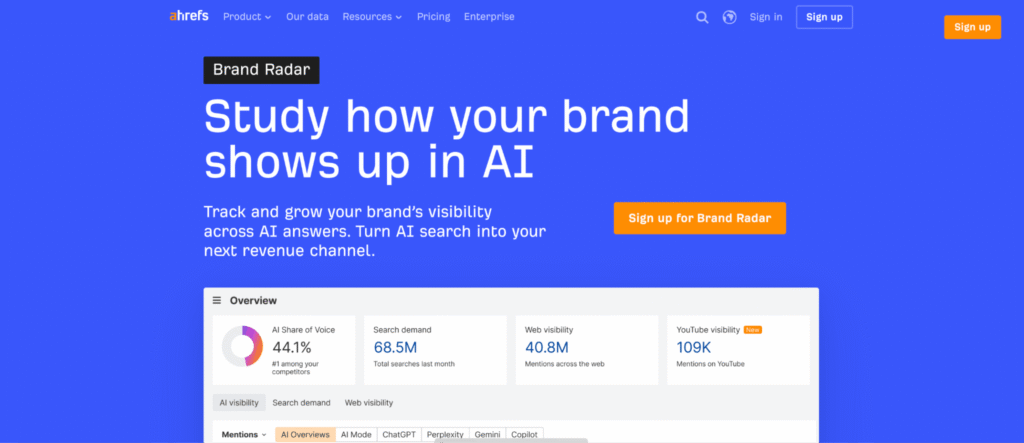
Quick peek: An AI visibility research tool built on Ahrefs’ search data. It maps brand mentions, citations, and share of voice across 565 million+ prompts on ChatGPT and five other AI platforms, with custom prompt tracking available on top. ChatGPT pricing is $199/mo for the AI Visibility Index (available standalone), and custom prompt tracking starts at $50/mo.
Understanding Brand Visibility Across AI Search
Brand Radar starts from the opposite end to most tools on this list. Instead of asking you which prompts to track, Ahrefs takes real queries from its keyword database and expands them into natural questions. It runs those through ChatGPT, AI Overviews, AI Mode, Perplexity, Gemini, and Copilot, then stores every response.
That means you can look up any brand, yours or a competitor’s, and see how often ChatGPT mentions or cites it, with no setup. Because every prompt traces back to real search demand, visibility is also weighted into estimated impressions. At this scale, you start to see category-level patterns, like which topics ChatGPT answers with your competitors and which ones it hasn’t connected to anyone yet.
Citation Sources and Competitive Research
The citation data is where Brand Radar fits most naturally into an existing SEO workflow, because cited pages and domains sit next to the backlink and keyword data you already use.
- Cited pages and domains: Which URLs ChatGPT links to when it answers questions in your category.
- AI share of voice: Your share of mentions and citations against competitors across a topic set.
- Search demand mapping: The keywords and topic clusters behind your mentions, so AI visibility connects back to your SEO strategy.
- Off-site sources: Reddit threads, YouTube videos, and TikTok content that tend to influence AI answers.
Database Research vs. Custom Prompt Tracking
There’s one detail that matters a lot for ChatGPT ranking. The index prompts are re-tested monthly on a 90-day reporting window, so the index shows broad patterns rather than where you ranked yesterday. For day-to-day tracking of a fixed prompt list, you need Custom Prompts. Paid Ahrefs plans include 5 to 20 daily prompts.
Beyond that, packages start at $50/mo for 2,500 checks, which works out to about 80 prompts a day on ChatGPT alone. Existing Ahrefs users get the most out of it, because the AI data plugs straight into tools they already pay for. Dedicated buyers who only want daily ChatGPT rankings will usually find a specialist tracker simpler.
How to Improve Your Brand’s Visibility in ChatGPT
Tracking tells you where you stand, but moving up takes work outside the tool. These are the habits that tend to shift ChatGPT rankings over time.
- Write pages that answer specific buyer questions directly, ideally in the first few lines, since ChatGPT pulls passages rather than whole pages.
- Keep your brand name and positioning consistent across Reddit, LinkedIn, and other platforms.
- Make sure your robots.txt allows OpenAI’s crawlers, and keep key content out of scripts and hidden tabs.
- Go deep on fewer topics with expert-written content instead of spreading thin across many.
- Check which competitors and sources get cited on your target prompts, then improve on those pages or earn a place on those sites.
- Track your buying-intent prompts daily so you can spot gaps early and see whether your changes move your position.
Final Remarks
In short, the right ChatGPT rank tracker depends on what you plan to do with the answer. For dedicated ChatGPT tracking, Track My Visibility, Peec AI, and Otterly.AI all cover it well at different price points. Profound and AthenaHQ suit enterprise teams that need deeper intelligence. SE Ranking and Ahrefs Brand Radar make the most sense if your SEO work already runs through them. And if you want fixes alongside the data, look at Track My Visibility or AthenaHQ. Whichever you pick, make sure it shows how your visibility changes and where to improve, because ChatGPT rankings rarely sit still for long.
Consider your 7-day Track My Visibility trial, or browse a few of our Trackdown reports.
Frequently Asked Questions
It’s the practice of checking how often and where your brand appears in ChatGPT’s answers to the prompts your buyers ask. Most tools also show which sources ChatGPT cites and how you compare with competitors.
Not necessarily. Strong Google rankings help, because ChatGPT often pulls from pages that rank well. But it also leans heavily on third-party sources like Reddit, LinkedIn, and review sites, so a brand can lead on Google and still be missing from ChatGPT’s answers.
It varies. Changes to your own pages can show up within a few weeks once they’re crawled again. Building presence on third-party sources usually takes longer. Tracking daily is the only reliable way to tell whether a change actually moved your position.
Your own ChatGPT uses your memory, history, and location, so it personalizes the answer. Trackers run prompts without that personalization to give you a neutral baseline. Answers also vary from one run to the next, which is why trends over time matter more than any single check.
Start with 20 to 50 buying-intent prompts, like “best X for Y” and “X alternatives.” Otterly’s own guidance suggests 50 to 100 per topic before trends become reliable, so expand once you know which prompts matter.
Daily for your core prompts, because ChatGPT’s sources shift from week to week. Database tools like Ahrefs’ AI Visibility Index refresh monthly, which works for market research but not for tracking your day-to-day position.