


60% of U.S. adults now use AI search tools to find information, according to AP NORC. That’s a huge shift in how people search.
But here’s the thing.
If your brand isn’t showing up in AI-generated answers, you’re losing visibility before anyone even clicks.
That’s where Track My Visibility vs Otterly comes in. Both are AI search visibility tools that help you track AI search visibility and improve how often your brand appears in responses from ChatGPT, Google AI, Perplexity, and other platforms.
Traditional SEO tools didn’t account for this. These new platforms focus on what we call ‘Generative Engine Optimization’ (GEO).
But choosing between them isn’t simple. Pricing gets complicated with add-ons. Features overlap but work differently. One focuses on monitoring, the other on optimization.
Here’s what you’ll learn in this guide:
- How Otterly AI vs Track My Visibility compare on pricing, features, and performance
- Which AI search platforms tool tracks, and what you actually get
- Specific recommendations based on your budget, team size, and goals
- Whether these AI optimization tools actually help improve visibility
So, let’s get started!
Key Takeaways
- AI search tools like ChatGPT, Perplexity, and Google AI Overviews are now a primary discovery channel, and most brands have no idea if they’re showing up or not.
- Track My Visibility focuses on action: it tells you which pages to fix and why, not just how often your brand appears.
- Otterly focuses on depth and better serves agencies that need polished reporting, regional tracking, and client-ready dashboards.
- Pricing looks similar at a glance, but the real entry price for Otterly is $189/month versus $50/month for Track My Visibility.
- Neither tool optimizes your content for you. They show you what’s broken. You still have to do the work.
What Is Track My Visibility?
Track My Visibility was founded by Aureate Labs. They built the platform specifically for affordability and action.
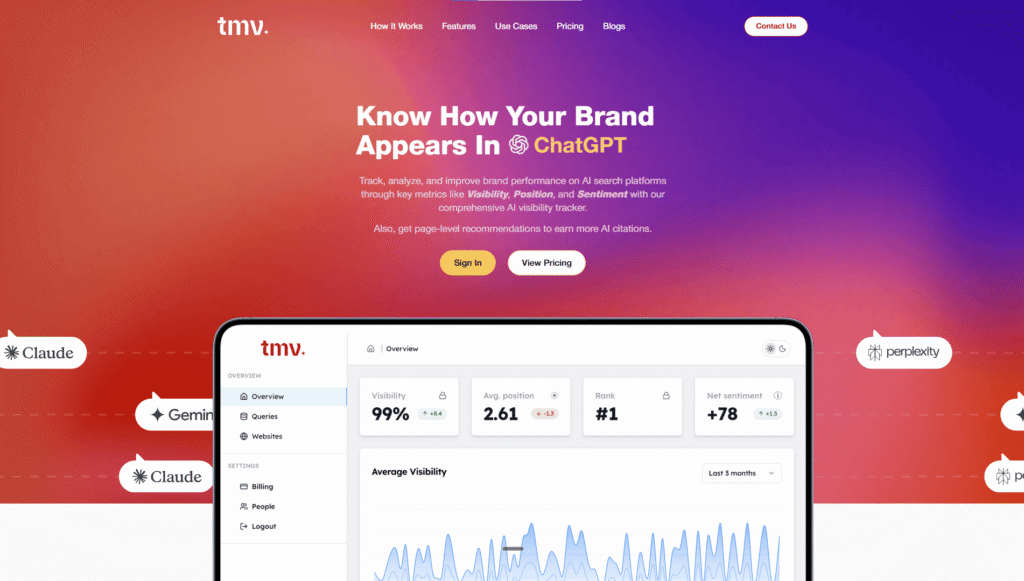
The main goal of the platform is to turn AI visibility metrics into a checklist of optimization tasks. Instead of just showing you a graph of how often your brand is mentioned in multiple large language models (LLMs) like ChatGPT, Perplexity, Google AI Overviews, and Google Gemini. It also points out specific gaps you need to fix to improve your standing.
It is designed specifically for small businesses, mid-sized agencies, and marketing teams just starting with Generative Engine Optimization (GEO). If you have a budget of around $50 to $100 a month. If you are looking for a tool that tells you what to do next, rather than just giving you another dashboard to stare at. This is likely the right fit for you.
 Pro Tip: Before picking a tool, see where you actually stand. The free AI visibility checker gives you an instant look at how your brand shows up across AI platforms. It’s a useful baseline to have before you start comparing features or committing to a subscription.
Key Features of Track My Visibility as a Brand AI Visibility Tool
1. AI-Ready Score: This is one of the most useful features. You get an AI ranking score for every page of your website. This will help you understand which page on your website is ready to get cited by different AI search engines. This highlights the content that needs attention.
2. Persona-based Prompts: You can run custom AI prompts, or you can also create your own prompts. By this, you can get to know whether AI search tools are citing your brands or if they totally depend on your competitors’ content.
3. Cross-model Comparison: Every AI SEO tool works differently. With Track My Visibility tool, you can execute prompts in top AI search platforms like ChatGPT, Gemini, Perplexity, and Google AI Overviews. You can also compare your brand visibility side-by-side. This will help you understand where you are taking the lead and where your competitors are standing strong.
4. URL-Level Citation Tracking: This brand AI visibility tool will help you see which pages from your website get cited. It also tells the number of times your website pages appeared in AI answers and which AI search engine is referencing your pages. With this information, you can identify your best content and content that needs changes.
5. Competitor Benchmarking: This helps you see how your competitors’ websites are getting mentioned in different AI search tools. You’ll also get to know where they are outranking you. With this data, it will be easier for you to make a clear plan to win the AI share of voice. This is closely related to tracking brand mentions in AI search, which requires a different approach than traditional mention monitoring tools.
6. AI-ready recommendations: With the help of this AI visibility tracking tool, you can also get clear steps to strengthen your content. It lets you know the missing context, which will help your team to fill the gaps faster in order to improve your brand’s AI search visibility.
Pro Tip: AI visibility tools only track performance; they don’t optimize your content. Before investing in tracking software, ensure your content is actually optimized for AI citations. So, learn how to optimize content to rank on AI answers with our complete guide. Once your content is AI-ready, tracking tools like these will show you the results of your optimization efforts.How Does Track My Visibility Work?
Track My Visibility has a pretty straightforward workflow.
You connect your domain to the platform. From there, it automatically generates persona-based queries, basically the types of questions your customers would ask different AI search models. The system runs these prompts daily across multiple AI platforms to see how often your brand shows up and in what context.
When your brand gets mentioned, the tool maps those citations back to specific URLs on your site. Your dashboard updates every 24 hours with an AI-Ready Score for each page. This score tells you how likely AI models are to recommend your content.
Instead of generic keyword lists, you get prioritized tasks showing exactly which pages need better structure or stronger information to get picked up by AI systems.
Pros and Cons of Brand AI Visibility Tool Track My Visibility
Pros
- AI-Ready Score: You know exactly which pages to optimize and why. For small teams without dedicated GEO specialists, this changes how you prioritize your work.
- Transparent Pricing: Pricing is clear and affordable. $50/month gets you started with meaningful coverage. You get unlimited users on all plans means your whole team can access the platform without any additional costs.
- Daily Updates: The dashboard updates every 24 hours. Unlike tools with weekly cycles, you’re never working with week-old data.
- Collaboration: Unlimited seats make it easy to loop in clients or different departments without worrying about a monthly bill.
Cons
- Growing Documentation: It’s newer, so documentation is still developing. You might find fewer tutorials compared to established platforms.
- Limited Platform Coverage: Platform coverage is limited to four AI engines currently. If you are looking for comprehensive tracking across 10+ platforms, you’ll need to wait or look elsewhere.
- Early-Stage Integrations: Direct connections to tools like Google Analytics are still being refined. While you can export data, fully automated AI workflows with other SEO suites are still in the works.
- Streamlined Analytics: It focuses on visibility and optimization. But it currently lacks the deep sentiment analysis and granular regional breakdowns found in high-end enterprise AI tools.
Track My Visibility Pricing
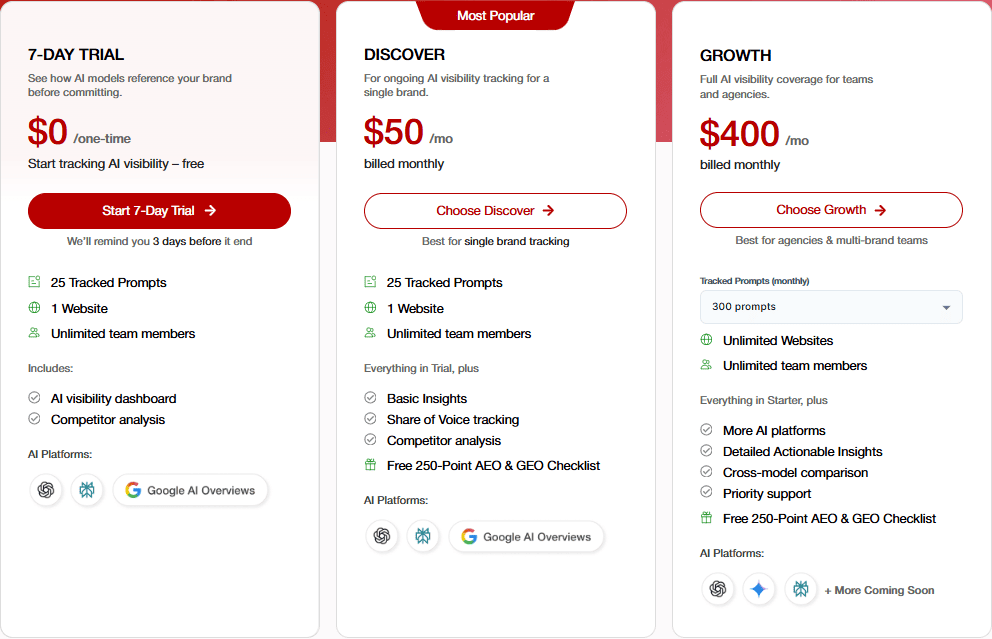
Trial: Free for 7 days
- 25 tracked prompts
- 1 website
- Unlimited team members
- Competitor Analysis
- AI Visibility Dashboard
- 3 AI platforms (ChatGPT, Perplexity, Google AI Overviews)
Discover Plan: $50/month
- 25 prompts per month
- 3 AI platforms tracked (ChatGPT, Perplexity, Google AI Overviews)
- Unlimited users
- Basic Insights
- Share of Voice tracking
- Competitor analysis
- Free 250-Point AEO & GEO Checklist
Grow Plan: $400/month
- Up to 300 prompts per month
- 4 AI platforms (ChatGPT, Perplexity, Google AI Overviews, Gemini)
- Unlimited websites
- Unlimited team members
- Detailed Actionable Insights
- Cross-model comparison
- Priority support
- Free 250-Point AEO & GEO Checklist
They offer an annual discount with 2 months free when you choose yearly billing on any plan.
No hidden fees or surprise add-ons. What you see is what you pay.
Note: Pricing may change over time, so it’s best to check their official page for the most up-to-date information.
What Is Otterly?
Otterly AI is a fast-growing, founder-led platform that focuses on comprehensive monitoring and GEO audits. The team has built a reputation in the European market, particularly, though they serve clients globally.
At its core, the platform provides deep insights into your AI search presence across multiple platforms. Additionally, it positions itself as an AI search visibility tool for teams that want detailed analytics and client-ready reports.
While they work with everyone from small businesses to large enterprises, they really shine for agencies. If you’re managing multiple clients and need to prove that your work is actually influencing AI-generated answers, Otterly was built with your workflow in mind.
Key Features of AI SEO Tool Otterly
1. GEO Audit Tool: It provides a “Generative Engine Optimization” checklist and a SWOT analysis to show where your brand is winning or losing in AI responses.
2. Citation & Mention Tracking: It distinguishes between a “mention” (just talking about you) and a “citation” (actually linking to your site). This distinction is important for proving ROI to clients.
3. Looker Studio Connector: This is included at no extra cost for Standard and Premium users. It’s a huge time-saver for agencies because it pushes AI visibility data directly into existing client dashboards.
4. Sentiment Analysis: Otterly does offer color-coded sentiment tracking (Positive, Neutral, Negative). Worth noting that accuracy can vary, as AI-on-AI sentiment analysis is still a developing science.
5. Share of Voice (SoV): It calculates what percentage of the “conversation” your brand owns compared to competitors for specific prompts.
6. Regional Visibility: You can track how your brand appears in over 50 different countries to see if your visibility holds up internationally.
How Does AI Visibility Tracking Tool Otterly Work?
Otterly’s setup process is fairly automated. You start by defining your brand and the specific topics or “money queries” you want to keep an eye on. Instead of just tracking keywords, the system uses an AI research tool to turn those terms into conversational prompts that people actually use in tools like ChatGPT or Perplexity.
Then, once your prompts are ready, the system automatically runs them across major platforms. Such as Google AI Overviews, Gemini, and Copilot, to see where your brand shows up.
Additionally, Otterly tracks which sources get cited and generates reports showing your position and sentiment data. As a result, with daily tracking across all plans, you work with current information rather than week-old snapshots.
Everything shows up in your dashboard, and you can export it to Looker Studio if you need cleaner reports for stakeholders or clients.
Otterly Pros and Cons
Pros
1. Comprehensive Platform Coverage: At the highest tier, the platform currently tracks six major players: ChatGPT, Perplexity, Google AI Overviews, Google AI Mode, Gemini, and Microsoft Copilot. As a result, it offers one of the broadest views available in a single dashboard.
2. Actionable GEO Audit Tool: For teams still figuring out “Generative Engine Optimization,” the audit tool is a highlight. It analyzes over 25 factors (like citation readiness and technical schema) to give you a clear SWOT analysis and starting point.
3. Looker Studio for Agencies: The connector is a major time-saver. It allows you to pipe visibility metrics directly into client-facing reports. It is essential if you’re already using the Google ecosystem for standard SEO reporting.
4. User-Friendly Interface: The UI is modern and leans into a “4-step setup” that is genuinely intuitive. While there is a slight learning curve in moving from keywords to conversational prompts, the dashboard itself is clean.
5. Data-Driven Prompt Research: Instead of guessing what people ask AI, the tool suggests prompts with search volume indicators. This helps you focus your monitoring on queries that actually drive organic traffic.
Cons
1. Pricing Jumps are Steep: That $29/month Lite plan sounds affordable, but it only gives you 10-15 prompts. That’s barely enough for meaningful tracking. To get actual professional value with 100+ prompts, you need the Standard plan at $189/month. That’s a big jump.
2. Complex Add-on Costs: The base price doesn’t include features like Google AI Mode or Gemini. They cost an extra $9 to $149 per month, depending on your tier. A $189 bill can easily turn into $300+ once you add what you actually need.
3. Sentiment Analysis Accuracy: Sentiment analysis isn’t reliable. The feature exists, but users report accuracy issues. It struggles with neutral mentions, sometimes labeling them as positive. This happens more often on newer or niche AI platforms.
4. Monitoring vs. Execution: The tool monitors but doesn’t execute. Otterly shows you where you stand, which is valuable. But it won’t help you fix the problems it identifies. There’s no content creation support or action center to guide optimization. You’re on your own for implementation.
Otterly AI Visibility Tracking Tool Pricing
Lite Plan: $29/month
- Tracks 4 AI platforms (ChatGPT, Perplexity, Google AI Overviews, Copilot)
- 15 prompts per month
- Basic features
- Limited value for serious tracking
- 1 workspace
- Unlimited team members
- Multi-country support (50+)
- Conduct 1,000 GEO URL Audits/month
Standard Plan: $189/month
- Tracks 4 AI platforms (ChatGPT, Perplexity, Google AI Overviews, Copilot)
- 100 prompts per month (Add 100 extra search prompts at $99)
- Unlimited Workspaces
- Unlimited team members
- Conduct 5,000 GEO URL Audits/month
- Multi-country support (50+)
- Google Looker Studio Connector
Premium Plan: $ 489/month
- 400 search prompts (Add 100 extra search prompts at $99)
- Tracks 4 AI platforms (ChatGPT, Perplexity, Google AI Overviews, Copilot)
- Add Google AI Mode ($149/month)
- Add Google Gemini ($149/month)
- Total costs can exceed $400+/month with add-ons
- Unlimited users are included at all tiers
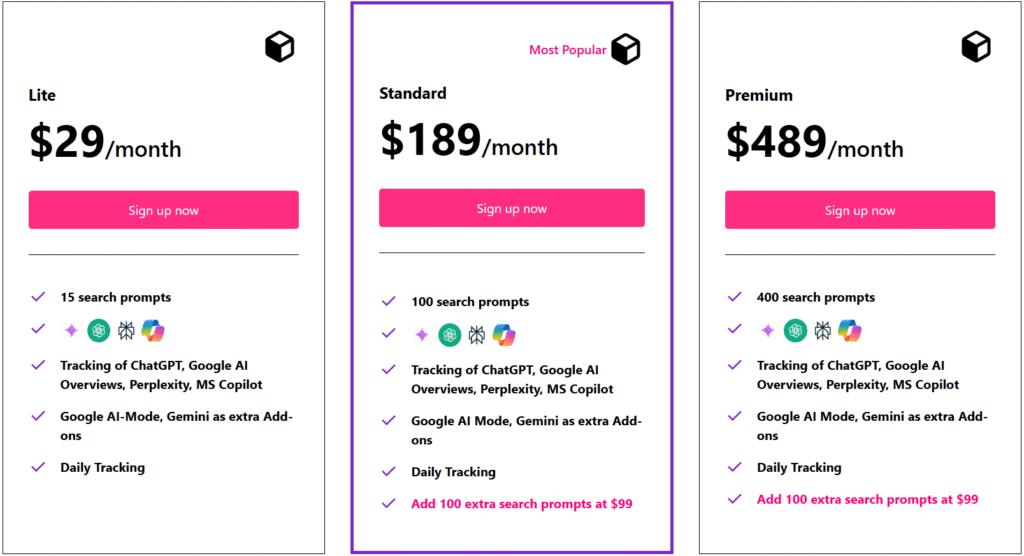
The pricing structure makes it difficult to estimate total costs upfront. What looks like $29/month entry turns into $189+ for practical use, and potentially $400+ for full platform coverage.
Track My Visibility vs Otterly: Head-to-Head Feature Comparison
Let’s compare Track My Visibility vs Otterly on the factors that actually matter for your decision.
| Feature | Track My Visibility | Otterly.ai | Winner |
| Starting Price | $50/mo | $29/mo (limited) | Track My Visibility |
| Real Entry Price | $50/mo (3 platforms) | $189/mo (4 platforms) | Track My Visibility |
| AI Platforms Tracked | 4 (Gemini, Google AI Overviews, ChatGPT, Perplexity) | 4-6 (add-ons required) | Tie |
| Prompts Per Month (Base) | 25 prompts | 20-100 prompts | Otterly (volume) |
| Primary Strength | AI-Ready Score + optimization | Comprehensive monitoring | Depends on need |
| Unique Feature | URL-level action items | GEO Audit Tool | Tie |
| Reporting & Analytics | Clear, action-focused | Detailed, client-ready | Otterly (depth) |
| Actionable Recommendations | Built-in daily | Initial audit only | Track My Visibility |
| Multi-Language Support | Limited | More extensive | Otterly |
| Team Members Included | Unlimited (all plans) | Unlimited (all plans) | Tie |
| Integration Options | Limited (API coming) | Looker Studio, Slack | Otterly |
| Customer Support | Direct founder access | Email/Slack (varies) | Track My Visibility (responsiveness) |
| Best For | SMBs, new to GEO | Agencies, client reports | Depends on use case |
| Trial Available | 7-Day Trial | 14-day free plan | Otterly AI |
| Update Frequency | Daily (24 hours) | Daily | Tie |
Limitations of Brand AI Visibility Tracking Tool
Both tools face the same fundamental constraints because of how AI search visibility tool works.
Where Both Tools Have Constraints
- They use “best guess” prompts: Most tools run automated, synthetic queries to see if your brand pops up. They cannot mimic the infinite, messy ways real humans actually talk to AI, so you’re only seeing a narrow slice of potential visibility. A user on Reddit noticed that social platforms are now outpacing owned content in AI citations by more than 2x, based on an analysis of 6.1 million citations across 10 LLMs.
New data on AI citation patterns: Social platforms now outpacing owned content 2.3x
by u/mohamad_abdou in aeo
- Visibility doesn’t equal visits: Just because an AI mentions your brand doesn’t mean the user clicked through. These tools are great at tracking “digital shelf space,” but they struggle to predict actual traffic or sales.
- The “Moving Target” problem: AI models update their logic and citation patterns constantly. A strategy that gets you cited in ChatGPT today might not work next week if the model shifts its preference toward different types of data.
- Data needs a pilot: These tools can tell you what happened, but they can’t tell you why it matters for your specific business goals. You still need a human to turn those charts into a logical marketing plan.
Risks of Over-Reliance:
These AI optimization platforms provide data, not a complete strategy. You still need to understand your market, audience, and search intent.
Context matters significantly. A tool might tell you to optimize a certain page, but you need to determine if that aligns with business priorities and available resources.
Regular monitoring and adjustment are required. Neither tool is set-it-and-forget-it. The AI search environment changes too quickly for that approach.
Technical expertise still matters. While both tools simplify GEO tracking, you need someone who understands content creation, SEO, and how AI-generated responses work.
Track My Visibility vs Otterly: Future of Best AI Search Visibility Tools
The AI search tool is growing fast. If you want to understand how to rank in Google AI Overviews, the approach is meaningfully different from traditional ranking signals. ChatGPT launched SearchGPT. Perplexity continues to gain users. These platforms are reshaping information discovery.
Sam Altman has even described ChatGPT as “the best search product on the web,” which highlights how AI interfaces are increasingly replacing traditional search experiences.
This means search visibility strategies need to change. Traditional rank tracking and keyword suggestions don’t capture how people find information through AI-powered platforms.
Content quality matters more than ever. AI tracking systems prioritize authoritative, well-structured content with clear source links. Gaming the system doesn’t work the way it sometimes did with traditional search engines.
Citation and source transparency are increasingly important. AI-generated answers show where information comes from more clearly. Being cited as a source builds trust and authority.
Brands need both visibility tracking and optimization. Knowing where you appear is step one. Understanding how to improve those appearances is step two. Tools that combine both will become more valuable.
Track My Visibility vs Otterly: Actual Performance Analysis
Let’s examine how Track My Visibility vs Otterly perform in practice across specific criteria.
1. AI Platform Coverage
When comparing these two AI SEO tools, Track My Visibility currently covers ChatGPT, Gemini, Google AI Overviews, and Perplexity. You can get instant access to these AI models by purchasing a plan. If you’re looking to start with the 7-day trial, then you will be able to access ChatGPT, Google AI Overviews, and Perplexity.
The platform is expanding its coverage to additional AI-powered search engines as they become significant.
Otterly, on the other hand, is built more like a modular toolkit. It’s very affordable to start at $29, but it uses a “pay-for-what-you-track” model. If you only care about ChatGPT and Perplexity, you save money.
If you want the full suite, including Gemini and Copilot, the costs scale up with your needs. It’s particularly popular with agencies because of its heavy focus on Generative Engine Optimization (GEO) audits that help you actually fix the visibility gaps it finds.
2. Ease of Use and Setup
Track My Visibility keeps it simple. Once you log in and add your website, the AI suggests relevant topics for you to track. You have total control to pick or skip these suggestions. From there, it generates specific prompts, though you can always add your own manually.
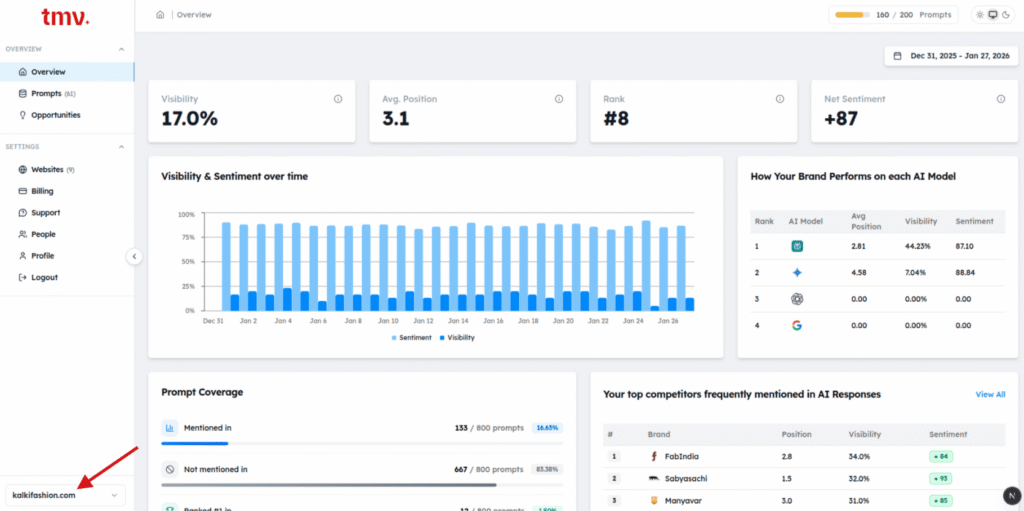
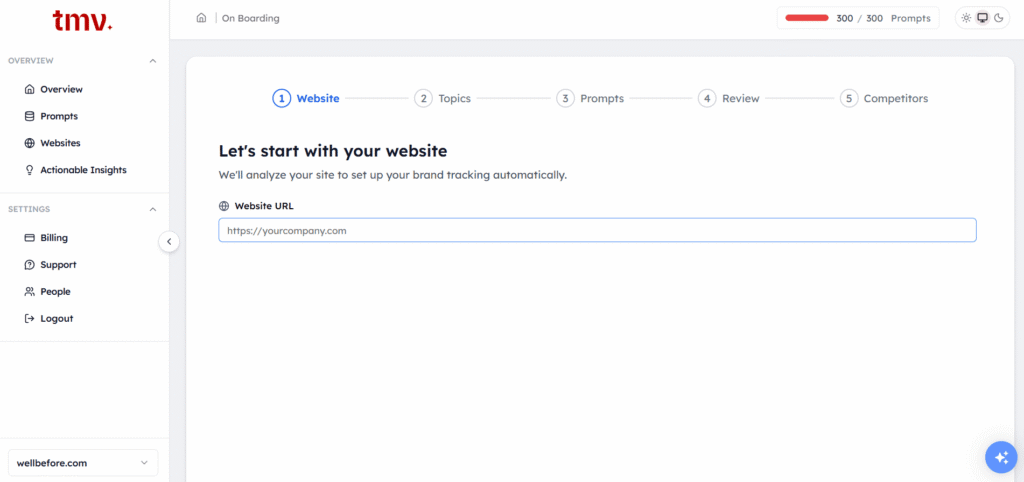
Once you’re live, the tool monitors your presence and gives you direct feedback on what to improve or where you might be falling behind. Since the data refreshes every 24 hours, you’re always looking at a current view of your visibility.
Otterly is built for a bit more detail. It starts by analyzing your site with a GEO Audit to see how “AI-ready” your content actually is. Instead of just general topics, it gives you keywords with search volume, helping you prioritize what people are actually asking. You do have to organize these topics into categories manually, but this keeps things structured for larger teams.
Once your prompts are set, it tracks them across multiple AI platforms and can even send that data directly into Looker Studio for your custom reports. It’s a deeper dive for those who want to move beyond basic tracking.
3. Reporting and Analytics
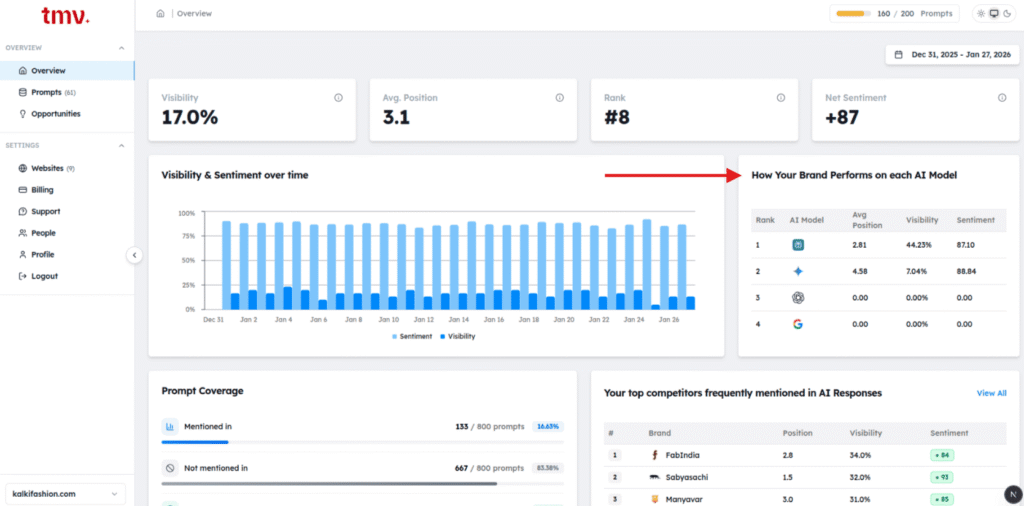
Track My Visibility is built around the AI-Ready Score, which measures how easily an AI can actually parse and cite your content. The dashboard is pretty focused on giving you actionable insights rather than drowning you in raw data.
It also shows a full prompt coverage breakdown, including how many prompts your brand was mentioned in, how many it was absent from, and how many times it ranked #1.
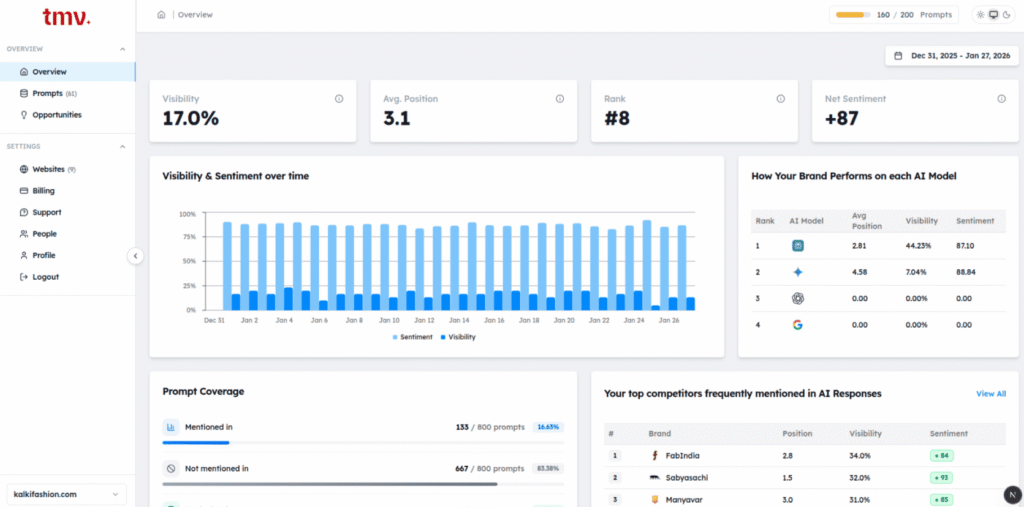
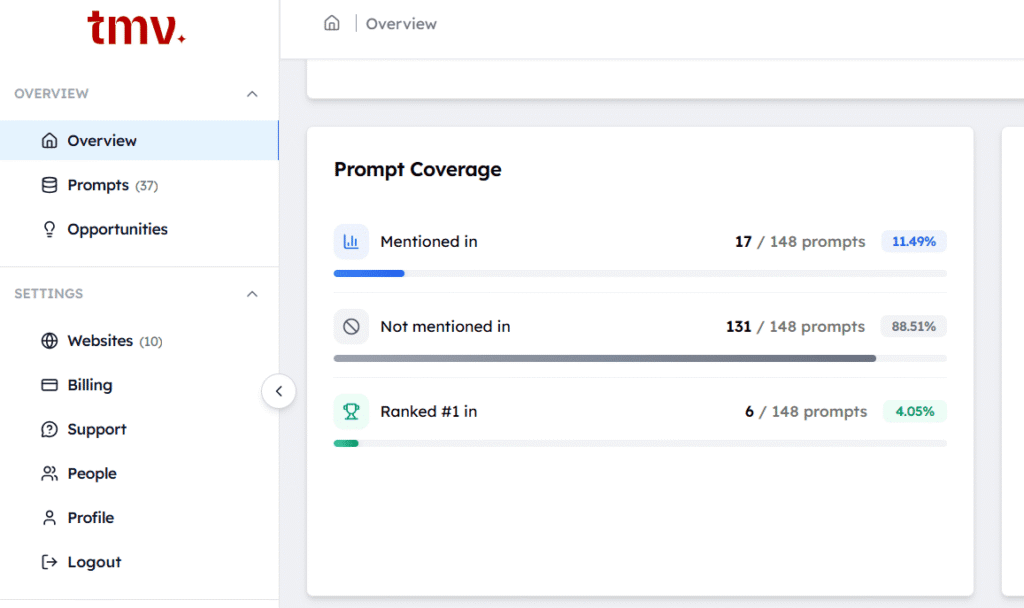
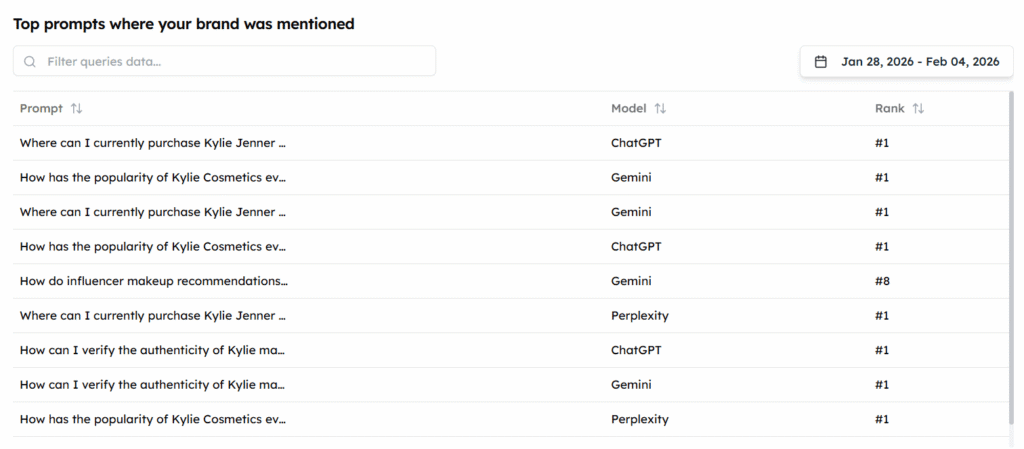
You get clear tracking across ChatGPT, Perplexity, Google AI Overview, and Gemini, with a particular emphasis on which URLs are actually driving your visibility. It’s useful if you want to spend less time in spreadsheets and more time improving your position through competitor benchmarking.
Otterly offers a more complete analytical suite. The reporting centers on visibility percentages and source attribution mapping, so you can see where your traffic is actually coming from in the AI ecosystem. One nice feature is the Looker Studio connector, which lets you pull AI visibility data into whatever reporting setup you’re already using for trend analysis.
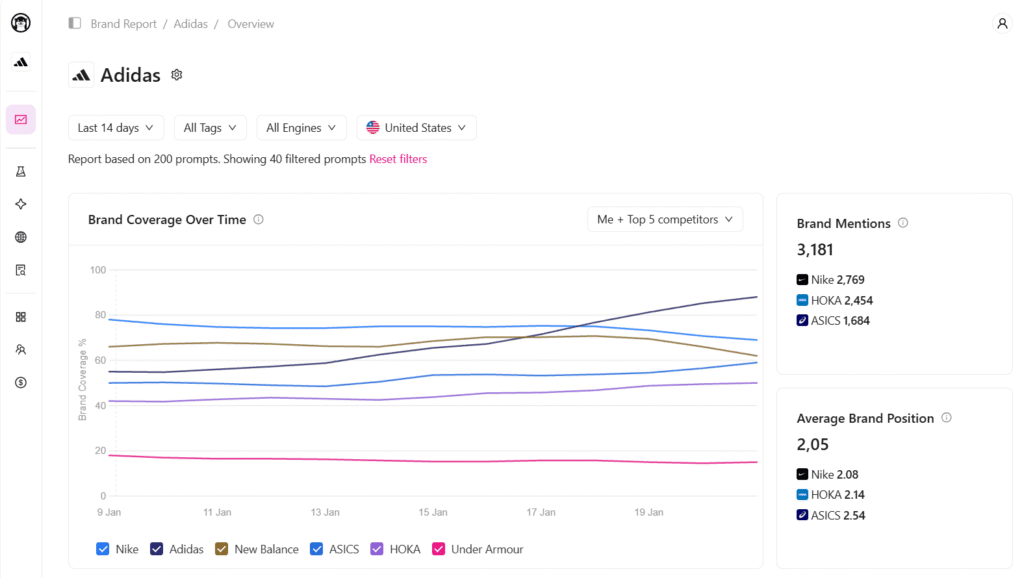
It tracks sentiment and position key metrics too, though these work better as general indicators than precise measurements. With regional visibility breakdowns and detailed brand mention tracking, it gives you the kind of comprehensive analytics that professional data teams expect.
4. Actionable Insights and Recommendations
Track My Visibility is designed for ongoing work. It gives you an “AI-Ready” score for each page that you can use as a baseline for your Generative Engine Optimization. Where it really helps is with daily tasks.
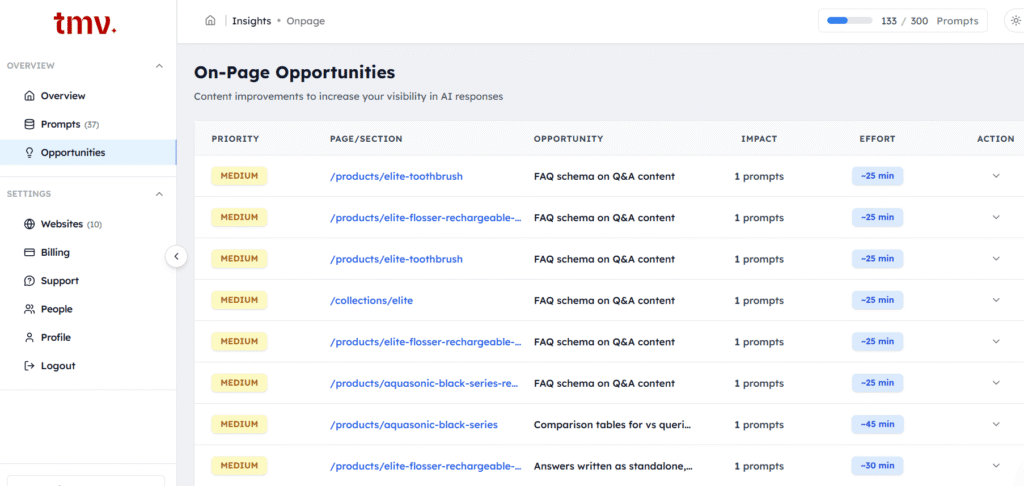
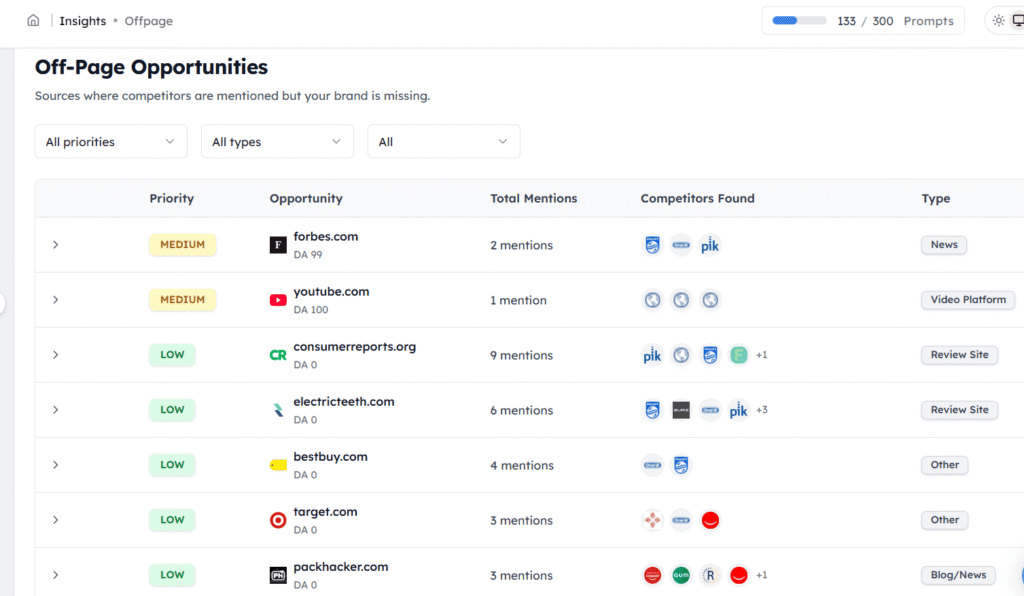
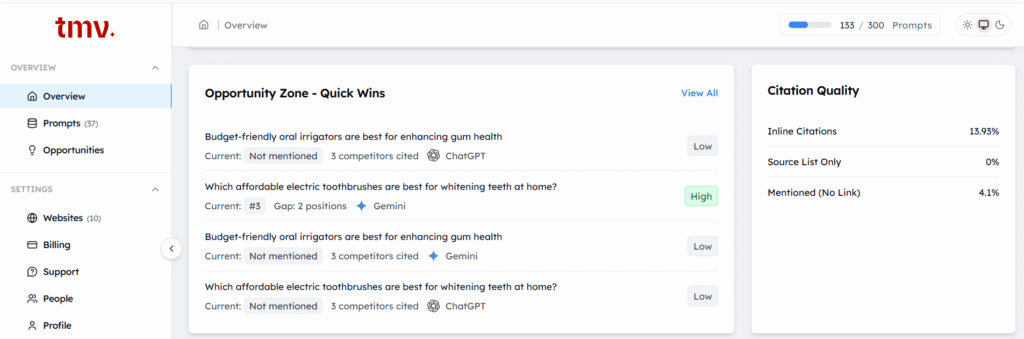
The Opportunity Zone shows you exactly which prompts to prioritize, with High or Low urgency labels, which AI platform has the gap, and how many competitors are already being cited there.
It also breaks down citation quality, showing whether your brand is getting inline citations, source list mentions, or name drops without a link. Each type carries a different weight in terms of how AI models perceive your authority.
For a broader look at how LLMs choose content to cite in their answers, it helps to understand what signals actually drive citations versus what’s just noise.
Otterly takes a different approach. It’s more of a monitoring and audit platform. The GEO Audit Tool gives you a broader view with a SWOT analysis that shows how your brand stacks up against competitors.
You’ll get high-level recommendations during the audit, but the day-to-day experience is centered on tracking mentions and sentiment. It won’t automatically generate content optimization briefs. Basically, Otterly tells you where you stand, while Track My Visibility tells you what to do about it.
5. Competitor Tracking
Both Track My Visibility and Otterly handle competitor tracking well, but they take different approaches to how they show you the data.
Track My Visibility is designed for direct performance comparisons. It shows you which specific URLs are getting cited instead of yours and tracks your Share of Voice to spot when competitors start dominating particular topics.
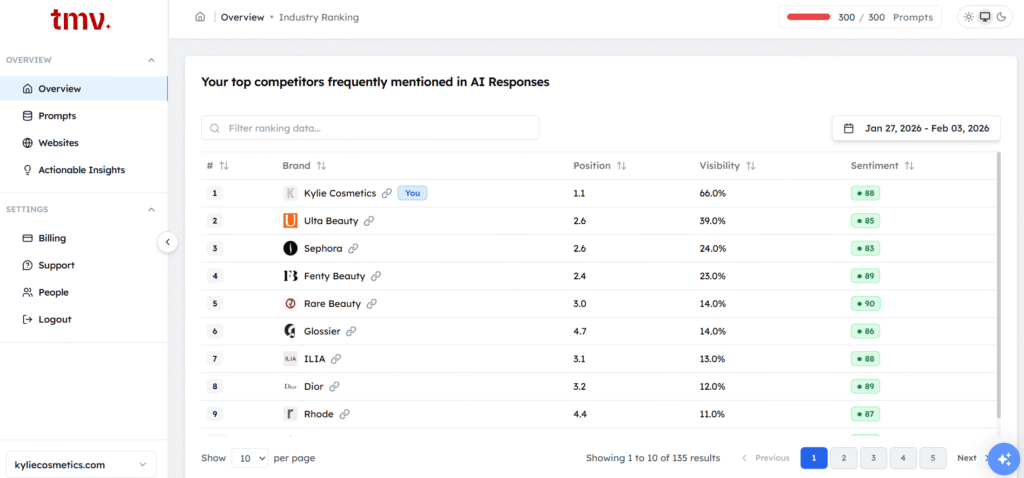
One useful feature is that it breaks down how citations vary by AI model. You might see a competitor getting cited in Perplexity but not ChatGPT for the same query, which can tell you something about how different systems evaluate authority.
Otterly leans more toward intelligence gathering and organization. It does offer sentiment comparison, though AI sentiment analysis can miss things like sarcasm or subtle tone shifts. Where it stands out is in regional analysis and workspace management.
The regional piece lets you see how competition shifts geographically. The multi-brand workspace is valuable if you’re an agency or managing several brands, as it keeps reporting clean and separate across different projects.
6. Team Collaboration and Integration
Track My Visibility works well if you’re part of a smaller team that doesn’t want to deal with per-seat pricing. All their plans come with unlimited users. The platform is still developing; they’re working on API access, but it’s not available yet.
So for now, you’re mostly working with CSV exports and sharing dashboards. What’s nice is that you can actually talk to their product team directly. If you’re the type who likes being heard and shaping how a tool evolves, that matters.
Otterly feels more built-out, especially if you’re running an agency or handling more complex workflows. They also don’t charge per user, but where they really stand out is integration. They have a native connector for Looker Studio, and they’re part of the Semrush App Center.
If you’re already using either of those, you can pull AI visibility data right into your reports without bouncing between platforms. Their higher-tier plans provide API access for custom setups, and the Slack integration pings your team when something important happens. You don’t have to refresh a dashboard to stay in the loop.
7. Data Accuracy and Reliability
Track My Visibility is built for speed and freshness. It runs daily 24-hour cycles, which makes it a good fit for teams that want to test content changes in real time. What sets it apart is transparency. You can see exactly how it maps citations to specific URLs. It’s a newer platform, but early feedback suggests the data is stable and the methodology is straightforward.
Otterly has a larger user base and a longer track record. It also runs daily tracking cycles across all plans, giving you current data to work with. It has a broad feature set, but sentiment analysis can be inconsistent. Some users also run into technical bugs or export issues during deeper audits.
8. Customer Support and Resources
Track My Visibility uses its newness to its advantage here. You’re dealing with a smaller team, which means you often talk directly to the founders or product people. They’re actively building based on what users tell them. The documentation isn’t as built out yet, but the flip side is you get quick, personal responses no matter which plan you’re on.
Otterly has a more established support setup, which makes sense given how much they’ve grown. Standard and Pro users get dedicated Slack channels, which are particularly useful for agencies. Enterprise customers can call in. They have solid documentation and an active user community.
The downside is that support can be slower now. As they’ve scaled to thousands of users, you’re less likely to get an immediate answer from a founder. It’s more of a ticketing system at this point.
Which AI Search Visibility Tool Should You Choose?
The decision between Track My Visibility vs Otterly comes down to your specific situation.
Choose Track My Visibility If
- Tight budget: Plans start at $50/month for the Discover tier, with a 7-day trial to test things first. That’s accessible for freelancers or small teams just entering the AI visibility space.
- Actionable advice is a priority: The platform gives you AI Readiness Scores and tells you exactly what needs fixing on each page.
- Want source-level citation clarity: The Sources tab shows whether AI is citing your pages, competitor sites, or third-party domains, so you know exactly where to focus.
- Manage Many Stakeholders: Unlimited users across all plans means you can give full access to clients and teammates without worrying about per-seat pricing.
- Daily Insights: Daily refreshes mean you can see if yesterday’s changes are working, rather than waiting around.
Choose Otterly If
- Enterprise or high-volume agency: You’re working at enterprise scale. The starter plan is $29, but the real value is in the Standard plan at $189/month, which supports 100+ prompts. Built for teams handling serious volume.
- “Executive-Ready” reporting: You need polished reports for executives. The Google Looker Studio integration (on Standard and above) lets you pull AI visibility data into your existing SEO and PPC reports.
- Technical site audit: Their GEO Audit Tool crawls thousands of URLs and compares how ‘AI-scannable’ your site is against competitors. Good if you need technical details.
- Target global audience: Otterly covers 50+ countries, so if you have a global or European audience, it’s a stronger fit.
- Sentiment analysis: It scores mentions as positive, negative, or neutral. Useful if PR teams are watching how the brand is being talked about.
Final Thoughts
There’s no winner when comparing Track My Visibility vs Otterly. It depends on your budget, team size, and what you need.
Track My Visibility works well for smaller teams that want clear, actionable steps. The AI-Ready Score and daily insights help you fix things, not just track numbers. At $50 to 400/month, you get solid functionality without the complexity.
Otterly is better for deeper analytics and polished reporting. The GEO Audit Tool and client-ready dashboards make sense for agencies with larger clients or brands needing detailed visibility tracking across multiple regions.
Most startups and budget-conscious agencies will get more value from Track My Visibility. Larger agencies with enterprise clients will appreciate what Otterly offers.
Both let you test before committing. Track My Visibility has a 7-day trial. Otterly offers a 14-day free trial.
The real mistake is doing nothing. AI search is changing how people find brands. Pick the tool that fits your situation, test it, and adjust as you learn what works.
Frequently Asked Questions
Neither is objectively better. It depends on what you need. Otterly is for teams that love diving into data and building detailed client reports. It’s analytics-heavy and connects with Looker Studio. Track My Visibility is for people who just want answers like “What do I need to fix?” It costs less and focuses on giving you a clear action plan instead of burying you in numbers.
Track My Visibility usually makes more sense. It’s built for teams without a full-time AI expert. You get an AI-Ready Score and daily tips for about $50 a month. Otterly has its strengths, but you’ll likely need to pay around $189 a month to really use it properly. For most small businesses, that’s more than necessary.
They simulate what users might see, but AI responses shift based on where someone is, when they ask, and how they phrase their question. They’re good for catching patterns, like seeing your brand pop up more often than it did last month. Just don’t expect them to predict exact AI traffic analytics.
Track My Visibility is still small, so you can usually talk directly to the people who made it. Quick and personal. Otterly has grown into something more formal. They have documentation and Slack support for premium users, but it feels less personal compared to the direct line you get with Track My Visibility.
No. These tools show you what’s wrong; they don’t fix it for you. Think of them as diagnostics. They’ll tell you where you’re invisible in AI generated mentions or where AI has outdated information about your brand. But you still need to do the actual work: rewrite content, improve your site structure, implement their recommendations.
You’ll see your baseline data within a few days of setup. But actual improvement? That takes time. Usually, weeks or months of consistent content optimization and keyword research before AI models start noticing the changes and mentioning you more often. It’s not instant like paid ads.
Resources:
- Young adults are leading the way in AI adoption – AP-NORC
- Sam Altman Declares ChatGPT 4o the “Best Search Product on the Web” – Tekedia