


Scrunch AI is genuinely good at crawling insights, the kind of thing an enterprise brand wants if they’re after Scrunch’s Agent Experience Platform, which serves up lightweight pages built specifically for AI crawlers to read. That’s a real strength, and it makes Scrunch a pretty specific product, built for enterprise budgets.
But once you factor in the data limitations, the platform quirks, how long setup actually takes, and the export headaches when you’re trying to report to a client. And a diagnosis-without-a-next-step problem that a bunch of reviewers bring up independently, you might as well look at alternatives.
If that’s where you’re at, here are seven alternatives I’ve tested and evaluated myself. See which one actually fits.
How I Evaluated These Scrunch AI Alternatives
How I Evaluated These Scrunch AI Alternatives
For these alternatives, I went through their website, pricing page, and trials where I could get one. I scored each one on five things:
- Pricing honesty: how fast do prompts, engines, and frequency multiply the headline number?
- AI engine coverage: how many engines are actually covered on the plan a normal team buys?
- Recommendation: does it give recommendations, content briefs, or a clear next step?
- Data collection method: how they collect the data in the first place.
- Who it’s for: does it serve a small team, an agency, or an enterprise?
7 Scrunch AI Alternatives I Tested
| Tool | Best For | Standout Feature | Starting Price |
| AthenaHQ | Teams that want next steps, not just data | Action Center turns findings into tasks | $295/mo |
| Track My Visibility | Tracking and fixes in one workflow | Flat pricing, no per-engine multiplier | $89/mo |
| Profound | Enterprise teams needing real demand data | Prompt Volumes, actual user prompt panel | $399/mo |
| Omnia | Unlimited brands plus content execution | Omnio drafts and pitches content | $79/mo |
| AIClicks | Small teams wanting tracking and content together | Content and outreach bundled into every tier | $59/mo |
| Otterly | Budget-conscious, straightforward monitoring | Real UI-based tracking at a low price | $29/mo |
| Peec AI | Clean tracking for a self-sufficient team | Clearest, most intuitive interface | $95/mo |
* Pricing can vary based on platform; please check the latest pricing on their official pages.
1. AthenaHQ
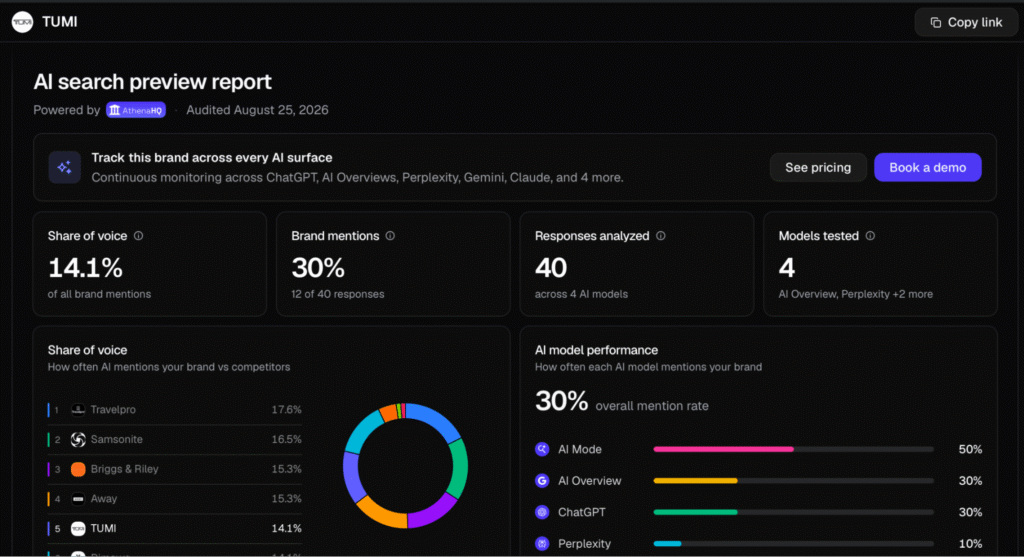
AthenaHQ is probably the closest alternative to Scrunch, mostly because its Action Center fills the before-and-after gap that keeps showing up in Scrunch’s own reviews. It tracks 8 engines with no gating at $295/mo, so Claude and Gemini aren’t stuck behind an Enterprise wall the way they are with Scrunch.
What Happens After AthenaHQ Finds the Problem?
The insights themselves look a lot like Scrunch’s: mentions, sentiment, citations, share of voice, but AthenaHQ turns that into assigned, trackable tasks through Action Center instead of leaving you with a dashboard and a question mark. Ask Athena, a copilot over your own data, adds something Scrunch doesn’t really have.
Where the Credit Plan Starts to Get Complicated
- That broader GEO workflow is genuinely more than a smaller team needs, and the credit pool is shared across monitoring.
- Ask Athena, and agent runs, so the $295 sticker price is widely reported to understate what you’ll actually spend once you’re using more than basic tracking.
- If you’re a single brand just trying to see where you stand, this is more machinery than the job calls for, which is why people end up searching for AthenaHQ alternatives that fit a smaller scope without the shared credit pool.
When to choose AthenaHQ over Scrunch AI
| Criteria | AthenaHQ | Scrunch AI |
| Pricing | $295/mo | $250-300/mo |
| Engines | 8, no gating | 4 at entry |
| Content execution | Assigned tasks | Reporting only |
| Technical insights | Lighter | Crawler diagnostics |
| Best fit | Broader GEO programs | Deep site diagnostics |
My verdict: Consider AthenaHQ if you’re tired of Scrunch handing you a problem with no next step. Skip it if you’re a small team, since the credit pool can get expensive fast, or if crawler analytics is the whole reason you’re here.
2. Track My Visibility
Before we go further, full disclosure: this is our AI visibility tracker tool: Track My Visibility. I work on this product, and the position itself tells a lot!
I believe AthenaHQ is good if you can absorb a $295/mo credit-based system that grows with usage.
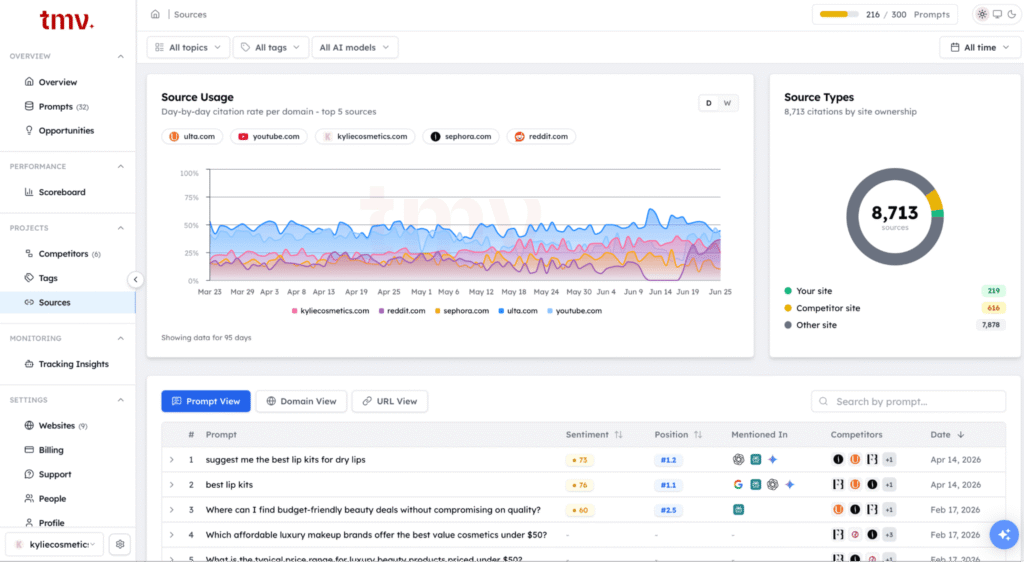
And coming to Track My Visibility, we do more than just track (in our trackdown reports); source-level analysis and fix-it recommendations sit inside the same workflow, so you’re not bouncing between a monitoring tool and a separate content tool to close the loop.
How Much Can You Actually Track?
- Which AI model has the highest or lowest visibility for your brand, with model-wise breakdowns across ChatGPT, Perplexity, Gemini, Google AI Overviews, Grok, and Copilot
- Full competitor analysis, ranked by position and visibility across every model
- Citation and source-level breakdowns, so you can see exactly which domains AI answers are actually pulling from
- A prioritized list of opportunities, split into on-page, off-page, and technical, so you know what to fix first
- Crawling insights by platform and bot type, with detailed URL-level breakdowns
The Tradeoff Against Scrunch’s Broader Technical Approach
Scrunch still goes further on the pure crawler-diagnostics side, and its GA4 and Cloudflare-tied traffic analytics remain genuinely stronger. Where Track My Visibility keeps things simpler, the crawling and citation data feed straight into the same prioritized fix list. On pricing and usability, the difference is more straightforward: a flat prompt allowance instead of Scrunch’s per-engine credit math, and unlimited brands on Growth instead of paying more every time you add a client.
When to choose Track My Visibility over Scrunch AI
| Criteria | Track My Visibility | Scrunch AI |
| Pricing | Flat, from $89/mo | $250-300/mo, credit-based |
| Engines | 4, flat allowance | 4 at entry |
| Prompt tracking | Not divided per engine | Divided per engine tracked |
| Technical insights | Crawling insights with detailed breakdown | Deeper, separate crawler diagnostics |
| Best fit | Tracking and fixes in one workflow | Deep crawler and agent diagnostics |
My verdict: Consider Track My Visibility if you want tracking and next-step recommendations without stitching two tools together, or if per-engine credit math is exactly what’s pushing you off Scrunch.
 Pro tip: There’s a quick way to check your AI visibility insights in just a few minutes with our free AI visibility checker and see where you stand before committing to anything.
3. Profound
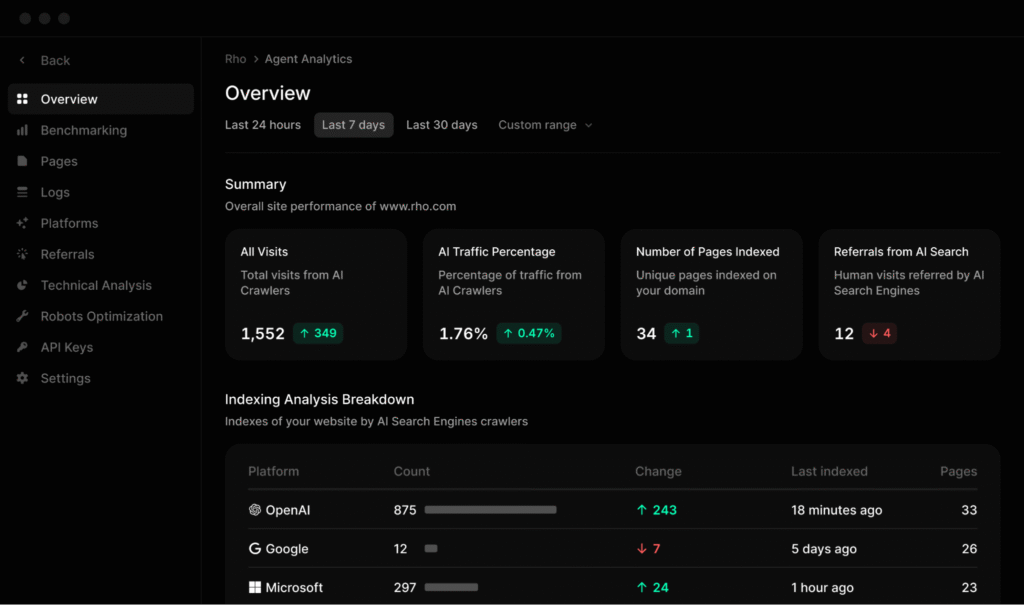
Profound is the best-known name in AI visibility tracking, and it’s genuinely on par with Scrunch in scale; both are backed by serious funding, both target enterprise budgets, and both show up on the same “which one do we actually buy” shortlist for enterprises.
What Are You Actually Paying More For?
- Analytics depth: Prompt Volumes gives you real user prompt-demand data, not just tracked answers, something neither Scrunch nor most of this list actually has
- Enterprise reporting: Aim prioritizes what to fix weekly, and higher tiers come with a dedicated AI strategist and Slack channel
- Competitive intelligence: the Profound Index benchmarks brands against real conversation data, not hypothetical queries
- Advanced AI-search data: front-end browser capture with daily refresh, plus panel data, so you’re getting two capture methods instead of one
Do You Really Need That Much Platform?
Growth starts at $399/mo on an annual commitment, and that number climbs fast once you’re at Enterprise, which is where most of the engine coverage and the real prompt-demand features actually live. It’s a lot of platforms onboard too, enough that more than one reviewer has warned the pricing structure tempts you into tracking more topics than your team can realistically act on. It’s a bit much of an annual commitment for a short engagement, making it built for teams with a standing budget and a standing team, not a project-based one.
When to choose Profound over Scrunch AI
| Criteria | Profound | Scrunch AI |
| Pricing | $399/mo, annual, Growth | $250-300/mo |
| Engines | 3 at Growth, up to 9 at Enterprise | 4 at entry |
| Analytics depth | Real prompt-demand data | Tracked mentions only |
| Reporting | Weekly prioritization, dedicated support | Diagnostic dashboards |
| Best fit | Full AEO stack, enterprise budget | Crawler-level diagnostics |
My verdict: Consider Profound if you want actual demand data behind your prompts, not just tracking. Look out for Profound’s alternatives if you’re not ready for an annual commitment, since that’s the thing that trips people up even when they like the product.
4. Omnia
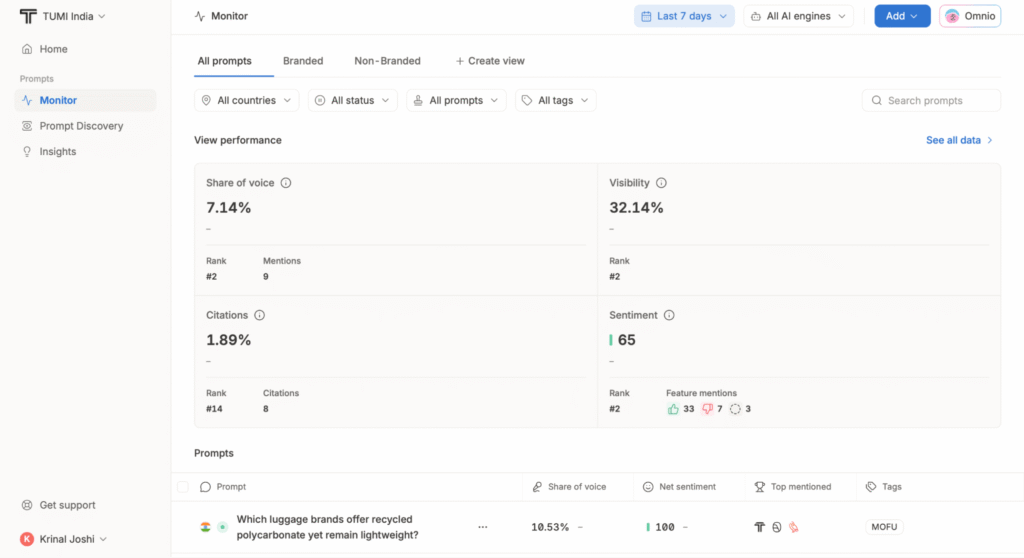
Next up is Omnia, and what it’s good at is real-location, browser-simulated tracking, meaning it opens actual browsers in different countries to see what a user in that market gets, not just an API pull, paired with unlimited brand tracking on every tier, including the €79 entry plan.
Where Omnia Stood Out: Insight and Action
- AI visibility tracking that simulates real local browsing, not API responses
- Citation-level gap analysis, included at every tier, not gated to a higher plan
- An “impact-scored, prioritized action backlog” that ranks what to fix first
- Omnio, its GEO agent, drafts content briefs, pitches publishers, and pushes to your CMS, available from the entry plan
- What felt different from a reporting-first tool is that Omnia hands you a ranked to-do list instead of just a dashboard, closer to what’s missing from Scrunch
Where Omnia Falls Short
The engine coverage story is genuinely muddled. Omnia’s own product page says it deliberately limits tracking to four engines to avoid “noise,” while the pricing page and FAQ claim Claude, Gemini, and Copilot are available “on request” at every tier including Growth. Sentiment analysis and API access are also held back until Pro ($279/mo), so the €79 headline gets you tracking and the action backlog, but not the full picture.
When to choose Omnia over Scrunch AI
| Criteria | Omnia | Scrunch AI |
| Pricing | €79/mo, unlimited brands | $250-300/mo, 1 brand at entry |
| Engines | 4 confirmed, more “on request” | 4 at entry |
| Recommendations | Prioritized action backlog, every tier | Diagnostics, no assigned fixes |
| Execution | Drafts and pitches content via Omnio | No content layer |
| Best fit | Unlimited brands with content execution built in | Deep crawler diagnostics |
My verdict: Consider Omnia if you want unlimited brand tracking plus a real content and outreach layer without paying enterprise prices. Skip it if you need confirmed, not “on request,” access to Claude or Gemini, or if the product still feels too new for your reporting needs.
5. AIClicks
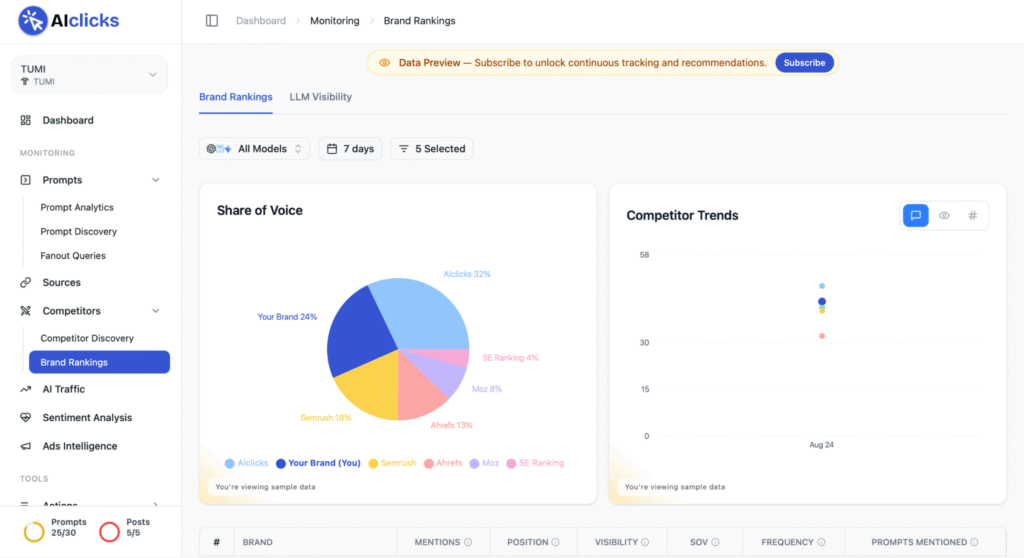
Further on our list is AIClicks. It shows exactly which pages an AI engine cited and why, with a pool of 10+ AI platforms to pull from. It tracks prompt-level visibility, citations, competitors, and source data, then turns what it finds into actual work you can assign, rather than just a report to read.
What Can You Actually Do With the Opportunities It Finds?
- Recommendations that split into three concrete action types: content creation, source outreach, and community engagement
- Content opportunities tied to specific gaps, not a generic “improve your content” note
- Source opportunities, including outreach targets for third-party sites AI engines actually cite
- AI-generated articles bundled into every tier, from 5/mo on Starter up to 30+/mo on Business
- An execution workflow that goes from “here’s the gap” to “here’s a draft” without switching tools
Where the Plan Limits Start to Matter
The entry tier is genuinely tight once you look closely. Starter gives you 30 prompts across only 3 models, and you don’t get to pick freely; ChatGPT and Gemini are locked in as defaults with one more slot to fill. It’s also capped at a single website, so if you’re managing more than one brand, you’re moving to Pro at $189/mo just to get unlimited sites.
Claude and Copilot don’t show up at all until Pro, and the full model set plus GA4 integration and API access wait until Pro or higher too. Content allowances scale the same way; 5 articles on Starter isn’t much if content is the reason you picked this tool in the first place, and costs climb fast once you need more models, more sites, or more content in the same month.
When to choose AIClicks over Scrunch AI
| Criteria | AIClicks | Scrunch AI |
| Pricing | $59/mo | $250-300/mo |
| Engines | 3 at entry, choose from pool | 4 at entry |
| Prompt tracking | 30 prompts, daily refresh | 125 credits, divided per engine |
| Content execution | Articles + outreach, every tier | No content layer |
| Best fit | Tracking and content in one tool | Deep crawler diagnostics |
My verdict: Consider AIClicks if you want a cheap entry point that includes actual content output, not just tracking. Skip it if you need more than 3 engines or more than one site without immediately jumping to the higher tier.
6. Otterly
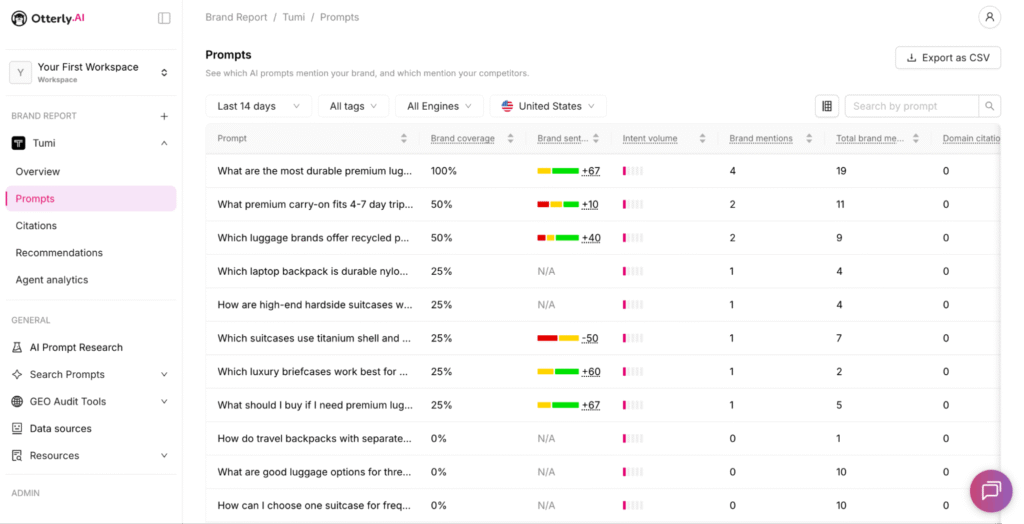
Up next, I’ve considered Otterly, mainly for its data-capture methodology, replicating the actual AI web interface instead of pulling from an API, and for being the budget-friendly option on this list at $29/mo. It comes with unlimited brand reports, unlimited team members from Standard up, and 50+ country tracking included at every tier, including Lite, which is more geographic breadth at the entry price than Scrunch offers at more than eight times the cost.
How Much AI Visibility Tracking Do You Actually Need?
For a lot of smaller teams, probably less than Scrunch makes you buy. Otterly’s setup is genuinely fast, prompt monitoring is straightforward without a per-engine credit puzzle to solve first, and citations and reporting are there from the entry tier rather than locked behind a higher plan. That lower barrier to adoption is really the whole pitch: you’re not signing an enterprise contract or learning a complicated credit system just to see where you stand.
Where Keeping Things Simple Becomes a Limitation
- The $29 headline covers 4 engines only: ChatGPT, Google AI Overviews, Perplexity, and Copilot. Others are all paid add-ons that scale steeply by tier
- Prompt volume and recommendation caps scale by tier too; Lite only gives you 3 recommendations a week, and unlimited doesn’t kick in until Standard
- There’s no crawler or agent-traffic diagnostic layer at all, so anyone leaving Scrunch specifically for that reason won’t find a replacement here
- Compared to Omnia or AIClicks, there’s no content-generation or execution layer; Otterly stops at monitoring and reporting
When to choose Otterly over Scrunch AI
| Criteria | Otterly | Scrunch AI |
| Pricing | $29/mo entry | $250-300/mo |
| Engines | 4 included, 3 more as paid add-ons | 4 at entry |
| Prompt tracking | Flat, no per-engine multiplier on core 4 | Divided per engine tracked |
| Technical insights | None | Crawler and agent diagnostics |
| Best fit | Low-cost, straightforward monitoring | Deep crawler diagnostics |
My verdict: Consider Otterly if you want a low-cost entry point and don’t need every engine on day one. Skip it if Claude and Gemini matter to you from the start, since the add-on pricing erases the budget advantage fast, or if you need crawler-level diagnostics at all.
Pro tip: If you need quick AI crawler insights before diving into any of this. Run an AI visibility audit for your website and see exactly what’s readable and what’s getting missed within just a click.7. Peec AI
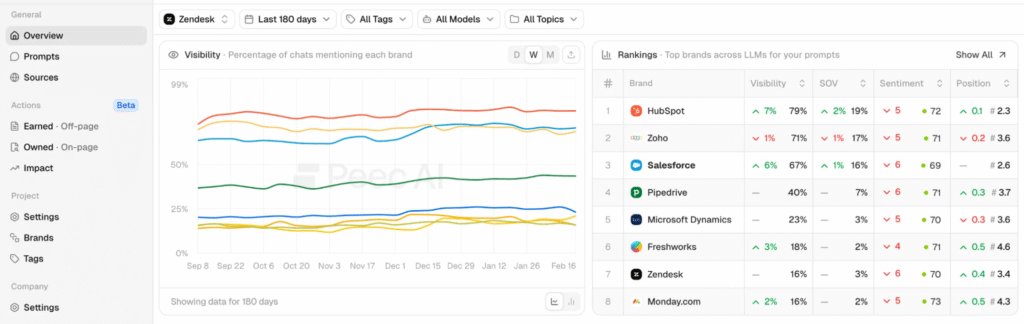
Finally, I’ve put Peec AI on this list for its clean UI. It gives you clear visibility, position, sentiment, prompt performance, competitor benchmarking, and citation sources, all in an interface that’s easy to actually read.
Peec AI, with unlimited seats on every tier and near-zero onboarding, is a considerably good option compared to Scrunch if you have a team that can read the data itself and just wants it presented cleanly, rather than a team that needs the tool to hand-hold them into a next step.
Where Peec Feels Easier to Use
The interface itself gets called out as “clear and intuitive,” which is close to a direct quote from more than one G2 reviewer. Prompt tracking comes with tagging and bulk upload built in, competitor comparisons surface brands you didn’t know you were up against, and projects keep multiple brands cleanly separated.
Reporting reads well without much setup; one reviewer described data flowing in at signup with zero configuration required, and overall, interpreting what the tool is telling you takes less effort here than with most of this list.
What Do You Still Have to Handle Outside Peec?
- No content execution layer at all; Peec measures and surfaces; it doesn’t draft or publish anything for you
- No crawler or agent-traffic technical insights, so nothing here replaces Scrunch’s site-diagnostics side
- Scrunch’s broader workflow, crawler analytics plus a diagnostic content-delivery view, simply covers more ground; Peec is deliberately narrower and leans on you to act on what it shows
When to choose Peec AI over Scrunch AI
| Criteria | Peec AI | Scrunch AI |
| Pricing | $95/mo entry | $250-300/mo |
| Engines | 3 of 7, selectable | 4 at entry |
| Competitor tracking | Strong, cross-LLM | Not a core focus |
| Reporting | Clean, easy to read | Denser, diagnostic-heavy |
| Best fit | Clean, readable tracking for a self-sufficient team | Deep crawler diagnostics |
My verdict: Consider Peec AI if your team is comfortable turning clean data into its own action plan. Look out for Peec AI’s alternatives if you need the tool itself to tell you what to do next, or if crawler-level diagnostics matter to you at all.
How to Choose the Right Scrunch Alternative
Seven tools still seem like a lot to pick from, so let me make this easier.
Want the tool to actually tell you what to do next, not just show you a problem? Go with AthenaHQ if you’re fine with a broader workflow (and the price that comes with it), or Track My Visibility if you want that same “here’s your next step” feel without the credit-pool math working against you.
Need analytics deep enough for a genuinely enterprise setup? That’s Profound, as long as you’re ready for the annual commitment that comes attached to it.
Want monitoring that actually leans into execution instead of stopping at reporting? Omnia gets you unlimited brands plus a real content layer, or AIClicks if content and outreach recommendations specifically are what you’re after.
Just want straightforward AI visibility tracking without extra machinery? Otterly if budget’s the priority, or Peec AI if you want the cleanest interface around and don’t need much hand-holding on what to do with what it shows you.
Final Thoughts
Every tool on this list solves at least one real problem with Scrunch, whether that’s the pricing, the missing next step, or the credit math that never quite adds up the way the sticker price suggests. But the question that should actually drive your pick isn’t which one has the most features; it’s what happens after the dashboard: who turns the data into work, and how much you’re paying for the part you actually want.
If the answer is “we have a team for that already,” lean toward the ones built for raw depth, Profound or Peec AI. If the answer is “I want the tool to hand me the next clear step,” AthenaHQ, Omnia, and AIClicks are built closer to that job, and that’s the gap we built Track My Visibility to close too: flat pricing and fixes sitting in the same workflow as the tracking.
With that said, we’ve got a 7-day trial at Track My Visibility if you’re looking for a place to start.
FAQs
Because it shows what your customers actually see. AI platforms don’t return the same answer twice, and API pulls can differ from the real interface, so tools like Otterly, Peec AI, and Omnia track the UI directly instead.
No, and I’d be skeptical of any that claim to. Every tool here, Track My Visibility included, measures visibility and points you toward fixes, but the actual outcome is still up to the AI model.
Omnia and Track My Visibility both include unlimited brands from the entry tier. AthenaHQ, Profound, and Peec AI still price by brand or project, so run the math if you’re managing multiple clients.
Almost certainly. Most AI visibility tools here, including several on this list, don’t offer retroactive backfill, so tracking effectively restarts on day one.