


AI search feels almost magical. You ask a question in ChatGPT, Gemini, or Perplexity, and within seconds, you get a direct answer instead of a list of links. But what actually happens behind the scenes? How do these AI systems understand your query, retrieve information, and form an answer that sounds conversational and contextual?
Here’s what we’ll cover: what AI search is and how it works, how platforms like ChatGPT, Perplexity, and Google Gemini answer queries, and, more importantly, why this shift matters for brands, marketers, and anyone trying to improve AI visibility.
TL;DR: AI search generates direct answers instead of showing only ranked links. Platforms like OpenAI ChatGPT, Perplexity AI, and Google Gemini use retrieval, reasoning, and summarization to answer queries. Each AI engine handles freshness, citations, and source selection differently. AI visibility now depends on mentions, citations, semantic relevance, and structured content.
What Is AI Search?
AI search generates direct answers instead of simply listing webpages. Unlike traditional search engines that rely heavily on keyword matching, AI search, often called generative search, uses semantic understanding to interpret intent, context, and conversational meaning behind a query.
This allows users to ask natural-language questions, refine searches through follow-ups, and receive synthesized responses in real time. As a result, conversational search becomes a natural part of the experience.
AI search tools combine retrieval, reasoning, and summarization into one experience, turning search from a list of links into an interactive AI answer engine.
How AI Search Actually Works
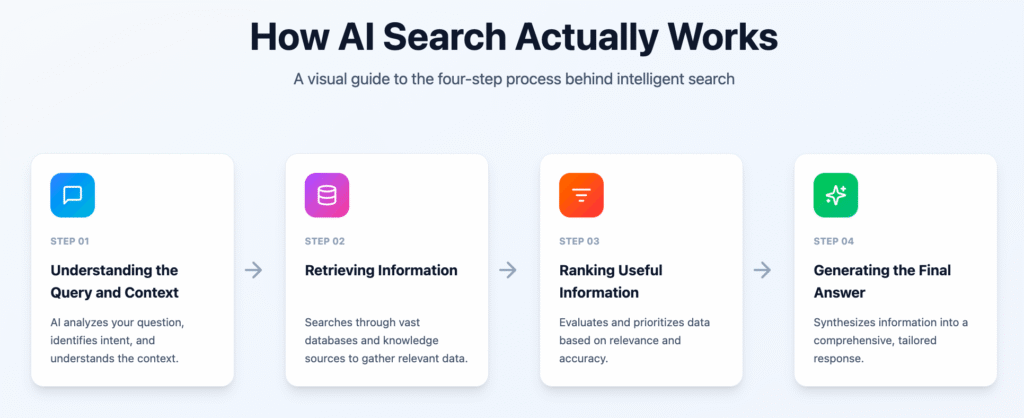
AI search works through a combination of query understanding, information retrieval, ranking, and answer generation. Instead of simply matching keywords, AI systems analyze intent, pull relevant information from multiple sources, and synthesize it into a conversational response.
Let’s see how it works.
Step 1: Understanding the Query and Context
The first step in AI search is understanding what the user is actually asking. Instead of relying only on exact keywords, AI models analyze intent, phrasing, and context behind the query.
This allows users to ask conversational questions like “What’s the best CRM for startups?” instead of typing fragmented keyword searches. AI systems also use previous prompts in the conversation to refine interpretation and maintain context across follow-up questions.
For more complex queries, the system breaks the prompt into smaller concepts or sub-queries. This helps retrieve more relevant information before generating the final answer.
Step 2: Retrieving Information
After understanding the query, the AI system retrieves relevant information. Most modern AI search platforms use Retrieval-Augmented Generation (RAG), which pulls web content from indexed sources before generating a response.
For recent or time-sensitive topics, live web search may supplement the model’s existing knowledge. This combines external retrieval with information learned during model training.
AI systems do not include every webpage. Source accessibility, crawlability, content structure, and relevance all influence whether a page can be retrieved and used in the final answer.
 Pro Tip: Most pages never make it into an AI answer, and the reason usually traces back to how they are structured for retrieval. The AEO GEO Audit Checklist maps out exactly which ones matter.
Step 3: Ranking Useful Information
Once information is retrieved, the system evaluates which sources are most useful for answering the query. Topical authority, relevance, and topical alignment all influence this ranking process and ultimately affect how content ranks in AI search results.
AI models also compare information across multiple sources. When several trusted sources support the same point, confidence increases. AI systems prioritize clear, concise, and well-structured content because retrieval systems interpret and synthesize it more easily.
AI systems typically filter out low-quality, outdated, or low-confidence content before generating the final answer.
Step 4: Generating the Final Answer
After ranking the information, the AI model combines multiple sources into a single readable response. Instead of showing separate webpages, it synthesizes the most relevant information into one answer.
Conversational tone, query intent, and context from the ongoing interaction shape the phrasing, producing a personalized response. Some platforms also display citations or referenced sources alongside the response when retrieval runs.
In multi-turn conversations, memory of previous prompts also helps refine follow-up answers and thereby maintain continuity within the same session.
How AI Search Is Different From Traditional Search
| Key Difference | Traditional Search | AI Search |
| Primary Output | Ranked lists of webpages | Directly generated answers |
| Query Understanding | Keyword-focused matching | Semantic and intent-based understanding |
| Information Handling | Users compare sources manually | AI synthesizes multiple sources |
| Visibility Metric | Rankings and clicks | Mentions, citations, and inclusion |
| User Interaction | Mostly single-query searches | Conversational follow-up interactions |
| Answer Experience | Requires visiting multiple pages | Summarized within one interface |
| Optimization Focus | Traditional SEO | AI visibility and retrieval optimization |
How Different AI Models Generate Answers
While most AI search platforms follow a similar retrieval-and-generation process, each model handles queries differently based on its architecture, retrieval systems, and search integration. Some prioritize conversational reasoning, while others focus more on live web retrieval and citations.
Let’s look at how ChatGPT, Perplexity, and Google Gemini generate answers and process user queries.
How ChatGPT Answers Queries
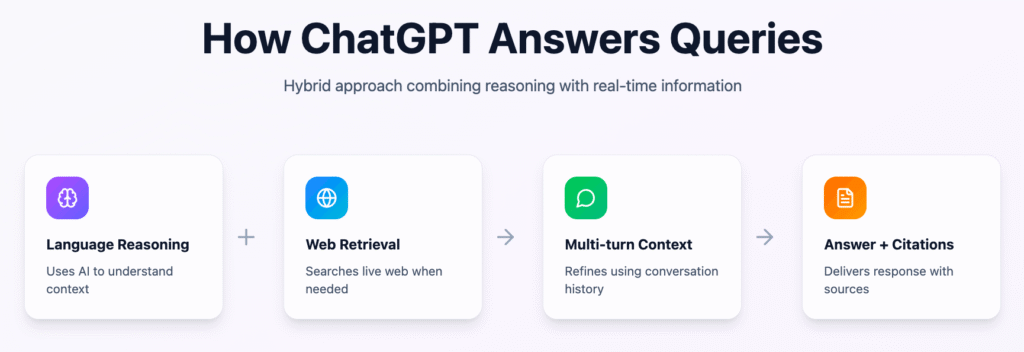
ChatGPT uses a hybrid approach that combines language reasoning with web retrieval capabilities through ChatGPT Search. This allows the model to generate conversational answers while also accessing live information when needed.
The platform places strong emphasis on multi-turn reasoning and contextual conversations. Instead of responding to prompts in isolation, ChatGPT generates answers by building from previous interactions to refine responses and maintain continuity across conversational queries in a session.
For queries that require fresh or real-time information, ChatGPT may browse the live web and surface citations. Its retrieval process generally prioritizes semantic relevance, clarity, and context alignment over simple keyword matching.
In our analysis of ChatGPT citations, we found that Reddit is ChatGPT’s most-cited source, accounting for 29.43% of all citations, followed by Wikipedia at 14.99%. Other frequently cited sources include Amazon (3.38%), Forbes (1.67%), and Business Insider (1.31%), highlighting ChatGPT’s preference for combining community-driven discussions with authoritative reference and editorial content.
Pro Tip: Want to know where your brand stands across AI platforms? Run a quick audit with a free AI visibility checker and see how your content currently performs across AI search platforms.How Perplexity Answers Queries
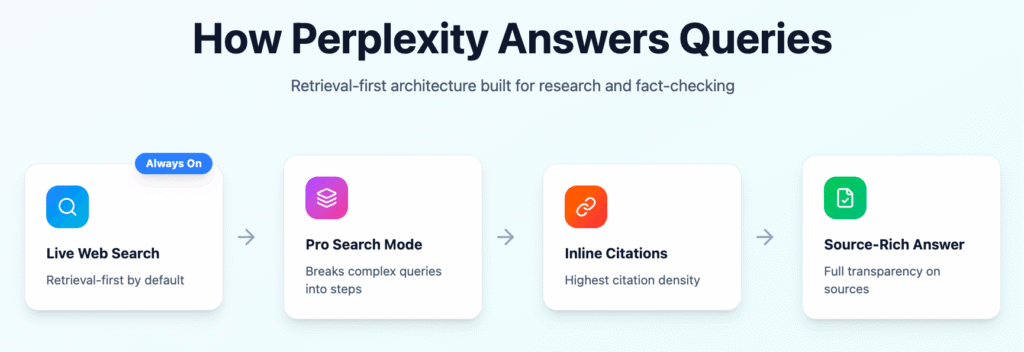
Perplexity search uses a retrieval-first architecture where live web search is integrated directly into the answering process. Unlike many AI assistants, it retrieves web information by default for most queries before generating a response.
Perplexity is also known for its high citation density, often displaying sources inline beside specific claims. This makes the platform feel closer to a research engine than a traditional chatbot.
Its Pro Search mode can break complex prompts into multiple retrieval and reasoning steps for deep research and improved answer quality. Furthermore, the system is primarily designed for factual answers and research-oriented queries where transparency and source verification are important.
In our Perplexity citation data report, YouTube is the single most-cited source (16.1%), followed by Wikipedia (12.5%), while news and journalism websites collectively account for 17.5% of citations. We also found that 70% of Perplexity’s top-cited sources were published or updated within the last 12–18 months, highlighting the platform’s preference for fresh information.
How Gemini Answers Queries
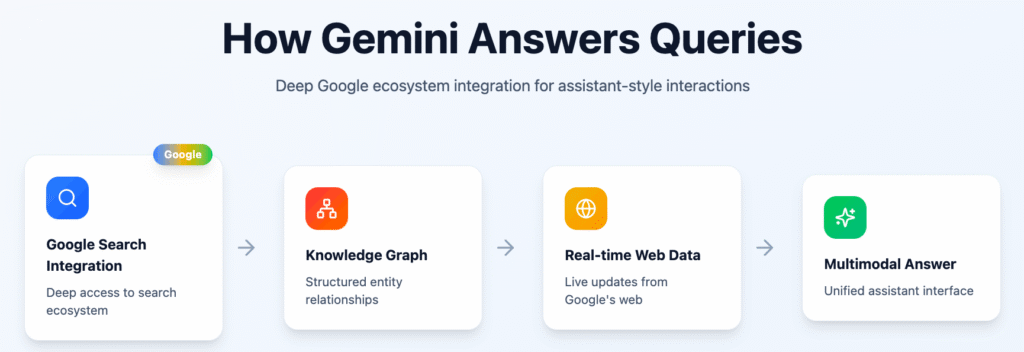
Gemini is deeply integrated with Google Search, the Knowledge Graph, and Google’s broader web ecosystem. This gives the model access to large-scale indexed content, structured entity relationships, and real-time web information.
Google Gemini also shares retrieval and citation logic with Google AI Overviews, allowing it to surface information directly from Google’s search infrastructure. This helps the system generate answers grounded in current web data and recognized entities.
The platform handles assistant-style interactions, multimodal inputs, and entity-rich queries. Moreover, it is designed to handle text, images, and contextual search experiences within a unified AI interface.
According to our analysis of Gemini citations, the platform frequently cites both Google-owned properties and authoritative third-party sources. We found that Gemini 3 significantly increased citation diversity after its January 2026 update, with the average number of sources per response increasing by 31.8% and unique cited domains growing by 9.3%.
In addition, Gemini shows a strong preference for Google-owned services such as YouTube, Google Maps, and Google Shopping for video, local, and product-related queries, while Reddit and other user-generated content continue to gain prominence for authentic discussions and technology-related topics.
Side-by-Side: Key Differences Across the Three Engines
| Key Difference | ChatGPT | Perplexity | Gemini |
| Freshness Handling | Selective live browsing | Live retrieval by default | Deep real-time search integration |
| Citation Density | Variable | Highest | Moderate |
| Core Strength | Conversational reasoning | Research and factual retrieval | Search ecosystem integration |
| Source Selection | Semantic relevance and clarity | Authority and recency focused | Search index + entity relationships |
| Query Style | Multi-turn conversational queries | Research-oriented queries | Assistant-style and multimodal queries |
| Brand Visibility Impact | Context-driven inclusion | Citation-heavy inclusion | Entity and search-driven inclusion |
What This Means for Your Business
But here’s the thing. AI search is changing how customers discover brands, products, and information online. LLM visibility is no longer limited to search rankings alone. Businesses now need to appear directly inside AI search results. This is the shift.
Zero-click experiences are becoming the norm. Users get their answers from ChatGPT, Perplexity, or Gemini without ever visiting a website. This is also why tracking brand mentions matters. If your brand is not being surfaced, cited, or recommended within AI-generated answers, you risk losing visibility during the discovery process itself.
As AI-powered search platforms become part of everyday search behavior, brands that are not retrieval-friendly risk becoming invisible in AI-driven discovery.
This means semantic relevance, topical authority, structured content, and citation visibility are now table stakes. Therefore, businesses that understand how AI systems retrieve and surface information will be better positioned to maintain visibility as search behavior continues to evolve.
Main Metrics to Track in AI Search
However, traditional SEO metrics alone can’t fully explain how visible your brand is inside AI-generated answers. AI search introduces a new set of visibility signals focused on mentions, citations, retrieval presence, and how AI systems represent your brand across different platforms.
AI Mention Frequency: Measures how often your brand appears in AI-generated answers.
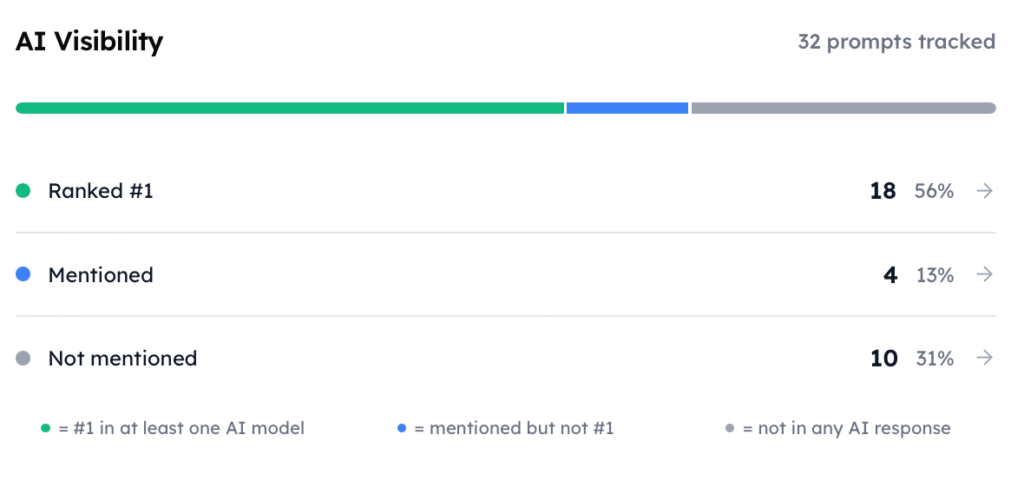 Pro Tip: So what actually pushes one brand into AI answers while another stays absent? The factors behind frequent mentions are more controllable than they look. How to Appear in AI Search Results breaks down what drives that visibility.
AI Model Visibility: Compares how your brand performs across multiple AI models like ChatGPT, Gemini, Perplexity, and Google AI Overviews.
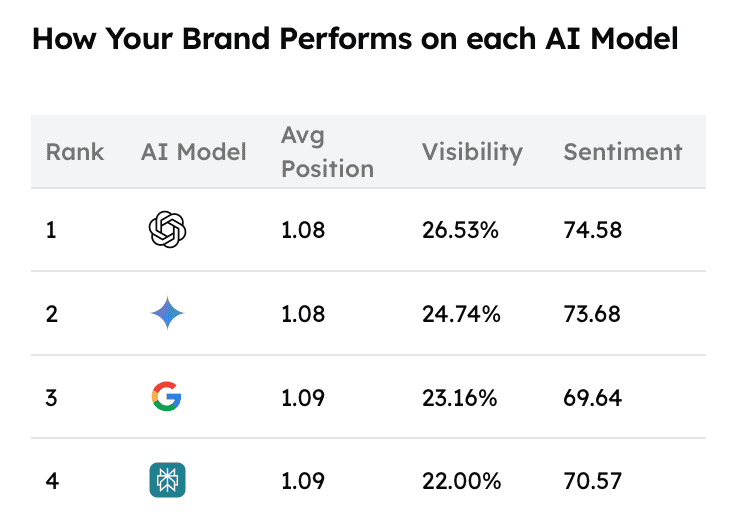
Citation Presence: Tracks whether your website or content is being cited by LLM as a source.
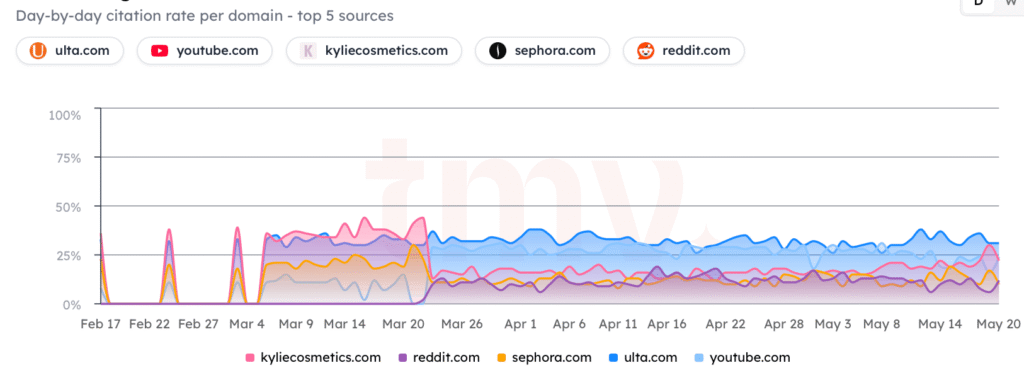
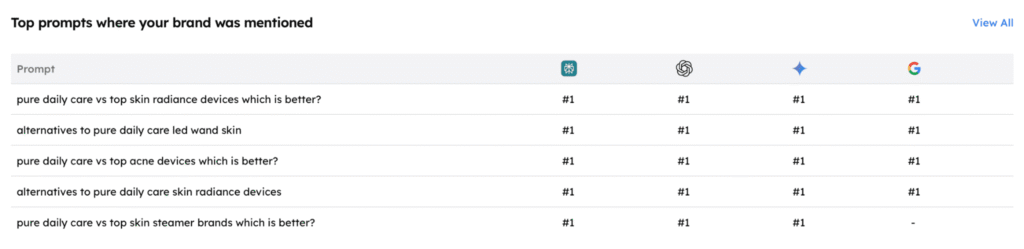
Prompt Coverage: Measures the number of relevant prompts where your brand is included.
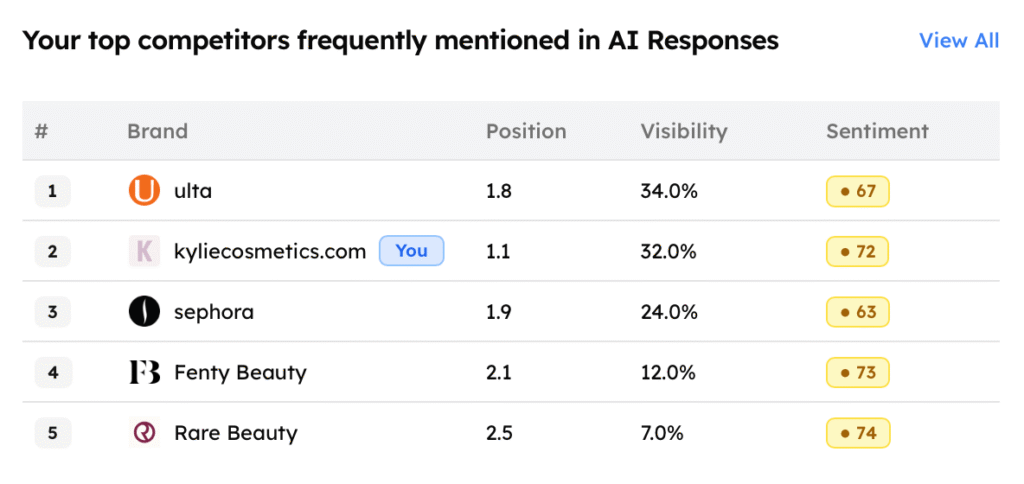
Share of AI Voice: Compares your visibility against competitors across AI search platforms.
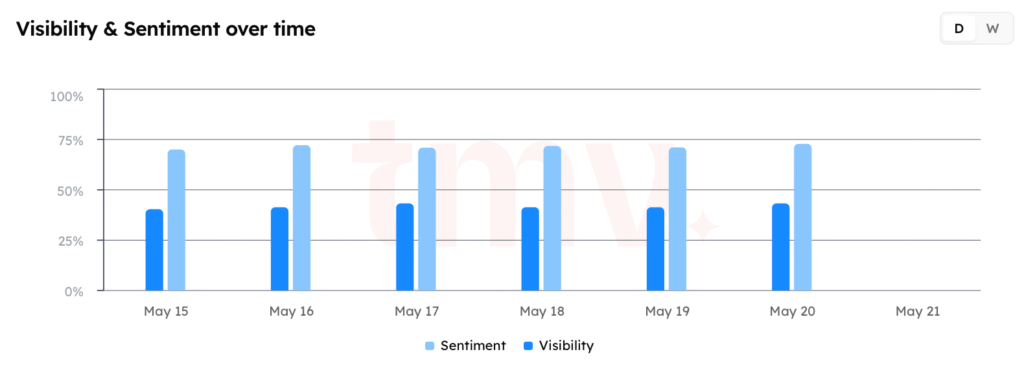
Sentiment & Framing: Analyzes how AI systems describe or position your brand in responses.
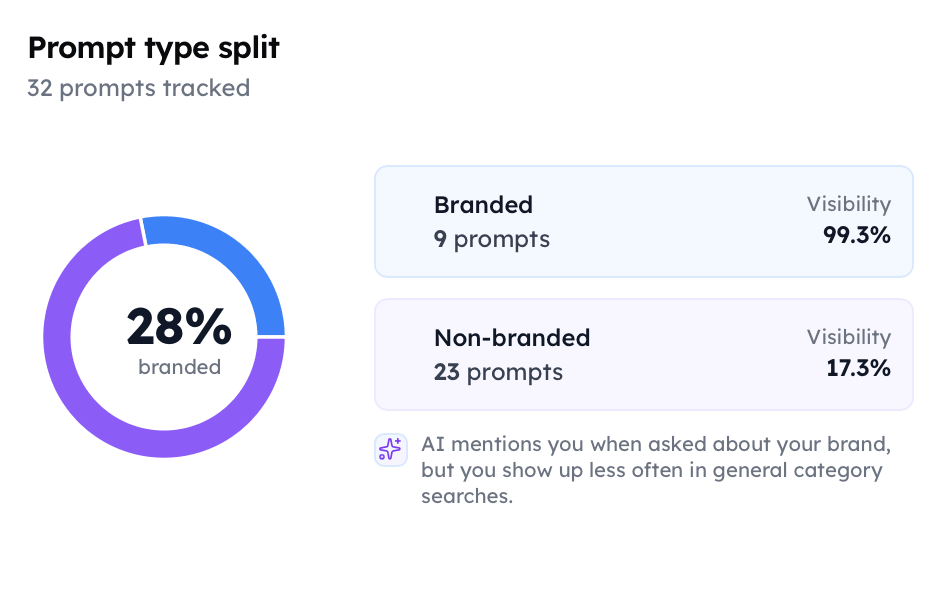
Prompt Type Split: Compares visibility across branded vs non-branded prompts to measure category-level discoverability.
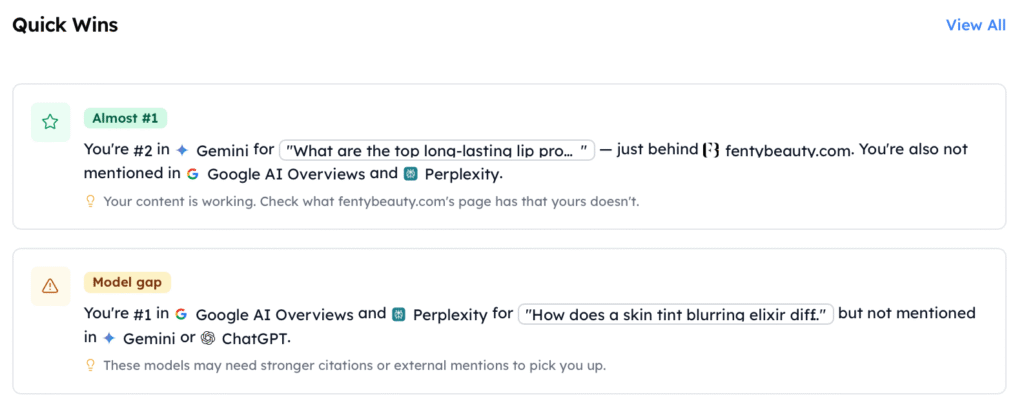
Quick Wins & Model Gaps: Highlights opportunities where small content improvements could improve rankings or cross-model visibility.
Conclusion
AI search is changing how information is discovered, consumed, and trusted online. Instead of browsing through pages of links, users now get AI search answers from platforms like ChatGPT, Perplexity, and Google Gemini. While each platform follows a different retrieval and answer-generation approach, all of them prioritize relevance, clarity, and trustworthy sources.
This shift makes citation-worthiness just as important as traditional rankings. As a result, brands that optimize for semantic retrieval, entity associations, and structured content are more likely to appear in AI-generated responses.
Today, AI visibility is harder to measure through traditional SEO tools, so platforms like Track My Visibility help brands monitor citations, mentions, and presence across major AI search engines. As a result, brands can better understand how they are being surfaced in AI-generated answers.
Start tracking how your brand shows up in AI answers with our 7-day free trial.
Frequently Asked Questions
Traditional search focuses on ranking webpages, while AI search synthesizes information into conversational answers using semantic understanding.
They combine query understanding, information retrieval, ranking systems, and AI-generated summarization to create conversational responses.
No. AI search changes SEO rather than replacing it, shifting focus toward citations, semantic relevance, and retrieval visibility.
AI-generated answers increasingly influence brand discovery, product research, and purchase decisions across search experiences.
Yes. While AI search reduces some clicks, cited sources and referenced brands can still receive referral traffic and visibility.
No. AI systems can still produce incorrect or incomplete answers depending on retrieval quality and source reliability.
Clear, well-structured, factual, and topically focused content tends to perform best in AI retrieval systems.
Tools like Track My Visibility help businesses monitor mentions, citations, and visibility across AI search platforms.