


If AI engines answer questions in your industry today, does your brand appear as a cited source?
Because that question defines search visibility in today’s era.
Search behavior is shifting from traditional results to AI-generated answers. Users increasingly rely on platforms like ChatGPT, Gemini, Perplexity, and Google AI Overviews to get instant explanations, comparisons, and recommendations.
As a result, ranking on Google alone no longer guarantees visibility. A brand needs to appear in AI-generated responses.
Most of the smart brands are now focusing on improving their AI search visibility.
This is where an AI visibility audit is required.
An AI visibility audit helps you understand whether AI models can discover your content, interpret it correctly, and cite your brand when answering user questions.
So, if you’re planning to optimize your AI visibility, then it’s important to do an audit and follow a standard checklist before taking any action.
In this guide, you’ll understand:
- What is an AI Visibility Audit?
- Key Components of AI Visibility
- AI Search Visibility Audit Ultimate Checklist
- What not to do during an audit
By the end of this guide, you’ll know exactly the role of the AI visibility audit and the checklist to follow.
So, without any further delay, let’s begin the guide!
What is an AI Visibility Audit?
An AI Visibility Audit checks how often your brand appears in answers generated by AI platforms such as ChatGPT, Gemini, Perplexity, and Google AI Overviews.
Unlike traditional SEO, instead of only analyzing search rankings, this audit focuses on whether AI systems can find your content, understand it, and use it as a trusted source when answering user questions.
Key Components of AI Search Visibility
Here are some key components of AI search visibility:
- Brand Citations in AI Answers: Measures how often AI platforms like ChatGPT, Gemini, Perplexity, and Google AI Overviews cite your website when generating answers.
- Content Authority and Trust: AI systems prioritize content from credible sources with expert insights, real experience, and strong brand mentions across the web.
- Structured and AI Readable Content: Clear headings, short paragraphs, lists, and direct answers help AI engines understand and extract information efficiently.
- Topic Relevance and Query Coverage: Content must clearly answer important user questions and cover key topics within your industry for comprehensive coverage.
- Competitor AI Visibility: Analyzing how often competitors appear in AI answers helps identify AI visibility gaps in your brand’s presence.
- Clear Source Attribution: Strong authorship, consistent branding, and accurate information help AI systems confidently recognize and cite your content.
 Pro Tip: If you’re new to this, try a few real customer questions in AI tools and see which brands show up repeatedly. It often reveals gaps you wouldn’t expect before doing a full audit. You can also use a free ai visibility checker to quickly get a baseline of where your brand stands.
AI Visibility Audit Checklist
Running an AI visibility audit is a key step in generative engine optimization, as it evaluates whether AI systems can discover your content, understand it, trust it, and cite it when answering user questions.
If your content is not easily discoverable and structured, it can hurt your generative engine optimization efforts, even if your site ranks well on Google.
The checklist below will help you systematically audit your AI visibility and identify areas that need improvement.
Phase 1: Foundational AI Visibility Assessment
Before optimizing anything, you must understand how AI platforms currently see your brand.
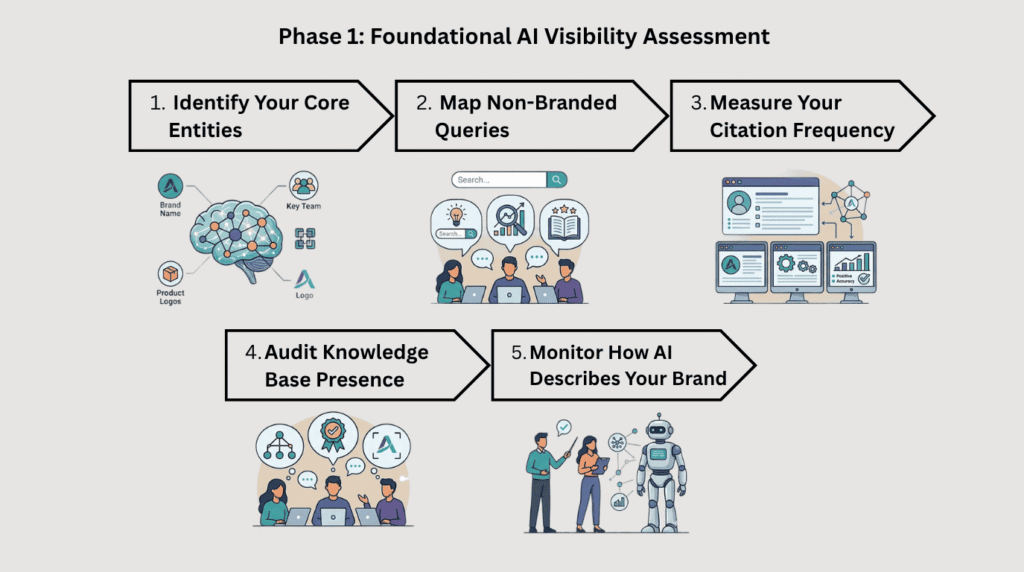
1. Identify Your Core Entities
AI systems rely heavily on entities to understand brands and their relationships with topics.
Start by defining the key entities associated with your brand, which helps strengthen your content marketing efforts.
These typically include your company name, products or services, key team members, and the core topics your brand wants to be recognized for.
Clear entity signals help AI engines understand what your brand represents and when it should appear in answers.
2. Map Non-Branded Queries
Most users do not search using brand names. They ask questions related to problems, solutions, or comparisons.
List 20 to 30 common questions your audience might ask about your industry, which go beyond traditional SEO keyword targeting. Then check whether your brand appears in AI answers for those queries.
If your brand only appears for branded searches but not for industry questions, your AI visibility may still be limited.
3. Measure Your Citation Frequency
Another important step is to analyze how often AI systems cite your brand compared to competitors.
Check responses across platforms like ChatGPT, Gemini, and Perplexity to see which sources are being referenced when answering relevant questions.
Tracking citation frequency helps you understand your AI share of voice.
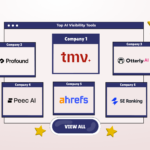
Manually checking this across multiple AI platforms can take time. AI tools like Track My Visibility provide an AI visibility dashboard that helps track where your brand appears in AI answers and how frequently it gets cited.
4. Audit Knowledge Base Presence
AI models rely on trusted knowledge sources to validate brand information.
Review your brand profiles across platforms such as LinkedIn, Crunchbase, industry directories, and other knowledge bases.
Ensure that your brand information is accurate and consistent across these platforms. This strengthens credibility signals for AI systems.
5. Monitor How AI Describes Your Brand
Finally, ask AI platforms to describe your company, services, or expertise.
Check whether the responses are accurate and aligned with how you want your brand to be positioned.
If AI provides incorrect or inconsistent descriptions, it may indicate weak brand signals or incomplete information across the web.
Phase 2: Technical AI Accessibility Audit
Even the best content will not appear in AI answers if AI systems cannot access your website.
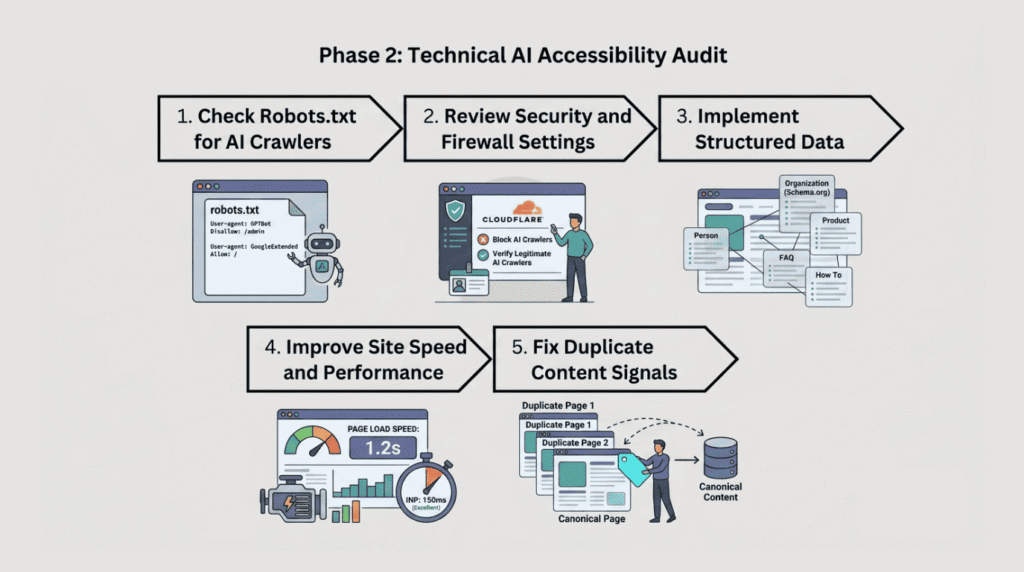
1. Check Robots.txt for AI Crawlers
Review your robots.txt file to ensure that important AI bots are not blocked.
Common AI crawlers include:
- GPTBot
- Google Extended
- ClaudeBot
- PerplexityBot
Blocking these crawlers prevents AI systems from accessing your content, which is different from how traditional search engines operate.
2. Review Security and Firewall Settings
Sometimes website security settings unintentionally block AI bots.
If you use services like Cloudflare or other firewalls, verify that legitimate AI crawlers are allowed to access your site.
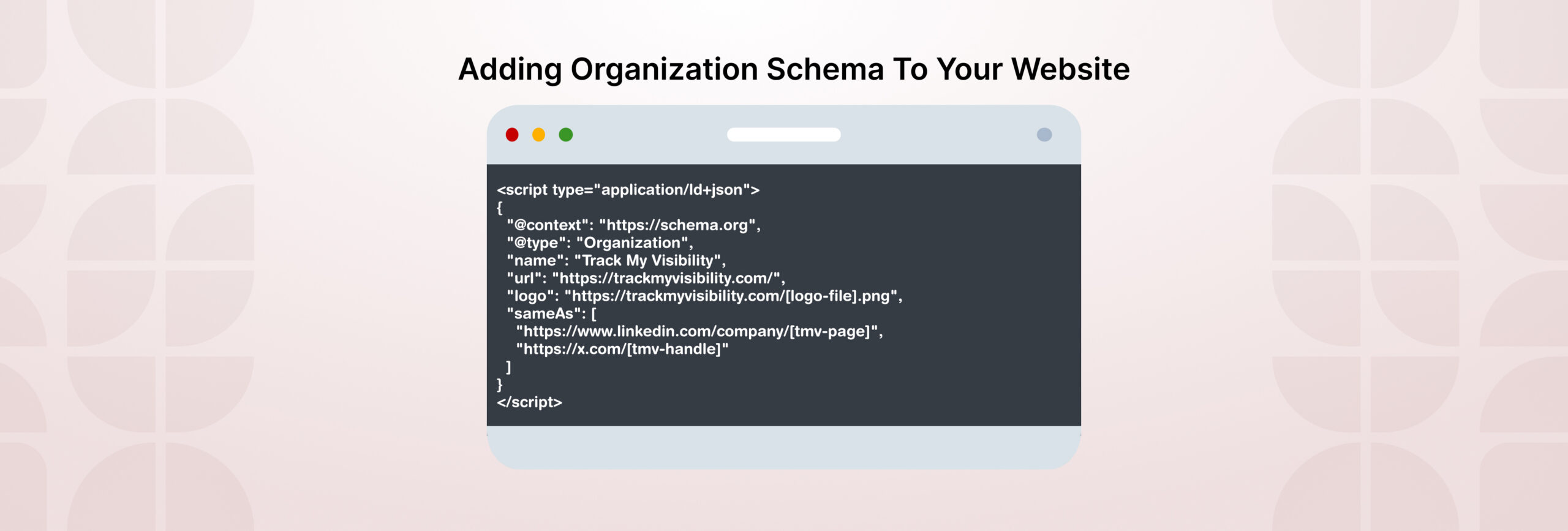
3. Implement Structured Data
Structured data helps machines understand your content more clearly.
Especially useful schema types include:
- Organization
- Person
- Product
- FAQ
- How To
These structured signals help AI systems interpret relationships between entities.
4. Improve Site Speed and Performance
AI systems evaluate websites that load quickly and respond efficiently.
A fast website improves both user experience and machine readability.
Metrics like Interaction to Next Paint (INP) help measure how responsive your website is.
5. Fix Duplicate Content Signals
Duplicate pages can confuse AI systems.
Use proper canonical tags to indicate the original version of your content. This ensures AI engines recognize the correct source.nal version of your content. This ensures AI engines recognize the correct source.
Phase 3: Content Readiness for AI Extraction
AI systems prefer content that is clear, structured, and easy to extract.

1. Use Answer First Formatting
Start each section with a direct answer before expanding with additional details. This structure helps AI engines quickly identify the key information.
2. Write Question-Based Headings
Headings should match the way users ask questions.
For example:
“How does AI search visibility work?”
This improves the chances of your content appearing in AI-generated responses.
3. Break Content Into Smaller Sections
Long paragraphs are harder for AI engines to process.
Instead, use:
- Short paragraphs
- Bullet lists
- Numbered steps
This structure improves readability for both users and AI models. Each section should cover one clear idea.
4. Use Comparison Tables
Tables help present information clearly and are frequently used by AI search engines when answering comparison queries.
For example:
- Tool comparisons
- Feature differences
- Pricing comparisons
Tables make information easier to extract and reference.
5. Provide Unique Insights
AI systems prefer sources that provide new value. Content that only repeats existing information is less likely to be cited.
Include:
- Original insights
- Expert opinions
- Real examples
- Case studies
Unique information increases the chances of AI referencing your content.
Phase 4: Authority and Trust Signals
AI platforms prioritize sources that demonstrate expertise, credibility, and reliability, which should be reflected in your content strategy.
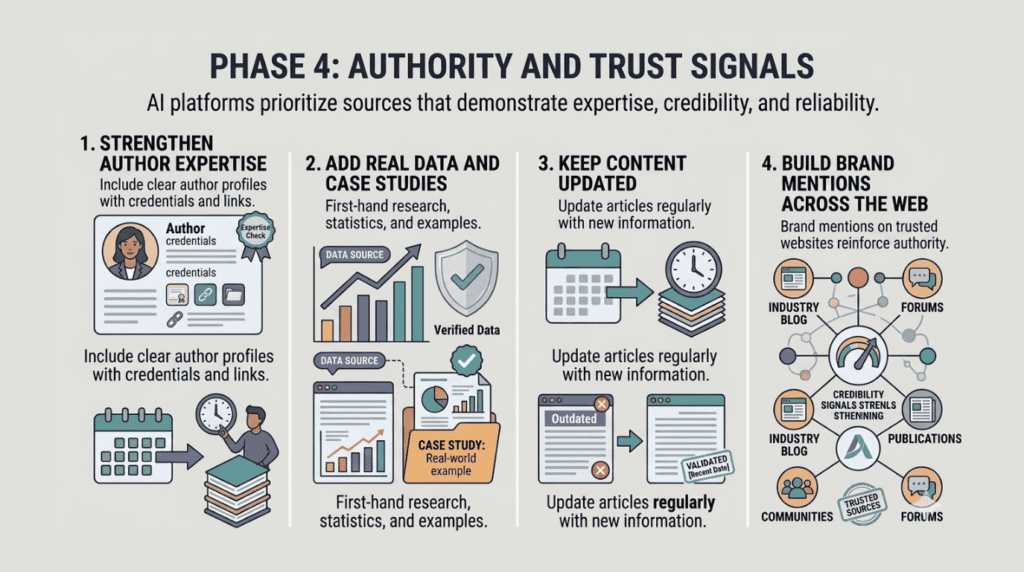
1. Strengthen Author Expertise
Each article should include a clear author profile with credentials and professional links. This helps establish subject authority.
2. Add Real Data and Case Studies
First-hand research, statistics, and real-world examples improve credibility. AI search engines are more likely to trust sources that provide evidence-based information.
3. Keep Content Updated
Outdated content loses credibility. So, regularly update articles with new information, examples, and insights. AI engines often prefer fresh and validated content.
4. Build Brand Mentions Across the Web
Mentions on trusted websites help reinforce your brand authority.
These mentions can come from:
- Industry blogs
- Publications
- Communities and forums
The more your brand is referenced across the web, the stronger your credibility signals become.ome.
Phase 5: Measurement and Continuous Improvement
AI visibility requires ongoing monitoring.
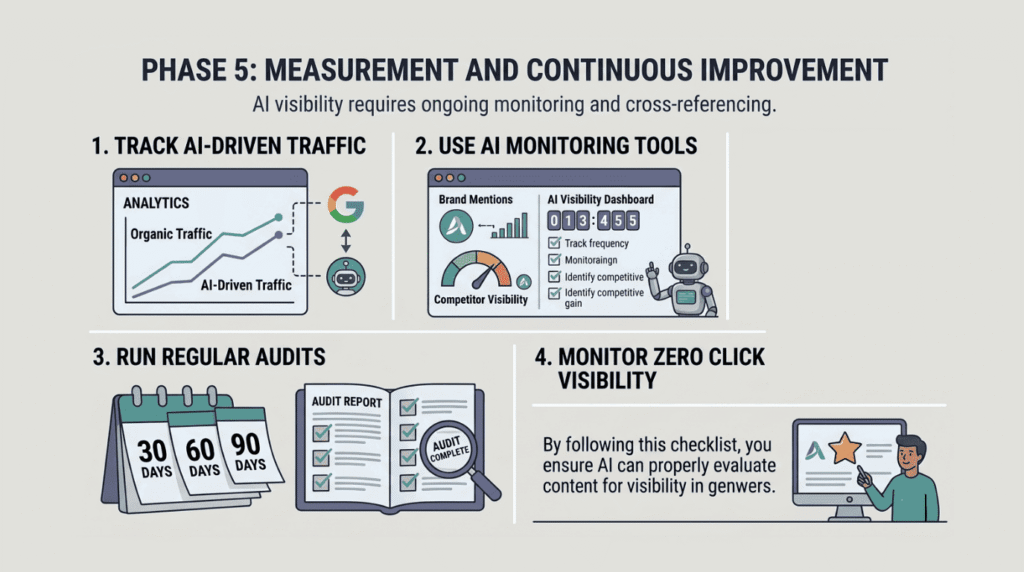
1. Track AI-Driven Traffic
Monitor analytics and cross-reference with Google Search Console to see organic performance alongside AI-driven traffic. This helps measure the real impact of AI visibility.
2. Use AI Monitoring Tools
AI visibility tools with an AI visibility dashboard can track how often your brand appears in AI responses and where competitors are gaining visibility.
3. Run Regular Audits
Schedule AI visibility audits every 30 to 90 days. Regular reviews help ensure your content remains competitive.
4. Monitor Zero Click Visibility
AI platforms often provide answers without sending users to websites.
Even if traffic decreases, being cited in AI answers still increases brand awareness and credibility.
By following this GEO checklist, you ensure that AI-powered search engines can properly crawl, understand, and evaluate your content, which is essential for improving your visibility in AI-generated answers.
What Not to Do?
- Overusing Keywords: AI search engines understand context and intent. Repeating keywords unnaturally does not improve visibility and can reduce content quality.
- Publishing Thin Content: Pages that provide limited information or shallow explanations are unlikely to be selected by AI platforms as reliable sources.
- Ignoring Structured Data: Ignoring schema markup can prevent AI search engines from correctly interpreting your content, entities, and page purpose.
- Relying Only on Backlinks: Backlinks still matter, but AI engines also evaluate brand authority, expertise, and entity relationships before citing a source.
Why Choose Track My Visibility for AI Visibility Audit?
Running an AI visibility audit manually is slow and unreliable.
However, to do this, you would need to test dozens of prompts across multiple AI platforms and constantly track search results. As a result, this process is often time-consuming and inconsistent.
Track My Visibility handles this by helping you:
- Track your brand across ChatGPT, Gemini, Claude, and Perplexity.
- Measure how often AI platforms cite your brand
- Find queries where competitors appear, but you do not, helping you discover AI visibility gaps
- Analyze AI responses without manual checks
- Get insights to improve AI citations
- Monitor your AI visibility over time
If you want your brand to become a trusted source that AI engines cite, you need visibility tracking.
Start your AI visibility audit with Track My Visibility.
Conclusion
Search is rapidly shifting toward AI-generated answers. Platforms like ChatGPT, Gemini, Perplexity, and Google AI Overviews are becoming key sources of information for users.
Because of this change, ranking on Google alone is no longer enough. Your brand also needs to appear in AI-generated responses.
Running an AI visibility audit helps you optimize content strategy by ensuring AI engines accurately discover and cite your content.
We hope this GEO checklist helps you take the first step. Run the audit, find your gaps, and start fixing them.
Now it’s your turn to audit your AI visibility with Track My Visibility and see where your brand appears in AI-generated answers.
FAQs
Start by searching important industry questions on platforms like ChatGPT, Gemini, Perplexity, and Google AI Overviews. Look at which websites are cited in the responses and whether your brand appears among them. Since doing this manually can be time-consuming, AI visibility tools like TrackMyVisibility help track where your brand appears across AI platforms and how often it gets cited.
Non-branded queries are questions users ask without mentioning your company name. These are usually problem-based or comparison queries related to your industry. Checking these queries helps you understand whether your brand appears in AI answers beyond searches that include your brand name.
AI search engines rely on entities to understand relationships between brands, topics, products, and people. Clearly defining entities such as your company, services, and key experts helps AI understand your brand and when it should appear in answers.
Several technical issues can limit your AI visibility. These include blocking AI crawlers in robots.txt, restrictive firewall settings, missing schema markup, slow website performance, and duplicate content signals. Fixing these issues helps ensure AI can crawl and interpret your content properly.
AI platforms prefer content that clearly answers questions and is easy to extract. Pages with direct explanations, structured headings, short paragraphs, lists, and comparison tables are easier for AI search engines to understand and reference.
AI engines look at signals from across the web to evaluate credibility. Mentions on trusted websites, industry publications, and communities help strengthen your brand authority. The more credible references your brand has, the more likely AI platforms are to trust and cite your content.