



People are increasingly turning to AI tools to search using natural language, asking complete questions instead of typing fragmented keywords. This shift makes interactions more intuitive, but it also changes how results are generated. To get useful answers out of large language models, users need more than just questions; they need well-structured prompts.
This is where prompt-based search comes in. A prompt helps the AI understand intent, follow specific instructions, and generate outputs that match the user’s expectations. The quality of the prompt directly shapes the quality of the answer.
As generative AI becomes a primary discovery layer, knowing how queries are framed and answered has become a mandatory skill for marketers. In this article, we’ll break down what prompt-based search is, how it works, and why it matters for visibility.
TL;DR
- Prompt-based search uses conversational queries, where AI generates direct answers instead of listing links.
- Visibility shifts from ranking on SERPs to being selected and cited within AI-generated responses.
- AI evaluates content based on relevance, authority, structure, and freshness, not just keywords.
- High-intent queries (recommendations, comparisons, problem-solving) are increasingly happening inside AI tools.
- Brands need to create intent-driven, structured, and authoritative content to be included in answers.
What Is Prompt-Based Search?
Prompt-based search is a search interaction where users type complete, natural language prompts, and AI platforms generate direct, synthesized answers. Instead of relying on short keywords, users express their full intent, including context, constraints, and desired outcomes within a single query. The AI interprets this prompt and responds with a structured answer, often combining information from multiple sources.
How It Differs from Traditional Search
Keywords vs Full Questions: Traditional search relies on fragmented keywords like “best CRM tools,” while prompt-based search uses complete queries such as “What is the best CRM for a small B2B SaaS company with a limited budget?”
Links vs Synthesized Answers: Search engines typically return a list of links for users to explore. In contrast, prompt-based systems generate a direct answer, reducing the need to visit multiple pages.
Ranking vs Selection: Traditional SEO differs from AI search, which focuses on ranking pages on a results page. Prompt-based search shifts the focus to being selected, cited, or mentioned within the AI-generated response itself.
Examples of AI Prompt Queries
- “What is prompt-based search and how does it work?”, aiming to understand a concept and triggering a structured explanation.
- “Which AI tools are best for tracking brand visibility in search?” reflects a recommendation intent, prompting the AI to evaluate and suggest options.
- “Compare SEO and generative engine optimization for ecommerce brands” is a comparison query, driving a side-by-side analysis.
How Prompt-Based Search Actually Works
When a user submits a prompt, AI systems don’t just retrieve information; they interpret intent, filter relevant sources, and construct a final answer. The process is selective, structured, and focused on delivering a single, useful response rather than multiple options.
The Role of AI Models (RAG Concept)
Prompt-based search is powered by retrieval-augmented generation (RAG). In simple terms, the AI combines what it already knows with information pulled from external sources like web pages, documents, or indexed data. It retrieves relevant content based on the prompt and then synthesizes it into a clear, contextual answer instead of pointing users to individual links.
This is why effective prompt generation has become an important part of AI search optimization, with tools such as AI Prompt Generator helping standardize prompts that people actually ask AI.

Most modern AI engines also run a step called query fan-out: a complex prompt is split into multiple narrower sub-queries that run in parallel, each pulling its own candidate sources. The final answer is built from passages that survive across those sub-queries, which is why broad pages that don’t address each sub-question often get bypassed.
Source Selection Logic
The system applies a defined set of filters to determine which content is eligible for inclusion in the final answer:
- Relevance: Semantic matching using vector similarity to align content with the exact intent of the prompt
- Authority: Signals like domain strength, backlinks, and E-E-A-T validation from third-party sources
- Structure: Preference for extractable formats such as lists, tables, and schema over dense, unstructured text
- Freshness: Time decay prioritizes recently updated content, with support for real-time data retrieval when needed
Why Only a Few Brands Get Included
AI engines are designed to generate a single, high-confidence answer, so only a limited number of sources are selected while most are excluded. This makes tracking brand mentions critical, as it reveals whether your brand is actually being included in these synthesized responses.
Selection favors trusted entities that have consistent validation across credible third-party sources, supported by strong E-E-A-T signals. Relevance to the user’s query determines eligibility, while authority and external mentions influence which brands are actually included.
Because the response is synthesized into one output, visibility depends on being among the few sources the AI considers reliable and contextually aligned with the prompt.
 Pro Tip: Want to know where your brand stands across AI platforms? Run a quick audit and check your AI visibility to see how your brand currently shows up across major AI platforms.
Why Prompt-Based Search Changes Visibility Strategy
Prompt-based search shifts visibility from ranking on pages to being selected within answers. Instead of optimizing only for keywords and positions, brands now need to align with how AI interprets intent, evaluates sources, and constructs responses. The focus moves from driving clicks to becoming a trusted, citable source within AI-generated outputs.
#1: Ranking No Longer Guarantees Visibility
Ranking well on traditional search engines does not ensure inclusion in AI answers. For example, a Google search like “best SEO tools” returns a list of ranked pages where SEO determines position. In contrast, a prompt such as “What are the best SEO tools for a small B2B SaaS with a limited budget?” leads the AI to generate a direct answer using a few selected sources. Content built only for keyword ranking may not align with the prompt’s full context, which reduces its chances of being included.

#2: High-Intent Queries Are Moving to AI
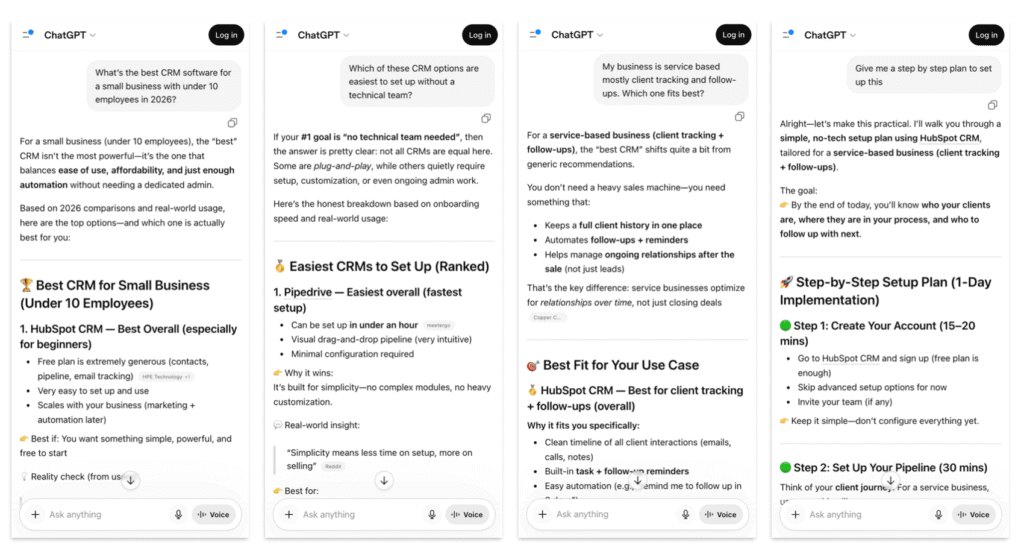
Users are increasingly asking high-intent, decision-driven questions directly to AI tools. Queries like “What is the best CRM for small businesses in 2026?” followed by “Which one is the easiest to set up?” reflect how users move from discovery to evaluation within a single interaction. These prompts signal clear intent, and AI systems respond with curated recommendations rather than multiple options to browse.
#3: Category and Product Pages Are Losing Ground
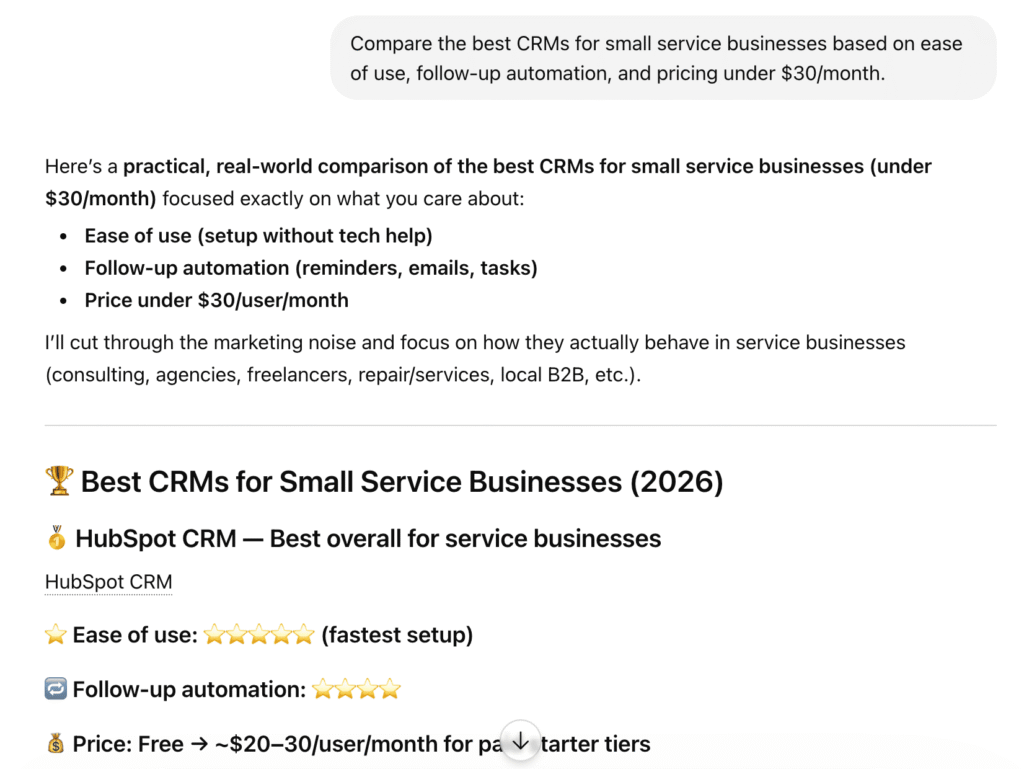
In prompt-based search, LLM visibility depends on how well the content answers specific queries. Prompts like “Which CRM is best for small SaaS teams under $30/month” require contextual, structured responses. Category and product pages that only list features or products without directly addressing such prompts are less likely to be selected. Without clear, extractable answers aligned to prompt intent, these pages remain largely invisible in AI-generated results.
#4: Brand Entity Matters More Than Ever
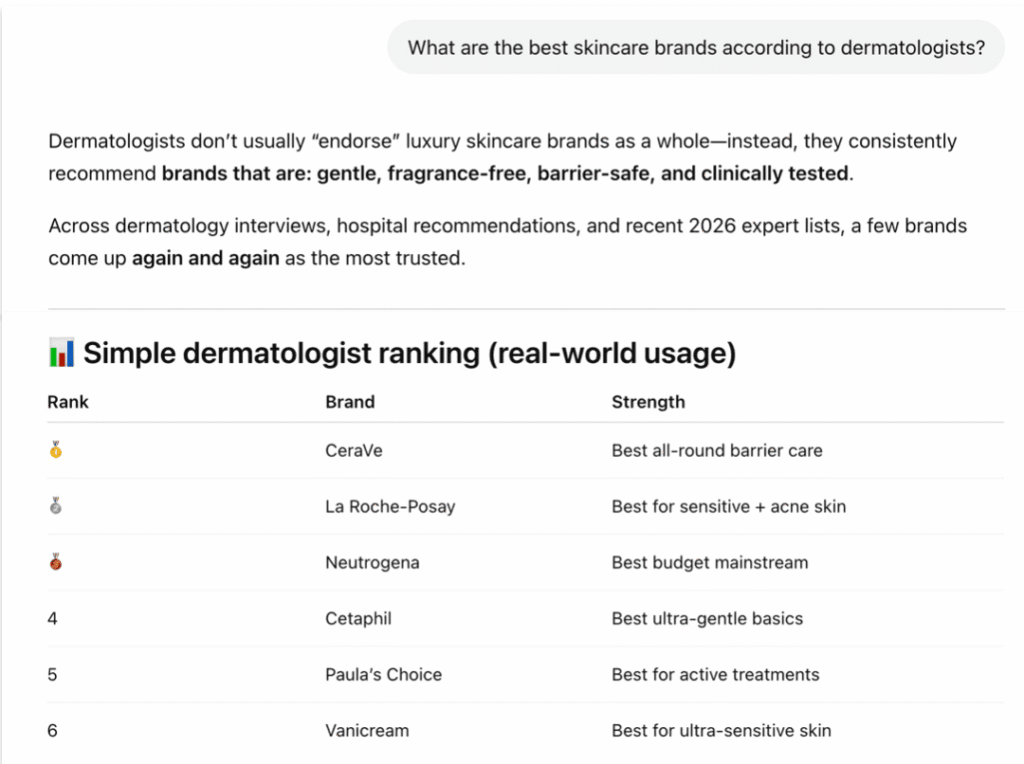
When users ask prompts like “What are the best skincare brands according to dermatologists?”, AI systems rely on established entity signals to decide inclusion. Consistent mentions across credible sources, clear category associations, and aligned messaging increase the likelihood of being surfaced. Strong entity presence ensures the brand appears in responses tied to relevant prompts, rather than being excluded due to weak or fragmented signals.
How to Optimize for Prompt-Based Search
Optimizing for prompt-based search means aligning your content with how AI systems interpret queries and generate answers. Instead of focusing only on keywords and rankings, AI content optimization prioritizes intent, clarity, and usability. Content needs to directly answer real user prompts, be easy for AI to extract, and be supported by strong authority signals.
1. Build Content That Answers, Not Just Targets Keywords
The focus should move from “optimizing for a term” to “solving the query.” AI systems prioritize content that directly answers real user questions clearly and completely. This shift is already visible in how users interact with AI tools.
In a Reddit discussion on AI answer optimization, a user noted that AI consistently prefers clear, direct answers over keyword-padded copy.

2. Structure Content for Extraction
Even relevant content won’t be used if it’s hard for AI to extract. Structure directly impacts whether your content is included in responses.
For example, when users search for product recommendations like “best noise-canceling headphones,” AI systems often pull from structured discussions and clearly formatted content rather than dense paragraphs.
To improve extractability:
- Use clear headings that match user questions
- Provide direct answers immediately under headings
- Include an FAQ optimized for AI that mirrors prompt formats
- Add structured data (FAQ, HowTo, Product schema) to make content machine-readable
Well-structured content increases the likelihood that AI can parse, select, and reuse your information in answers.
Tool tip: Not sure if a specific page is actually structured the way AI systems expect? Run a quick AI study with this AI visibility checker to check any page’s AI visibility instantly. 3. Strengthen Authority Signals
AI systems prioritize brands that are consistently validated across external, credible sources. Authority is built through real-world mentions, user feedback, and third-party coverage. Strong topical authority signals increase the likelihood of being selected and cited in prompt-based answers.
How to build these signals:
- Actively collect and manage reviews from real users on trusted platforms
- Contribute to community discussions by answering questions and sharing insights
- Invest in digital PR to earn mentions in authoritative publications
- Ensure consistent brand positioning across all external sources (same messaging, categories, and use cases)
Pro Tip: Are authority signals the only factor determining whether a brand gets cited in AI-generated answers? The AEO GEO audit checklist walks through each signal layer so nothing gets missed.4. Keep Content Fresh and Updated
AI systems favor content that reflects current and accurate information. Recently updated pages are more likely to be selected, especially for queries where relevance changes over time.
Maintained content signals reliability, while outdated pages lose priority in selection. Regular updates, such as refreshing data, improving answers, and expanding context, increase the chances of being included in AI-generated responses compared to static content that hasn’t been touched in years.
The Missing Piece: Measuring Your Visibility in AI Answers
As prompt-based search becomes a primary discovery layer, visibility is no longer defined by rankings alone. Brands need a way to understand whether they are actually being included in AI-generated answers.
Without measurement, it’s hard to know which prompts drive visibility, where competitors are gaining ground, and where opportunities are being missed. Tracking AI visibility turns prompt-based search from a black box into something actionable.
Why Traditional SEO Tools Fall Short
Traditional SEO tools are built to track keyword rankings, traffic, and SERP positions. They do not capture whether your brand is being mentioned, cited, or excluded in AI-generated responses. Since prompt-based search does not rely on ranked lists, these tools miss the core signal that matters, inclusion within the answer itself.
What You Actually Need to Track
To improve visibility in prompt-based discovery, measuring AI visibility becomes essential. Tracking needs to shift from keywords to prompts, and from rankings to inclusion. This means understanding where your brand appears across relevant prompts, which competitors are being cited more frequently, and which content sources AI systems rely on when generating answers. It also involves identifying missed opportunities: prompts where your brand is contextually relevant but not included.
This is where a purpose-built solution like Track My Visibility becomes critical. Track My Visibility helps track brand mentions across AI-generated answers, analyze competitor presence, and surface gaps where your content is not being selected. By mapping how your brand performs across different prompt types, it enables a more precise and measurable approach to AI search visibility.
How Track My Visibility Helps You Win in Prompt-Based Search
As prompt-based search reshapes discovery, brands need visibility into how they actually perform inside AI-generated answers. Without prompt-level data, it’s difficult to know where you stand, what’s working, and where you’re being excluded. This is where Track My Visibility enables a more precise and informational approach to optimizing for AI search.
Track Real Prompts Across AI Platforms
Track My Visibility focuses on actual user prompts instead of static keyword lists. This allows you to track how real queries are framed across AI platforms and understand which prompts drive visibility for your brand. By mapping prompt types to performance, you can prioritize high-impact queries that influence discovery and decisions, and use that signal to get LLM citations.
See Exactly Where You’re Mentioned (And Where You’re Not)
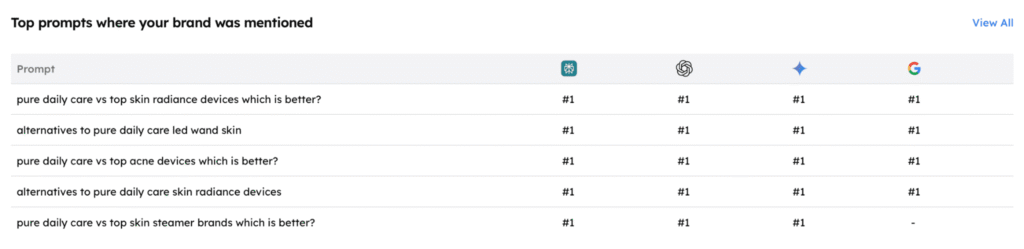
Track My Visibility provides a clear view of your brand’s inclusion across major AI systems, helping you understand where you are being cited and where you are missing entirely. Instead of guessing performance, you get prompt-level visibility into how frequently your brand appears and how it compares across platforms.
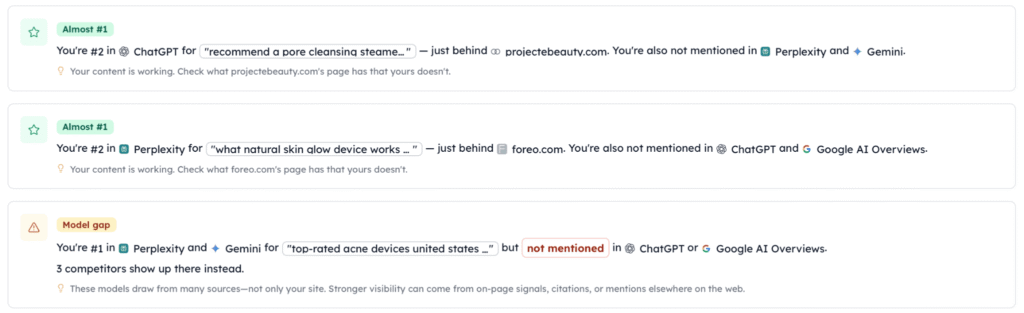
Identify Opportunities to Get Cited
By analyzing prompt coverage, Track My Visibility highlights gaps where your brand is relevant but not included in AI-generated answers. It also surfaces which competitors are consistently being cited for those same prompts, so you can prioritize the missed opportunities that matter most.

Optimize Based on Real Data, Not Assumptions
Track My Visibility enables continuous tracking of visibility trends, sentiment, and competitive positioning. These insights help you refine content, strengthen authority signals, and better align with prompt intent. Instead of relying on assumptions, you can make targeted decisions based on how AI systems are actually selecting and presenting information.

Final Thoughts
Search is no longer just about discovering links; it’s about receiving direct, synthesized answers. As this shift accelerates, visibility depends on whether your brand is included in those answers, not just whether it ranks on a page. If your brand isn’t part of the response, it effectively doesn’t exist in that moment of decision-making.
Prompt-based search will continue to evolve, becoming more contextual, personalized, and selective. Brands that adapt early, by aligning content with prompt intent, strengthening authority signals, and measuring real visibility, will have a clear advantage as AI-driven discovery matures.
Start tracking how your brand shows up in AI answers with our 7-day free trial.
FAQs
Prompt-based search is a search method where users enter complete, natural language queries instead of keywords, and AI systems generate direct, synthesized answers based on intent and context.
Traditional search returns a list of ranked links based on keywords, while prompt-based search delivers a single, AI-generated answer by interpreting the full query and selecting relevant sources.
Because visibility is no longer about ranking on search results pages, it’s about being included in AI-generated answers. Brands that aren’t cited or mentioned in responses lose visibility and potential traffic.
Brands can optimize by creating content that directly answers user queries, structuring content for easy extraction, building authority through third-party mentions, and keeping information updated and relevant.
Tracking visibility requires monitoring where your brand appears across different AI prompts, which competitors are being cited, and where you’re missing despite being relevant. Tools like Track My Visibility help by tracking real prompts across AI platforms, showing where your brand is mentioned, and identifying gaps to improve your presence in AI-generated answers.