


You’ve written a detailed piece of AI for authors content with strong structure, clear formatting, and all the elements that make it easy for AI systems to extract and interpret. It answers the query accurately and follows best practices, yet it still does not get cited.
The gap usually comes down to missing trust signals. Large language models evaluate content alongside the credibility of its source when generating answers. They look for clarity around who created the content, whether that person is qualified, and whether those other sources can verify those credentials.
When these signals are weak or absent, AI systems lose confidence in attribution. This is where the author bio becomes critical. It provides structured context about the author’s identity, experience, and domain expertise, helping AI systems connect the content to a credible source.
This guide walks through how to write and optimize author bios that AI models can interpret, verify, and trust, and the AI guidelines for authors that consistently earn citations.
TL;DR
- Author bios act as critical AI trust signals, helping systems verify who created the content and whether that person is qualified.
- Use a real, consistent name along with topic-specific credentials and verifiable experience to establish credibility.
- Keep bios concise, structured, and easy to extract, focusing on clear, factual information instead of storytelling.
- Strengthen your bio with external profile links and proper schema markup so AI systems can cross-reference identity and explicitly connect the author to the content.
- Well-optimized author bios improve AI citability, content attribution, and long-term brand authority, making your content more likely to appear in AI-driven search results.
Why Author Bios Matter in AI Search
In AI-driven search, author bios are no longer “about the author” footnotes; they are E-E-A-T signals that help AI decide whether your content is worth citing or sending users to. A strong bio tells AI systems that this is content written by a real person with verifiable expertise, not synthetic text generated without human oversight.
How AI Uses Author Bios
AI search engines and generative AI systems look at author bios to connect claims to named experts, using credentials, affiliations, and external profiles as proof of authority and trustworthiness. When bios are vague, generic, or missing, AI treats the content as lower‑confidence and is less likely to surface or quote it.
According to BrightEdge’s 2025 analysis of AI citation patterns, websites with author schema are roughly three times more likely to appear in AI answers than those without it. That number alone reframes how content teams should treat the bio block.
From an SEO and AI‑visibility angle, clear author bios help the team write content that does the following:
- Strengthen your site’s E‑E‑A‑T profile, especially as AEO and GEO reshape how content is evaluated beyond traditional search.
- Build author‑entity recognition in knowledge graphs, so AI increasingly associates your name with certain topics and surfaces your work more often.
- Increase user trust and engagement, which feeds into the signals AI‑driven systems use to rank and recommend content.
What AI Looks for in an Author Bio
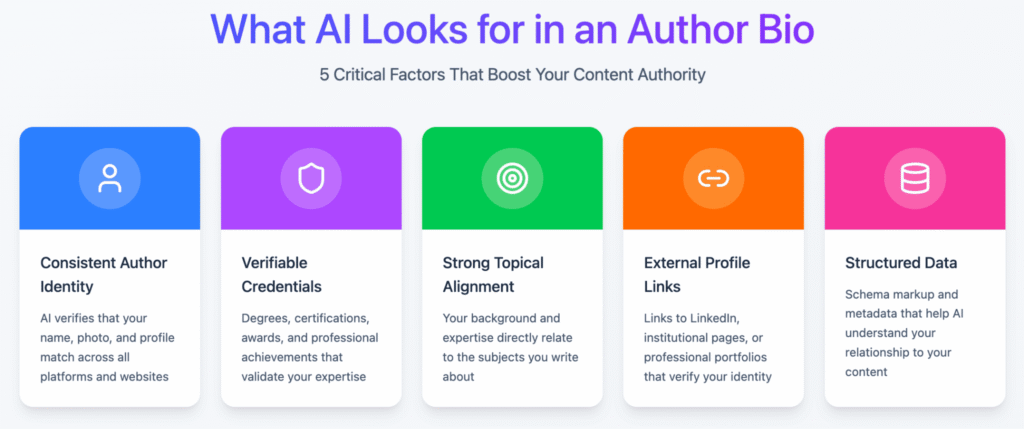
AI‑driven search systems treat author bios as compact trust‑packages: they scan them to decide whether a piece of content is written or overseen by someone credible enough to cite or recommend.
So let’s break down the key signals AI looks for in an author bio and how to shape your bio around them to get LLM citations.
# Consistent Author Identity Across the Web
AI looks for a named, stable identity that appears consistently across your site, author pages, and external profiles like LinkedIn or portfolios. When the same full name, title, and topic focus appear in multiple places, AI treats that author as a coherent, recognizable entity.
# Verifiable Credentials That Establish Authority
Credentials such as degrees, job titles, certifications, company affiliations, and notable publications give AI concrete proof that the author has real‑world experience and expertise.
# Strong Topical Alignment Between Author and Content
AI matches the author’s stated expertise against the topic of the article to estimate fit. If your bio says you specialize in AI-SEO and the content is about AI-SEO, that topical alignment increases confidence. Mismatched bios look generic or suspect, especially in content that targets the AI for authors’ keyword cluster.
# External Profile Links That Reinforce Credibility
AI trusts bios more when they link out to verifiable profiles like LinkedIn, personal sites, speaking pages, or third‑party mentions (news features, podcast appearances, conference talks). These links allow AI to cross‑check claims and treat the author as a real, documented professional.
# Structured Data That Connects Author to Content
Using schema markup, such as Person or author metadata, tells AI explicitly which person wrote which article. Clean, accurate, structured data strengthens the author-content connection and helps AI surface and attribute work correctly.
 Pro Tip: These five components describe what AI engines look for in an author bio, but how well does it actually perform? The Google E-E-A-T Audit Checklist breaks down exactly where content is building trust signals and where it is leaving citation opportunities on the table.
How to Write an Author Bio That AI Can Parse Easily
Author bios should be written as structured, information-dense summaries that clearly define identity, expertise, and credibility. AI systems rely on explicit signals rather than implied context, so clarity, consistency, and verifiability are essential. Each element in the bio should help establish the author as a recognizable and trustworthy source.
1. Start with Identifiable, Real‑world Authorship
Across AI writing platforms like ChatGPT, Gemini, Perplexity, Claude, and others, your author bio is a core trust signal that connects a named person to their content and helps AI determine whether a piece of writing comes from a credible, real‑world expert.
Modern systems scan bios for structured, verifiable information that can be cross‑checked against external profiles, social signals, and other data points. To work in this environment, your author bio should be clear, consistent, and built around concrete, checkable details.
Begin by using a full real name in every bio, such as “Joe Dawn,” and avoid generic labels like “Editor,” “Writer,” or “Content Team.” Pair that name with a live link to a verified LinkedIn profile, personal website, or professional portfolio so AI can confirm your identity, job history, and affiliations.
Apply this pattern consistently across all articles and author pages where your bio appears, so AI can recognize you as a stable, repeatable entity rather than an anonymous contributor.
2. Make Credentials Verifiable and Topic Specific
A credential in an author bio acts as machine‑readable proof of authority, so they need to be both checkable and clearly tied to the topic of the content.
List specific, real‑world indicators such as degrees, certifications, licenses, or professional affiliations that are directly relevant to the subject area, for example, “Google Analytics certified SEO specialist” or “MBA in Marketing with a focus on digital strategy”.
Include concrete topic-specific experience, such as the number of years working in a niche, notable clients or projects, or particular tools and frameworks you use regularly.
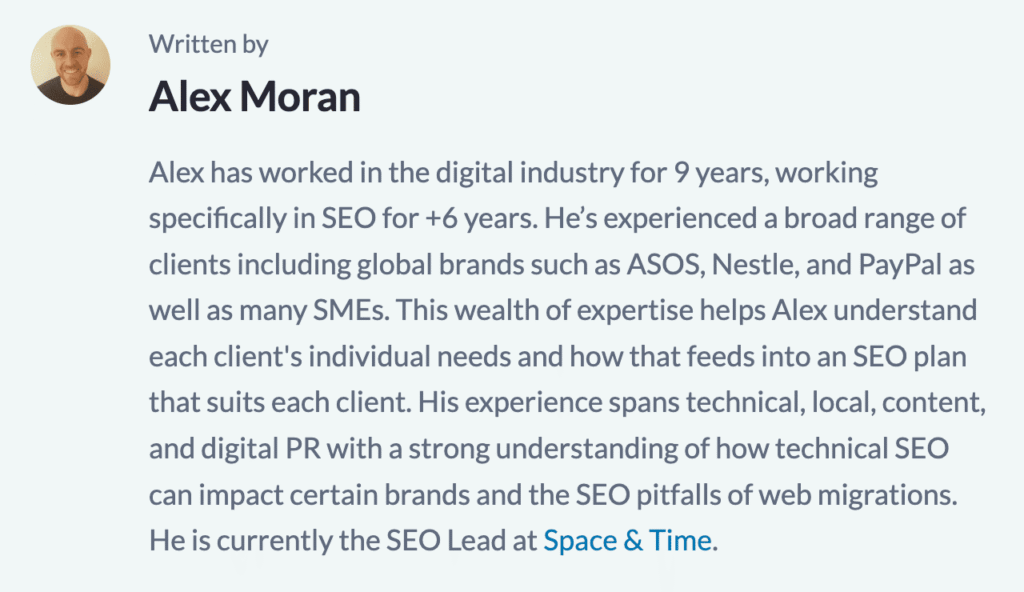
This helps AI match the author’s stated expertise to the article’s topic, reinforcing that the content is backed by real‑world knowledge rather than generic generalizations.
3. Emphasize experience and unique insight
Experience signals are a major part of what makes an author bio trustworthy. The writing process behind the bio matters; focus on concrete, specific examples of work that show depth and repetition, such as the number of years in a niche, types of clients served, or campaigns run.
Mention specific projects, case studies, or methods that demonstrate applied knowledge, for example, “built AI‑search‑optimized content strategies for 40+ SaaS brands” or “led on‑site E‑E‑A‑T audits for finance and health sites.”
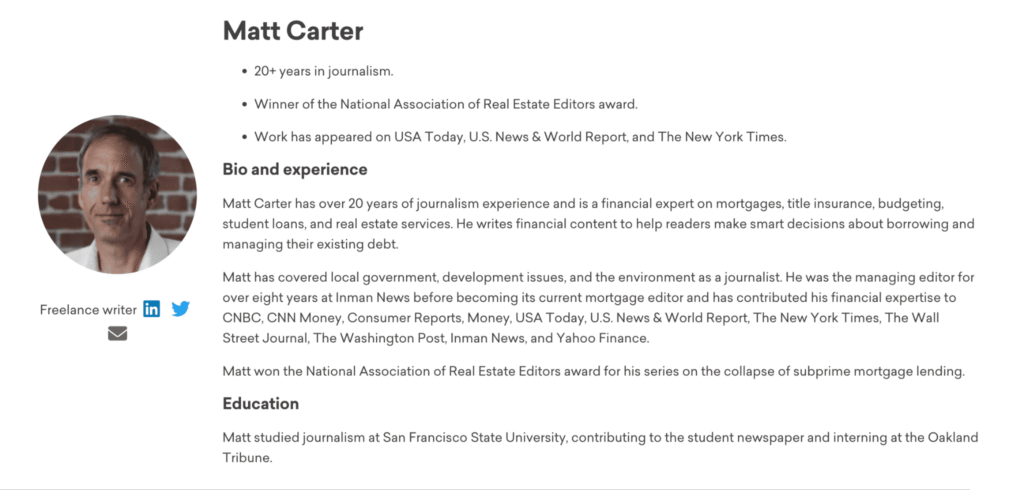
Highlight any unique insight that sets you apart from generic writers, such as proprietary data sets, custom frameworks, or recurring patterns you’ve observed across projects.
These details help AI recognize that the author brings a non‑generic, real‑world perspective to the content, which strengthens both trust and the likelihood of the content being visible in LLM responses.
4. Clarify Human Authorship vs. AI‑assisted Work
In AI‑driven search, it helps when the system can distinguish between fully AI-generated text and content guided by a real human writer. This is one of the most overlooked AI guidelines for authors.
Be explicit about your role by stating that the ideas, strategy, and final review come from a human author, for example, “This article is written by [Author name] with AI assistance for research and drafting.”
If the content is AI‑assisted, briefly mention the tools involved and emphasize human oversight, such as “reviewed and edited by the author for accuracy and practical applicability.”
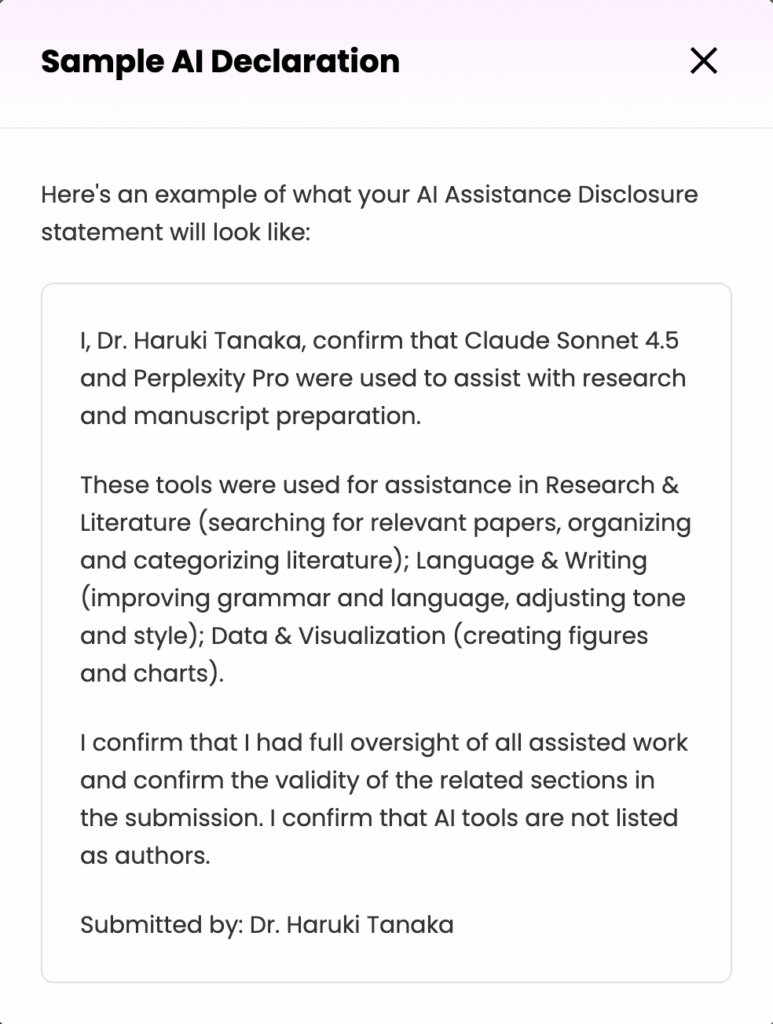
This framing signals that AI is used as a productivity layer, not as a stand‑in for expertise, which strengthens trust and helps AI treat the author as the primary source of authority.
5. Optimize Structure for Clarity and Extractability
For AI to parse your author bio easily, keep it short, linear, and built from clear, self‑contained statements rather than long, winding paragraphs. Aim for around 50 to 120 words, using short sentences that each carry one core fact: name, role, credentials, experience, and a link.
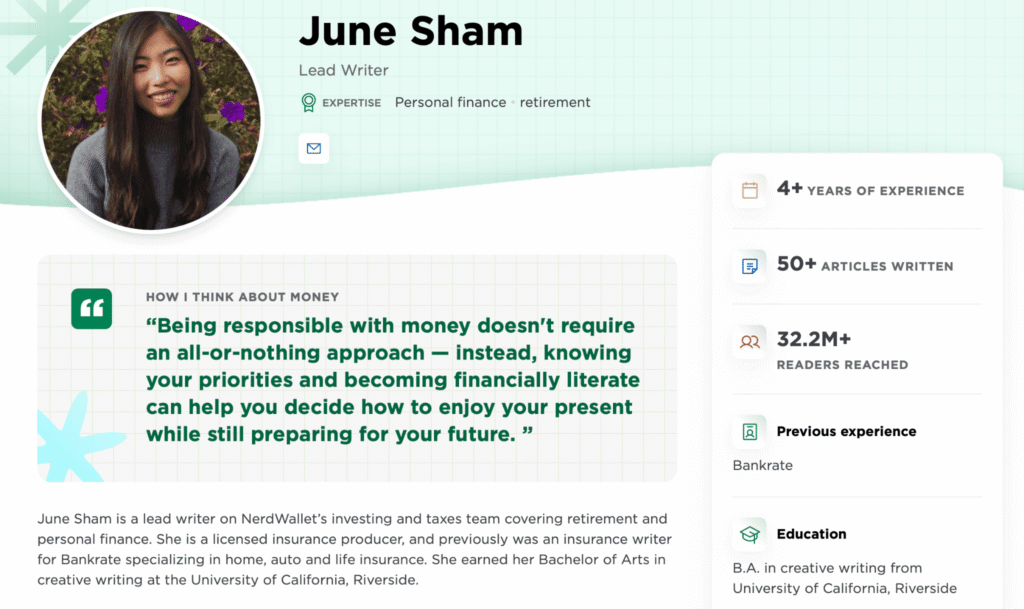
Structure the bio as a single, scannable block, starting with your full name and primary role. Follow it with 1-2 lines of credentials, 1–2 lines of experience, and a closing line linking to your profile or portfolio.
Avoid bullets, markdown, or dense formatting when designing content optimization strategies, so that AI can cleanly extract key fields like name, expertise area, and verification link without noise.
6. Avoid Classic “AI‑sounding” Red Flags
Author bios that sound generic or overly promotional often trigger AI systems to treat them as low‑signal or synthetic‑leaning text. Avoid vague, interchangeable descriptors like “passionate,” “results‑driven,” “innovative,” or “action‑oriented,” which carry little real‑world proof and appear in thousands of templated bios. A grammar checker will not flag these terms, but AI systems trained to identify high-trust content will deprioritise them.
Instead, focus on specific, concrete details that only a real practitioner can claim: exact niches, measurable experience (years, projects, clients), tools, frameworks, or campaigns.
This kind of grounded language makes the bio more extractable, verifiable, and aligned with the kind of input AI systems treat as high‑trust, human‑authored expertise.
7. Link and Reinforce Across Your Site
To strengthen AI’s perception of your authorship, treat your bio as part of a connected web of signals. Always link the author name to a dedicated author page or profile, and ensure that the same page links back to your key articles, portfolio pieces, or speaking engagements so AI can map your body of work.
Use consistent naming, titles, and positioning across all pages, like author box, byline, and profile page, so AI consistently sees the same entity. Add internal links to related content, such as your main author archive, personal site, and LinkedIn. This creates a clear, repeatable author-content graph that AI can use to reinforce trust and authority over time.
How to Audit and Improve Existing Author Bios
Audit author bios by checking whether they clearly establish identity, expertise, and verifiability. Look for gaps in naming consistency, weak or generic credentials, poor topic alignment, missing links, and unstructured formatting to repurpose it for AI visibility.
The goal is to make sure each bio clearly answers: Who is this author? What are they qualified to write about? Where can that be verified?
Pro Tip: An author bio audit covers identity, credentials, and schema, but what about the signals AI checks before it even reaches the author? Run a quick audit with a free AI visibility checker and see how your content currently performs across AI search platforms, which citations are being earned, and where visibility gaps exist.Page-Level Audit (On-Site Checks)
Review how the author appears within the page itself. Check if the full name is used consistently, the role and expertise are clearly defined, and the bio aligns with the topic of the article. Ensure the bio is concise, structured, and free from vague language. Add internal links to the author page and related content to reinforce authority.
Quick Audit Test:
| Audit Question | What to Check |
| Is a full real name used? | Confirm the bio uses the author’s complete professional name, no initials, pen names, or generic bylines |
| Are credentials topic-specific? | Check that the listed credentials, titles, or experience directly relate to the content’s subject matter |
| Is there an external profile link? | Verify at least one working link to LinkedIn, a personal site, or a professional portfolio |
| Does the bio avoid vague descriptors? | Look for and remove terms like “passionate,” “results-driven,” or “dedicated, ” and replace them with concrete specifics |
Off-Page Audit (External Validation)
Validate whether the author exists consistently beyond your site. Check LinkedIn, personal websites, or other third-party mentions for matching name, role, and expertise. Align discrepancies and strengthen external presence where signals are weak or missing.
Quick Audit Test:
| Audit Question | What to Check |
| Does the author appear in external search results? | Search the author’s full name and confirm a LinkedIn, personal site, or professional profile surfaces |
| Is the name format consistent across platforms? | Compare name spelling and format on-site against LinkedIn, bylines, and any third-party mentions |
| Do external profiles corroborate on-page claims? | Check that credentials, job titles, and affiliations listed in the bio match what appears off-site |
| Are there any third-party mentions or citations? | Look for press coverage, podcast appearances, or industry roundups that reference the author by name |
Schema Audit (Structured Data Checks)
Ensure author-related structured data is implemented correctly. Use the Person schema to define the author and link it to the content. Include properties such as name, job title, and sameAs links to external profiles. This helps AI systems explicitly connect the author with the content.
Quick Audit Test:
| Audit Question | What to Check |
| Is the Person schema implemented on the author page? | Use a schema validator to confirm Person markup is present and error-free |
| Are the core properties populated? | Verify that name, jobTitle, url, and sameAs are all included in the markup |
| Does the sameAs list verify external profiles? | Confirm that the sameAs field includes LinkedIn, personal site, and any other authoritative profile URLs |
| Is the author property connected to the Article schema? | Check that published articles reference the author entity through Article schema markup |
Where To Start
Start with tracking AI visibility of pages that already receive high traffic or are likely to appear in AI-generated responses. Improving author bios on these pages delivers faster impact, as they are more frequently evaluated and surfaced by AI systems.
Identifying which pages those are is where tools like Track My visibility help. They track which content is already being cited across ChatGPT, Perplexity, Gemini, and Google AI Overviews. This gives a clear starting point instead of relying on traffic data alone.
Example
Before:
“John is a passionate writer who loves marketing and creates helpful content for businesses.”
No full name. No defined role. Missing verifiable credentials. No indication of where he has worked or what he specializes in. No external links. The description is generic and provides no signals that AI systems can validate or connect to real expertise.
After:
“John Smith is an SEO Specialist at XYZ Company with 6+ years of experience in AI search optimization and content strategy. He works with B2B SaaS brands to improve AI citation visibility and organic performance. His work has been published on industry platforms and focuses on structured, AI-friendly content frameworks. LinkedIn | johnsmith.com”
Full name. Clear role and company. Specific years of experience. Defined area of specialization. Mention of published work. Two external links for verification. The bio provides identifiable, verifiable, and topic-aligned signals that allow AI systems to confirm identity and assess expertise.
Author Bio Mistakes That Reduce AI Citability
Author bios often fail when they lack clear, verifiable signals for AI systems to extract and validate. When key elements like identity, expertise, and structure are weak or inconsistent, AI cannot confidently attribute the content or assess its credibility, which directly lowers citation potential. This is also why tracking brand mentions matters; without strong author signals, AI-generated responses are less likely to recognize, attribute, or cite your brand.
The following mistakes weaken how AI systems interpret identity, expertise, and authority:
- Using generic bios with no extractable credential specifics like “SEO expert” without years, tools, or niches, gives AI nothing concrete to verify, so it treats the author and content as low-trust and less citable.
- Using inconsistent name formats across pages and platforms, such as “Joe,” “Joe Dawn,” “J. D,” or “Admin,” makes AI struggle to recognize the same person, so it sees fragmented signals instead of a clear author entity.
- Missing or using broken author page links stops AI from cross-checking professional history, roles, or affiliations, which reduces the amount of verifiable evidence and weakens perceived authority.
- Writing personality-led bios with no expertise signals, focusing on hobbies or “fun facts” instead of skills, tools, or topic-specific experience, fails to show AI what the author actually knows, so the content feels generic and less authoritative.
- Publishing content without a schema connecting author identity to the article makes AI less able to map the person to the post, so it cannot build a reliable author-to-content graph and treats the author as a weaker signal in AI-driven search.
These are the patterns that quietly drag down citation rates for authors using AI tools to scale content without rebuilding their attribution layer.
Final Thoughts
An author bio is rarely the first thing a reader notices, but it is often one of the first signals AI systems evaluate. A well-structured bio helps establish that the content is backed by a real, verifiable expert, improving both reader confidence and LLM citability.
The approach remains straightforward. Use a consistent real name, include topic-specific credentials, maintain a stable off-page identity, and support it with proper schema markup. These elements work together to reduce ambiguity and help AI systems clearly attribute expertise to the content.
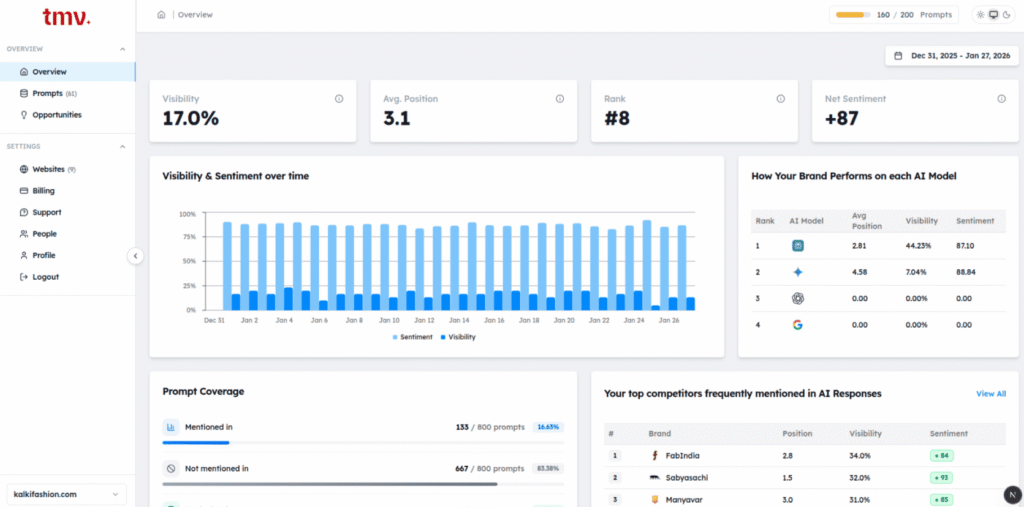
Tools like Track My Visibility provide insight into how this authority translates into results by showing where your brand is cited across AI platforms and how often, making it easier to measure the impact of stronger author signals.
Try our 7-day trial to see where you stand.
FAQs
An AI-trustworthy author bio includes a consistent real name, topic-specific expertise, verifiable credentials, and links to external profiles. These elements help AI systems confirm identity and assess whether the author is qualified to write on the topic.
Author bios provide attribution signals that AI systems use to evaluate credibility. When the bio clearly establishes expertise and can be verified across sources, the content is more likely to be cited in AI-generated responses.
An effective author bio should be concise, typically between 50 to 120 words. It should prioritize clarity, structured information, and verifiable details over long narratives.
Yes, linking to platforms like LinkedIn, personal websites, or published work helps AI systems cross-reference identity and expertise, strengthening trust and improving attribution.
Author bios should be reviewed and updated regularly to reflect new roles, achievements, certifications, or publications. Keeping them current ensures that AI systems continue to see accurate and relevant expertise signals.