


AI-driven traffic to Shopify stores keeps climbing as more shoppers turn to ChatGPT, Perplexity, Gemini, and Claude for product discovery. When a shopper asks for recommendations, the stores that get cited are not the prettiest ones. .They are the ones with Shopify product page optimization for AI in place, making their content easy for machines to extract and understand.
These platforms prioritize pages with clear, consistent, and verifiable product information that they can confidently reuse. This shifts optimization from just ranking in search results to being selected and getting LLM citations within AI-generated answers.
This guide breaks down Shopify product page optimization for AI into a practical, step-by-step playbook. It helps merchants improve how their pages are read, validated, and surfaced by AI systems.
TL;DR
- AI citations happen when platforms like ChatGPT, Perplexity, Claude, and Gemini reference your Shopify pages in answers.
- Shopify pages are judged on structure, specificity, and trust, not just SEO rankings.
- Use conversational content, schema markup, and clear value-driven descriptions for better extraction.
- Build trust with strong reviews, consistent product data, optimized images, and internal links.
- Avoid issues like missing schema, hidden tab content, blocked crawlers, and static pages.
- AI visibility requires ongoing updates as citation patterns and competition change.
What Are AI Citations?
An AI citation is a reference to your page inside an AI-generated answer. ChatGPT, Perplexity, or Google AI Overviews can name your page as a source while writing a direct response to a query. Instead of returning ten blue links, these systems generate an answer and identify the sources that informed it.
For example, when a shopper asks, “What is the best minimalist running shoe for wide feet?”, the response might name a specific product, mention a brand, and sometimes link straight to the page used as a source. That reference is an AI citation. Your source got selected, interpreted, and surfaced inside the generated answer.
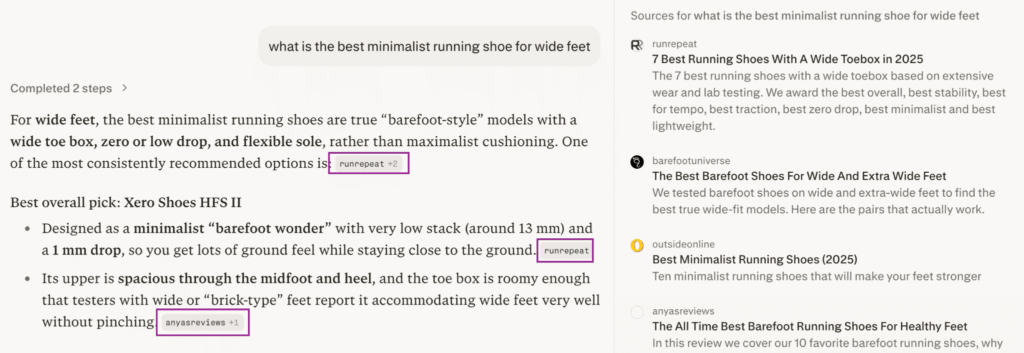
AI citations sit inside responses as embedded references, telling readers which sources actually shaped the answer.
How AI Systems Evaluate Shopify Product Pages for Citations
AI platforms evaluate Shopify product pages based on how easily their content can be extracted and used to generate answers for queries. When a shopper searches, the system scans multiple sources and picks pages that provide clear, reliable information that it can show directly.
This evaluation centers on three factors: structure, specificity, and trust. Structure ensures key product details appear early, organized under clear headings. Specificity focuses on measurable, verifiable attributes such as dimensions, materials, or capacity. Trust comes from supporting signals like detailed reviews, transparent policies, and clear brand information.
When several pages can support the same answer, the system favors the one that offers more precise and useful information. AI systems are more likely to select pages that present structured, factual, and trustworthy details..
 Pro Tip: How many of your current product pages would pass an AI citation evaluation today? Run a quick audit with a free AI visibility checker and see how your content currently performs across AI search platforms, which citations are being earned, and where visibility gaps exist.
7 Ways to Improve Shopify Product Page Optimization for AI
Shopify product page optimization for AI citations focuses on making information easy to extract, validate, and reuse. Clear structure, precise details, and query-aligned content improve how AI systems interpret product pages. The following methods help align pages with how AI systems process and surface information.
1. Write Conversational, FAQ-Style Content
Conversational, FAQ-style content aligns product pages with how users phrase queries in AI systems. Questions reflect intent more clearly than descriptive copy, making it easier for AI to match a page to a specific request.
When designing a content strategy, add a short FAQ block optimized for AI that mirrors real buyer queries. Use natural, question-based headings instead of keyword-heavy phrases. Start each section with a direct, one-sentence answer, then expand with supporting details. This structure creates self-contained answer blocks that AI systems can extract and reuse.
Instead of a general description, include a question like “Is this suitable for formal interviews?” followed by a direct answer such as “This shirt is designed for formal settings with a structured fit and minimal design,” and then add details about fabric, fit, and use case.
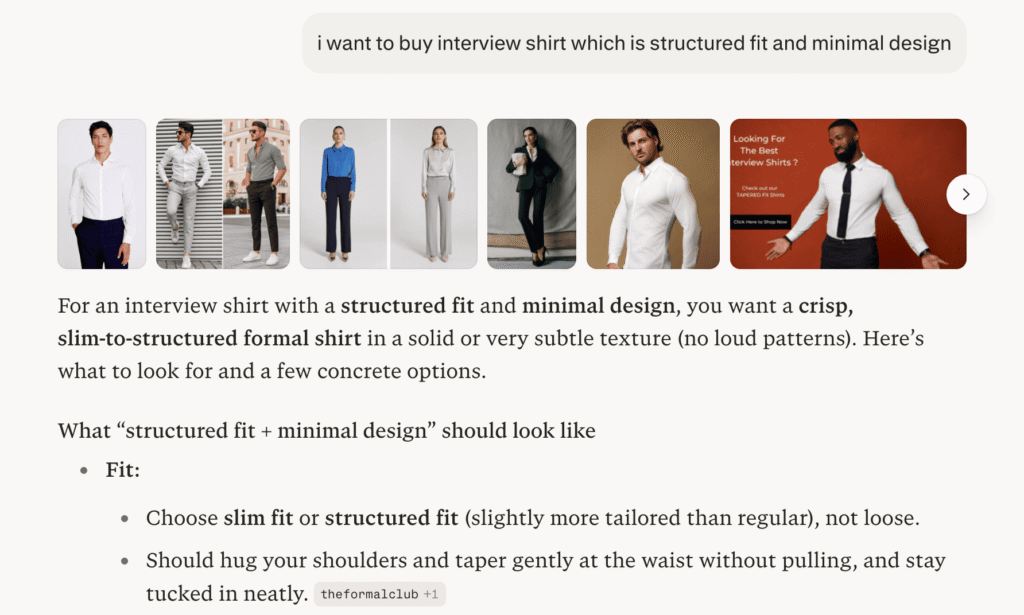
This approach improves how your Shopify store shows up in AI-generated responses. Your product content has a higher chance of being selected and cited for relevant queries.
2. Add Structured Data
Structured data is one of the most technical yet impactful areas of Shopify product page optimization for AI. It helps AI systems read product information in a clear, machine-readable format. It defines key details upfront, making it easier for systems to extract and reuse accurate data without relying only on visible content.
Start by implementing a Product schema with fields like name, brand, price, availability, and image. Add the AggregateRating schema to include ratings and reviews, which act as strong trust signals. Use the FAQ schema to structure question-answer pairs so they can be directly extracted and surfaced in responses. Shopify’s default setup often includes basic product schema but skips AggregateRating and FAQ. Merchants need to add these manually..
A product page with a schema that clearly defines price, availability, and ratings allows AI systems to pull this information directly when answering queries like “best rated product under ₹500.” Always validate the implementation using Google’s Rich Results Test to confirm that the data is structured correctly and accessible.
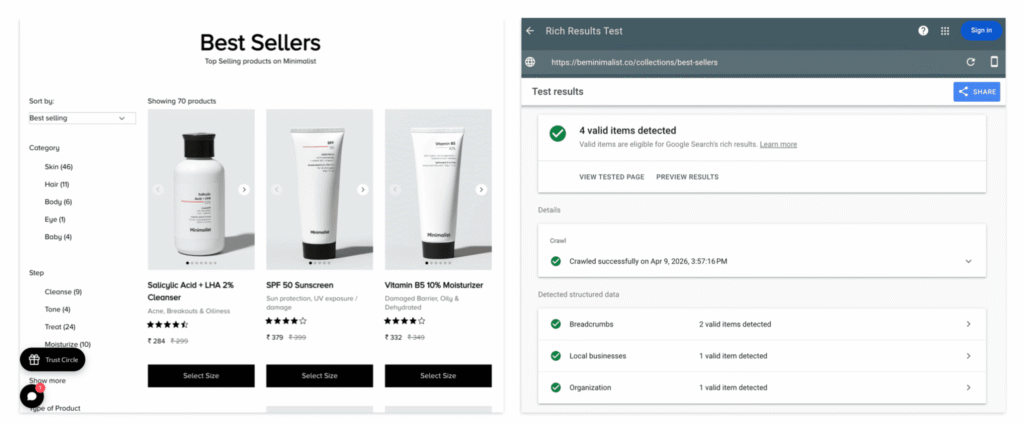
Adding structured data with schema markup for search visibility helps your Shopify store maintain a consistent and scalable data layer across products, making updates easier and ensuring information stays accurate across search systems and external platforms.
3. Create Value-Driven Product Descriptions
Value-driven product descriptions help AI systems understand what the product is, who it is for, and why it matches a specific query. Clear, purpose-led descriptions make it easier to match product pages with user intent.
Start each description with a direct statement that defines the product, its intended user, and a key differentiator. Focus on specific, verifiable details instead of broad claims. Replace promotional language with measurable attributes, and connect each feature to the problem it solves. This creates a clear relationship between product capabilities and user needs.
For example, instead of writing “high-quality travel backpack,” start with “lightweight travel backpack designed for weekend trips, with a 20L capacity and water-resistant material,” and then explain how those features support portability and durability. This format helps AI systems extract precise information and align it with relevant queries.
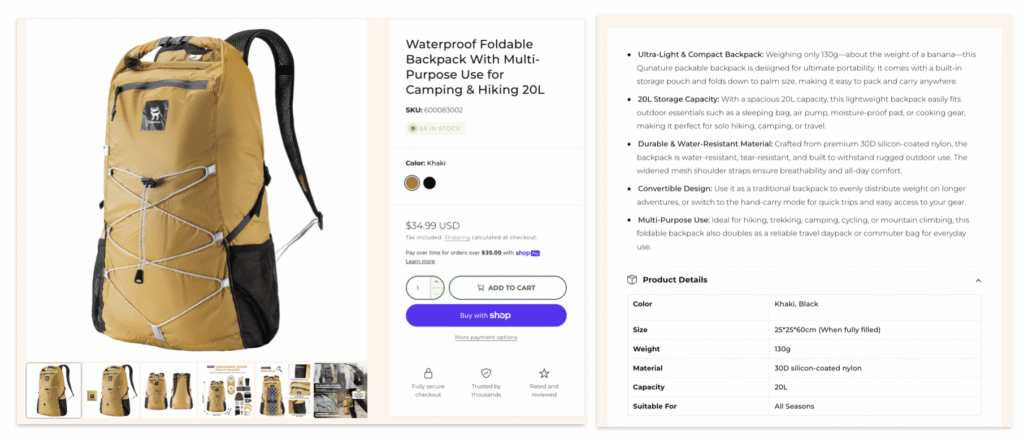
Product description like this helps your Shopify store present product information in a consistent, structured way, making it easier to scale content across products and improve how pages are interpreted across search and AI systems.
4. Leverage User-Generated Content and Reviews
User-generated content and reviews act as strong trust signals for AI systems evaluating product pages, helping them rank in AI search. They provide real-world validation that supports product claims and adds depth to the information available on the page.
Focus on collecting detailed reviews that describe specific use cases, outcomes, and comparisons rather than relying only on volume. Additionally, encourage photo and video submissions to add visual context, which helps AI systems interpret the product across multiple formats. Likewise, include a Q&A section where common buyer questions are answered clearly, as these directly align with how queries are structured in AI systems.
A review that says “comfortable for 8-hour office wear and fits true to size” provides clearer, usable information than a generic “good quality” comment. Similarly, a customer-uploaded image showing fit or usage adds context that supports the written description.

Reviews build higher engagement on your Shopify store by encouraging interaction, increasing time spent on product pages, and creating a more informative and trustworthy buying experience.
Pro Tip: Reviews and UGC strengthen citation eligibility across AI platforms, but the optimization logic shifts depending on the platform. Explore how to optimize product pages for AI search.5. Optimize Images for AI Discovery
Images help AI systems understand product context beyond text. Well-structured image data improves how product pages are interpreted in both visual and text-based queries.
Use descriptive and specific alt text for every image, clearly stating what the image shows along with key attributes. Add multiple images that cover different angles, real-world contexts, and use cases to provide complete visual information. Use descriptive file names instead of generic ones to reinforce semantic meaning and ensure the primary product image in the schema is high-resolution for accurate representation.
For example, instead of naming an image “IMG123.jpg,” use “men-formal-white-shirt-slim-fit-front-view.jpg” with alt text like “men’s slim fit white formal shirt front view.” Additional images can show fit, fabric texture, and usage in a formal setting.
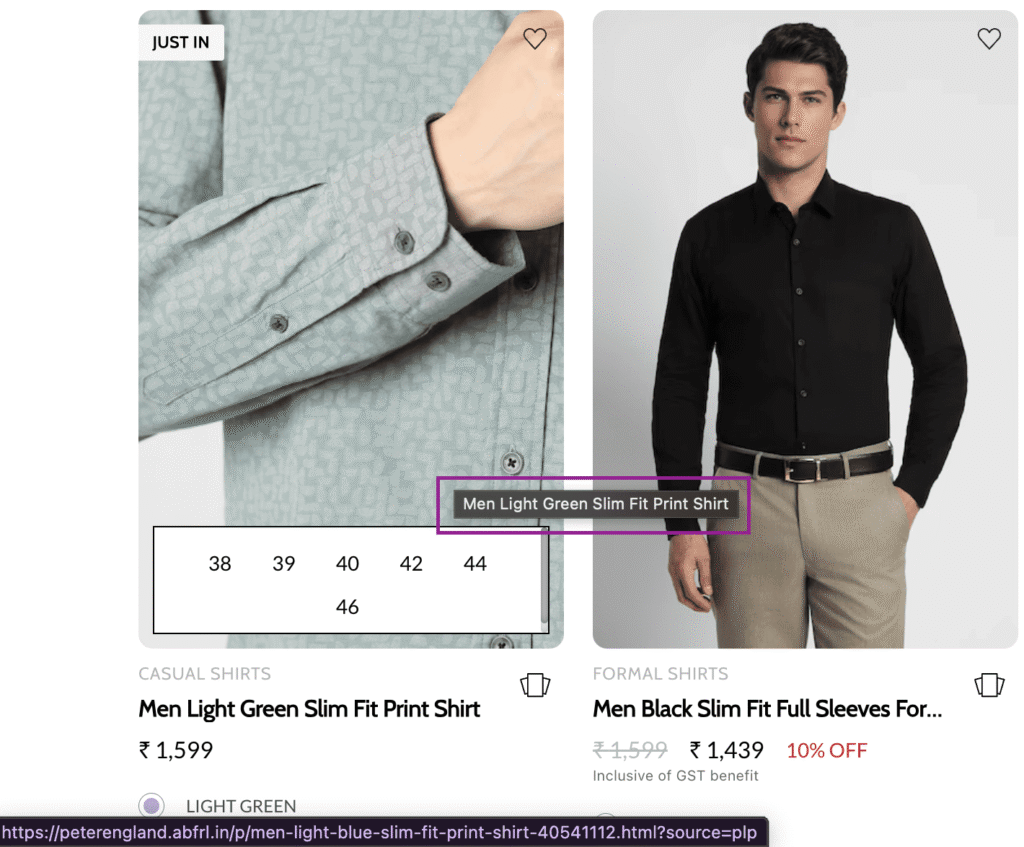
This strengthens how your Shopify product pages appear in visual and multimodal search, while also improving user engagement through clearer product understanding.
6. Create and Optimize llm.txt for AI Crawlers
An llm.txt file helps AI crawlers identify which pages on your store are most useful to read and cite. It sits at the root domain like robots.txt, built specifically to help large language models understand content priority.
Create an llm.txt file that highlights key pages such as best-sellers, collection pages, and buying guides. This directs AI systems toward high-value content instead of low-value pages like duplicate variants or thin product entries. Shopify does not generate this file by default, so it needs to be created manually or through a third-party app.
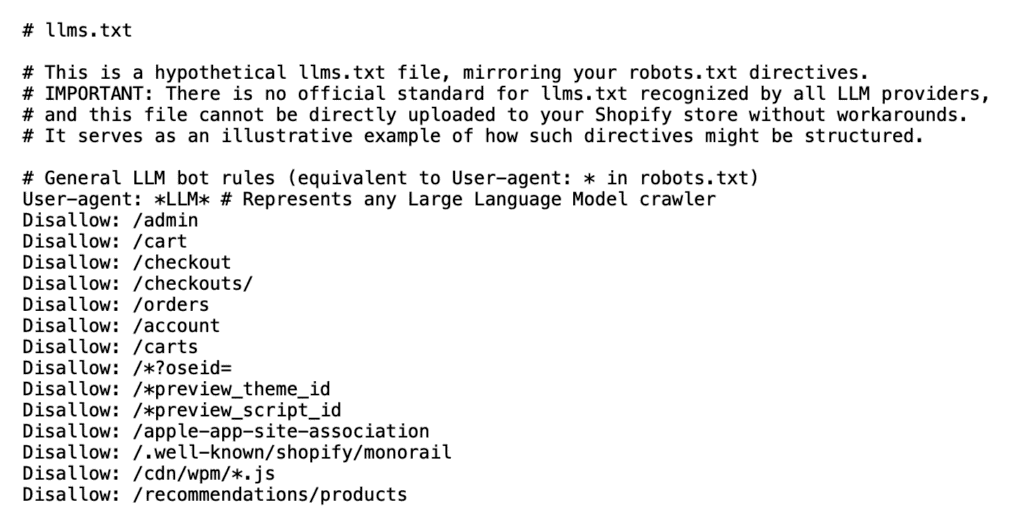
An llm.txt file can prioritize a top-selling product category and a detailed buying guide, helping AI systems focus on pages that provide richer, more useful information for answering queries.
Adding llm.txt helps your Shopify store to guide AI crawlers efficiently across large catalogs, improving how important pages are discovered and interpreted.
7. Strengthen Internal Linking and Contextual Cluster
Internal linking helps AI systems understand how product pages relate to broader topics and user intent. Clear connections between pages create context that supports better extraction and reuse of information.
Surround product pages with supporting content such as buying guides, comparisons, and how-to articles. Link from blog content to relevant product pages to create paths from informational queries to commercial pages. Add descriptive introduction paragraphs to collection pages to explain category context, and use clear, descriptive anchor text instead of generic phrases.
A guide on “how to choose a formal interview shirt” can link to specific product pages using anchors like “slim fit white formal shirt for interviews,” reinforcing both relevance and context.
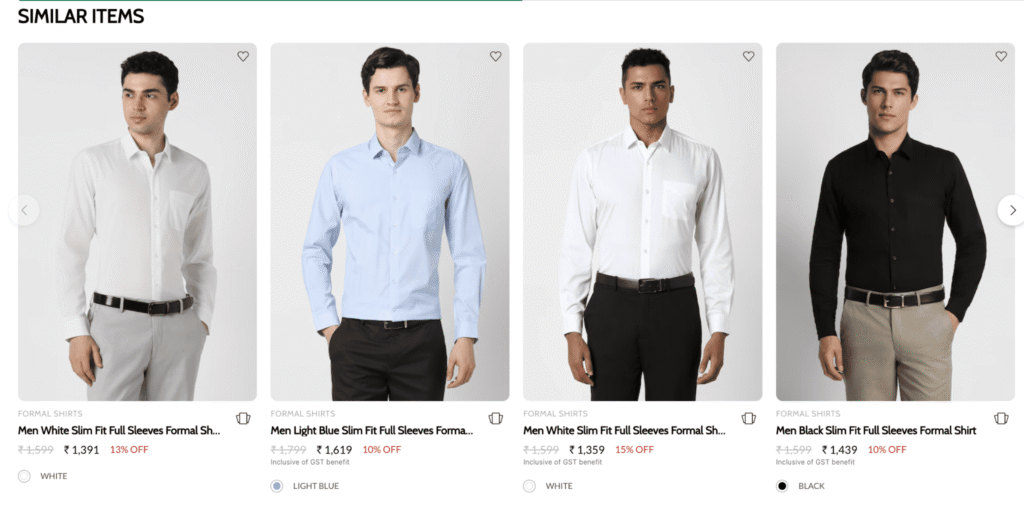
This strengthens your Shopify store’s content structure by building clear relationships between pages, improving navigation, and helping AI systems interpret products within a broader topic cluster.
How to Track and Measure Your AI Citations on Shopify
Tracking LLM visibility requires a different approach than traditional SEO metrics, since visibility happens inside generated responses rather than search result pages. The focus is on identifying when and where your Shopify product page optimization for AI efforts are paying off, referenced by AI platforms.
Start by monitoring referral traffic in GA4 from sources like ChatGPT, Perplexity AI, and Gemini. These referrals indicate that users are clicking through from AI-generated responses to your Shopify store.
Run manual prompt testing on a weekly basis by searching key product queries across different AI systems. Track whether your brand or product pages appear, and note variations in results based on phrasing or intent. This helps identify patterns in visibility.
Analyze citation gaps by comparing your presence with competitors. If similar queries consistently surface competitor products while your pages are missing, it points to gaps in content structure, detail, or validation signals.
For ongoing tracking at scale, AI citation monitoring tools like Track My Visibility help measure brand mentions, citation frequency, and overall presence across platforms, making it easier to monitor changes over time.
Common Shopify Product Page Mistakes That Hurt AI Citations
Many Shopify stores lose AI citation opportunities due to how product pages are built and maintained. These mistakes reduce content quality, limit structured signals, and make it harder for AI systems to extract reliable information.
# Mistake 1: AI Crawlers Blocked in robots.txt
A common issue in Shopify stores is modifying robots.txt (often via apps or custom rules) in a way that blocks key paths like ‘/products/’, ‘/collections/’, or query-based URLs. This restricts how AI crawlers can access product data. When AI crawlers cannot access these pages, they exclude them from extraction regardless of content quality.
# Mistake 2: Missing Key Schema (Ratings and FAQ)
Many Shopify product pages rely only on the default theme schema, which typically includes basic Product markup but skips AggregateRating and FAQ. That means reviews and question-answer content are not structured in a way AI systems can easily read, reducing both trust signals and extractable answer formats.
# Mistake 3: No Query-Focused Content in Descriptions
Shopify product descriptions are often written using short templates or promotional copy focused on conversions. This leads to pages that describe features but do not answer real user queries. Without sections that reflect how users ask questions in natural language, the content lacks clear entry points for AI extraction.
# Mistake 4: Key Info Hidden in Tabs and Accordions
Shopify themes place important details like specifications, shipping, returns, and FAQs inside collapsible tabs or accordions. Since this content is not immediately visible in the main page flow, it becomes harder for AI systems to consistently detect and extract it, reducing its impact.
# Mistake 5: No Ongoing Optimization
Shopify product pages are often treated as static once published. Over time, this results in outdated descriptions, missing schema updates, inconsistent product naming, and gaps in review content. Without regular updates and monitoring, these pages lose alignment with evolving query patterns and become less relevant for AI-driven citations.
What’s next
Shopify product page optimization for AI is essential as product discovery shifts toward AI-powered search engines. Pages that are clear, structured, and aligned with the query user intent are more likely to be selected and reused in responses.
It starts with writing content for AI query matching, adding structured data for machine readability, and creating value-driven descriptions that clearly define the product and its use case. Reviews, high-quality images, internal linking, and llm.txt further strengthen how pages are interpreted and prioritized.
Optimization alone is not enough. AI systems continuously evaluate multiple sources, and citation visibility changes based on competition and query variations. Without tracking AI visibility, it is difficult to know where your Shopify pages appear or where gaps exist.
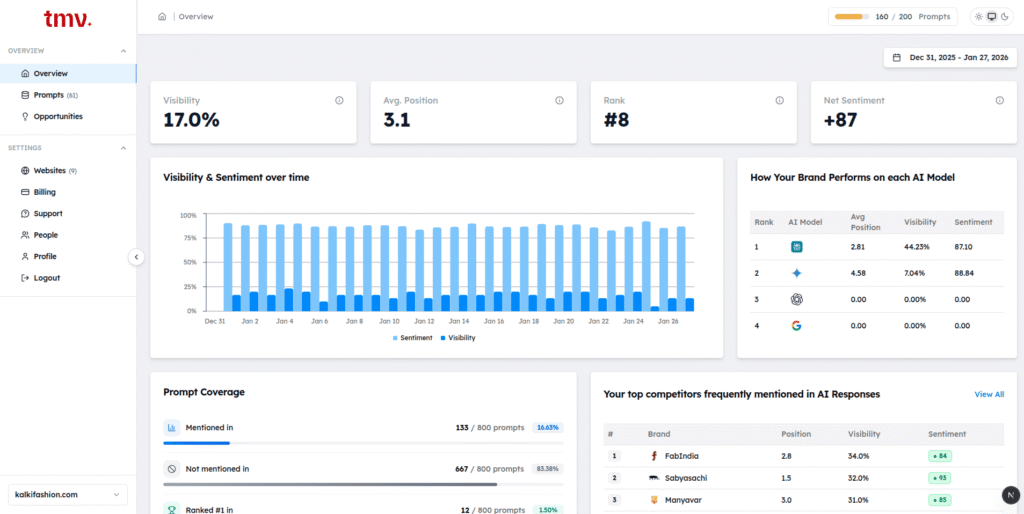
Tools like Track My Visibility help monitor how Shopify product pages perform across AI platforms. They make it easier to identify citation gaps, track brand mentions, and understand which queries surface your products, allowing you to refine your pages based on actual visibility data.
Try our 7-day trial to see where your product pages show across AI platforms.
FAQs
AI optimization focuses on making product data easy to extract and reuse in responses, while traditional SEO focuses on ranking pages in search results. This requires clearer structure, consistent attributes, and query-aligned content.
Schema improves how product information is understood, but it does not guarantee citations. AI systems still evaluate clarity, consistency, and supporting signals before selecting a page.
Product pages should be reviewed regularly to keep descriptions, schema, and reviews up to date. Ongoing updates help maintain alignment with changing queries and competitive content.
Yes. Stores with clear, well-structured, and specific product information can be selected for citations regardless of size, especially when they match user intent more precisely.
Content that answers real user queries works best. FAQ sections, detailed product attributes, use-case explanations, and verified reviews all improve how easily information can be extracted and reused. Use tools like Track My Visibility to track product mentions and citation frequency with actionable insights to improve the AI citations.