


AI platforms decide which brands to mention in their generated answers. Your AI Visibility Score measures how often your brand shows up across platforms like ChatGPT, Perplexity, Gemini, Google AI Overviews, and Claude, combining mention frequency, citation rate, share of voice, sentiment, and prompt coverage into a single benchmark.
Here’s the problem, though. Most brands know their LLM visibility is lower than it should be, but they have no clear path to fixing it. The tactics that work are specific, measurable, and tied directly to the signals AI platforms weigh when choosing what to cite.
This guide covers 12 proven tactics that address every layer of that signal stack, from content structure and entity clarity to third-party authority and prompt-level tracking. Let’s get into it.
TL;DR
- AI Visibility Score measures how often and prominently your brand appears in AI-generated answers across platforms
- Brand mentions and entity clarity are the strongest signals driving AI citations
- Structured, extractable content increases the chances of being selected and reused
- E-E-A-T and data-backed claims improve trust and citation likelihood
- Intent-aligned, journey-based content outperforms keyword-focused content
- Tracking across platforms is essential to measure, benchmark, and continuously improve visibility
What Signals Drive an AI Visibility Score?
Your AI Visibility Score is shaped by a set of core signals that influence how AI systems evaluate and select content.
- Brand mentions across the web: Frequency and consistency of your brand being referenced across sources.
- Branded anchor text & search volume: Strength of brand recognition through searches and link anchors.
- Domain authority & backlinks: Overall credibility based on the quality and quantity of inbound links.
- Content structure & extractability: How easily AI systems can parse and reuse your content.
- E-E-A-T signals: Demonstrated expertise, authority, and trustworthiness of your content and authors.
- Technical crawlability: Accessibility of your site for AI and search crawlers to efficiently process content.
12 Tactics to Improve AI Visibility Score at a Glance
A summary table covering all 12 tactics, the signal category each one addresses, and the primary action required.
| Tactic | Signal Category | Primary Action |
| Build Brand Mention Velocity | Off-site Authority | Earn mentions in publications, reviews, podcasts, and industry forums |
| Fix Technical Infrastructure | Crawlability | Ensure content is accessible without JS dependency; pass Core Web Vitals |
| Strengthen E-E-A-T Signals | Trust and Credibility | Add author credentials, methodology transparency, and organizational authority markers |
| Structure Content for AI Extraction | Content Parseability | Lead with direct answers; use clear heading hierarchy, lists, and comparison tables |
| Align Content to Customer Journey | Intent Relevance | Map content to awareness, consideration, and decision stage queries |
| Publish Structured FAQ Content | Answer Retrievability | Add FAQ sections under 60 words per answer with the FAQ schema implemented |
| Use Statistics and Quantitative Claims | Citation Probability | Place sourced data early in sections; write in context-independent language |
| Keep Content Fresh | Recency Signals | Refresh key pages quarterly with new statistics, examples, and updated dates |
| Implement Schema Markup | Structured Signals | Deploy FAQ, Article, Organization, and Product schema; validate before publishing |
| Target Trusted Citation Sources | Source Authority | Identify pages AI already cites in the category; earn inclusion through outreach |
| Build a Clean Entity Footprint | Entity Clarity | Maintain consistent brand signals across directories, Wikidata, and Google Business Profile |
| Track and Iterate by Platform | Measurement | Monitor visibility score, mention rate, and prompt coverage across all major AI platforms |
1. Build Brand Mention Velocity Across the Web
Brand mentions are a stronger signal because they show how often and in what context your brand appears in AI-generated answers. This is why tracking brand mentions becomes critical; it helps quantify your presence across sources and understand how AI systems are recognizing and reusing your brand.
To build your brand visibility, focus on consistent exposure. Get featured in industry publications through earned media. Contribute expert quotes and commentary to journalists. Appear on podcasts and speak at conferences to expand reach. Partner with other brands to co-create content and tap into new audiences. Stay active in industry forums and communities where real discussions happen.
Increase how often your brand is mentioned across credible sources so that large language models recognize and reuse it more frequently.
 Pro Tip: Curious to know which AI platforms are actually citing your content right now? Run a quick audit with a free AI visibility checker and see how your content currently performs across AI search platforms.
2. Fix the Technical Infrastructure for AI Crawlability
AI visibility at the technical layer is binary; your content is either extractable or ignored. According to Search Engine Journal1, slower-loading sites experience clear drop-offs in Google AI Mode citations.
AI crawlers ingest raw text differently and often don’t execute JavaScript, so blocks and delays make content invisible to AI crawlers. Start by checking your robots.txt file to confirm that GPTBot, ClaudeBot, PerplexityBot, and Google-Extended are not blocked. If they are, fix that first.
- JavaScript rendering: Ensure content is accessible without client-side dependency, as AI crawlers may not execute JS
- Page speed: Meet Core Web Vitals; slower pages show clear drops in AI citations
- Crawlability: Test pages with JavaScript disabled to confirm all key content is accessible
- Page structure: Use clear heading hierarchy, semantic HTML, and logical content flow
- Structured data: Implement a schema for FAQ, HowTo, Article, and Organization to reinforce context
- Security compliance: Maintain HTTPS with no mixed content or security warnings
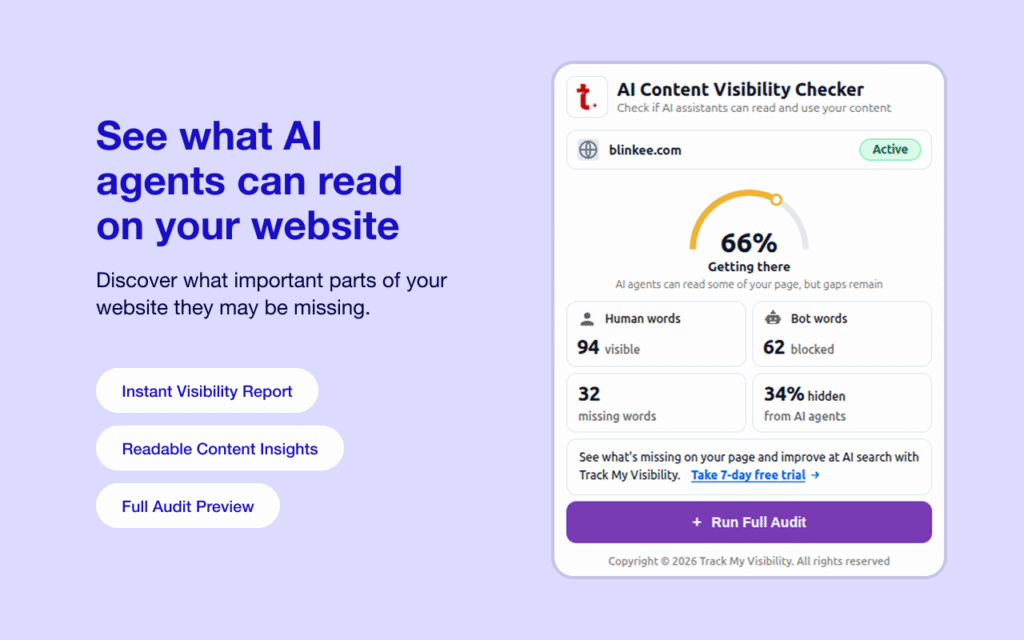
Regularly audit your website for AI content visibility checker to identify crawlability, rendering, and content accessibility issues that could limit how AI systems discover and cite your content.
3. Strengthen E-E-A-T Signals Across Content and Authors
AI platforms prioritize content they can trust, and that trust is inferred from clear evidence of expertise, experience, authority, and transparency.
To strengthen E-E-A-T signals, make credibility explicit and verifiable. Clearly highlight author credentials, including qualifications and certifications, on author pages. Document industry experience with specific years and areas of expertise. Link to published work, such as speaking engagements, articles, and media appearances, to reinforce authority.
At the organizational level, showcase client logos, case studies, and any industry recognition. Finally, include strong trust indicators like transparent methodologies, defined editorial standards, and conflict-of-interest disclosures.
The stronger and more visible these signals are, the easier it is for AI systems to validate and reuse your content. To strengthen your E-E-A-T standing, this Google E-E-A-T Audit Checklist covers 40+ signal items with performance ratings to track improvement over time.
4. Structure Content for AI Extraction
AI tools parse structured content far more effectively than dense, unformatted text. If your content isn’t easy to extract, it won’t be used, no matter how good it is. Practitioners consistently find that small structural changes can directly improve AI visibility2.
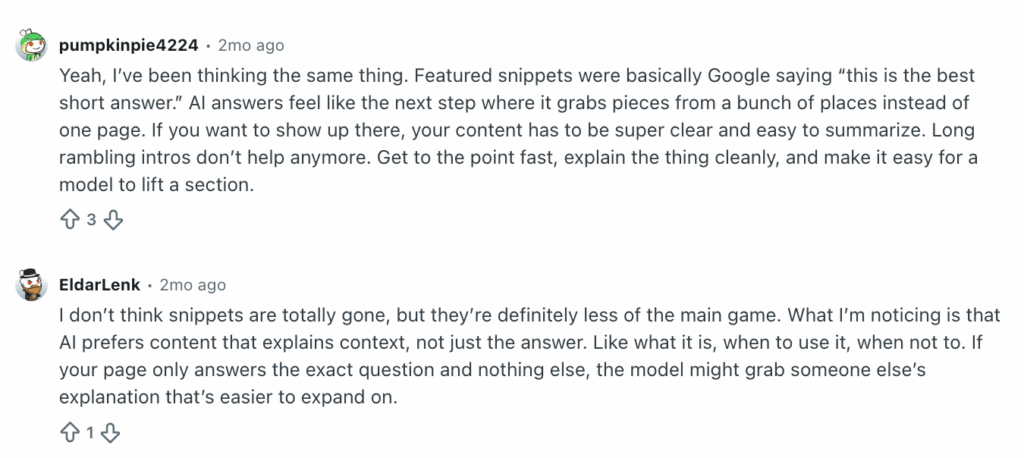
Use these content optimization strategies for AI extractability:
- Lead with direct answers in the first 2–3 sentences of each section
- Use numbered lists for steps, processes, and sequential information
- Use bullet points for features, benefits, and non-linear details
- Use tables for comparisons, frameworks, and data relationships
- Keep paragraphs within 2-4 sentences for better scannability
- Maintain a clear heading hierarchy with H2s and H3s
- Front-load each section with strong, relevant topic sentences
5. Align Content to the Customer Journey, Not Just Keywords
AI-powered search engines don’t just check for keywords. They evaluate whether your content actually solves the user’s needs. With a growing share of searches influenced by AI-generated results, intent alignment matters more than keyword targeting alone.
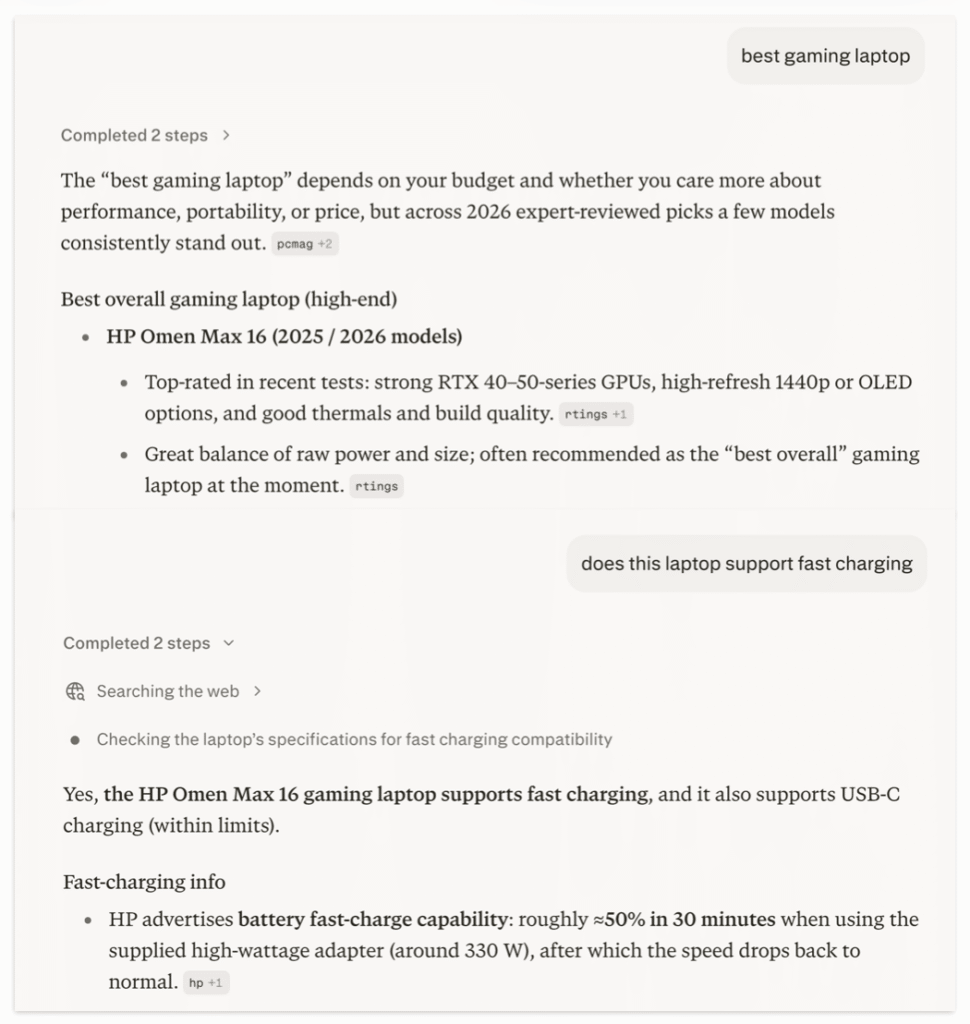
Keyword-focused content targets volume. Journey-mapped content answers real questions at the right stage, which is why it gets cited more often.
- Identify journey triggers like “realizing current tools aren’t working” or “needing a better solution.”
- Map stage-specific questions like “What is this?”, “Which options are best?”, and “Which should I choose?”
- Address exit points like confusion around pricing, features, or implementation
- Match content format to intent, like guides for awareness, comparisons for consideration, and case studies for decision-making
- Connect content across stages like linking guides → comparisons → product pages
Understanding real customer conversations, analyzing thousands of actual discussions rather than keyword volumes, helps create content that AI systems recognize as genuinely relevant, ultimately improving how your content can rank in AI search.
6. Publish and Optimize FAQ Content
FAQs can be helpful to get an LLM citation by aligning your content with how users actually ask questions. They signal a user-first approach, making it easier for AI systems to extract clear answers while also building brand trust through helpful, direct responses.
- Answer common queries in under 60 words with clear, complete responses that can stand alone
- Use the FAQ schema along with visible on-page FAQs to reinforce structure and context for AI systems
- Write question-based headings that closely match how users phrase prompts in real searches
- Update FAQs regularly to reflect new trends, product changes, and evolving user questions
Well-structured FAQs optimized for AI can increase your chances of being selected as a source because they mirror the exact format AI systems use to generate answers.
7. Use Statistics and Quantitative Claims
AI systems prioritize data-backed content because it provides clear, verifiable signals they can confidently reuse in generated answers. Unlike qualitative statements, statistics reduce ambiguity and make information easier to extract, validate, and present. Research from Princeton and Georgia Tech (Aggarwal et al., 2024) found that adding statistics to content improved AI citation rates by 30–40% compared to unoptimized content.
Place key statistics early in your sections, within the first few lines, making them immediately visible for extraction. Structure each paragraph so it stands on its own, using context-independent language like “Businesses that publish original research are cited more frequently” instead of relying on surrounding text for meaning.
Always attribute claims to credible, named sources to reinforce trust. Use measurable data: instead of saying “this improves performance,” specify “this reduced bounce rate by 25%.” The more precise and attributable your data is, the more likely it is to be selected and reused in AI-generated responses.
Pro Tip: Wondering which statistics actually drive AI citations in 2026? Explore the latest AI search statistics data, which breaks down the numbers behind AI citation trends, platform growth, and how citation weighting has shifted across platforms.8. Keep Content Fresh With Regular Updates
AI systems prefer recently updated content because it signals accuracy and relevance. When multiple sources answer the same query, models often favor the one with fresher information. A query like “latest AI search trends” is far more likely to surface content updated in the last few months rather than older, static pages.
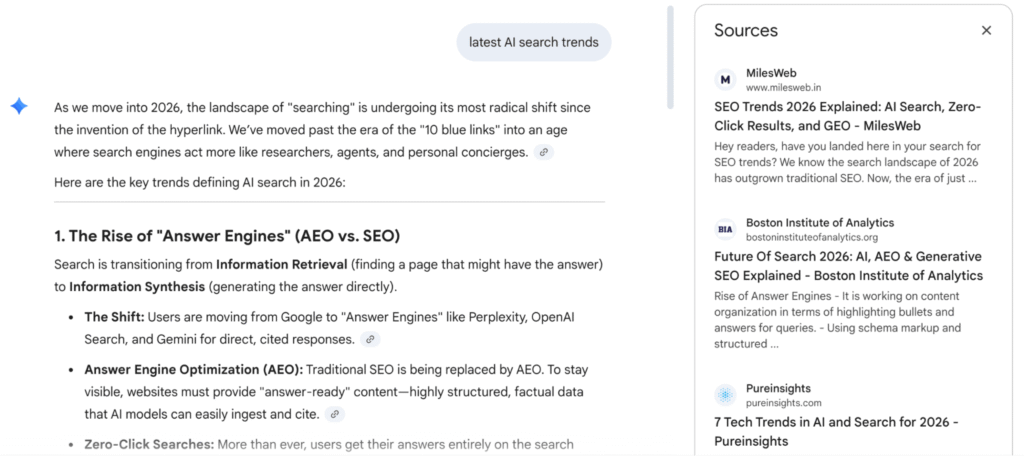
- Update pages every 2–3 months to improve chances of being cited in AI answers
- Add 2–3 new statistics, a recent example, and refresh the “Last Modified” date as a minimum update
- Include at least one new FAQ based on current questions in your category
- Review content quarterly for fast-moving industries and twice yearly for slower ones
- Prioritize freshness, especially if your site lacks strong authority or trust signals
Regular updates signal that your content is current and reliable, two factors AI systems heavily weigh when selecting sources.
9. Implement Schema Markup
AI systems rely on structured signals to better interpret content, even if they ultimately extract raw text. Schema markup provides explicit context about what your content represents, helping reinforce meaning, improve consistency, and increase eligibility for inclusion in AI-generated answers.
- Add schema for key content types like FAQ, HowTo, Article, and Organization
- Ensure schema matches visible on-page content to avoid inconsistencies
- Use structured data to clearly define entities like brand, author, and product
- Validate schema regularly to prevent errors or broken markup
- Prioritize high-impact pages like guides, product pages, and FAQs for implementation
While schema alone won’t guarantee visibility, it gives AI systems stronger signals to understand and trust content, especially when combined with clear structure and strong entity signals. Always use JSON-LD format and validate with Google’s Rich Results Test before publishing.
10. Target Pages AI Models Already Trust as Citation Sources
Identify which pages and domains appear most in AI search results. These are typically authoritative guides, comparisons, and high-quality editorial content that AI systems repeatedly reuse.
Compare citation patterns across platforms like ChatGPT, Perplexity, Gemini, and Google AI Overviews. Each model has slightly different preferences, and understanding these differences helps refine your targeting.
Audit for AI search, where competitors appear in AI responses, and your brand does not. This reveals clear visibility gaps and shows exactly where you need to compete or contribute.
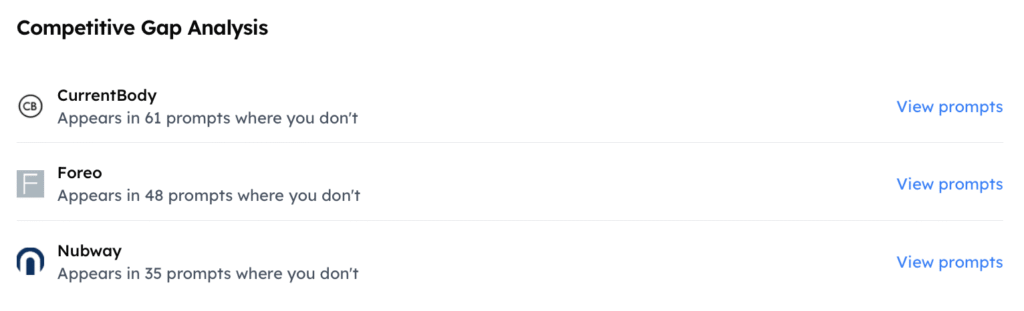
Prioritize content formats AI already cites, such as in-depth articles, comparison pages, and structured guides. These formats are easier to extract and more likely to be reused.
Reach out with original data, clear use cases, or expert input to earn inclusion. Contributing unique value increases your chances of being referenced in sources AI already trusts.
11. Build and Maintain a Clean Entity Footprint
AI systems rely on clear entity signals to correctly identify and attribute your brand. If your brand information is inconsistent or fragmented, it increases ambiguity, often leading to missed or incorrect citations.
Maintain a consistent brand name, description, and category signals across all directories and platforms. Even small variations can confuse entity recognition and reduce visibility.
Establish presence on key platforms like Google Business Profile, Wikidata, and Wikipedia where relevant. These act as validation layers that reinforce your brand’s legitimacy.
Actively build your entity footprint in trusted platforms and communities such as industry directories, Crunchbase, LinkedIn, GitHub (for tech brands), and niche forums. Mentions and consistent profiles across these ecosystems strengthen how AI systems recognize your brand.
Reduce ambiguity by aligning how your brand is referenced across the web. Inconsistent naming or positioning causes AI systems to skip or misattribute the brand.
Entity clarity is not optional. Without it, even strong content and authority signals may not translate into AI citations.
12. Track, Measure, and Iterate by Platform
AI visibility is not static. It changes based on how models evolve, what they cite, and how your content performs over time. Without tracking, you’re operating blind. Measuring AI visibility is what turns this from guesswork into a repeatable growth process.
Relying on a single platform gives an incomplete picture. According to a 2026 analysis by Cloro, single-engine coverage misses 60–70% of AI brand-visibility signals. The minimum defensible coverage is ChatGPT plus Perplexity plus AI Overviews, and broader coverage across five or more platforms is increasingly the standard.
Each platform has distinct citation behavior. ChatGPT, Perplexity AI, Gemini, Google AI Overviews, Claude, and Copilot all evaluate and cite content differently, so performance must be analyzed individually.
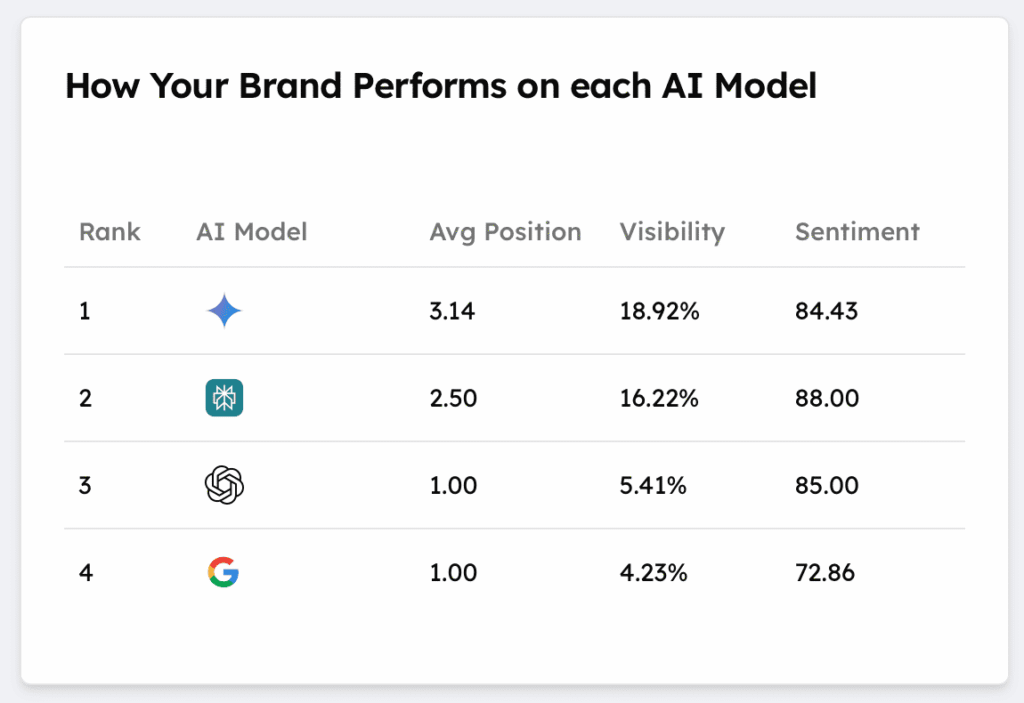
Track core metrics like mention score, visibility score, and prompt-level coverage. These show how often your brand appears, how competitive you are, and which queries you’re winning or losing.
Establish a baseline before making changes. What matters most is trend movement over time, not a single snapshot; consistent growth in visibility signals that your optimizations are working.
Pro Tip: How much of the brand’s current off-site presence is actually visible to AI platforms? A structured audit reveals exactly which mention and entity signals are missing. The AEO GEO audit checklist covers every signal category with actionable items to close the gaps.Start Tracking Your AI Visibility Now
The most reliable way to improve AI Visibility Score is to strengthen the core signals (Google EEAT guideline) AI platforms weigh when deciding what to cite. As AI-generated answers replace traditional search journeys, brand presence in those responses drives awareness and influence.
Improving your AI Visibility Score comes down to strengthening core signals, brand mentions, content structure, E-E-A-T, intent alignment, and consistent tracking of AI search visibility across platforms.
This leads to long-term benefits:
- Higher brand recognition in AI answers
- Stronger trust and authority through citations
- Increased share of voice in key queries
- More qualified, high-intent visibility
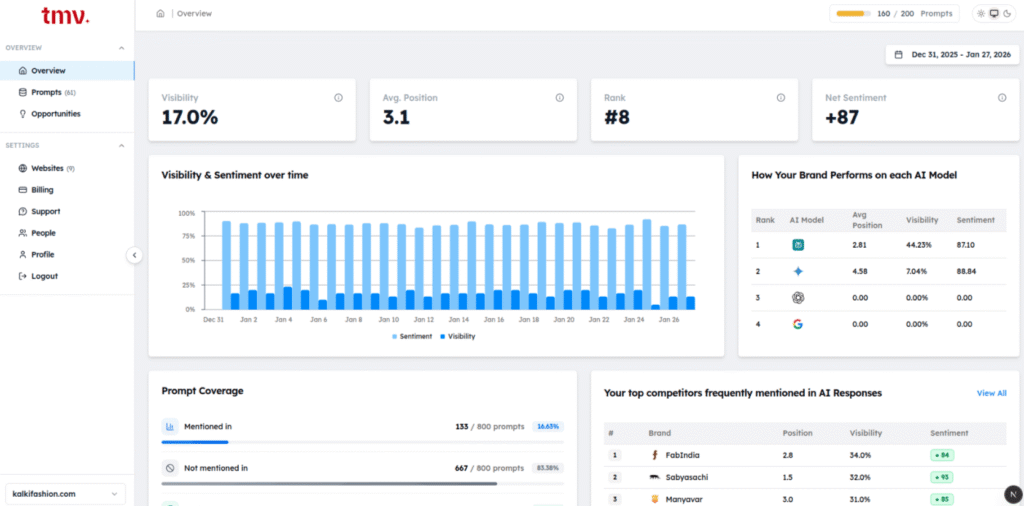
To make this actionable, you need continuous tracking and insights. Track My Visibility helps you monitor how your brand appears across AI platforms, measure key metrics like mention rate and share of voice, and identify exactly where to improve, so you can turn AI visibility into a measurable growth channel.
Try our 7-day trial to see where you appear across AI platforms.
Frequently Asked Questions
An AI Visibility Score measures how often and how prominently your brand appears in AI-generated responses across platforms like ChatGPT, Perplexity, and Google AI Overviews.
SEO focuses on rankings and clicks, while AI visibility focuses on whether your content is selected, cited, and included in generated answers.
Key factors include brand mentions, content structure, E-E-A-T signals, intent alignment, technical accessibility, and consistency across platforms.
Focus on restructuring content for extraction, increasing brand mentions, adding data-backed insights, and optimizing FAQs and intent-driven content.
You can track metrics like mention rate, share of voice, and prompt coverage using tools like Track My Visibility, designed for AI monitoring, which help identify gaps and measure improvement over time.
Reference
1. The Technical SEO Debt That Will Destroy Your AI Visibility
2. Are AI citations replacing featured snippets?